The Cat, the Dog, and Adam Before Eden Closed
They put their paws together and swore never to share a house. The dog starved his way to Adam's door. The cat was already inside.
Table of Contents
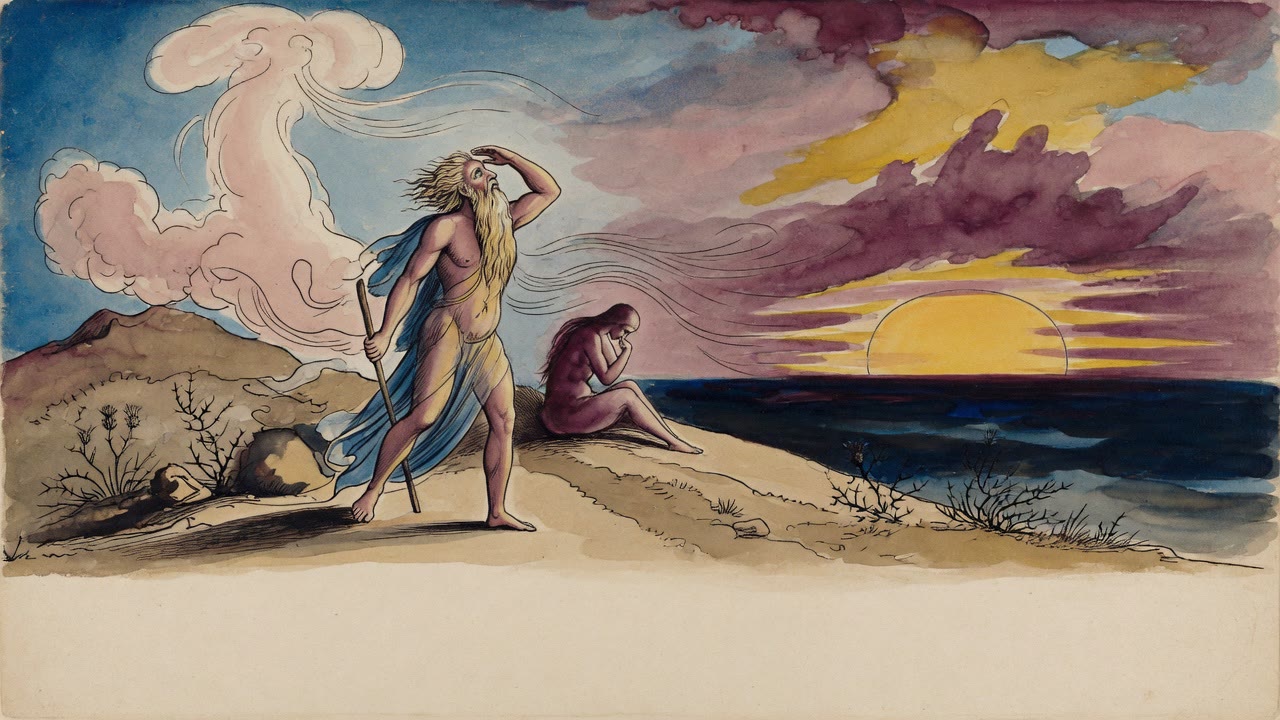
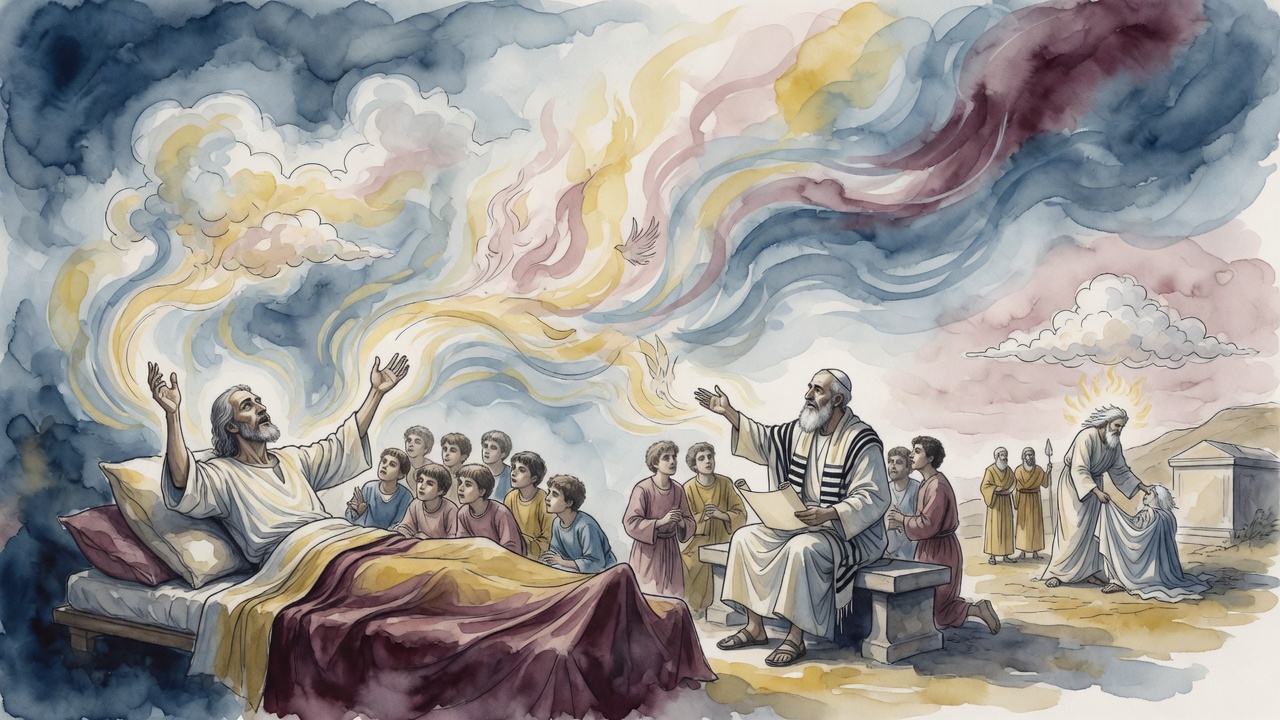
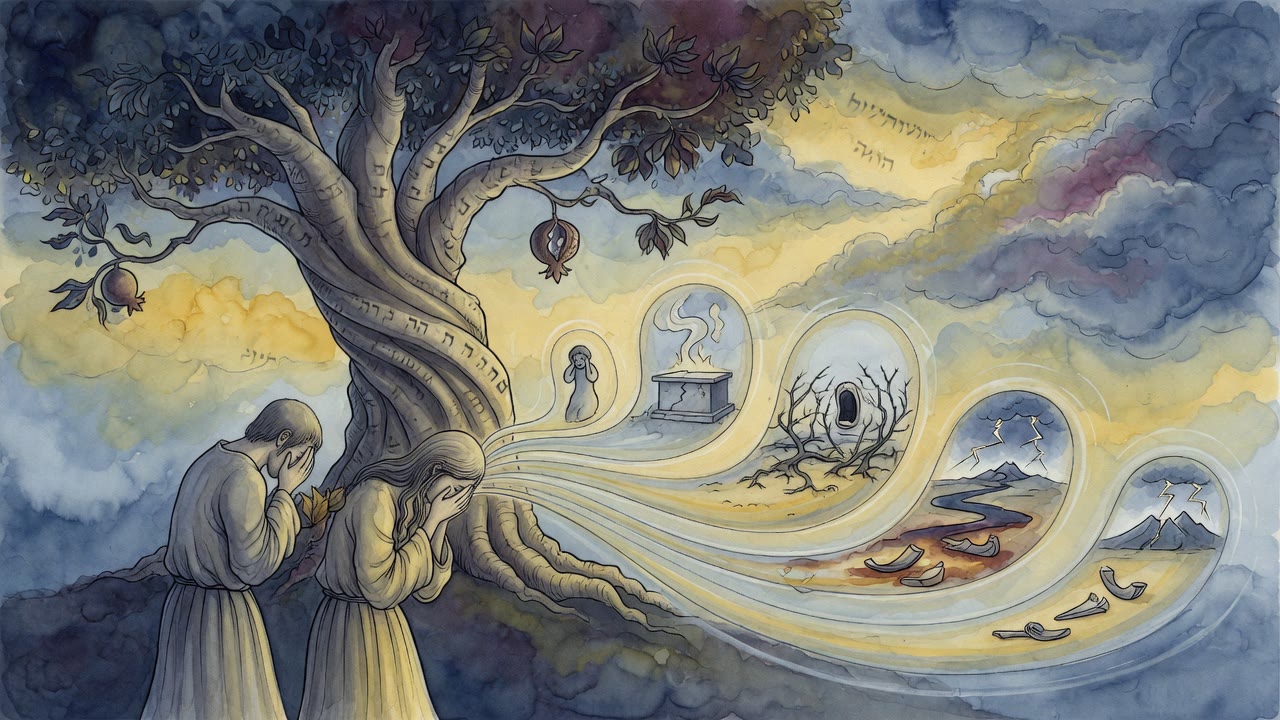
The curve of Adam's heel had outshone the sun. God had tied canopies over him in the Garden, ten or eleven or thirteen, depending on who counted the stones in the verse. Then God said, "You are dust," and the glory of his face changed, and the gate shut.
 Click for full size
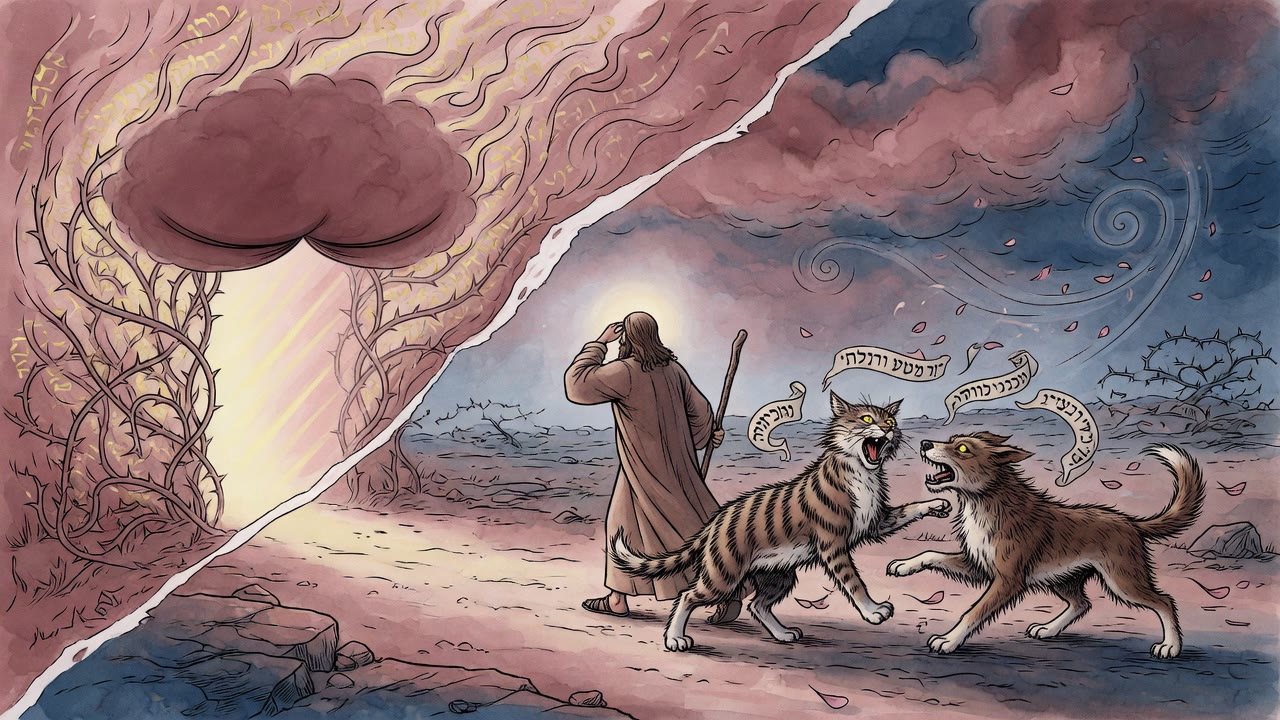
Adam did not walk out in silence. Animals came at his heels. A household formed around him before he had even learned the ordinary dust. Inside that household a politics began at once.
The Mouse Stood Before God
Before the famine, before any oath, the mouse went to God with a complaint. "I and the cat are partners, but we have nothing to eat."
God looked into the mouse's heart. "You are intriguing against your companion. You want only to devour her. As a punishment, she shall devour you."
"O Lord of the world, wherein have I done wrong?"
"You should have been warned by the moon, who lost part of her light because she spoke ill of the sun, and what she lost was given to her opponent. The evil you harbored shall be punished the same way. Instead of your devouring her, she shall devour you."
"Shall my whole kind be destroyed?"
"I will take care that a remnant of you is spared."
In her rage the mouse bit the cat. The cat threw herself on the mouse and hacked with her teeth until the mouse lay dead. From that moment the mouse stood in such awe of the cat that she did not even try to defend herself. She kept herself in hiding. Intent had been enough. The act only confirmed what God had already seen.
They Swore on Their Paws
The cat and the dog had been friends. They shared food. They shared winter. Then neither could find anything to eat for three days.
The cat grew peevish, then sharp. "We can't go on like this," she said. "We can't find enough to share. Separately we might each live." The dog offered to help because he was stronger. She already knew where she was going.
"To the house of Adam," she said. "There are mice there. He will be grateful if I clear them. I shall have food."
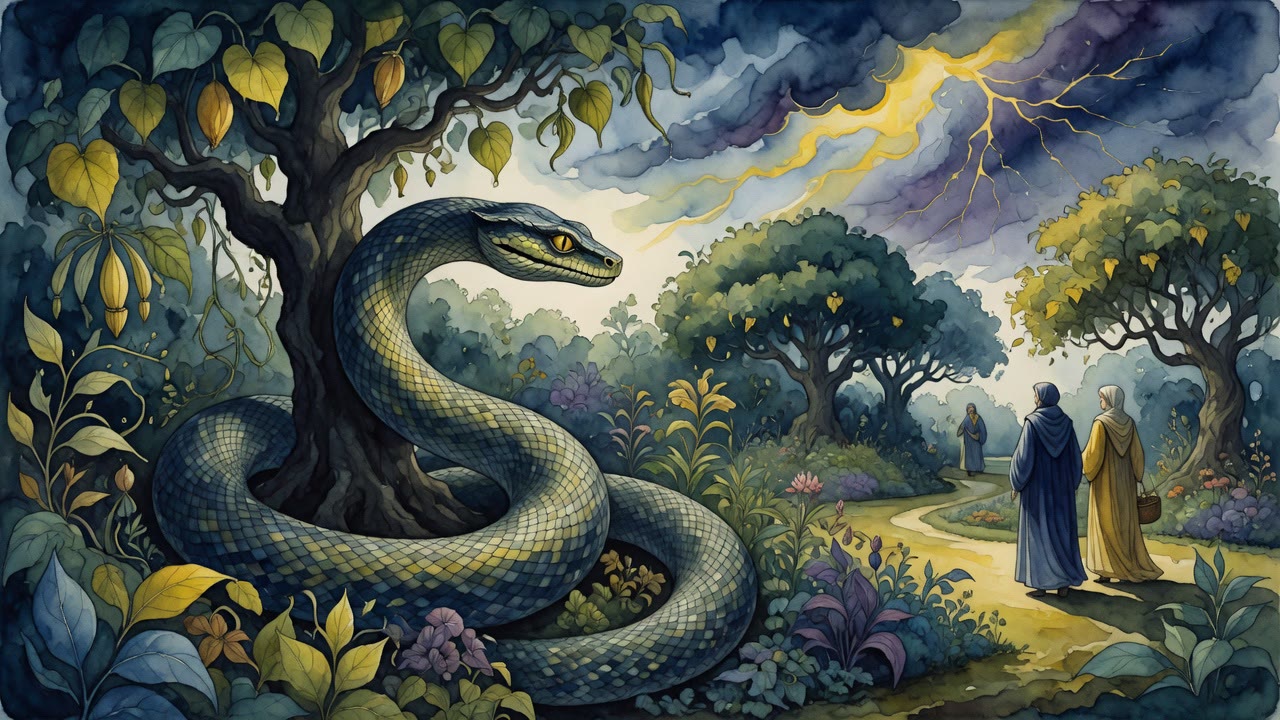
The dog assented, hurt, and said he would wander farther. The serpent, wisest of the animals, told them the proper way to end a compact. They put their right fore-paws together and swore never to interfere with each other by going to the same place. Then they parted. The dog trotted off with his head hanging down. Once he looked back. The cat did not.
The Dog Lost Every Host
The cat took up her abode with Adam and found enough mice to satisfy her. Adam treated her kindly. The dog saw bad times.
The first night he sheltered in the cave of the wolf. He barked at steps in the dark. The steps were wild animals, and he nearly lost his life. He fled to the monkey, who would not grant him even one night. He went to the sheep. Again he heard steps. He rose to chase the marauders, who turned out to be wolves. His barking told the wolves where the sheep were. He saved his host and killed his host with the same sound.
Now he had lost his last friend. Night after night he begged for shelter and found none. He was cold. He was hungry. He stood outside Adam's house and decided that no oath, sworn under better circumstances, could require him to starve to death.
Adam Could Not End It
He went in. Wild animals approached under cover of darkness. The dog barked. Adam woke, took his bow, and drove them away. He bade the dog remain always. In the morning the cat was already there, watching. She had been there first, by the terms of their agreement.
"The dog has violated the oath he swore not to come to the place where I am," she said.
"He did not know you were here," Adam said. "I invited him. He is useful. There is room for both."
The dog promised not to touch anything intended for her. She insisted she could not live in one house with a thief. She arched her back and put out her claws. He stood dejected, tail between his legs, and said he had been hungry and miserable and tired. She would not be pacified.
Bickerings became the order of the day. At last the dog could stand it no longer. He left for the house of Seth, who welcomed him. From there he still tried to make peace. In vain. Adam lost patience.
"You blame each other," he said. "I can't make you out. You look like quarrelling forever."
The sentence sat on them like a decree. The enmity of the first dog and the first cat went down to their descendants. Behind it sat an older sentence still, spoken over a mouse who had only intended harm, in the days when Adam's heel still remembered the sun.
← All myths