Leah Built Israel From a Love That Was Never Promised
Leah held a firstborn who looked like any other child. She named him so heaven would see the affliction her husband would not.
Table of Contents
 Click for full size
She Named Him in the Dark
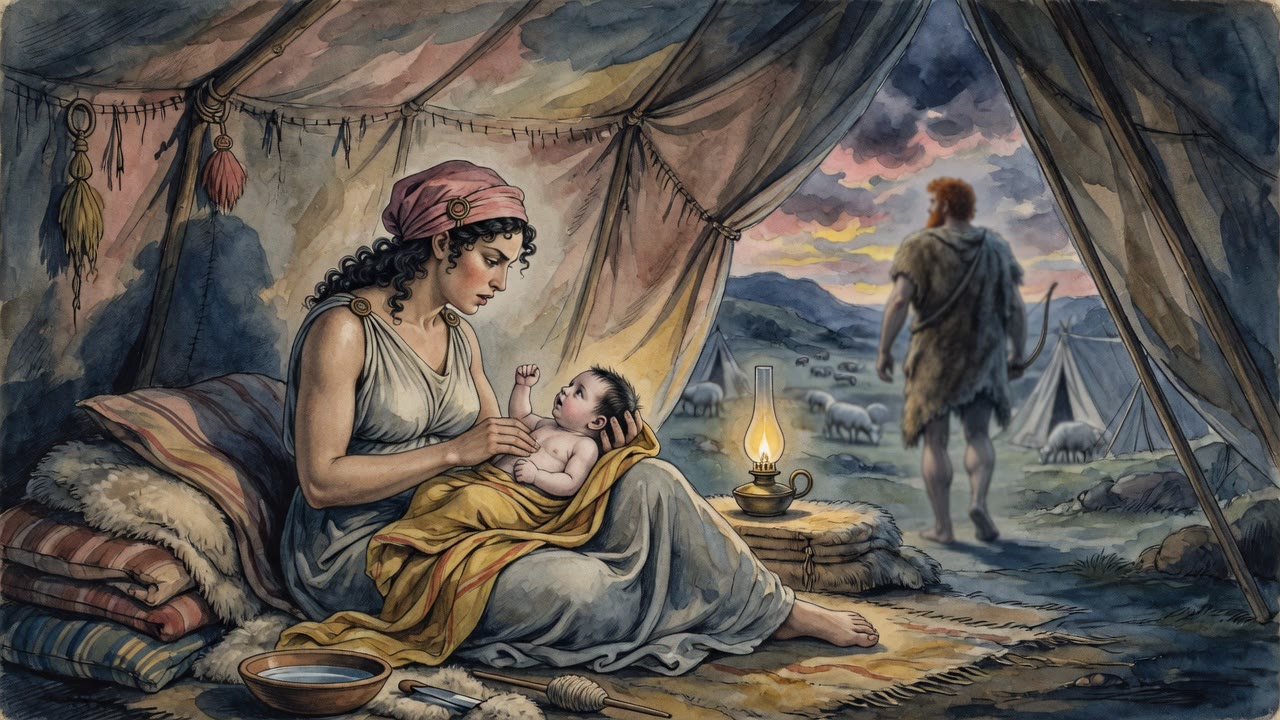
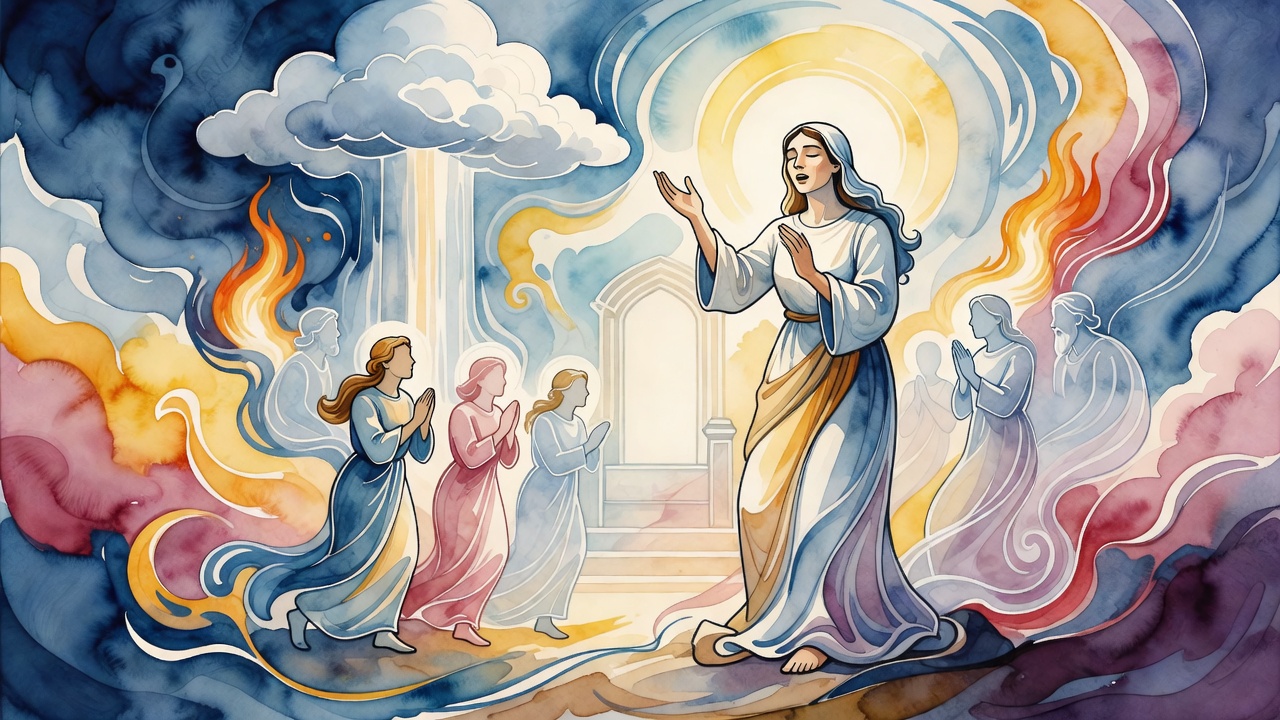
Leah held the child against her chest in a tent that still smelled of wedding wine. Jacob had gone to Rachel. The baby was neither large nor small, neither dark nor fair. An ordinary boy. She looked at his face and spoke a name into the quiet.
Reuben. Re'u ben (ראובן), see a son. See the normal man. "God has seen my affliction. Now my husband will love me" (Genesis 29:32). She was not describing the child to the camp. She was telling heaven what the marriage would not admit. Jacob heard the cry. He did not hear the sentence inside the name.
"Behold the difference," the name also carried, between this firstborn and Esau, firstborn of her father-in-law. Esau sold his birthright of his own will and then hated the buyer. This boy would lose a birthright without being asked, and still pull Joseph out of his brothers' hands.
Four Names, Then She Stopped
Simeon came next. She named him while the house was still divided. "Because the Lord has heard that I am hated, He has given me this son also" (Genesis 29:33). Heard. Not seen only. The second name was a claim that heaven had taken the case.
Levi. "Now this time will my husband be joined unto me" (Genesis 29:34). She was still bargaining with a man who had never promised her his love. The third name reached across the curtain toward Jacob's bed and asked him to come back.
Judah. "This time I will praise the Lord" (Genesis 29:35). She did not ask Jacob for a feeling. She did not point at the wound. She praised the Giver and stopped bearing for a season. The tent went quiet of new cries. The four names she had already given kept working in the house.
Later Issachar and Zebulun arrived, and Dinah, the only daughter. Six sons and a daughter from a love that had been unpromised from the wedding night. The line of kings sat in the fourth name, the one she spoke when she stopped asking and started thanking.
They Bowed at Mamre
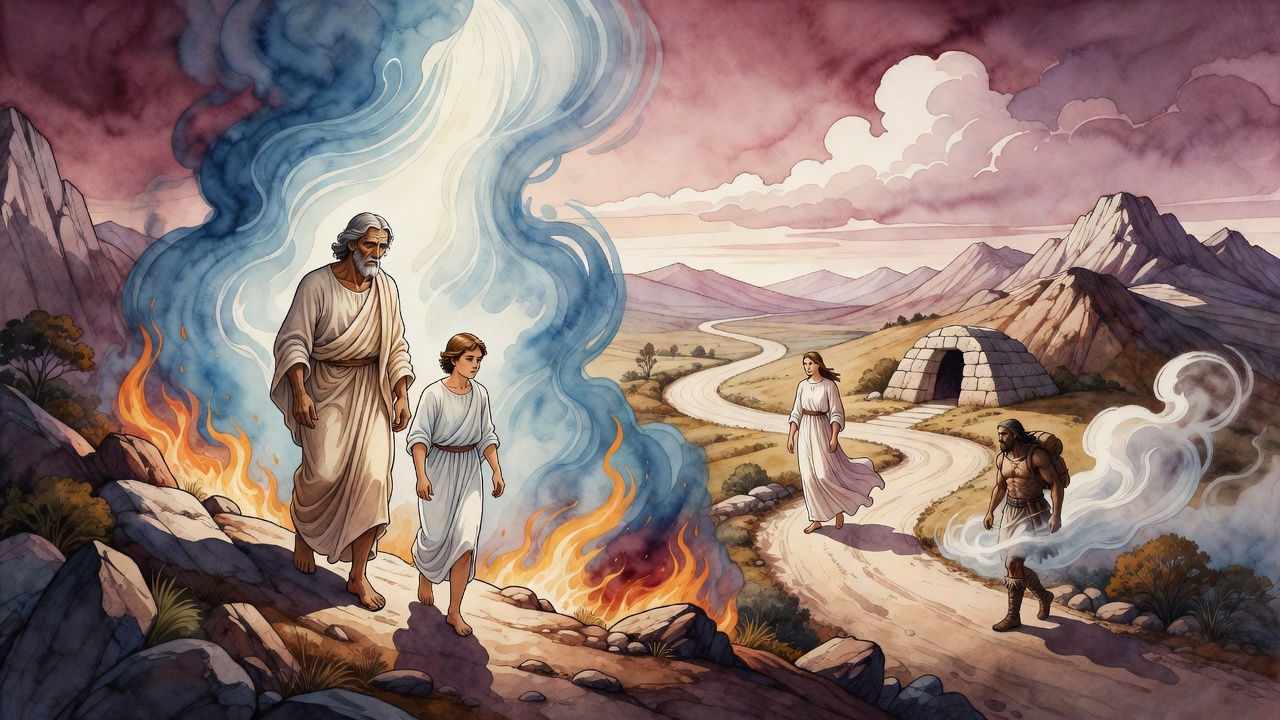
Years later Jacob brought all twelve sons to Isaac at Mamre. The old man sat with Rebecca. Dust from the road was on the boys' hems. They bowed. Isaac looked at the count and rejoiced, because the younger son's house was no longer a quarrel in a tent. It was a people standing in a row.
Leah's children stood in that line: Reuben, Simeon, Levi, Judah, Issachar, Zebulun, and Dinah with them. Dan and Naphtali, sons of Bilhah, stood too. Gad and Asher, sons of Zilpah, stood too. Isaac blessed Jacob and all his sons. Then Jacob sent them to pasture at Shechem, and the family walked out of the grandfather's sight as a finished number.
Six of the twelve had come through Leah. The firstborn who would lose his crowns. The second whose zeal would cut Shechem. The third who would carry the service. The fourth who would carry the scepter. She had built them with prayer because a husband's love would not.
The Crowns Moved Down the Line
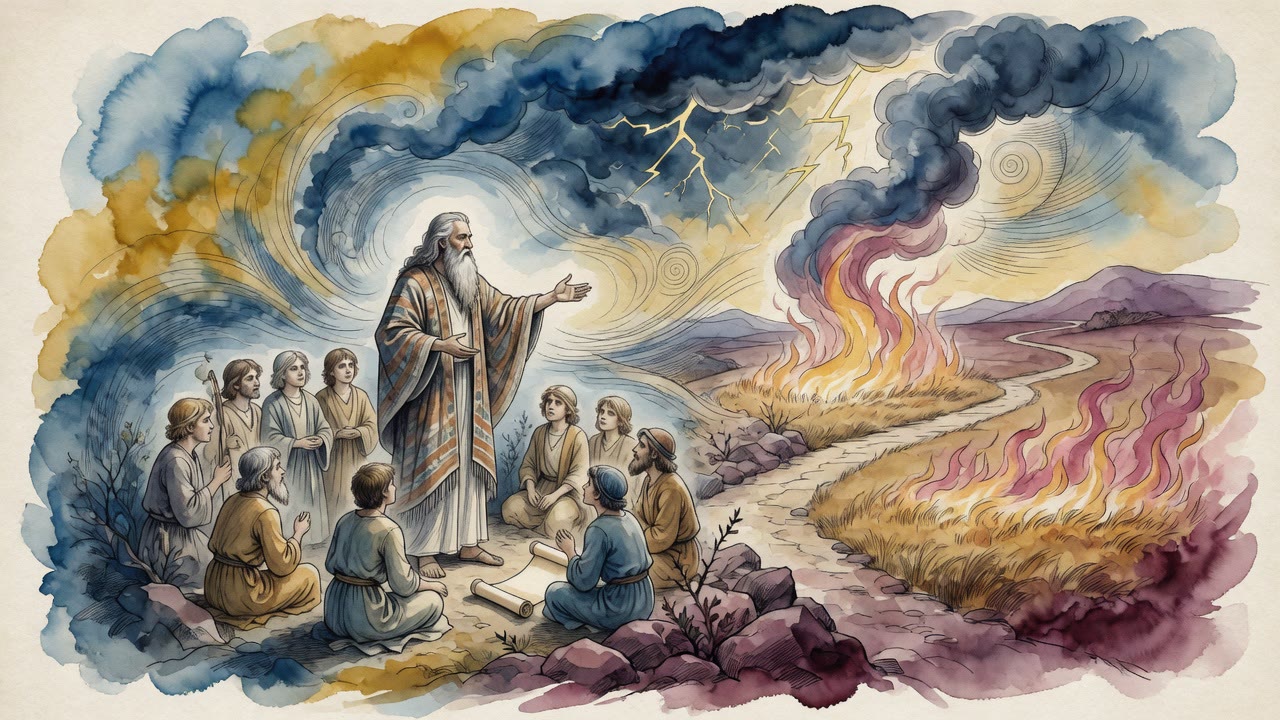
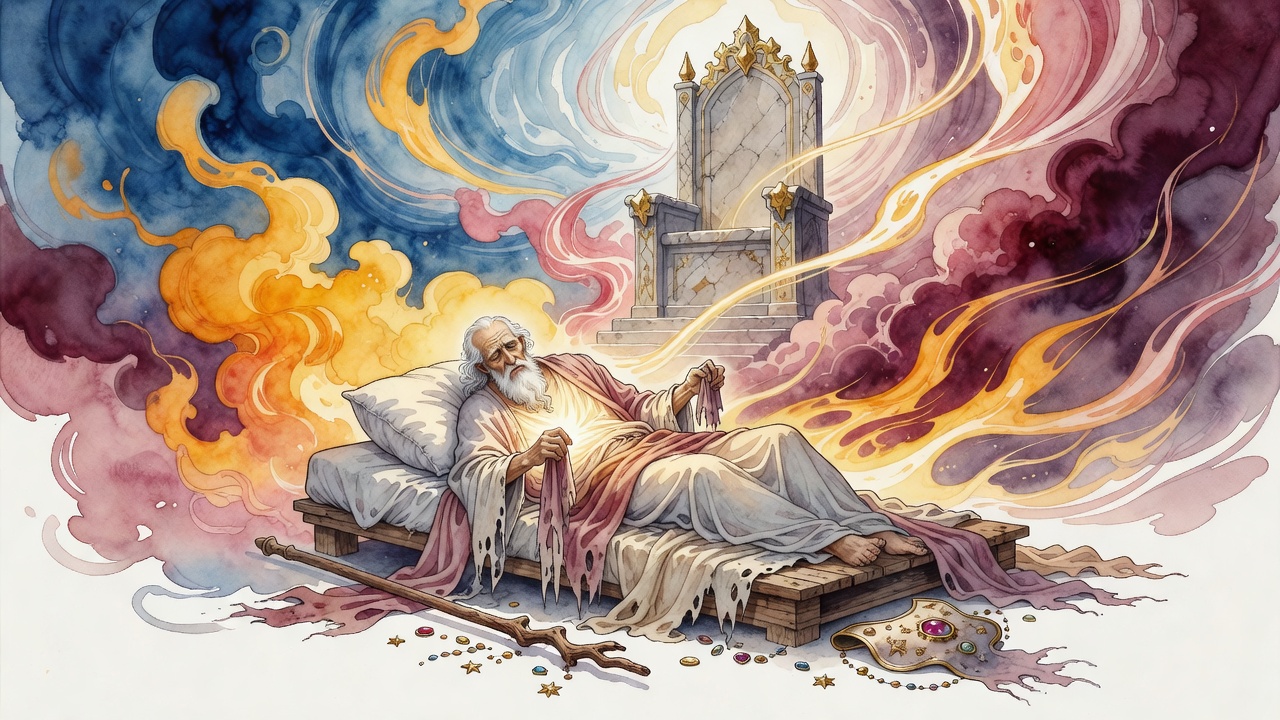
In Egypt, Jacob lay on a golden bed at Raamses and summoned the twelve. He told them to make themselves clean so the blessing would stick. Angels brought them in. He warned them against strife. He was about to speak the end of days. The Shechinah (שכינה), God's dwelling presence, visited and left, and the secret left with her. Jacob grew afraid. "Ishmael was the blemish in Abraham's house. Esau was the blemish in Isaac's. I fear there is one among you who harbors idols."
They answered together. "Hear, O Israel, our father, the Eternal our God is the One Only God. As thy heart is one, so are our hearts one." He relaxed. "Praised be the Name of the glory of His kingdom forever and ever."
Then he blessed them. Reuben should have worn three crowns: firstborn, priesthood, kingship. The sin with Bilhah moved the birthright to Joseph, the priesthood to Levi, the kingship to Judah. "Judah, thou dost deserve thy name. Thy mother called thee Jehudah because she gave praise to God at thy birth, and so shall thy brethren praise thee."
He Asked for Her Grave
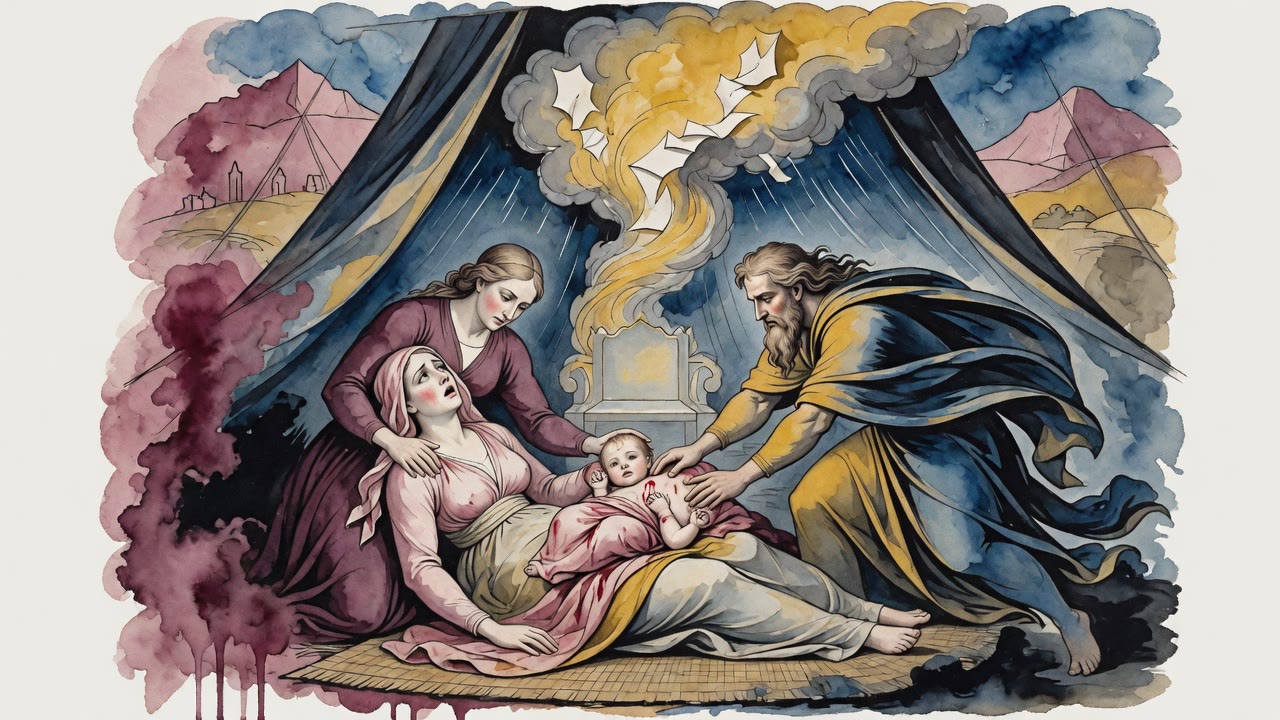
Jacob did not say, at the end, that he had loved Leah. He had loved Rachel. The house knew it. Rachel was already in the ground on the road to Bethlehem, where he had set her when the birth killed her.
When his own time came, he asked to be placed in the cave at Machpelah with Abraham, with Isaac, and with Leah (Genesis 49:29-31). Not with the wife of his choosing. With the wife who had named children toward a different audience, and who had been waiting in that cave since before he arrived in Egypt.
Judah would carry the scepter. Levi would carry the service. Reuben would live as the ordinary son his mother had insisted on seeing. Israel stood on names spoken in a tent when no one was listening but God.
← All myths