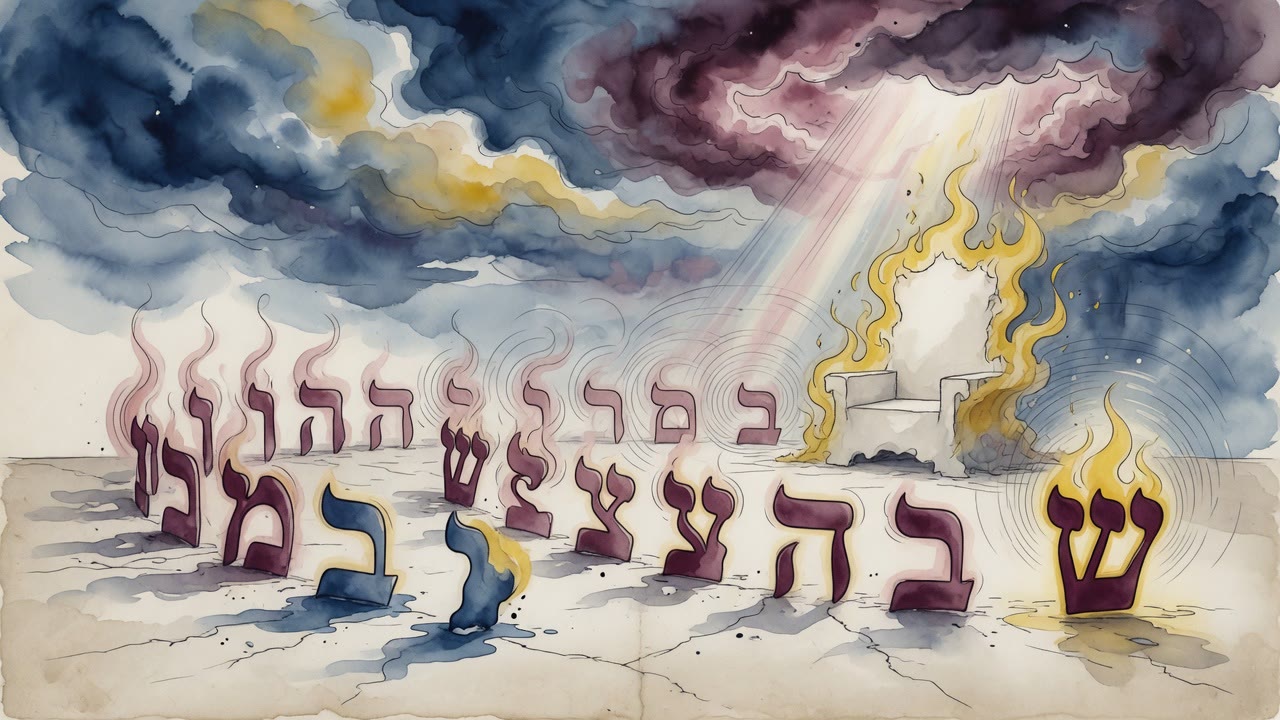
Ibn Gabirol Built a Wooden Woman Using Letter Combinations
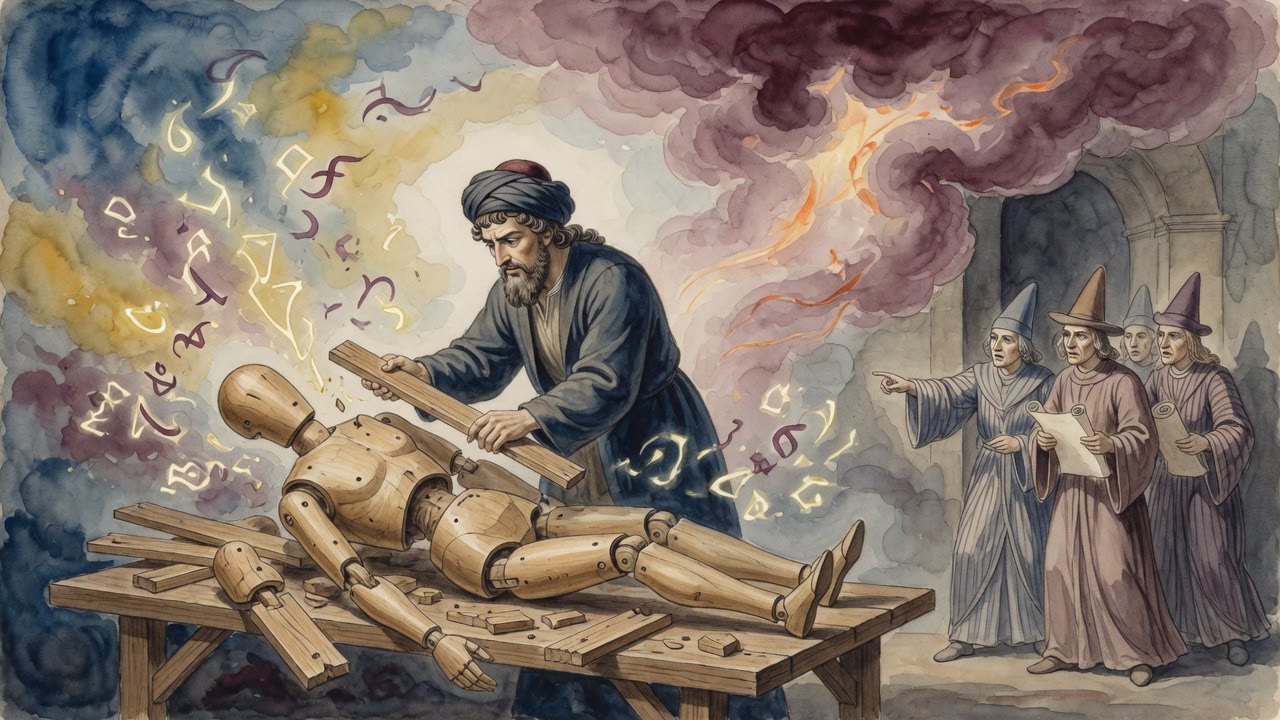
Solomon ibn Gabirol shaped a female servant from wood and letter combinations. When authorities came to investigate, he disassembled her before their eyes.
Table of Contents
 Click for full size
A Philosopher Who Worked With Letters
Solomon ibn Gabirol was born in Malaga around 1021 CE and became one of the most remarkable figures in medieval Jewish intellectual life. He worked in Saragossa, he worked in Valencia, he moved constantly and made enemies wherever he settled. He wrote philosophical poetry that nobody in Andalusia had produced before, bridging the contemplative traditions of Jewish thought and the rational structures that Aristotle's Arabic interpreters had put into circulation across the Mediterranean world.
He was also, the legends say, deeply versed in the practical side of mysticism. Not just the theory of creation but the mechanics of it: the arrangement of letters, the combinations of names, the methods by which the Book of Creation taught that God had assembled the universe. He understood how things were made. And one night, perhaps out of loneliness, perhaps out of intellectual ambition, perhaps out of the particular desire of a man who works alone to have someone in the house, he applied what he knew.
The Woman of Wood
He carved her from wood. The legends do not say how long it took or what tools he used, only that she was shaped as a female form and that he then combined the letters in the specific arrangements the ancient tradition prescribed, the sequences that the Book of Creation attributed to the working of the divine word in the first days. She was not stone. She was not clay. She moved. She served him. She was, by all appearances, a woman in the house of a man who had no other company.
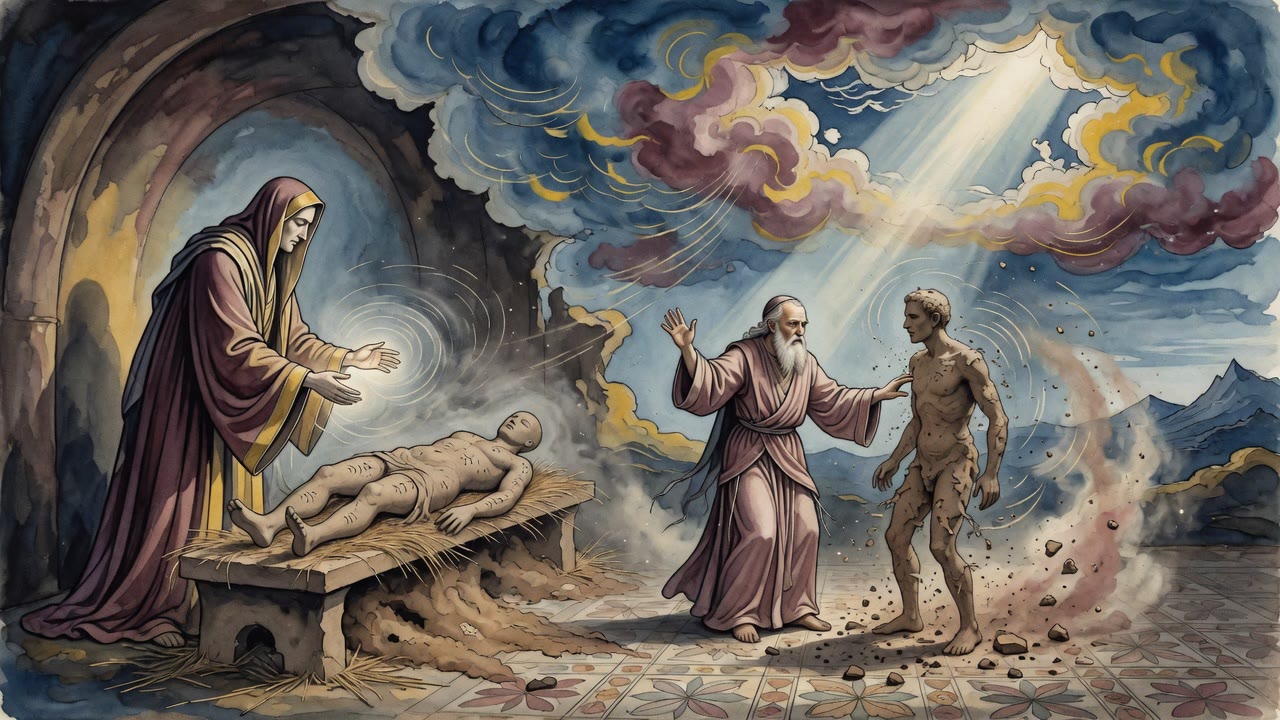
This is where the golem tradition and the creation tradition converge in a way that made later readers uneasy. The Talmud already contained the account of Rava, who had fashioned a man through letter combinations and sent the silent creature to Rabbi Zera, who immediately ordered it back to the dust because it could not speak. And Adam himself had begun as a golem: God's hands shaping clay before the breath was blown in. Ibn Gabirol was working within an established lineage. He had only applied it to a woman.
The Accusation
Someone reported him. The sources are not precise about who or why, but word reached authority that the philosopher kept a woman in his house without a clear account of where she had come from. The assumption, naturally, was that something immoral was happening. He was brought before the relevant official and asked to explain himself.
Ibn Gabirol did not argue. He did not attempt to demonstrate that she was wood and letters rather than flesh. He reached into the relevant arrangement of whatever held her together and undid it. In the presence of the official, the form that had served him disassembled. What stood before them a moment later was carved wood, nothing more. The accusation had no object.
The Knowledge He Had Proven
The tradition that carried his name forward set the moment down not as a scandal but as proof. A man who could create a functioning female form from wood and letter combinations and then deconstruct her on command, without drama, without loss, was demonstrating something specific: that he understood creation at its roots, that he held the knowledge of how things come into being and how that process reverses. It was the same knowledge the ancient mystics said God had offered to anyone who could master the Book of Creation.
Ibn Gabirol's golem-woman sits at a peculiar angle to the better-known tradition of the Maharal's clay giant, made to protect a community under siege. There is no protection here, no crisis being solved. There is only a scholar who understood how creation worked and acted on that understanding, and then dissolved what he had made when the world demanded an account of it.
← All myths