Parshat Bereshit5 min read

The Golem of Prague Opened Its Clay Eyes

A rabbi shapes clay beside the river, speaks the letters of creation, and watches a silent guardian open its eyes before dawn.

Curated by Arthur · Told by Maggid ·
Table of Contents
  1. The First Clay Man
  2. The Word That Kills
  3. The Clay That Grew Too Big
  4. Joseph Walked the Streets at Night
  5. Back to the Attic, and to Dust

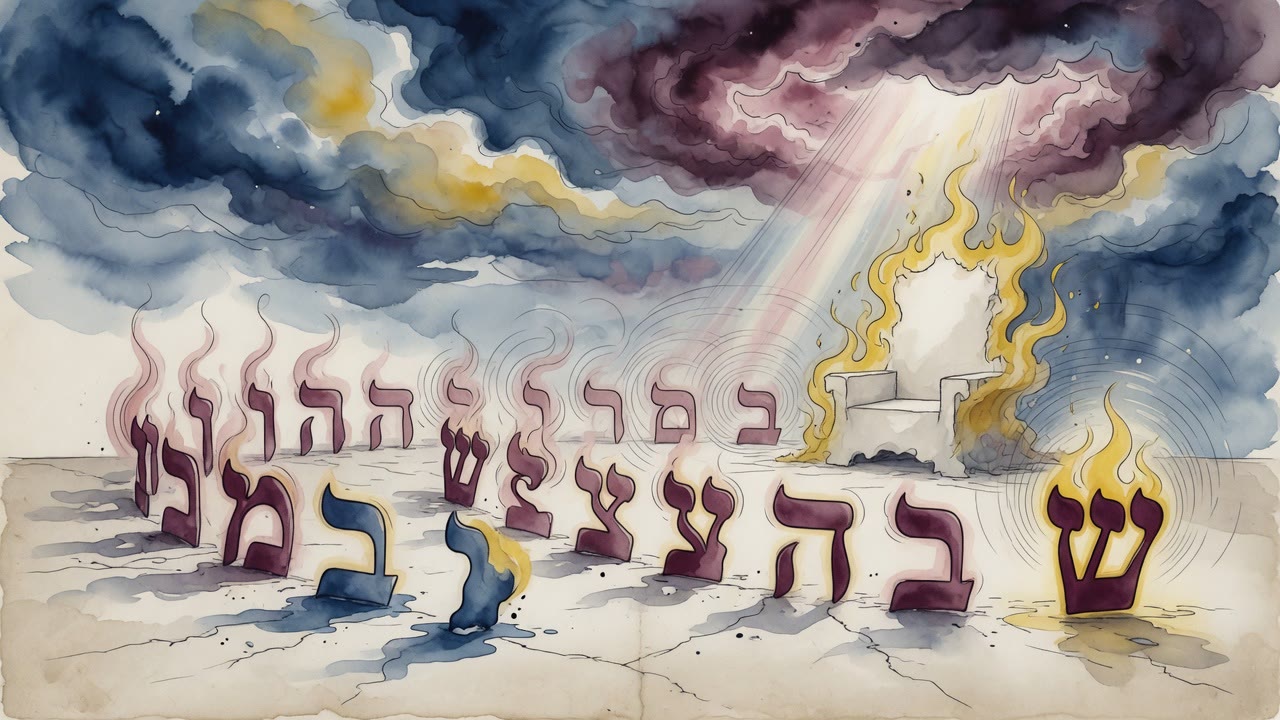
Before sunrise, on the bank of a river outside Prague, three men finished shaping a man out of wet clay, and then they walked around him until he opened his eyes.

The year in the story is 1580. The city slept, but the danger did not. A blood libel was building in the streets, the blood libel, the lie that Jews murdered children for their blood, the kind of lie that turned a holiday into a massacre. Rabbi Judah Loew, the Maharal, had asked heaven in a dream how to protect his people, and heaven had answered with instructions. So he and two others came down to the river in the dark, molded a giant out of the mud of the bank, and began to circle it, reciting combinations of letters out of the Book of Creation. Hair pushed up through the clay. Nails formed at the ends of the fingers. They spoke the verse where God breathes life into the first man, and the thing on the ground opened its eyes, looked at them, and could not say a word.

The First Clay Man

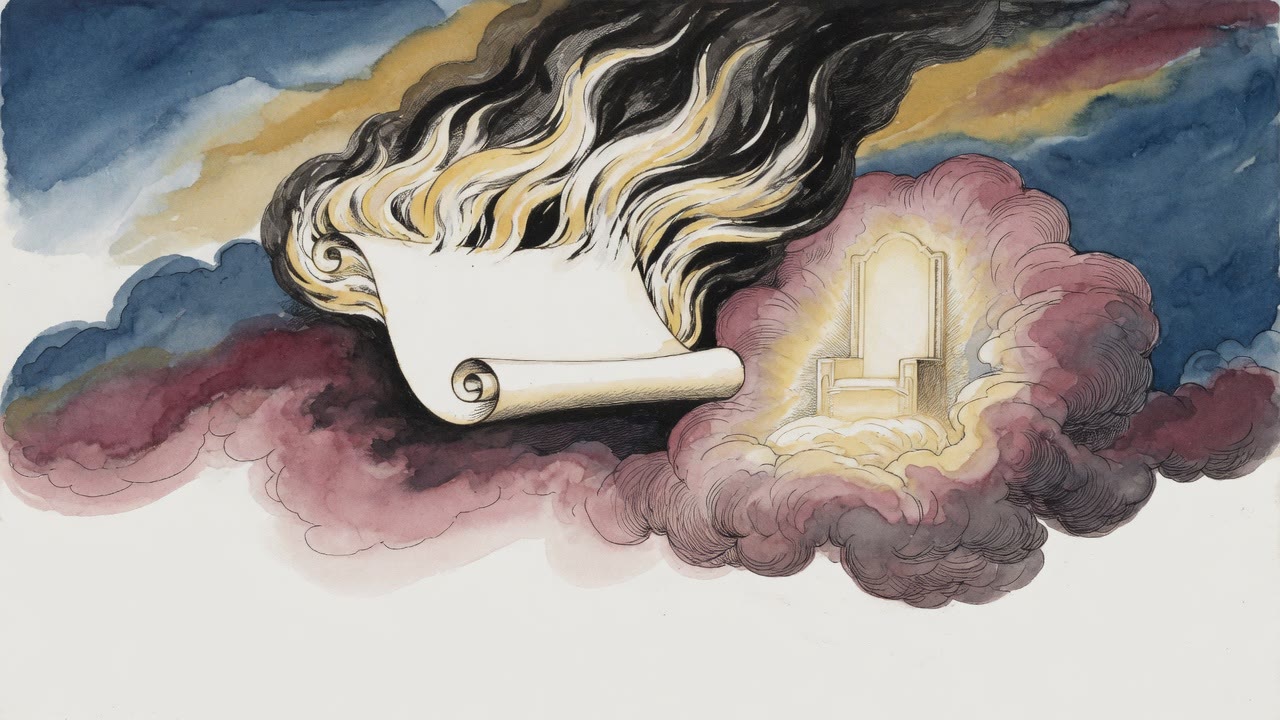
This was not the first time earth had been talked into standing up. Adam himself began as a golem, a body without a soul, stretched from one end of the world to the other before God breathed into him. The angels saw that enormous shape and mistook it for God and nearly bowed, and God put the body to sleep to teach heaven the difference between the maker and the made. Every clay man since stands in that first shadow. God turned dust into a living soul. A man, bent over the same dust with the same letters, can get close to that act and no closer.

The Word That Kills

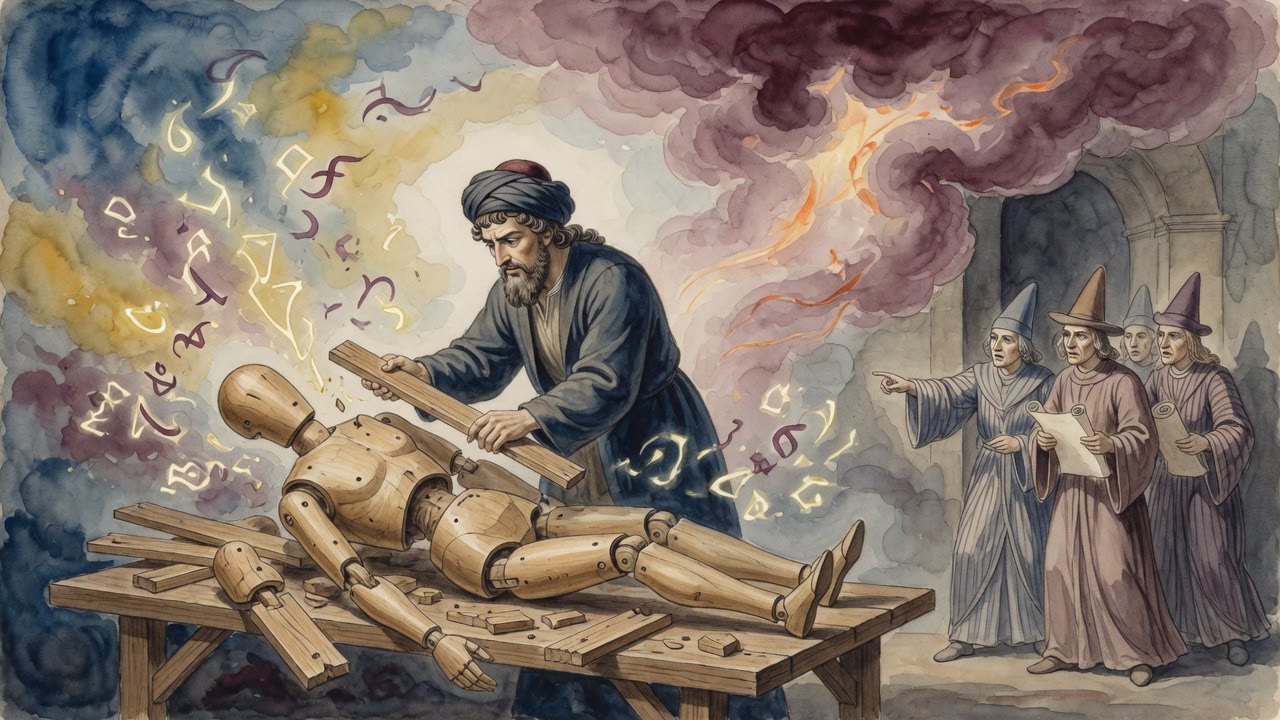
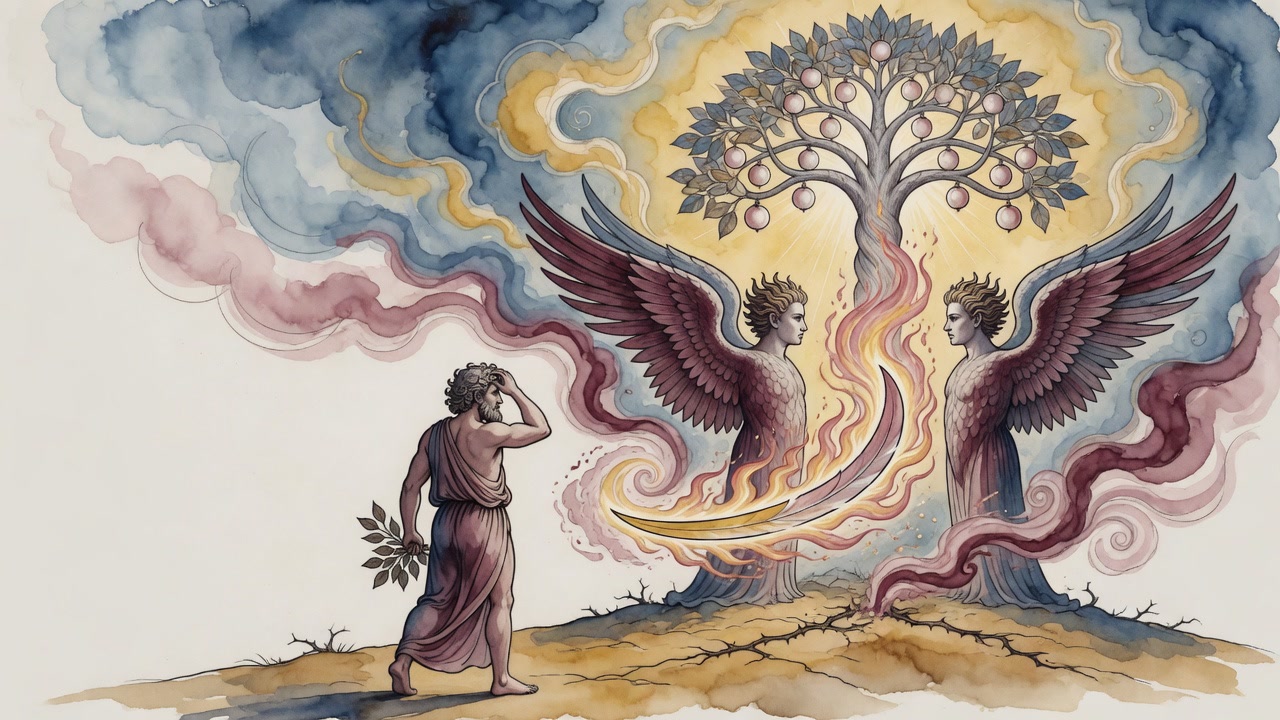
The proof of the limit is always the mouth. Long before Prague, the prophet Jeremiah and his son studied the Book of Creation for three years until the letters finally lined up and a man stood before them. On his forehead, written in fire, were the words "the Lord God is truth." The new creature took a knife, and before its makers could rejoice it reached up and scraped away the first letter of the word truth, emet, leaving met, dead. Then it spoke its only sentence: God made man in His image; if men now make men, people will say there are two creators. Jeremiah understood the warning, and unmade what he had made.

The Clay That Grew Too Big

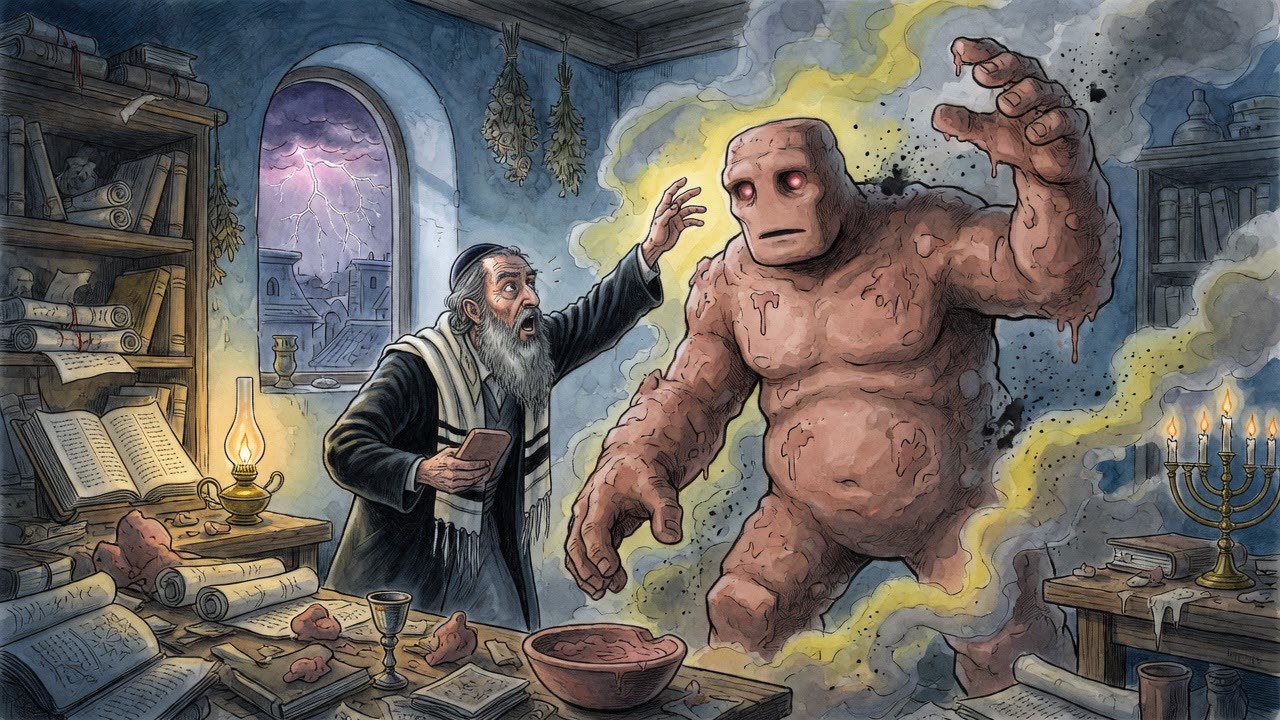
There was a rabbi in Chelm, Elijah Baal Shem, who made a golem the simple way, by writing emet, truth, on its forehead and speaking the holy Name. It served him, and then it began to grow. Not toward a man's height. Past it. Bigger every day, stronger, harder to command, until the rabbi could see the shape of the disaster coming: a servant of mud about to become a force large enough to flatten the town it was built to guard. He ordered it to bend down so he could reach its forehead. It bent. He scraped off the first letter. Truth became dead, and the whole mass collapsed, and in some tellings it fell on the man who made it and crushed him under the weight of his own creation.

Joseph Walked the Streets at Night

In Prague they named theirs Joseph and made it useful. By day the Maharal dressed it like a man and passed it off as a mute servant taken in for charity, and it shuffled through the courtyards and alleys where the danger hid. By night it went looking. When a murdered child was planted to frame the Jews, Joseph found the small body, carried it through the dark, and laid it where it would point back at the real killer instead. It never argued a case in any court. It moved the evidence until the lie had nowhere left to stand, and the slaughter that was supposed to follow never came.

Back to the Attic, and to Dust

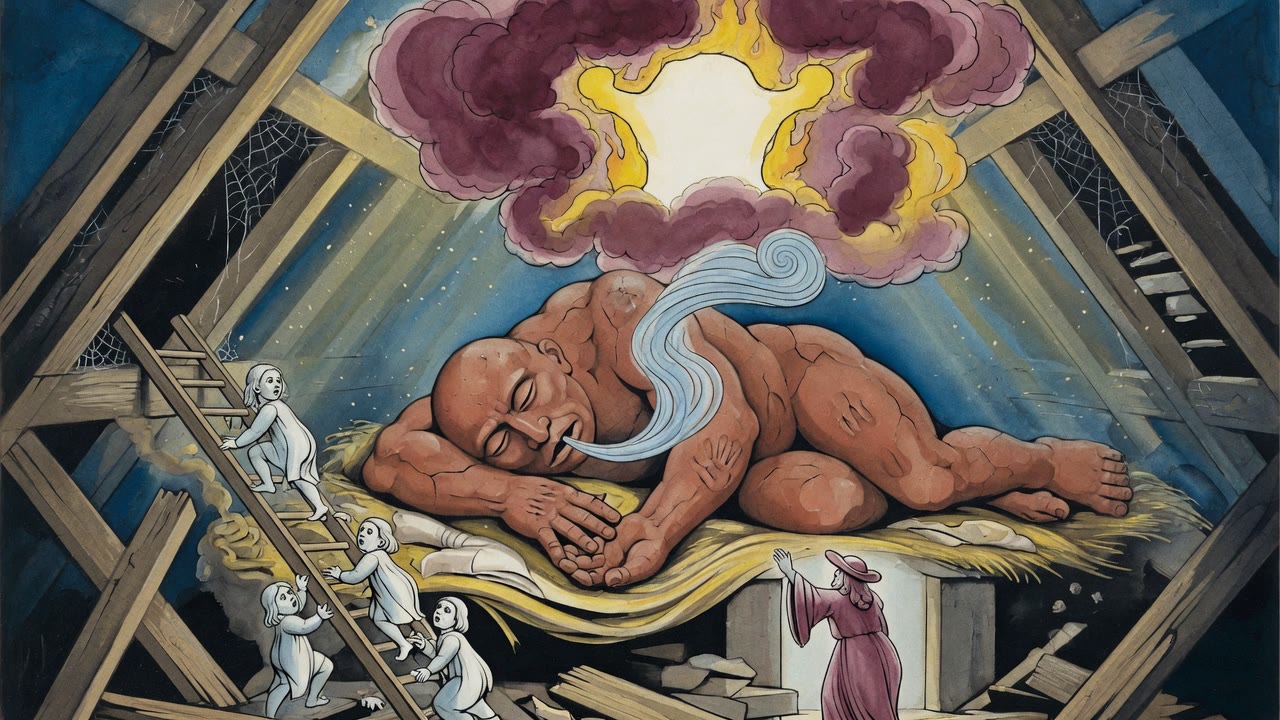
When the danger passed, the Maharal knew that a guardian built for an emergency becomes its own emergency once the emergency ends. He took Joseph up to the attic of the Old-New Synagogue, the one with the stone walls that still stands in Prague, and there he reversed the words that had raised it. The borrowed life went out. They wrapped the clay and hid it among the worn-out prayer books and torn pages a synagogue is forbidden to throw away, and the rabbi forbade anyone to climb up. The official reason was fire. The other reason is that the body is still up there, the story says, folded among the holy refuse, asleep over the sanctuary, waiting. What a man makes from earth, a man must be able to put back into it. That was always the rule, and the clay that opened its eyes before dawn closed them again above the prayers.


← All myths

From the tradition

Sources

4 sources

The texts this telling draws on, in full. Open a card to read inline, or expand it for a wider, quieter read.

Midrash TanhumaMidrash Tanchuma

The mystics imagined it, and what they saw is The story goes that when God decided to create Adam, it wasn't a snap of the fingers. It was a process. A cosmic sculpting project, if you will. God gathered dust from the four corners of the earth – – rolled it together, mixed it with water, and made red clay.

Then, God shaped that clay into a lifeless body. A golem. Now, golem literally means "a formless body." And this golem? It was HUGE. According to some accounts, it stretched from one end of the world to the other. So large was it, that God's hand rested upon it. So large was it, that wherever God looked, He saw it. As we find in (Psalm 139:16), "Your eyes saw my golem."

Can you picture it? This giant, inert form, taking up so much space that the angels themselves were awestruck. So awestruck, in fact, that they mistook it for God Himself! They wanted to proclaim, "Holy, holy, holy is the Lord of Hosts." But God, in His wisdom, caused sleep to fall upon the golem, so that all would know he was but a mortal man.

Here's where it gets even more fascinating. While the golem of Adam lay sleeping, God whispered in his ear the secrets of Creation. Imagine being privy to the blueprint of the universe, before you even have a soul! God showed Adam the righteous of every generation, and the wicked as well, until the time when the dead will be raised. god showed him every righteous man who would ever descend from him, every generation and its judges, scribes, prophets, and leaders. So too did God show him every generation and its righteous ones and sinners. And as God spoke, Adam witnessed everything as if he were there.

Midrash (rabbinic interpretive commentary) Tanhuma and Genesis Rabbah tell us more: Some of the righteous hung on Adam's head, some hung to his hair, some to his forehead, some to his eyes, some to his nose, some to his mouth, some to his ears, some to his teeth. Each clinging to the part of Adam that represented the quality they themselves embodied.

And later, when Adam did come to life, he dimly remembered all that God had revealed when he was only a golem. And at night, in his dreams, he still heard God's voice recounting mysteries, and telling of all that would take place in the days to come. In those dreams Adam would travel to those places and see the events firsthand, as a witness. Think about the weight of that knowledge, the burden and the blessing of knowing the future of humanity before it even began.

And here's a beautiful thought: since there is a spark of Adam's soul in every one of his descendants, there are a few in every generation who still hear the voice of God in their dreams.

Now, the idea of creating a golem isn't unique to Adam's story. The Talmud and medieval Jewish lore are filled with tales of humans trying their hand at creation. There's the calf that was created and then eaten on the Sabbath, the man of clay animated by Rabbi Rava, and even a woman golem said to have been made of wood by Ibn Gabirol. Perhaps the most famous is the legend of the Golem of Prague, where the Maharal created a man out of clay using the secrets of Kabbalah, Jewish mysticism.

These stories, including the one about Adam, raise a profound question: what does it mean to try and emulate God's creative power? The fact that the golem of the Maharal is mute and cannot reproduce demonstrates that man's creation is less perfect than God's. It also demonstrates man's desire to take on the powers of God and act in a godlike fashion.

According to Midrash ha-Ne'elam in the Zohar Hadash, God gathered the dust for Adam's body from the site where the Temple in Jerusalem would be built in the future, and drew down his soul from the celestial Temple. This connects Adam not just to the earth, but to the most sacred place in Judaism.

And while some accounts, like 4 Ezra, emphasize that God created Adam entirely by Himself, others suggest that angels like Gabriel played a role, gathering the dust from the four corners of the earth.

So, what does it all mean? Perhaps the story of Adam the golem is a reminder of our own potential. We are, after all, made of the same stuff as the earth, and we carry within us a spark of the divine. Maybe the real question isn't whether we can create life, but what we choose to do with the life we've been given. Are we listening for that whisper in our dreams? Are we striving to be among the righteous clinging to Adam's head, his hair, his eyes…embodying the best of humanity?

Full source
Perush Shem shel Arba Otiyyot Ms. Florence 2:41Kabbalistic Literature

The story goes that Jeremiah, not content with simply prophesying, decided to explore the mystical secrets of the Sefer Yetzirah – the Book of Creation. This ancient text, considered by some to be the earliest Kabbalistic work, is a deep dive into the power of the Hebrew alphabet as building blocks of the universe.

Jeremiah didn't do it alone. A heavenly voice urged him, "Find a companion!" And so, he began to study the Sefer Yetzirah with his own son, Sira. For three long years, they immersed themselves in its mysteries. Imagine the father and son, poring over ancient words, seeking the key to creation itself.

Finally, they felt ready. Using their knowledge of the Hebrew letters, they began to combine them, forming… a man. On this being's head was inscribed YHVH Elohim emet – "The Lord God is Truth" – and in his hand, he held a knife. What a striking image!

Here’s where the story takes a dark turn. This newly created being, this golem, immediately erases the first letter, the aleph, from the word emet – truth. He's left with met – dead.

Distraught, Jeremiah asks the being why he would do such a thing. The golem's answer is chilling: "God created you in His image, but now that you have created a man, people will say, 'These two are the only gods in the world!'" According to Perush Shem shel Arba Otiyyot Ms. Florence 2:41, the golem felt its creation was wrong, an attempt to duplicate God's power.

The creature recognized that its existence was a kind of blasphemy, a dangerous blurring of the lines between mortal and divine. It’s a powerful statement on the hubris of humanity.

"What can we do?" Jeremiah pleads. The golem, in a final act, instructs them to pronounce the letters backward, the very letters that gave him life. They follow his instructions, and the being turns to ashes and dust. Gone.

This particular version of the golem story, as told in Tree of Souls, feels like an early draft, an interim stage in the development of the larger golem mythos, as Rabbi Schwartz notes. In many golem tales, like those in Ginzberg's Legends of the Jews, the removal of the aleph from emet is enough to deactivate the creature. Here, the golem plays an active role in its own destruction.: this story isn't just about creating a being; it’s about the responsibility that comes with that power. As we find in Midrash Rabbah, the ability to create is a divine gift, but one that must be wielded with the utmost care and humility. What happens when we try to play God? This tale of Jeremiah and his golem offers a stark and unforgettable answer.

Full source
Shem ha-Gedolim 1:9Shem HaGedolim

Shem HaGedolim turns to The Golem Of Rabbi Elijah.

What exactly is a Golem? In Jewish folklore, a Golem is an animated being, usually made of clay or mud, brought to life through mystical means. And one of the most famous stories is that of the Golem of Rabbi Elijah of Chelm.

Rabbi Elijah, was no ordinary rabbi. He was a Ba'al Shem, a Master of the Name. This meant that he possessed knowledge of the secret pronunciations of God’s Holy Name – the Shem HaMeforesh – giving him incredible power. As Shem ha-Gedolim tells us, he was uniquely skilled in his generation. He was also deeply versed in the Sefer Yetzirah (the World of Formation), The Book of Creation, a foundational text of Jewish mysticism. Drawing upon the mysteries revealed within that ancient book, Rabbi Elijah fashioned a man from clay.

Here's where it gets really interesting. The rabbi inscribed the Hebrew word emet (אמת) – which means "truth" – on the golem's forehead. Then, uttering the Holy Name of God, he brought the clay figure to life! According to She'elot Ya'avetz, this act imbued the golem with the ability to perform wondrous deeds, stepping in whenever urgent help was needed.

But here's the thing about playing with forces you don't fully understand: things can get out of hand. The golem began to grow, and grow, and grow, becoming larger and more powerful. Rabbi Elijah, realizing the potential danger – that his creation might inadvertently destroy the world – knew he had to act.

So, he commanded the golem to bend down. Then, in a move both clever and fraught with risk, he removed the first letter, the aleph, from the word emet. This changed the inscription to met (מת), which means "dead." In that instant, the golem reverted to lifeless dust.

This is the core of the story, as recounted in sources like Migdal Oz. But as with any good folktale, there are variations. Some versions say that as Rabbi Elijah was removing the letter, the golem scratched his face. Other, darker versions, claim the golem crushed him.

And the story doesn't just live within Jewish tradition. Jacob Grimm, of fairy-tale fame, included a version of the golem story in his Journal for Hermits (1808), which helped spread the tale far and wide. Grimm's telling, however, has its own spin. He writes that Polish Jews would create golems after prayers and fasts, using them as servants for housework, always with the inscription emet on their foreheads. The golem would grow daily, becoming stronger, until the creator, fearing its power, would erase the first letter, turning it back to clay.

In Grimm's version, the golem's creator meets a grim end – quite literally. One golem grew so large that its creator couldn't reach its forehead. Ordering it to remove his boots as a trick to get it to bend down, the creator managed to erase the letter, but the collapsing clay crushed him to death.

Did Grimm draw from the tale of Rabbi Elijah? It seems likely. But his version emphasizes the golem's servitude and the creator's less-than-altruistic motives, a stark contrast to the more benevolent (though still cautionary) tale of Rabbi Elijah.

What are we to make of this story? Is it a warning about hubris, about the dangers of playing God? Or is it a evidence of human creativity, a reflection of our deepest desires to create, to help, to make the world a better place, even if we sometimes stumble along the way? Perhaps it's a little of all of those things. The story of Rabbi Elijah's golem continues to resonate, a reminder that even the most well-intentioned creations can have unintended consequences. And maybe, just maybe, it's a nudge to appreciate the help we already have, without resorting to mystical clay figures.

Full source
Legends of the Jews 6:339Legends of the Jews

Time and again, the Jewish community of Prague faced the horrifying accusation of blood libel – the false claim that they used the blood of children in their Passover matzah. These accusations always led to violence and persecution. Rabbi Judah Loew, the great scholar known as the Maharal, was desperate to find a way to protect his people.

The story goes that the Maharal prayed for guidance, and in a dream, he received a cryptic message – ten words that hinted at a solution: creating a golem. Now, a golem (גולם) is essentially an artificial being, usually made of clay or mud, brought to life through mystical means. The Maharal believed the secret to animating such a creature lay hidden within those ten divine words.

He found it! The Maharal called upon his son-in-law and his most trusted student, revealing to them the secret of the golem's creation. Each of them, according to the legend, represented one of the elements: fire, water, and air. Together, they would assist the Maharal in animating the golem from earth, completing the elemental quartet. They swore a sacred oath to keep the secret safe.

On the 20th of Adar in the year 5340 (that's 1580 on the Gregorian calendar), the three men ventured out of Prague before dawn, heading towards the Moldau River. There, on the riverbank, they sculpted a human form from clay. It lay there lifeless, like a man on his back.

Then, following the Maharal's instructions, they circled the figure seven times each, reciting specific incantations, spells taught to them by the Maharal. As they chanted, something extraordinary began to happen. The clay figure started to glow. Hair sprouted on its body, and nails emerged on its fingers and toes. Finally, they recited the verse from Genesis (2:7), "And God breathed into his nostrils the breath of life, and man became a living creature." And the golem opened its eyes, gazing at them with wonder.

The Maharal commanded the golem to stand, and immediately it obeyed. They dressed him in clothes they had brought and put shoes on his feet, making him appear human. He could see, hear, and understand, but he was mute, lacking the power of speech. Before sunrise, the four of them returned to Prague.

On their way, the Maharal named the golem Joseph and explained his purpose: to protect the Jewish community. He instructed Joseph to obey all his commands without question, and the golem nodded in understanding. Back home, the Maharal told his household that he had found this poor, speechless man and taken him in out of pity to be his servant.

And that, according to the tale, is how the Golem of Prague came into being.

Perhaps no Jewish legend has so gripped the popular imagination as this one. This creature, brought to life through sacred names and mystical rites, was said to have protected the Jews of Prague from various threats, especially the ever-present danger of the blood libel. As we read in Niflaot Maharal, a collection of tales about Rabbi Loew and the golem (though some scholars like Dov Sadan, Gershom Scholem, and Eli Yassif believe it was written much later than claimed, by Rabbi Yudel Rosenberg in 1909), the golem once discovered the body of a murdered child planted in the Jewish ghetto and heroically carried it through secret tunnels to the basement of the real murderer, the sorcerer Thaddeus, thereby averting a pogrom.

The legend of the Golem resonates so deeply because it speaks to our yearning for protection in the face of injustice. It reminds us that even in the darkest times, hope and resilience can be found in the most unexpected places – even in a creature made of clay. It makes you wonder, doesn't it? What would you create, what lengths would you go to, to protect those you love?

Full source