The Golem Sleeps in the Attic Until the Messiah Comes
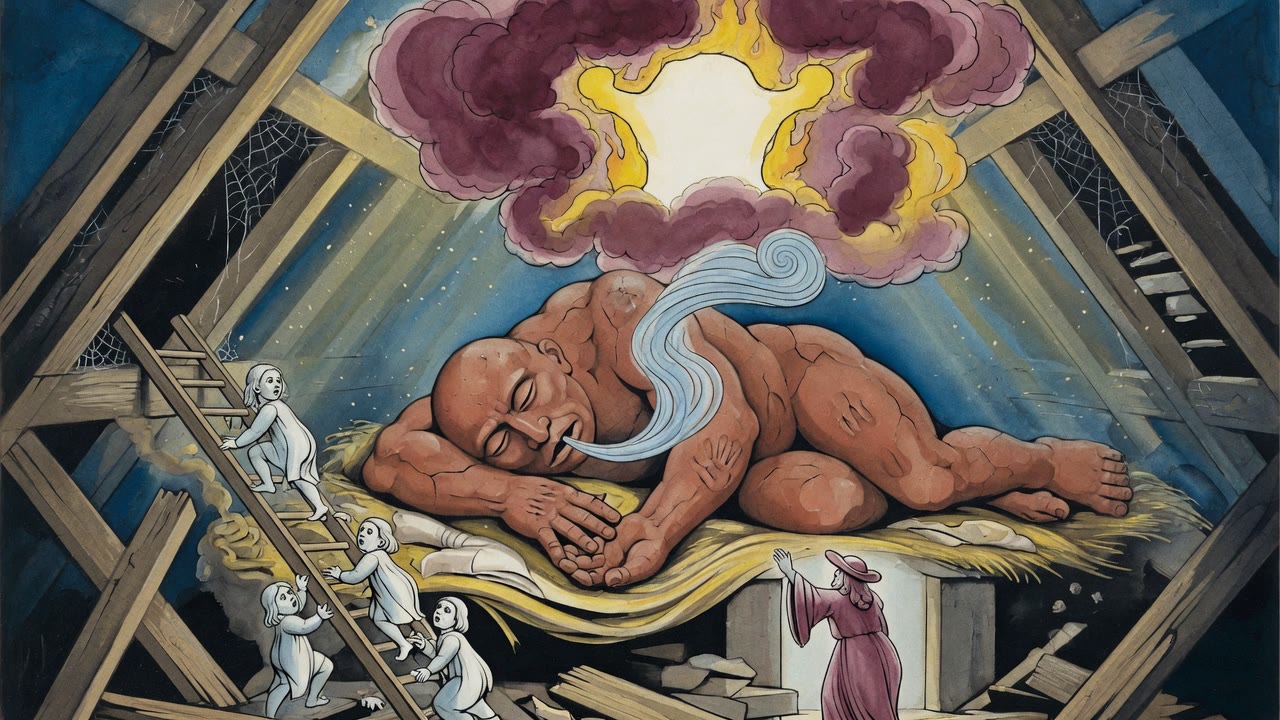
The Maharal put the clay body in the synagogue attic with a single promise: wait here until the Messiah. Children who climbed up to look could not come down.
Table of Contents
 Click for full size
The Emperor's Decree
When the emperor's protection came, Rabbi Judah Loew knew his golem's season was over. The decree had gone out: the blood libel accusations were now officially prohibited within the empire's jurisdiction. The community would have legal standing against them. Joseph, the clay man who walked the night streets of Prague, was no longer needed as a sentinel.
What do you do with a being you have made?
The question had only one precedent that the Maharal could find useful: Rava's golem, the silent man that Rabbi Zera had ordered dissolved back into dust because it could not speak. Return it to what it was. That was the rule. But the Maharal did not follow it entirely.
Two in the Morning, Three Men in the Attic
He summoned his son-in-law and his most trusted student at two in the morning, the hour when Prague slept deepest. The three men who had animated the clay together at the Moldau now climbed the stairs of the Alt-Neu Synagogue to the attic where Joseph lay dormant on a wooden platform.
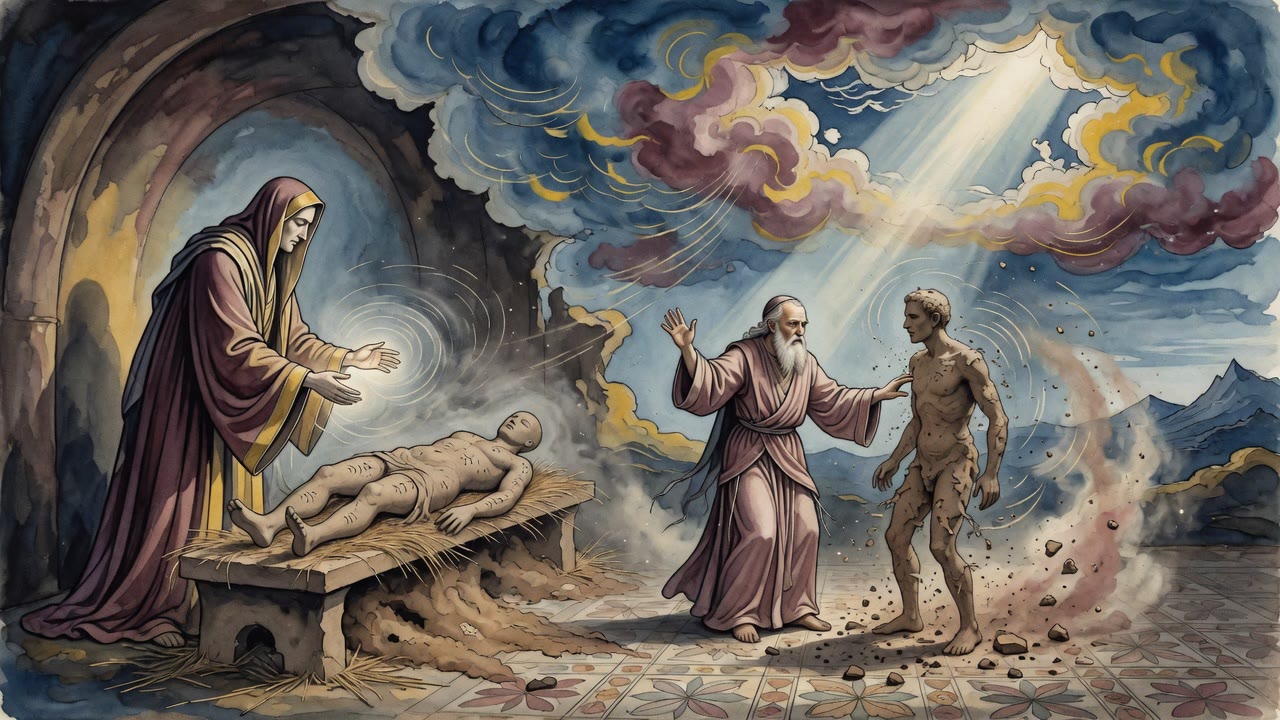
They circled him seven times. This time the direction was reversed: right to left instead of left to right, the animation unwinding in the same order it had been wound. As they circled, the glow that had spread through the clay when life entered it subsided. The breathing stopped. The color drained from the face. What lay on the platform when they finished was not a man but a mass of clay shaped like a man, the parchment bearing the Name removed from its mouth, the form present but the animating force gone.
The Maharal stood at the head of the clay form for a long moment. Then he covered it with worn prayer shawls and old manuscripts, the ordinary debris of a synagogue attic, until nothing was visible.
The Promise He Spoke Aloud
Before they descended, Rabbi Loew spoke to the silent pile of clay. No account explains why he spoke rather than simply leaving. Perhaps he had been with the creature long enough that silence felt like abandonment. Perhaps the golem, though not alive in any normal sense, had been something, had served something, and deserved a word.
He said: you will lie here until the time of the Messiah.
Not: you are finished. Not: your service is complete. He gave it a future. He placed the inert clay inside a timeline that had not yet closed, a waiting that was not abandonment but postponement. When the Messiah came, the golem's season would come again.
What the Children Found
The generations that came after heard the story and some of them climbed. Children who could not resist a forbidden thing, who went up the attic stairs when the adults were not watching to see whether the clay giant was really there. The legends that circulated in Prague and later in Israel said that the children who made it to the attic could not come back down. Something happened up there, in the dark with the prayer shawls and the old manuscripts and the shaped clay lying under all of it. The children who climbed stopped being able to descend. They had to be retrieved. After enough retrievals, the staircase to the attic was sealed.
The clay still waits. The synagogue still stands, the oldest in Prague, the building that survived everything the centuries sent against it. The attic is still closed. Nobody has gone to confirm what is or is not up there. Nobody, the legend implies, is quite ready to find out.
← All myths