Sodom Had More Gold Than Any City and That Was the Problem
A girl carried bread outside the wall. They smeared her with honey and left her for the bees. Abraham still asked for ten names.
Table of Contents
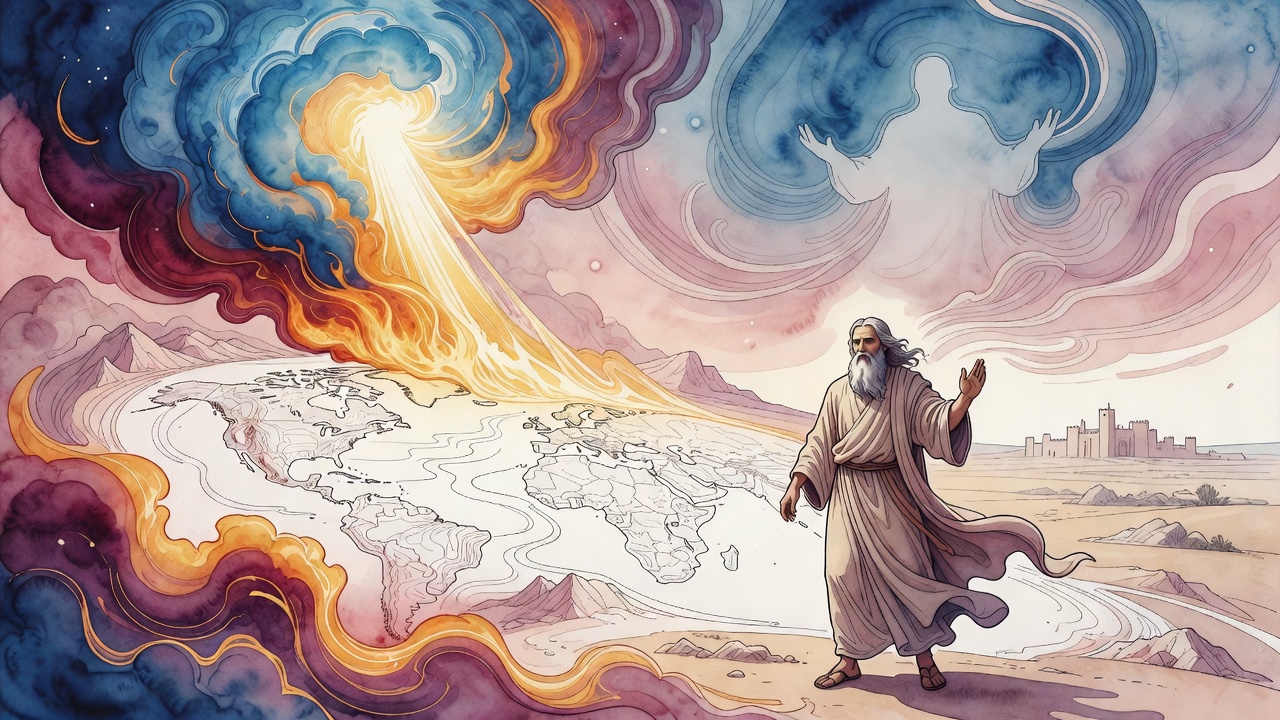
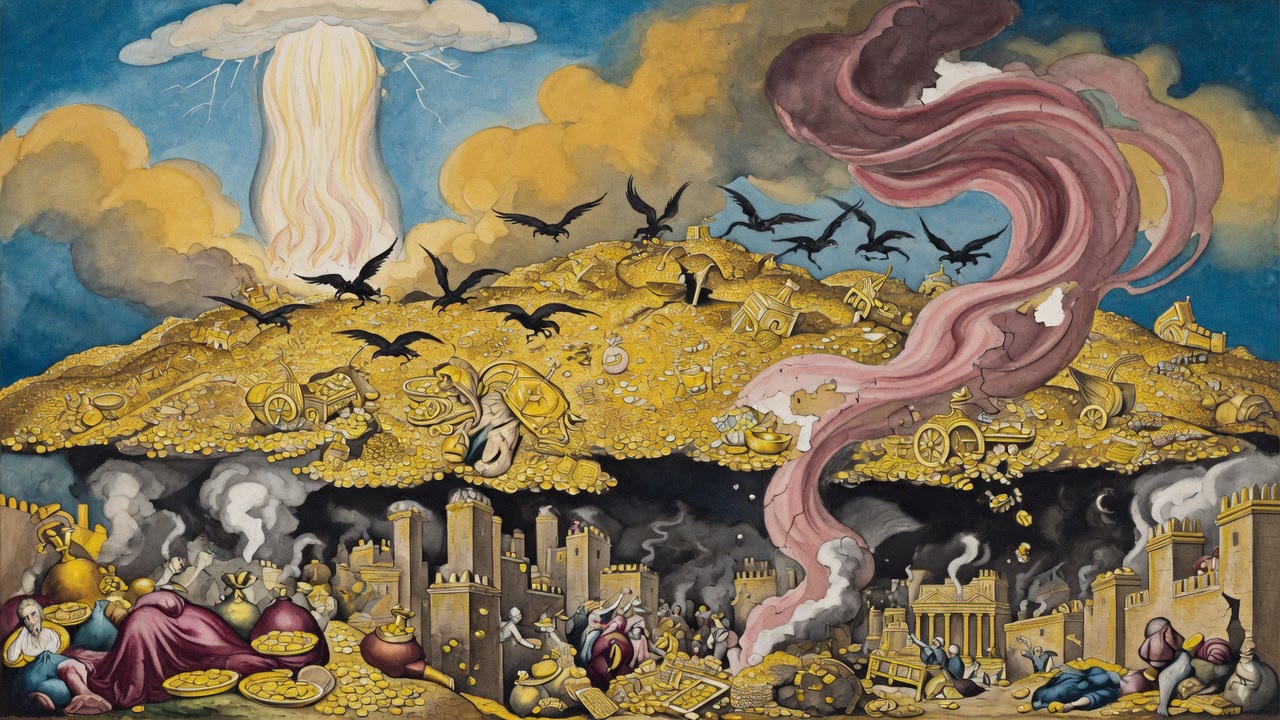
Sodom sat on bread that rose without a plow. Sapphires lay in the dirt. Springs ran. Trade roads poured more gold into a city that already had more gold than any city in the world. The trees grew so thick a buzzard turning overhead could not see the ground, and a buzzard can spot food from eighteen mil away.
 Click for full size
God granted that quiet. No famine came to interrupt it. No army knocked. Abundance sat on the valley like a lid, and under the lid the city learned how to keep a hand closed.
A Land Too Rich to See the Ground
Bread came up without the grinding labor that marked every other field. The earth below held sapphires. The canopy defeated even a bird of prey that can read a carcass from a distance other eyes cannot. "A land from which bread emerges, a source of sapphires, a path unknown by bird of prey" (Job 28:5-7). Sodom sat atop that land, and God quieted the world around it. "When He quiets, who can condemn?" (Job 34:29).
What do people become when nothing requires effort, when abundance is automatic, when there is no friction between desire and satisfaction? Sodom became a place that treated the stranger as prey and called the treatment law.
Generosity Made a Crime
Their answer to plenty was to make sharing it illegal. A stranger who entered the city could not receive food. Anyone who gave bread to a poor person was burned. What the land gave freely, the city refused to distribute. The earth opened its hand. The people closed theirs around it and built a legal code to keep it shut.
A girl carried bread outside the wall anyway. They caught her. They smeared her with honey and left her for the bees. She died in the open, sweet and stung, for the crime of an open hand in a city that had more than it could eat.
Abraham Tests the Count
Abraham knew the file was thin. When God told him what was coming for Sodom, he began to speak in a way that revealed both of them. He reminded God that he himself had been rescued from Amraphel and from Nimrod only by mercy. He was not owed this hearing. He stood before the One who had pulled him out of that fire and that war, with no claim he could name that made him deserving of an answer. He asked anyway.
He was not arguing that Sodom deserved mercy on the basis of its majority. He was testing whether a remnant of the righteous could serve as a basis for the whole. Fifty. If fifty righteous were found, would the Judge of all the earth sweep them away with the city?
God accepted the logic.
The Descending Count
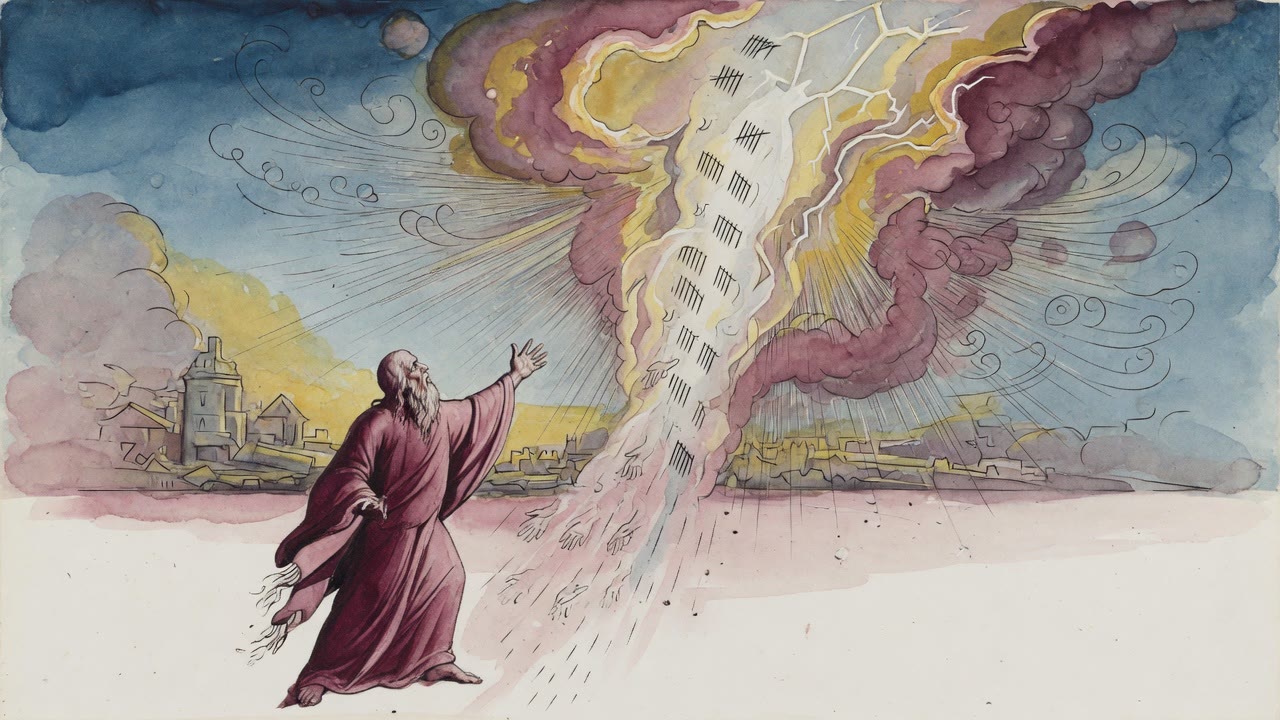
Forty-five. Forty. Thirty. Twenty. Ten. At each stage God accepted the logic, and at each stage Abraham lowered the number again, pressing the count downward toward the floor of what mercy could justify. He asked about Zoar, the smallest of the five cities, hoping the runt might be spared if the others were past help. God said He would not destroy it if forty-five were found. Abraham kept coming down.
Below ten righteous people, the logic did not hold. Sodom had produced wickedness so systematic that even ten could not be found inside the city the land itself had fed without asking anything in return. The buzzard could not see the ground. Heaven could not find ten names.
Fire on a Full Table
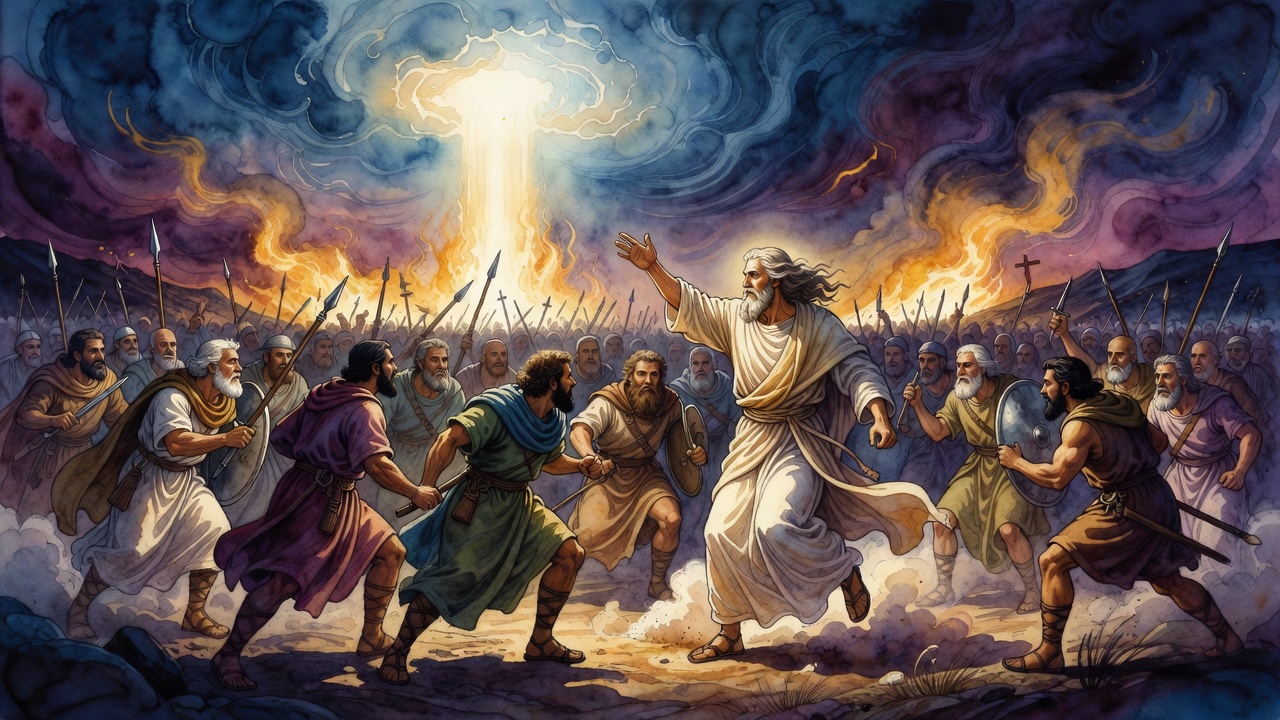
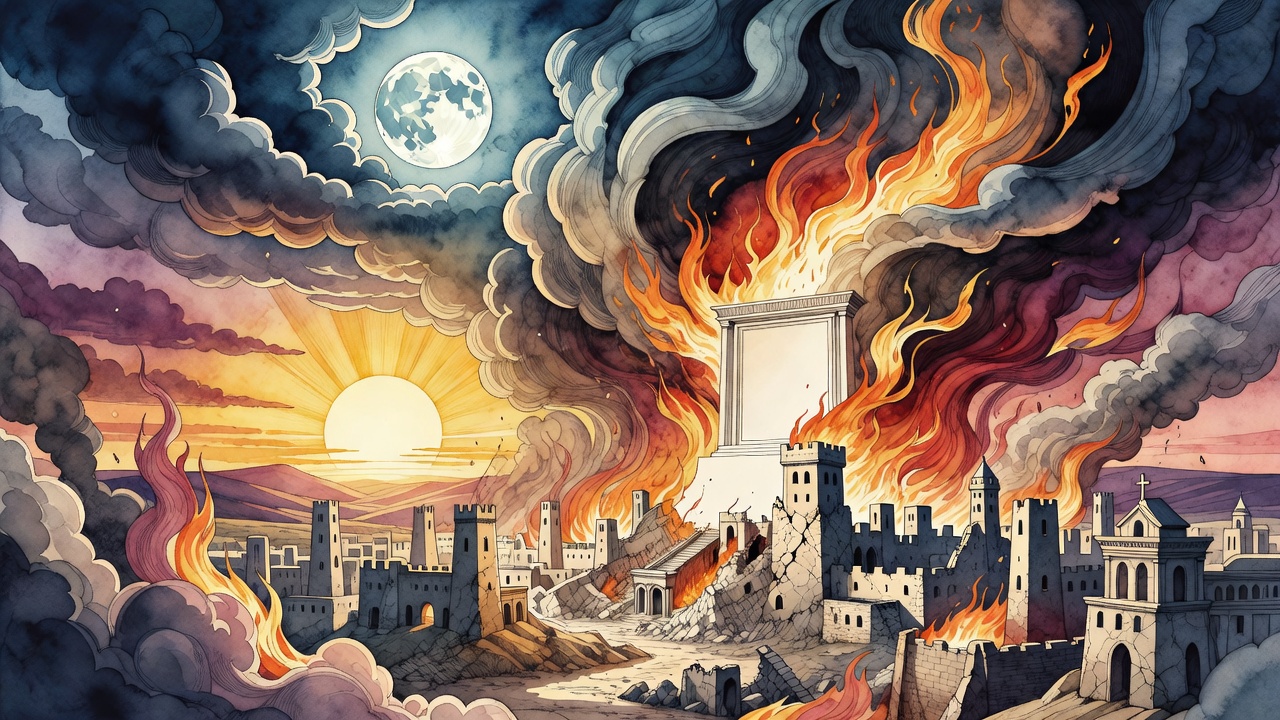
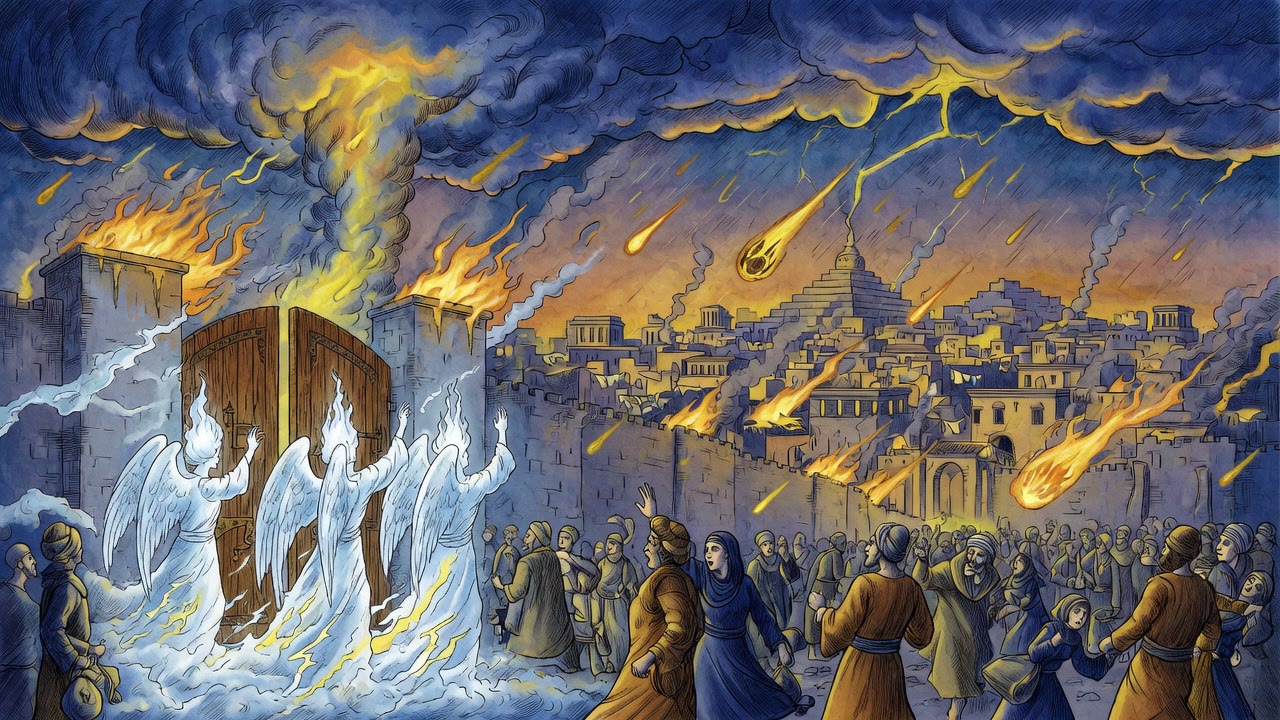
The Lord rained brimstone and fire on Sodom (Genesis 19:24). The trees that had blinded the buzzard burned. The gold did not buy an hour. The springs did not put it out. A city that had made bread a crime learned what a closed hand looks like from the other side of the sky.
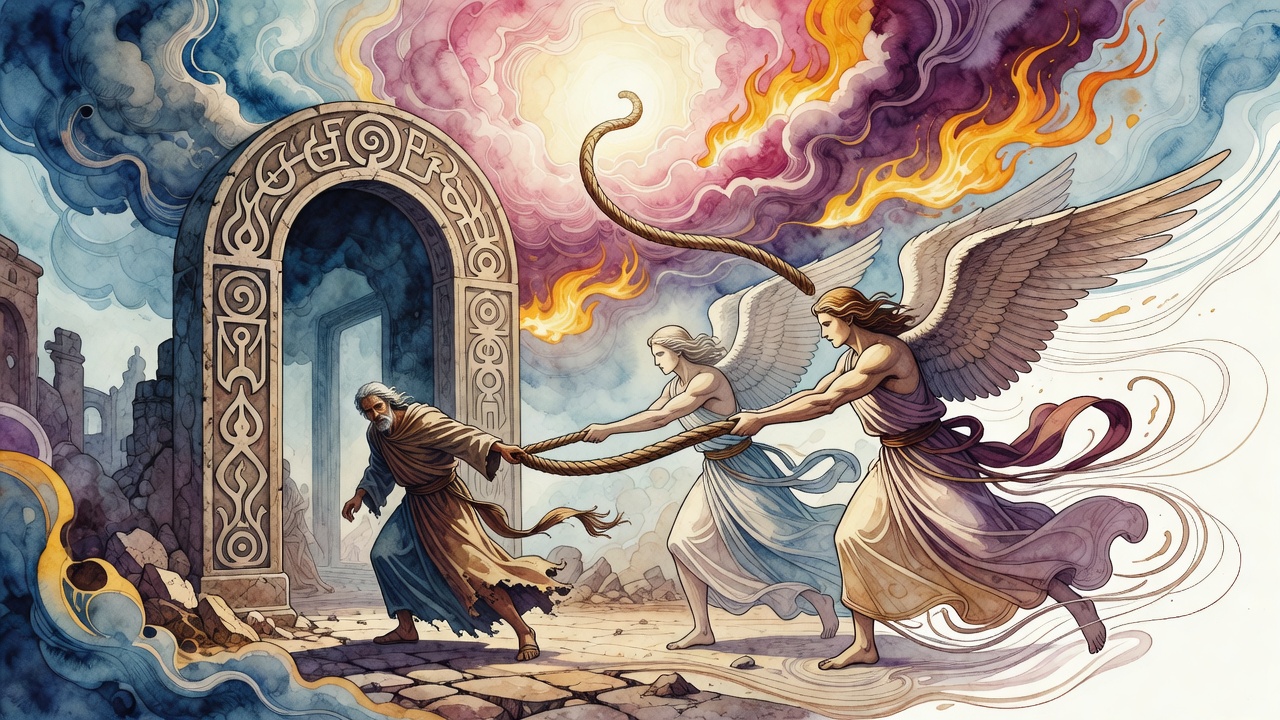
Abraham had asked for ten. The silence after ten was the verdict. He turned back toward his tents with the count still in his mouth and no names to hang it on. Lot would be pulled out. The city would not. The land that had given bread without labor took fire without rain, and the canopy that had hidden the ground from every bird hid nothing from the Judge who had, for a long time, been quiet.
← All myths