Samael Was Woven Into the Music of Torah at the Dawn of Creation
Samael was not just a tempter. The Kabbalists found him embedded in the cantillation marks of Torah itself, present before any human being existed.
Table of Contents
 Click for full size
The Cantillation Marks That Carry His Signature
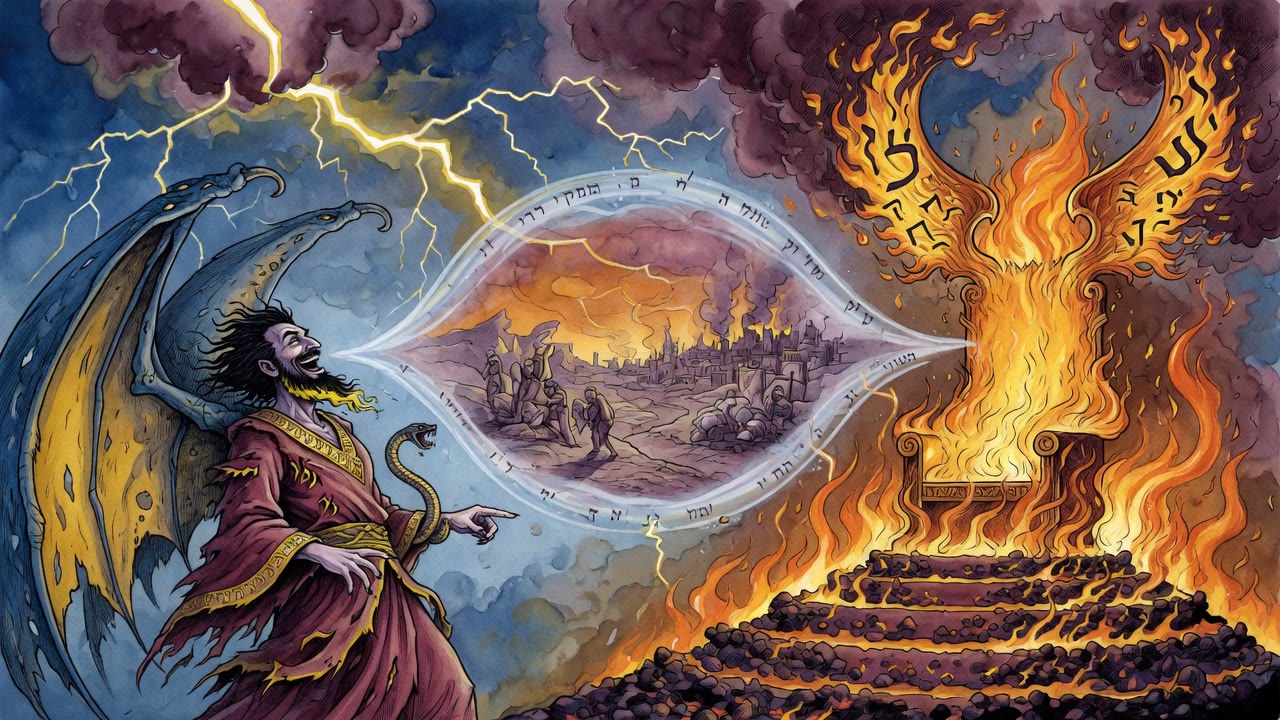
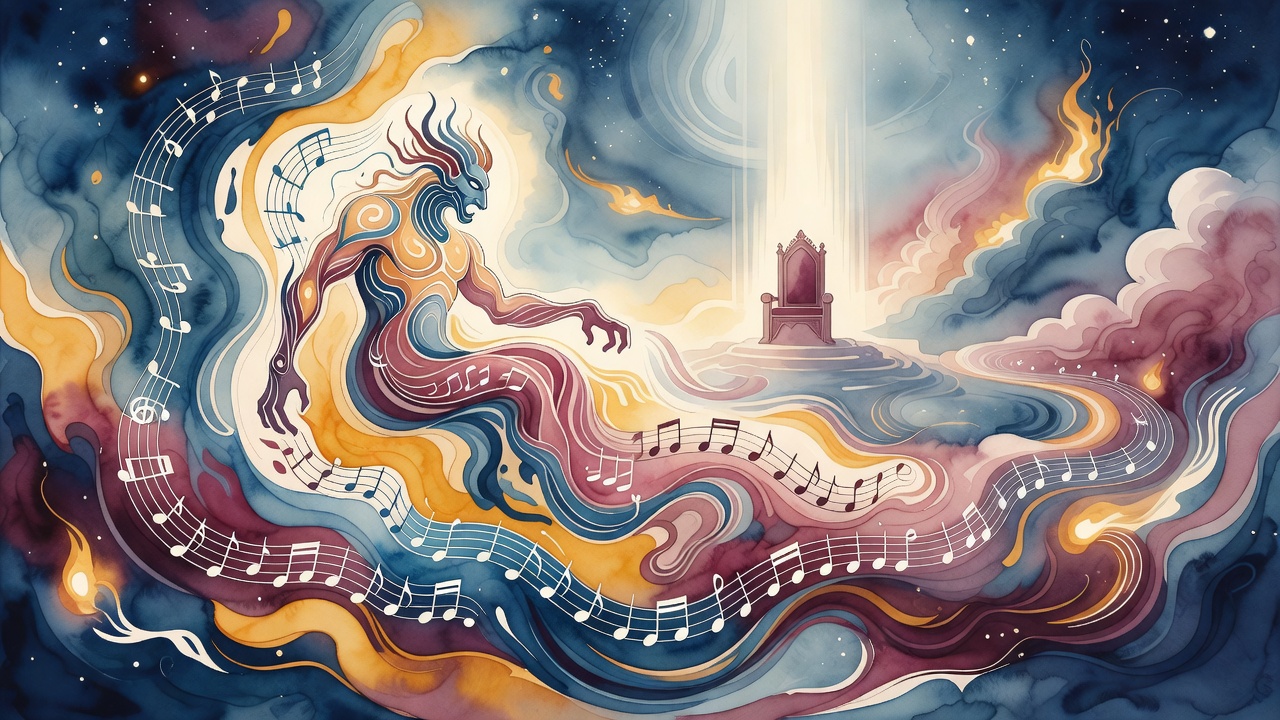
Four specific cantillation notes in the Torah, shophar holekh, revi'a, shnei grishin, and shalshelet, are signatures of Samael's presence at the dawn of creation. The Kabbalists were not speaking metaphorically. According to Tikkunei Zohar 97, composed in the late thirteenth century in the Zoharic circle of Castile, Spain, the music you hear when Torah is chanted carries the memory of a war fought before any human being existed. The marks beneath and above the letters are not just pronunciation guides. They are a record of what was present when creation was made.
Samael is not, in this tradition, an enemy of God. He is sar ha-ma'vet, the prince of death, an angel who administers divine judgment, prosecutor and accuser, the force that governs the space between holiness and its absence. The Kabbalistic tradition describes him as the partner of the Shekhinah's shadow, not opposing the divine presence but defining its boundary the way darkness defines light. You cannot have one without the other. You cannot have a boundary without something inside it.
The Moon That Lost Its Light
Tikkunei Zohar 48 pushes this further. The moon and the sun are not just astronomical bodies, they are also the female partners of Samael and his adversary, and when Isaiah writes that the moon shall be humiliated and the sun ashamed, the text reads this as cosmic consequence. Because Samael failed to fear the Holy One, his partner lost her light. The diminishing of the moon, that ancient rabbinic puzzle of why the two great lights became unequal after creation, is, in the Zoharic reading, a record of Samael's insubordination imprinted on the sky. Every new moon rising smaller than the sun is evidence of what happened in the time before time.
The Soul He Could Not Take
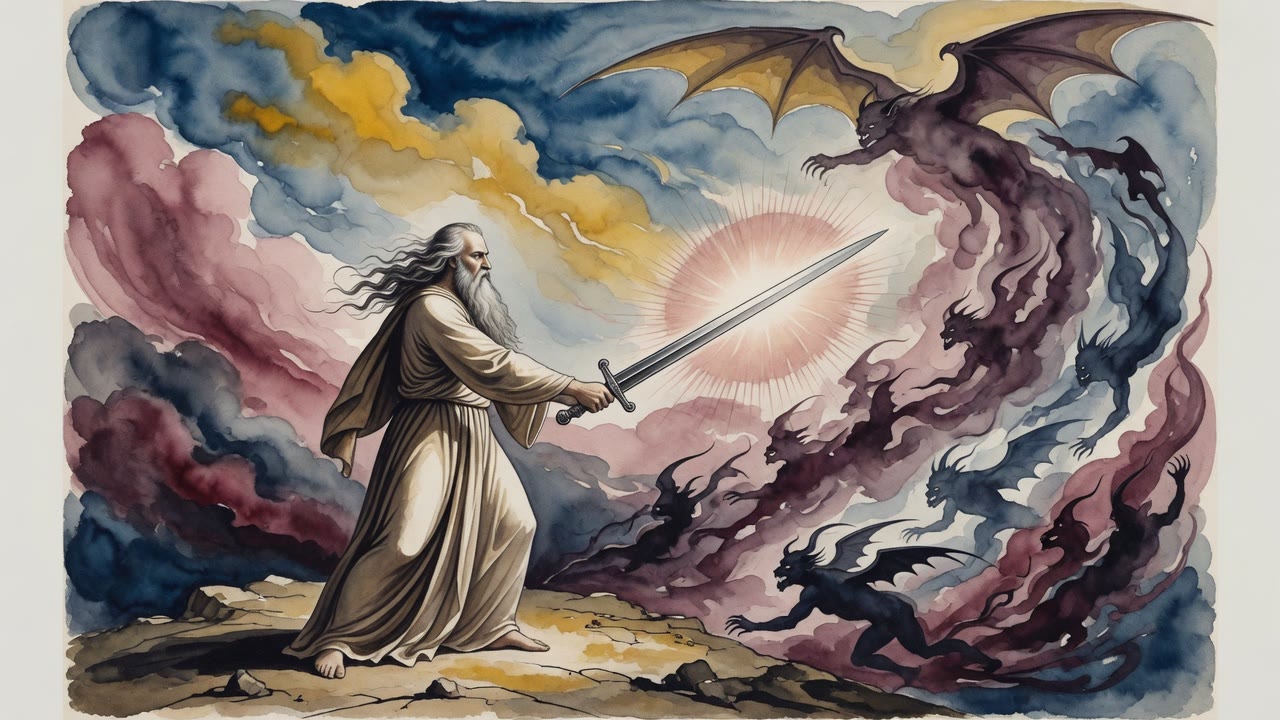
And then there is the story of Moses's death, preserved in Ginzberg's Legends of the Jews and drawn from a web of earlier midrashic sources. At the end of Moses's life, Samael comes to claim his soul. He arrives with force, with authority, the Angel of Death does not make house calls without divine commission. But standing at the threshold of Moses's presence, he loses his nerve. Something in the face of the man who argued with God, who climbed Sinai and descended with fire, stops Samael cold.
The Midrash does not say Moses was more powerful. It says the light in Moses's face was unbearable. Samael, who had been present at creation, who had woven himself into the cantillation marks of the Torah Moses carried, could not look at the man who had lived inside those words for forty years. There is a thread the Kabbalists pulled for centuries: if Samael is embedded in creation, and Moses mastered creation's text, then the confrontation at Mount Nebo was not just a death scene. It was a reckoning. The force that poisoned the first dawn met the human being who had transformed that music into something it could no longer control.
Part of the Architecture
Another passage in Tikkunei Zohar 47, attributed to Elijah the prophet speaking as a divine revealer, connects Samael to the liminal hour called havdalah, the moment at the end of Shabbat and festivals when the sacred withdraws and the ordinary rushes back in. In that gap, the tradition says, Samael surges forward. Not because God vacates, but because the structure of creation includes that surge. Samael is not a flaw in the design. He is part of the architecture.
That is what makes the story of Moses so devastating. The man who parted the sea, who spoke face-to-face with God on Sinai, who held the Torah before any people were ready to receive it, that man, at the end, could not be taken by the being woven into the Torah's own music. Samael had to back down. The reason he backed down was not power but luminosity: Moses shone with the light of what he had learned.
Why He Is Necessary
The Zohar is full of architectures like this, structures that make Samael essential rather than evil, necessary rather than opposed. Evil in this framework is not a foreign invasion. It is the shadow cast by everything that has weight. Samael casts the shadow of divine judgment. Remove him and you remove the possibility of consequence. Remove consequence and you remove meaning.
Moses, dying on Mount Nebo, was not simply a hero facing death. He was creation looking at the force it had always carried inside itself, and finding that the light was stronger. That Samael backed away is not a small detail in the tradition. It is the answer to the question the Tikkunei Zohar asks across a dozen passages: what is the limit of Samael's authority? The answer is this: wherever the Torah has been fully lived, Samael cannot collect the soul of the man who mastered it.
← All myths