Moses Had One Hour Left to Live and Spent It Arguing
A voice from heaven said Moses had one hour remaining. He asked to live as a bird, as a beast, anything that could cross the Jordan. God refused.
Table of Contents
 Click for full size
One Hour
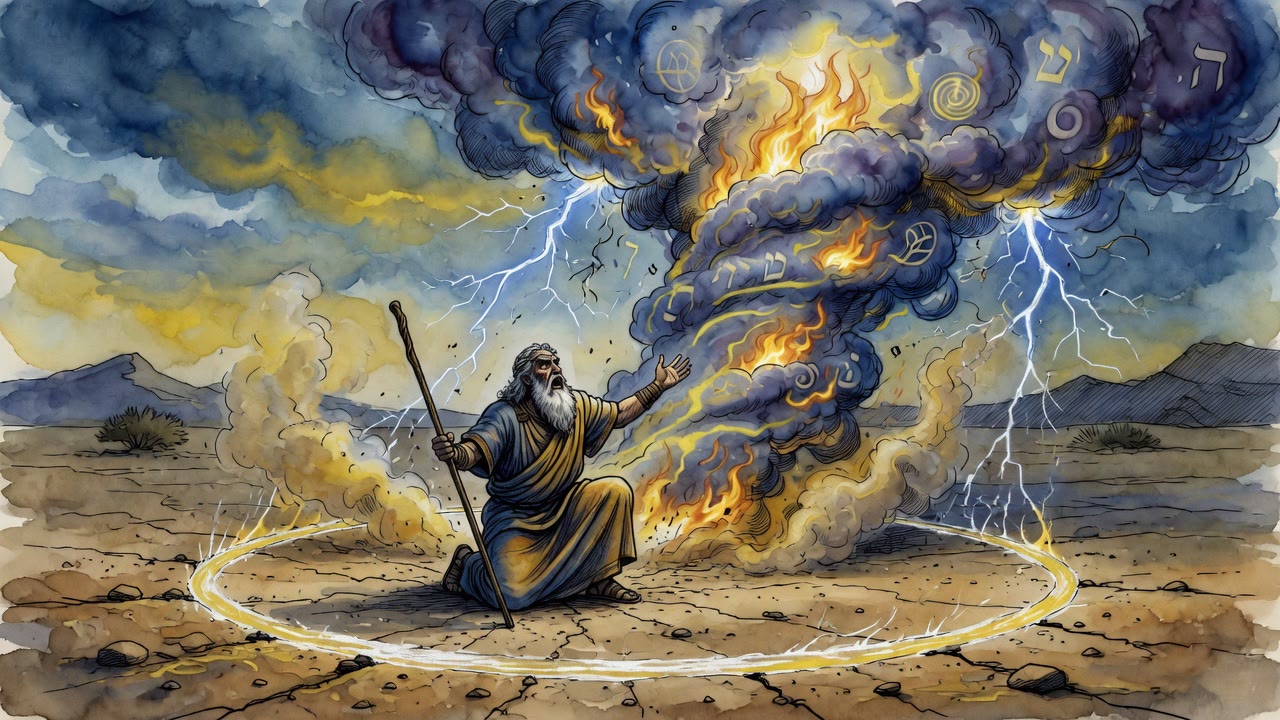
A voice came from heaven and said: "Moses, you have one hour left to live."
Moses did not accept it quietly. He had never accepted anything quietly when he thought there was still an argument to be made, and he thought there was still an argument to be made.
The Midrash preserves a version of Moses's end that runs alongside the peaceful one, the man on Nebo who sees the land, blesses the twelve tribes, and dies with God's kiss on his lips. Both versions are true, and together they describe a man who argued until the arguing became impossible and then accepted his death in the manner in which he had lived his life: fully, precisely, with a kind of dignity that did not require pretending the outcome was acceptable.
The Final Negotiation
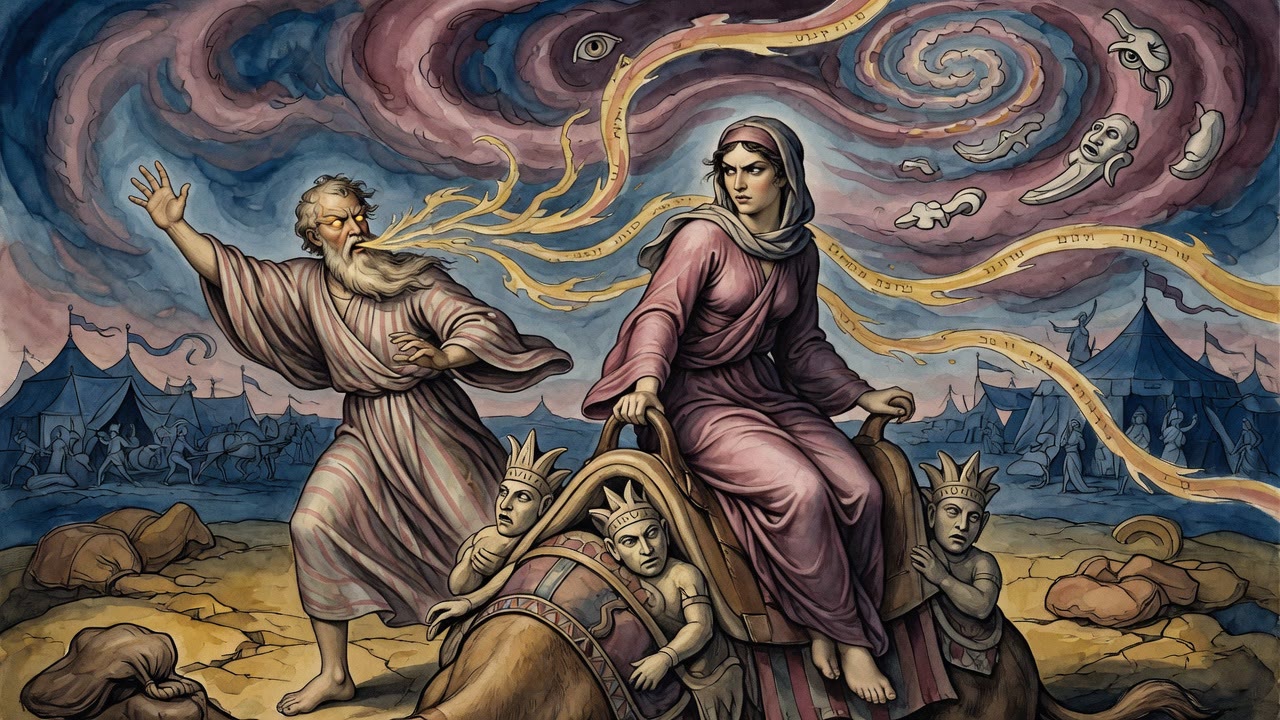
The Legends of the Jews, drawn from Devarim Rabbah and related sources compiled in Byzantine Palestine, records the negotiation in detail. Moses asked to live in the land of Israel. "No." To live in this world as a beast in the fields, eating grass, drinking from streams, returning to a nest at dusk. "No." To live as a bird, moving across the four directions of the world, belonging nowhere permanently. "No. You have already made too many words," God said. The decree stood.
Each request was a version of the same argument: let me remain in existence in any form that allows me to cross the Jordan. Let me see the thing I have been walking toward for forty years. Not as a leader, not as a prophet, not in any capacity that requires God to reverse the decree. Just let me be there. Moses would have taken the Jordan on the terms of a blade of grass touching the far bank. God said no to that too.
Arguing on God's Own Principles
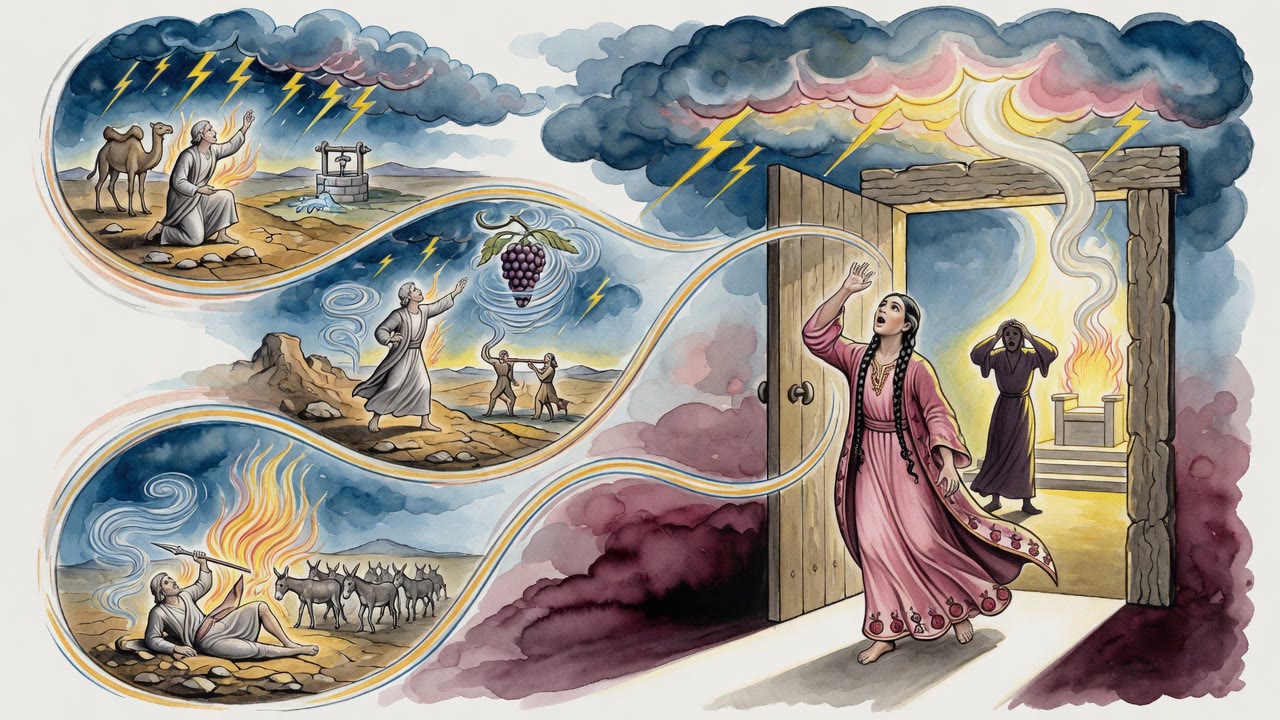
The earlier pleading had been conducted at a higher theological altitude. Moses had argued with God using the principles God Himself had established. "With justice and with mercy you created the world, so let mercy win here." He had reminded God of his own record: forty years, the plagues, the sea, the wilderness, the law carried down from the mountain while the people waited below in a state that required constant management. He had reminded God that a servant who works faithfully for decades should not be discarded like a broken tool. He said: "I am not asking to avoid death. I am asking to enter the land before I die."
The tradition is uncomfortable with these arguments not because they fail theologically but because they succeed. Moses's reasoning is airtight. The tradition does not find the counter-argument and present it as obvious. It records the divine refusal without fully explaining it, which is the tradition's way of acknowledging that some divine decisions sit beyond the scope of human argument, not because the argument is wrong but because the argument does not change the outcome.
The Garment That Was Not His Own
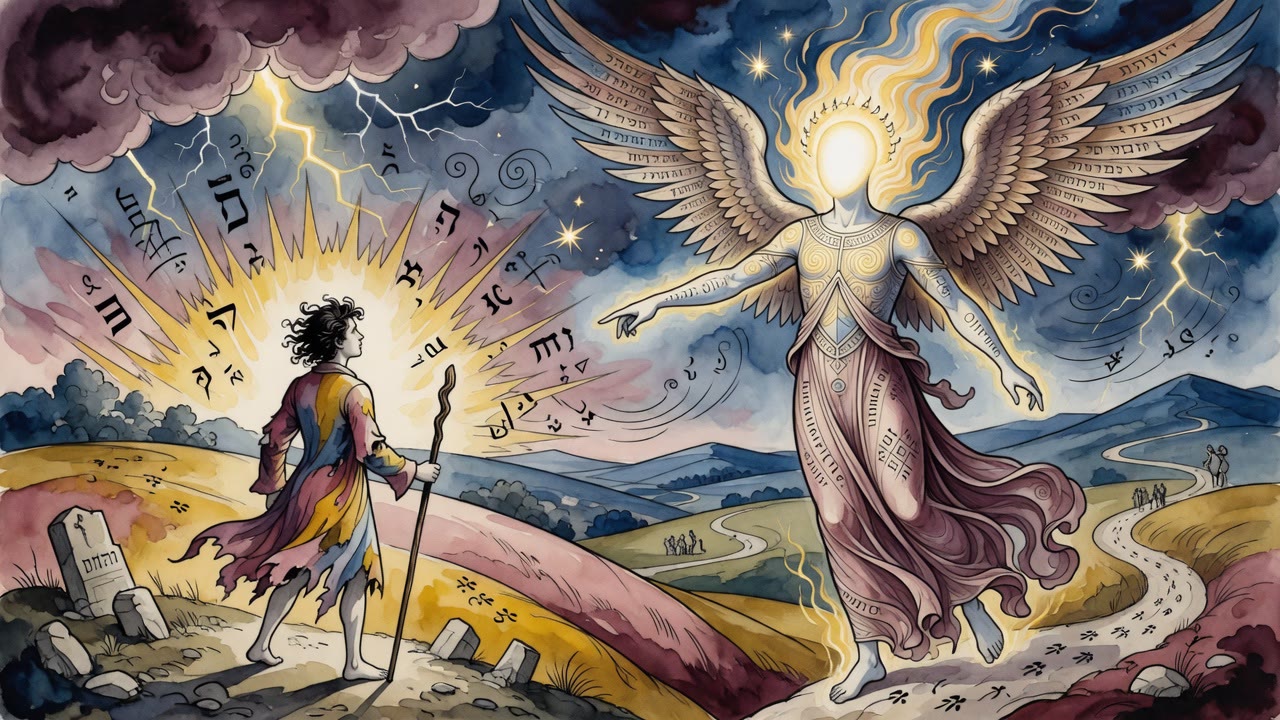
The Midrash records that Moses was enclothed in something that was not his own on the day he received the Torah, a garment of light, of divine proximity, that transformed his face until Aaron and the people were afraid to approach him. He wore a veil afterward so that ordinary conversation was possible. The Moses who had been given the Ineffable Name, who had stood in the cleft of the rock while divine glory passed, who had spent forty days on the mountain without eating or drinking, was not entirely the same person who had stood before the burning bush forty years earlier.
The tabernacle plans God had shown him were still in his memory on the day the one-hour announcement came. Everything he had built, everything he had transmitted, the law and the sanctuary and the organization of the priesthood and the framework of a nation: all of it was going to outlast him. Moses knew this. It was not a comfort. He wanted to see the land.
The Death That Was Also a Gift
God showed Moses the land from Nebo, every valley and ridge and river, the full scope of what his people would inhabit. Moses saw it from outside, which was the one form of entry God had never refused him. Then God kissed him and took his soul. The tradition says Moses died by God's kiss, the most intimate form of death imaginable, the one reserved for those who had been closest to the divine presence during their lives.
The Midrash notes that no one knows where Moses is buried. God buried him, and kept the location secret, and the reason the tradition gives is that if the site were known, the people would have come there to pray, and the praying would have crossed the line from honoring a prophet to worshipping one. Moses was buried in a hidden grave because his life had been in service to a relationship between Israel and God, and a known grave would have inserted Moses into the middle of that relationship in a way he would not have wanted and God would not permit.
← All myths