The Great Fish Was the Shekhinah and Jonah Swam Into Her
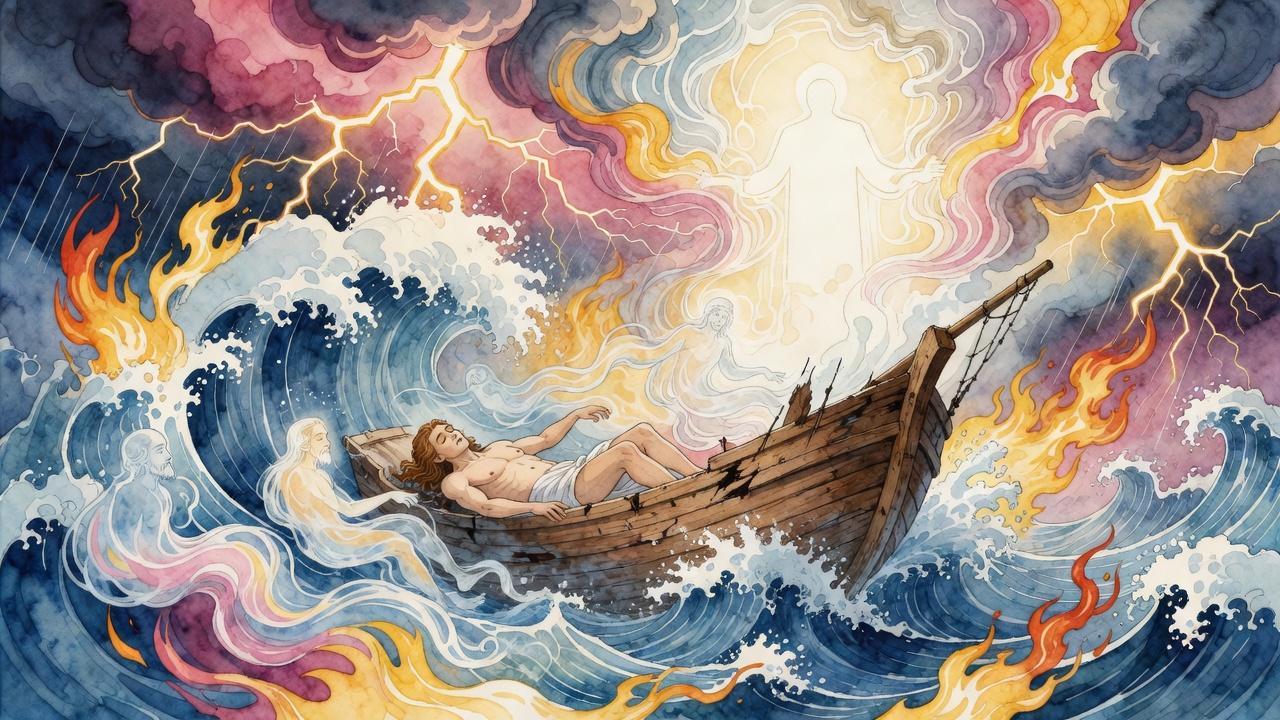
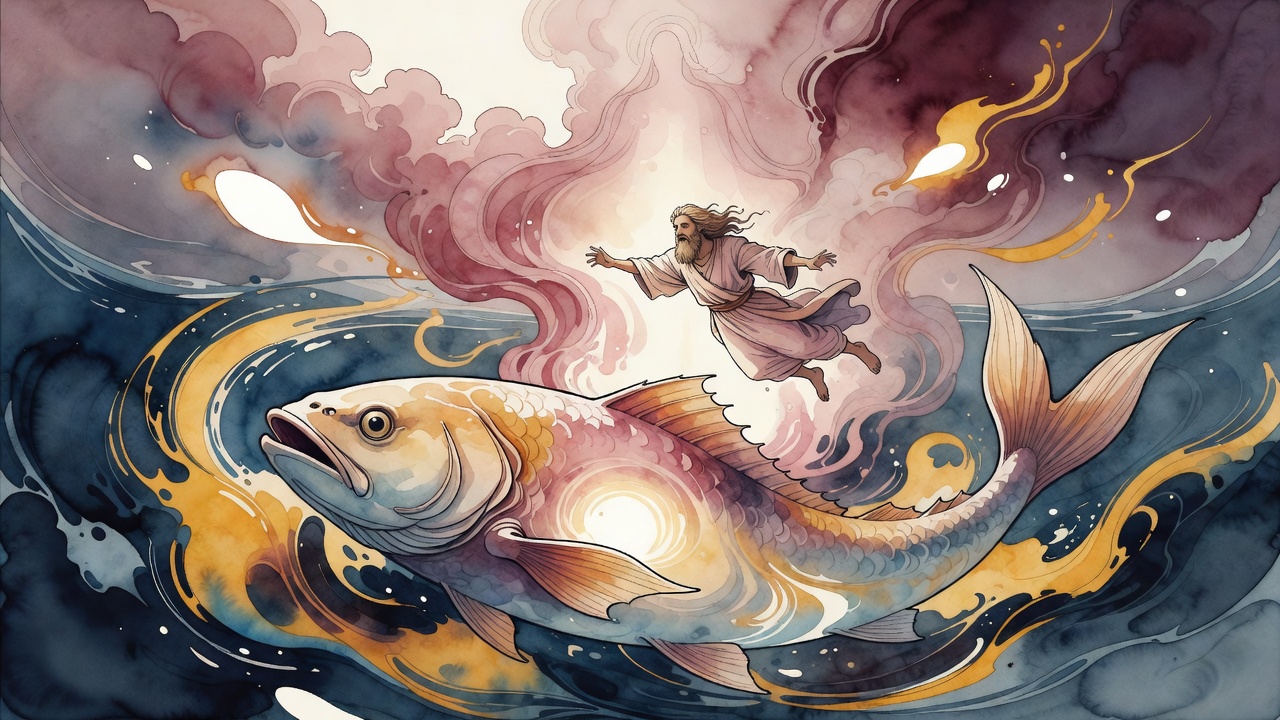
Jonah flees his mission and is swallowed by a fish the Tikkunei Zohar names as the Shekhinah, the Divine Presence, already waiting below.
Table of Contents
 Click for full size
The Captain Shouts and the Sea Does Not Stop
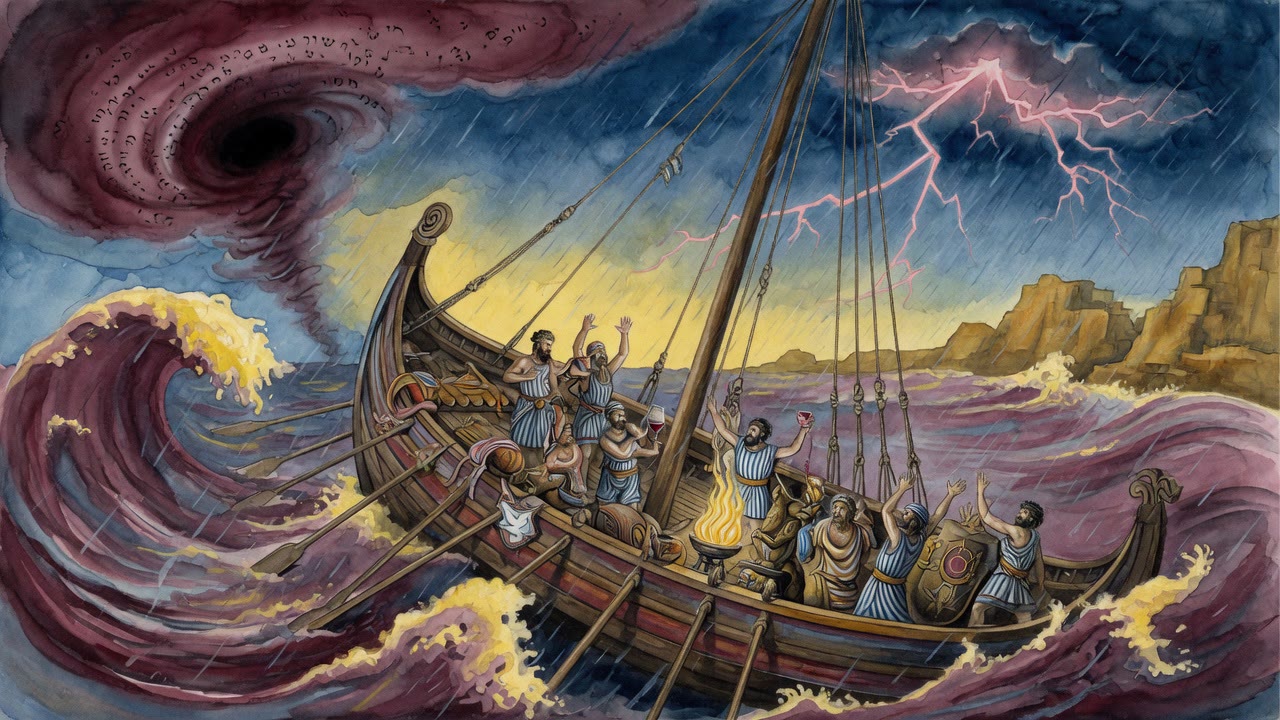
Jonah is below deck when the storm hits. The sailors are panicking above him, each calling to his own god, throwing the cargo overboard to lighten a ship that grows heavier by the minute. He has made his decision. He will go to Tarshish. He will not go to Nineveh. The sea has other instructions.
The captain finds him sleeping and the rebuke is immediate: "Get up! Call to your God!" The word in Hebrew is kum, rise, the same word used in the Torah at moments when someone must stop lying down under grief or failure and resume a task that has not been canceled. Jonah is told to rise not because rising will save the ship, but because something deeper than the captain is already speaking to him. He does not yet know what it is.
The lots are cast. The lot falls on Jonah. He tells the sailors what he is and where he is going and what he has refused to do. He tells them to throw him into the sea. They hesitate. They are better men than he has given them credit for. But the sea will not quiet, and finally they lift him and cast him out, and the water stops raging the moment he disappears beneath the surface.
Who Was Already at the Bottom
The Tikkunei Zohar, the mystical companion to the main Zohar compiled in thirteenth-century Castile, identifies the great fish with precision. The fish is the Shekhinah, the divine presence that dwells in exile with the Jewish people, the sefirah (a divine emanation) of Malkhut (the lowest of the ten channels of divine energy) in its condition of descending to the lowest place in order to receive and protect what has been lost.
This is not a metaphor for comfort. It is a structural description. The Shekhinah (the Divine Presence) goes down first. She arrives at the darkest point before the one who is falling reaches it. When Jonah was thrown into the sea of judgment, he did not fall into emptiness. He fell into the arms of the divine presence that had already gone there and was already waiting.
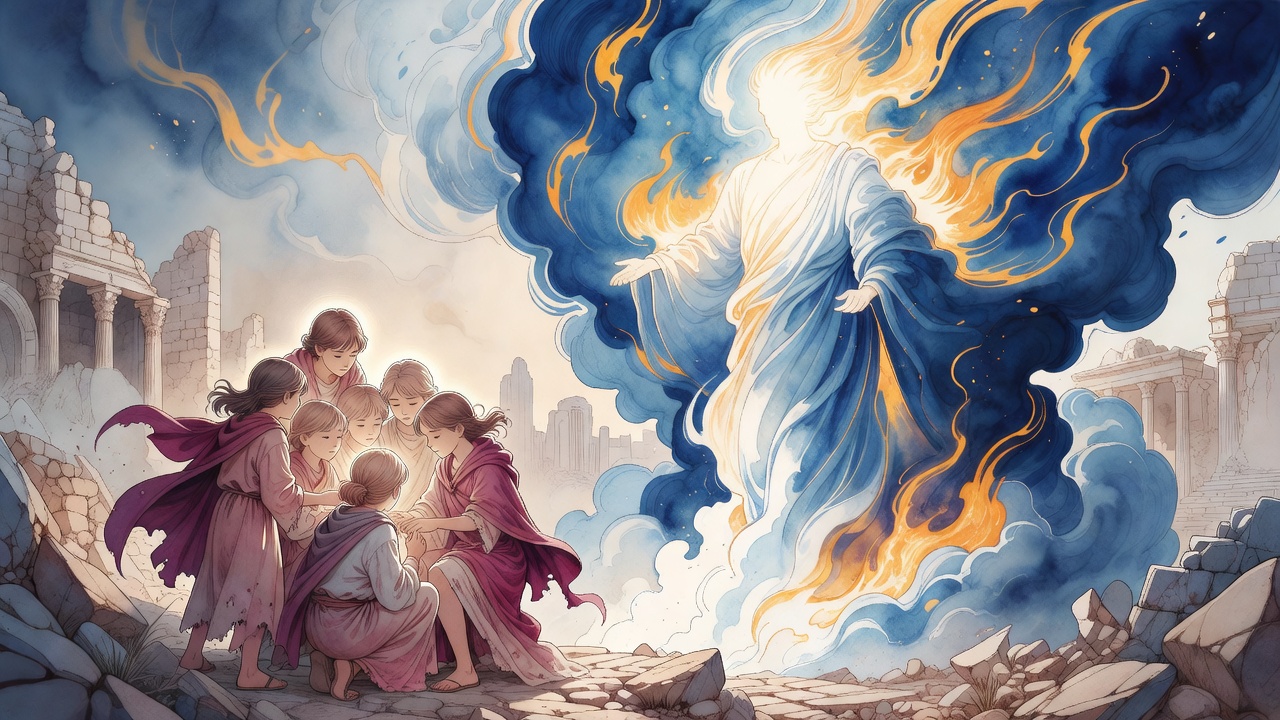
The exile received the exiled. The one who fled from his task was gathered up by the presence of the one he was fleeing from. And the voice that the captain relayed on deck, kum, rise, was not the captain's voice. It was the Shekhinah's call from within the fish, summoning the prophet who had descended into her domain to remember why he was there.
The Dove Who Left and the Dove Who Returns
The Tikkunei Zohar reads Jonah as the same soul that Noah sent out from the ark. The dove went out over the water and found no resting place and returned. Jonah is that dove in a later life, sent out again, fleeing again over the water, unable to find the solid ground that comes only from fulfilling the mission given to you rather than the one you chose for yourself.
The dove who went out from Noah's ark found nothing. The dove who goes out as Jonah finds something worse than nothing: he finds that the sea is not empty but full, full of judgment, full of the presence he is avoiding, full of the fish that has been sent to swallow him precisely so he cannot drown. He will not die in this sea. He has not been given that escape.
Three days. Three nights. Inside the darkness that is not death, Jonah prays. The prayer in chapter two of Jonah is a psalm of someone who has already been saved before he fully understands what happened to him. "Out of the belly of the depths I cried, and You heard my voice." The belly of depths is the Shekhinah in exile. The voice that heard him is the same presence whose body contained him.
The Soul That Ran and Was Caught
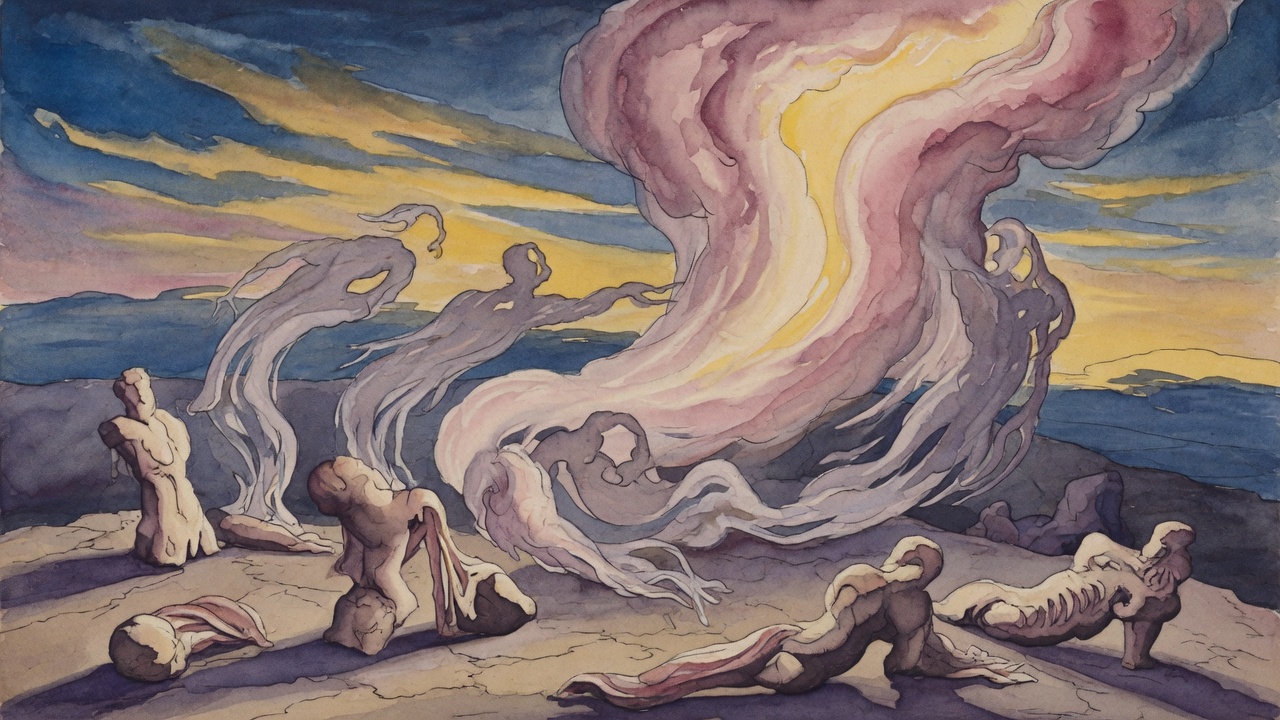
The Tikkunei Zohar's third reading of Jonah is the most interior. Jonah is the soul. The soul descends into a body as Jonah descends into the fish, entering a world of enclosure and limitation that feels like confinement but is in fact the necessary container for a specific task.
The soul that refuses its task tries to flee. It sleeps below deck when it should be calling out. It would rather sink into the comfortable darkness of inaction than rise to the surface and face the storm it was sent to address. But the Shekhinah, who has accompanied the soul into exile and into the body and into the dark, calls it up from its sleep: kum. Rise. You are not finished. What you were sent to do has not been done.
Jonah arrives at Nineveh in the end. He delivers the message he was given. The city repents. The city is not destroyed. And Jonah, sitting outside the city wall waiting for the fire that does not come, is the soul that has done what it was sent to do and has not yet made peace with the mercy that follows.
← All myths