167 myths · Page 2 of 6
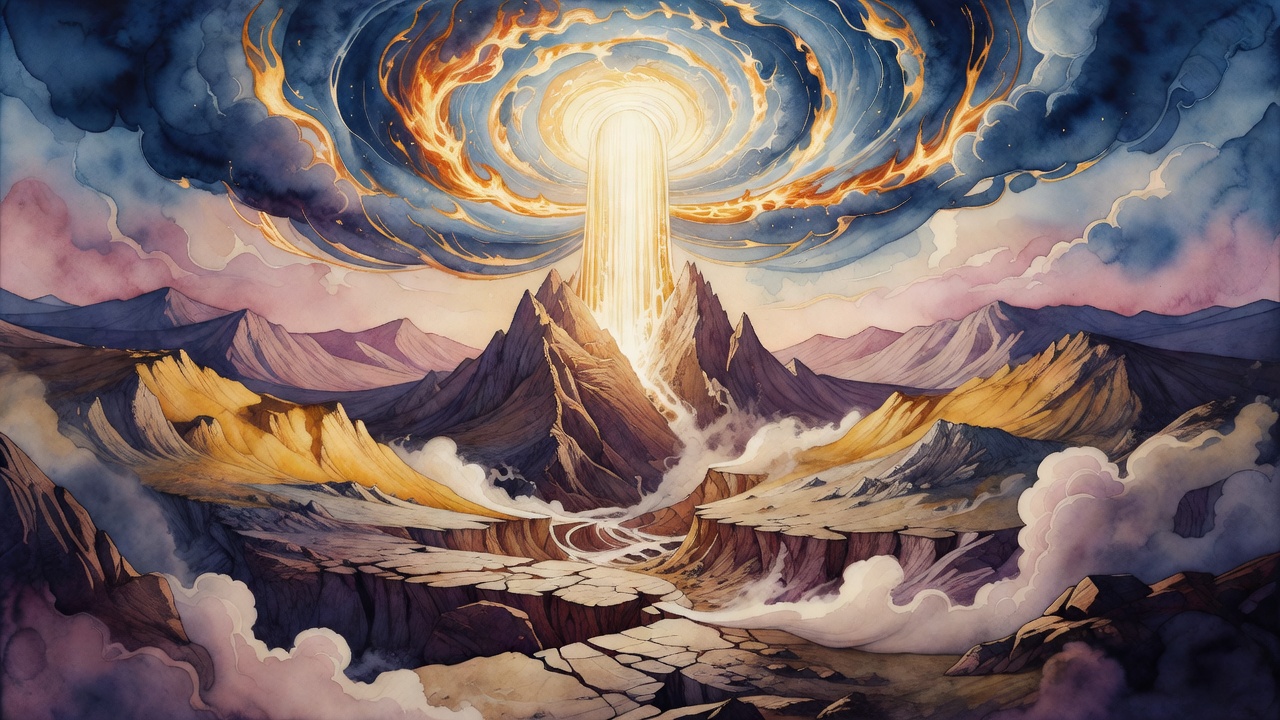
God summoned the surrounding hills and commanded them to merge. What had been a hollow in the earth rose to become the axis of the world.
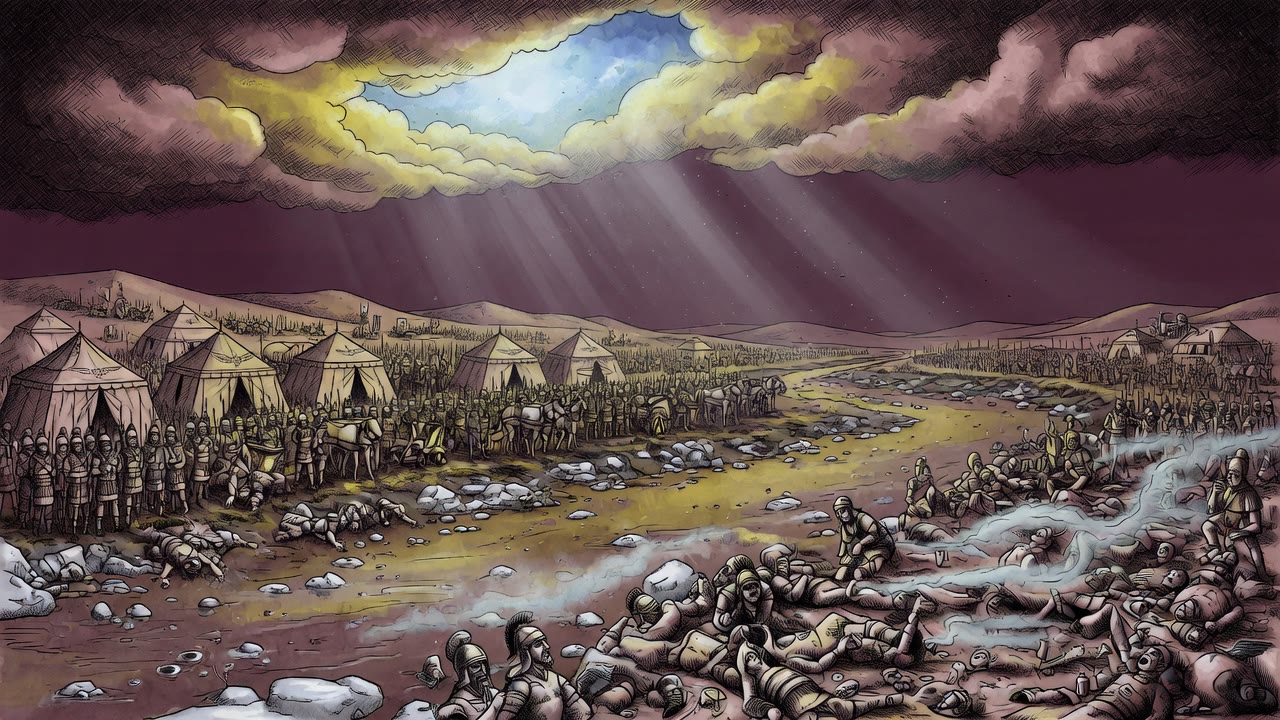
She kissed the pillars and called from the hill for three years. Nobody climbed up. The innkeeper would not open after dark.
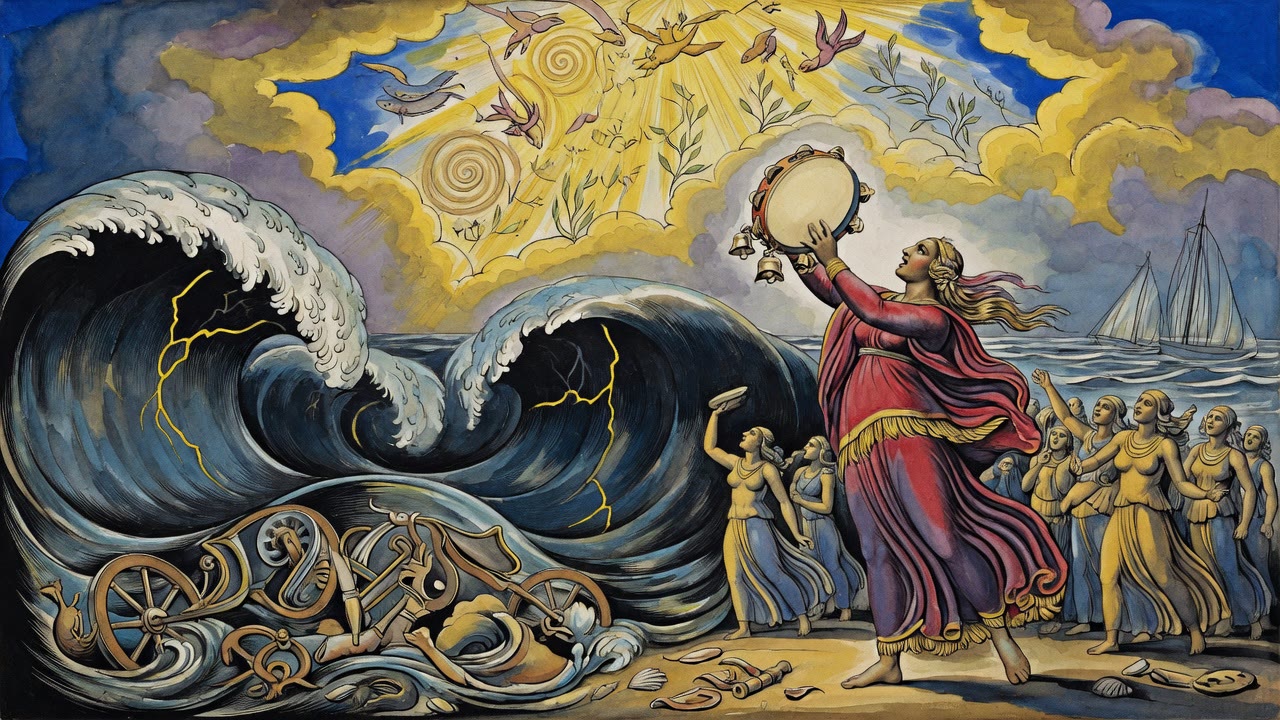
The earth opened under Korah while the censer was still in his hand. His three sons could not speak. A pillar rose under them in the fire.
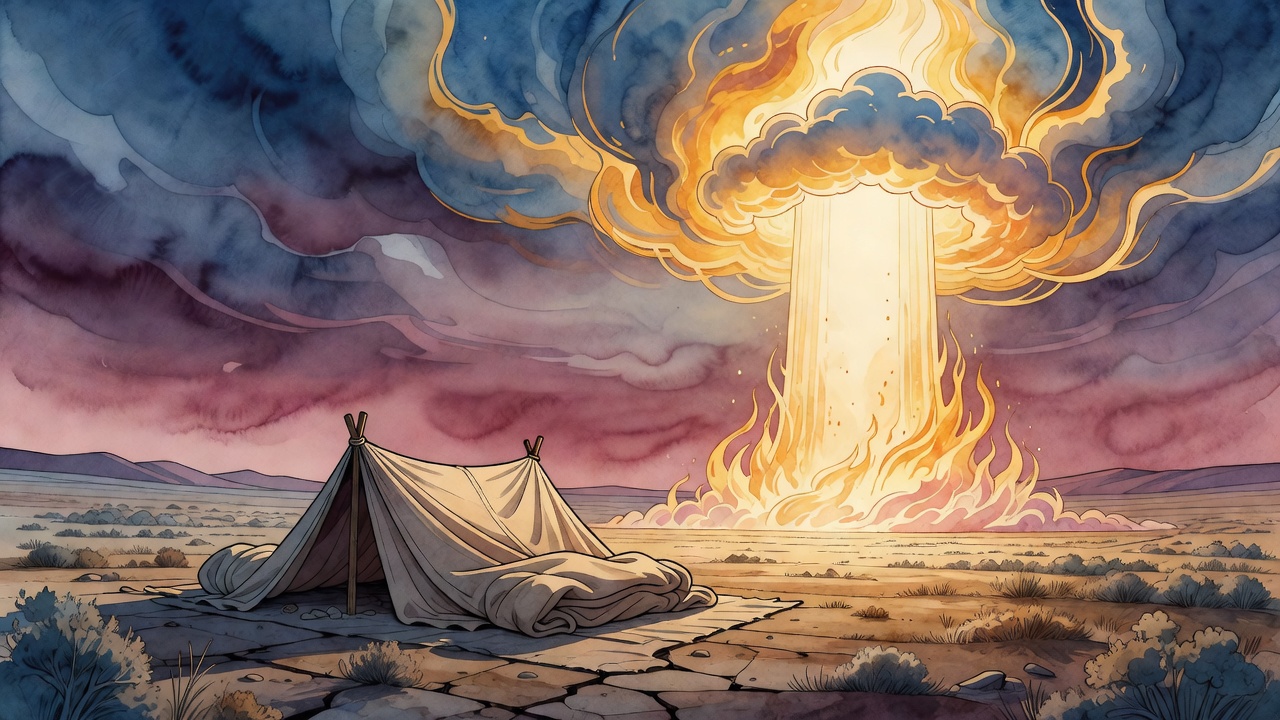
The Tabernacle was finished on the 25th of Kislev and sat folded for months. God held the dedication for Nisan, Isaac's month, to repay an ancient debt.
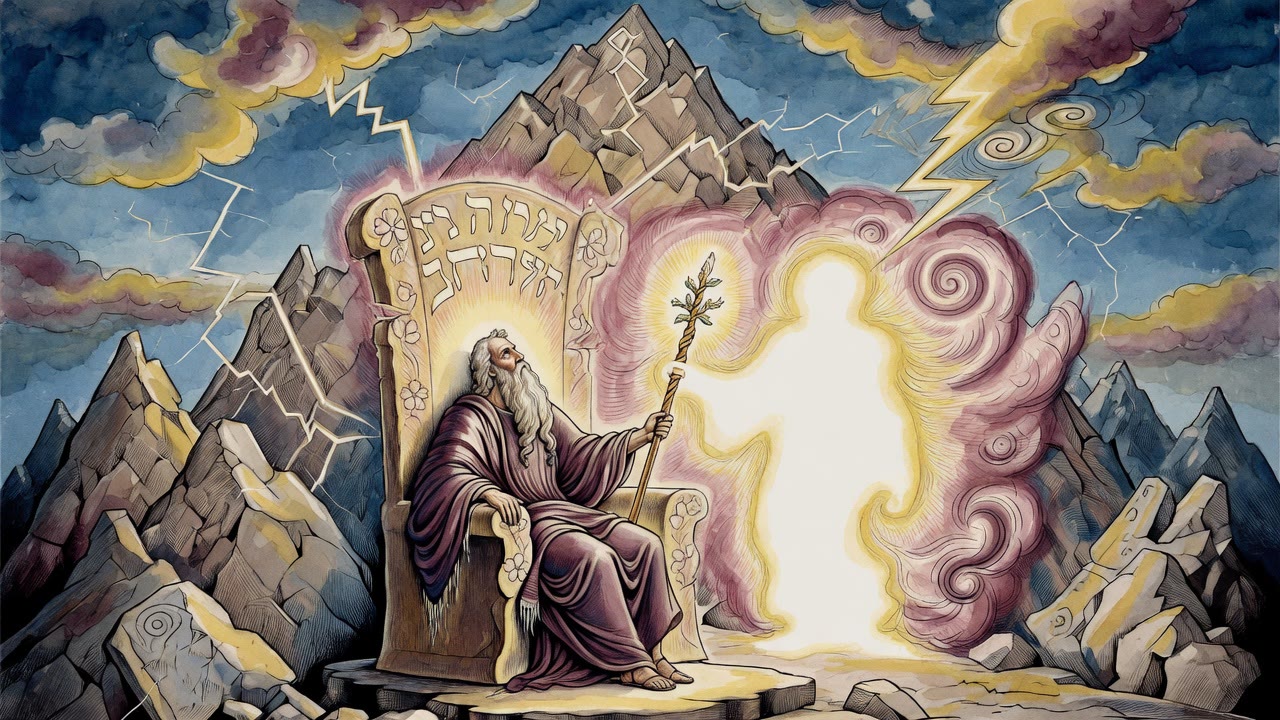
God tells Moses he will be gathered as Aaron was gathered. The rabbis heard desire: Moses wanted his brother's peaceful death, not his own.
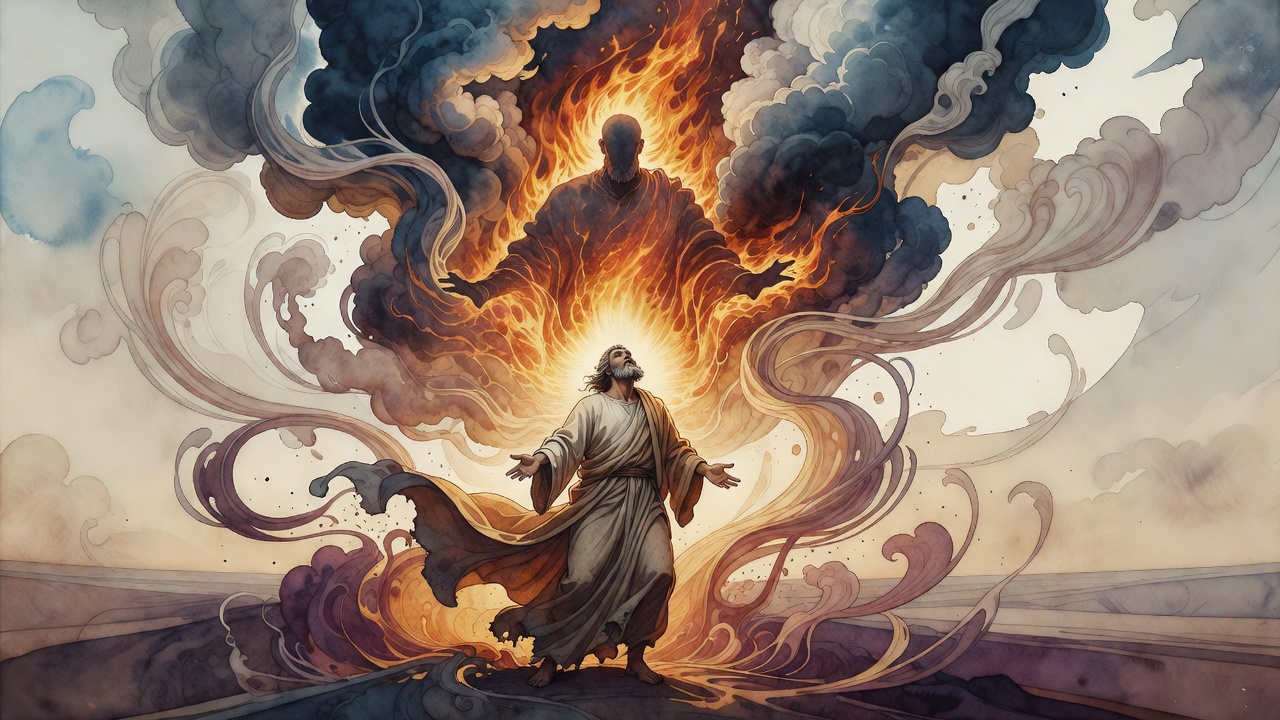
After the golden calf, God said He would send an angel instead of coming Himself. The people heard it, took off their ornaments, and never put them back on.
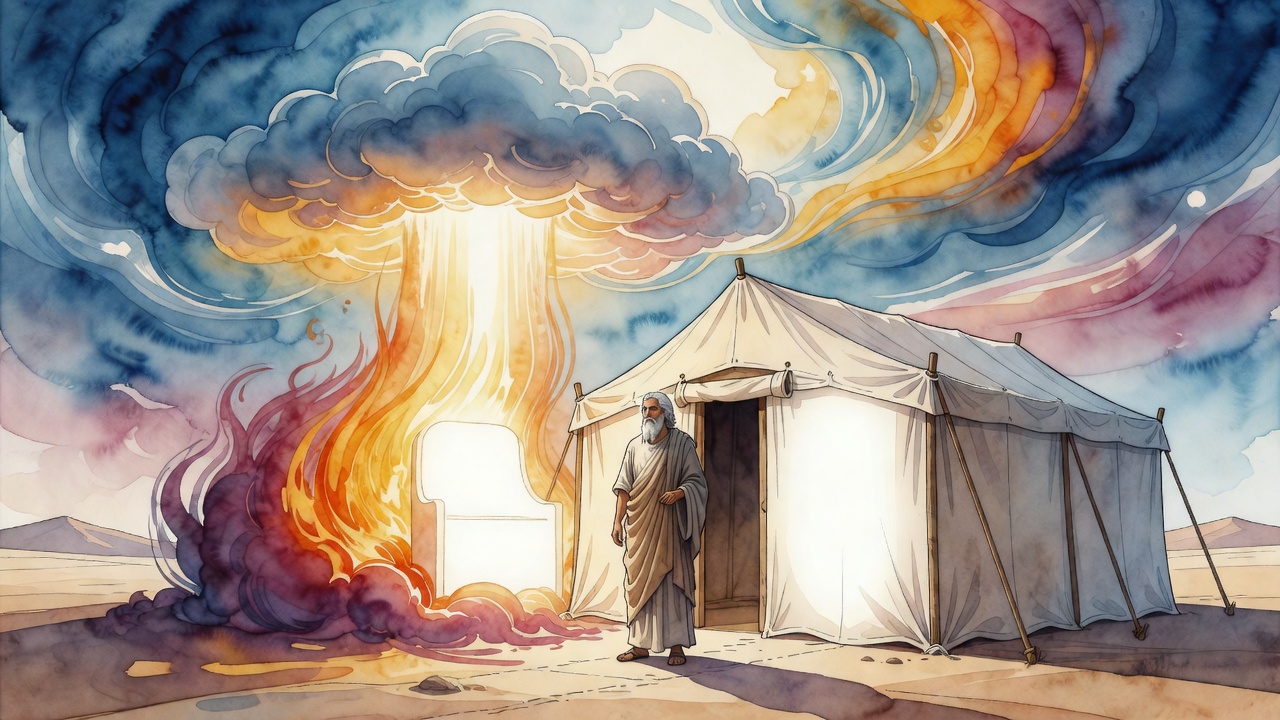
Moses built the Tabernacle and would not enter. He stood at the door until God called, because completing a sacred space does not grant ownership.
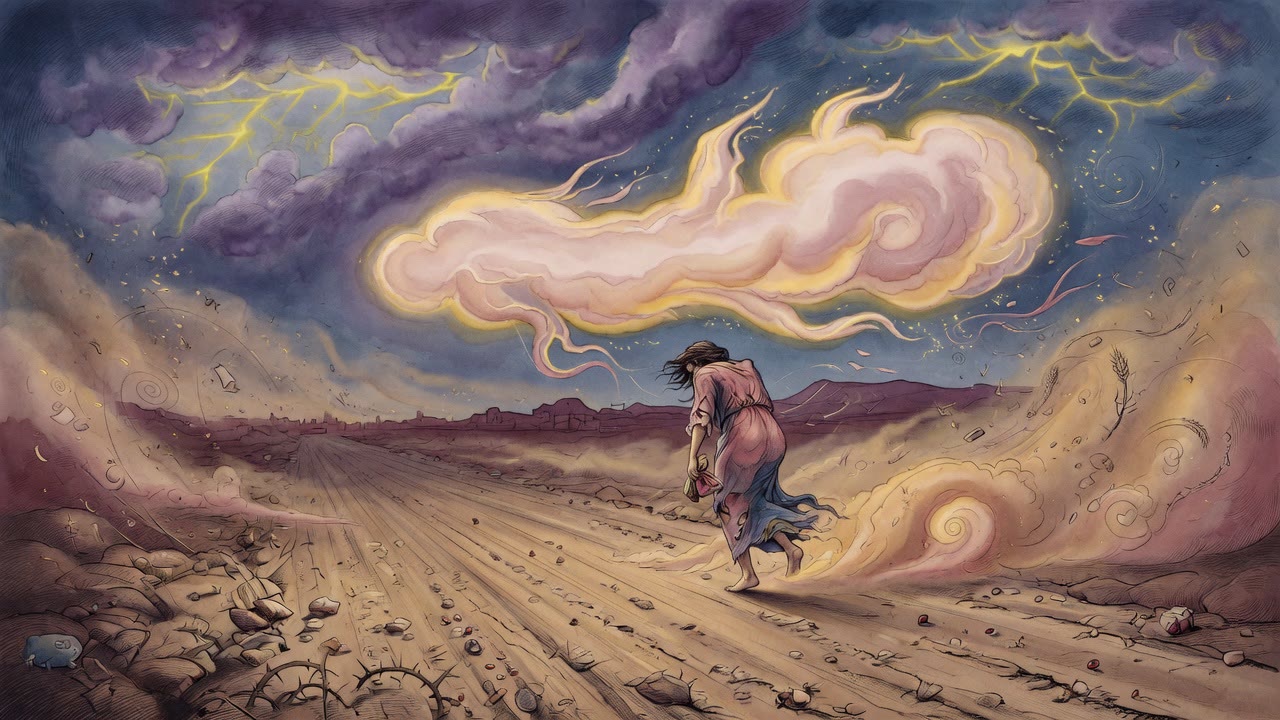
Naomi told her three times to go back to Moab. Ruth stood on the road and would not take a step toward her mother's house.
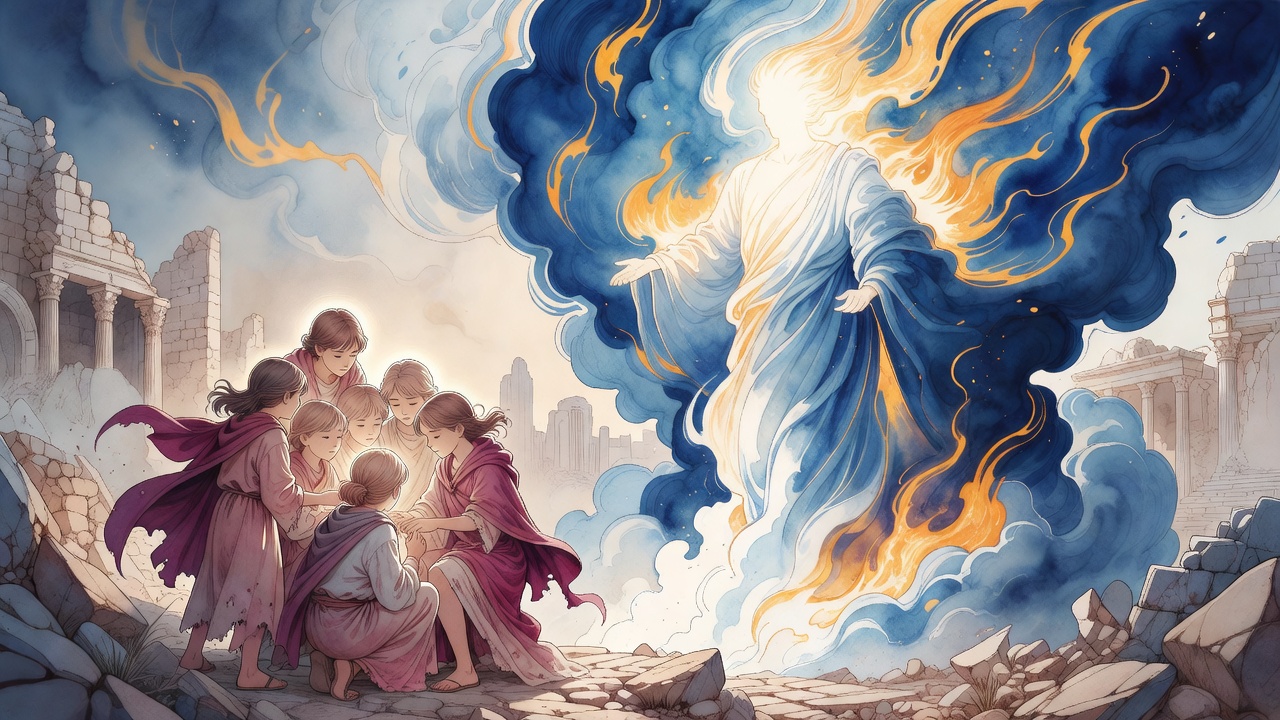
The Sanhedrin marched north. The Temple guard followed. She stayed in the empty courts until the children were driven through the wall.
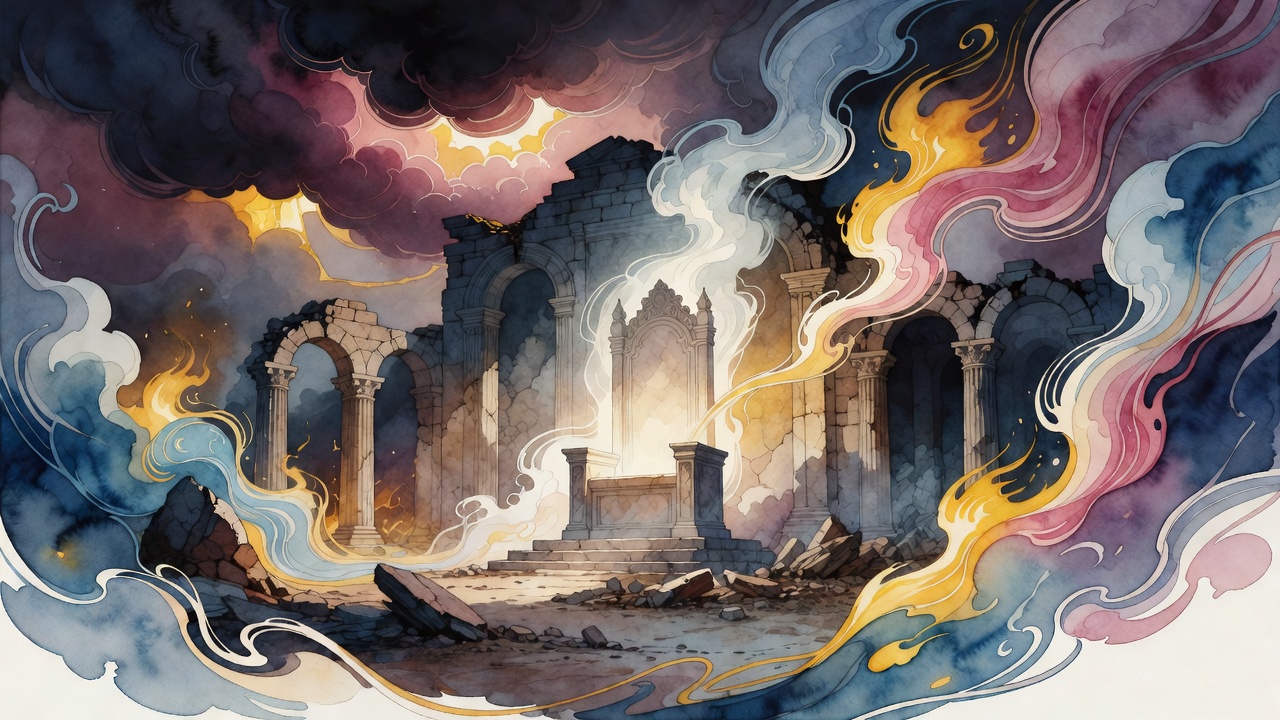
Metatron begged to weep in God's place. God refused him and went where no angel is allowed to enter. The Temple below was already ash.
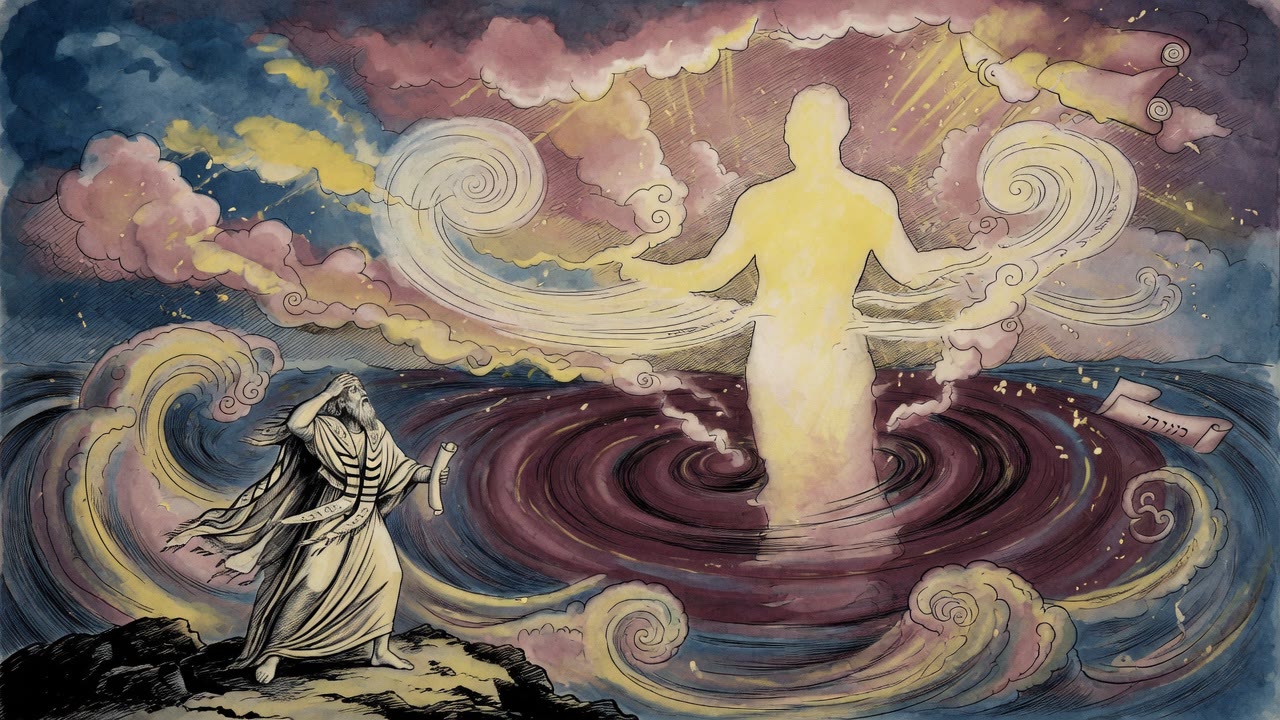
When the exiles returned, Nehemiah's priests dug for the sacred altar fire and found only thick water. He ordered them to pour it anyway.
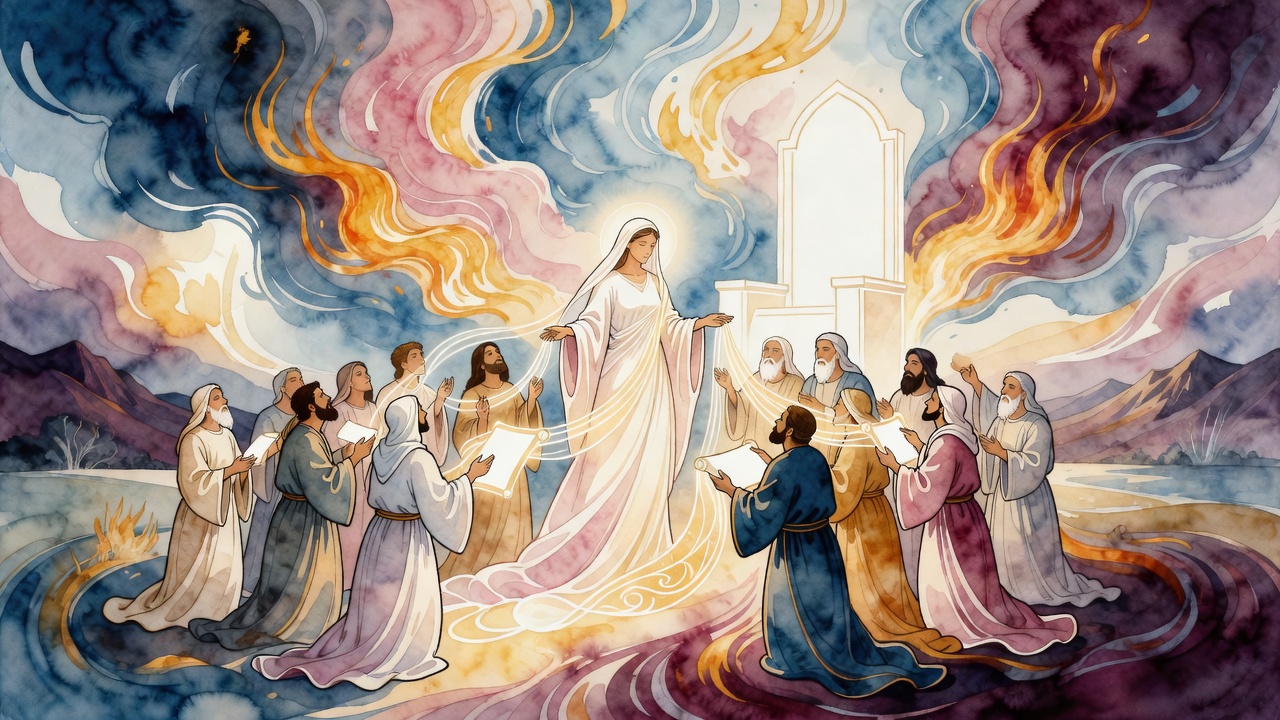
While the Temple stood, the King came down every midnight to the inner room. After it burned, His Bride went out into the road with nothing left to wear.
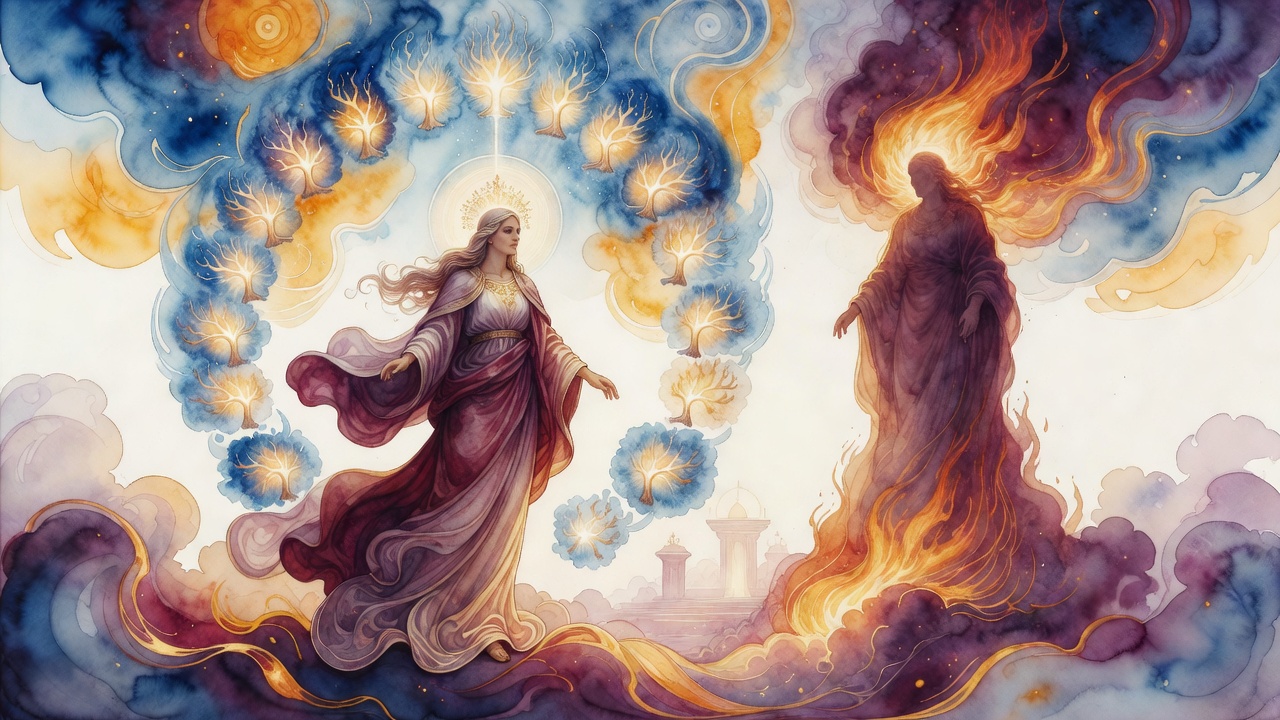
The Zohar sees Shabbat as a crowned Bride with seventy lights, adorned by commandments, escorted by the Shekhinah, the Divine Presence.
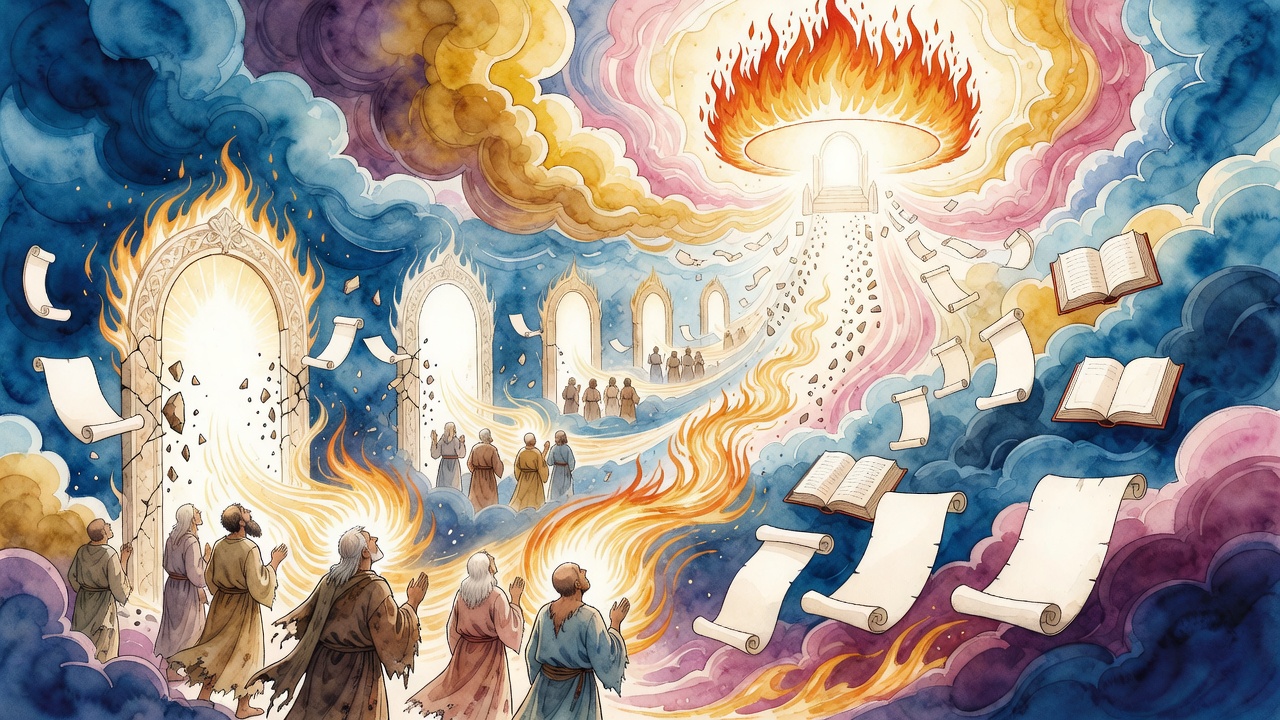
Palace texts and Tikkunei Zohar track each prayer from the mouth through gates of fire to the Shekhinah, the Divine Presence. The poor break every gate.
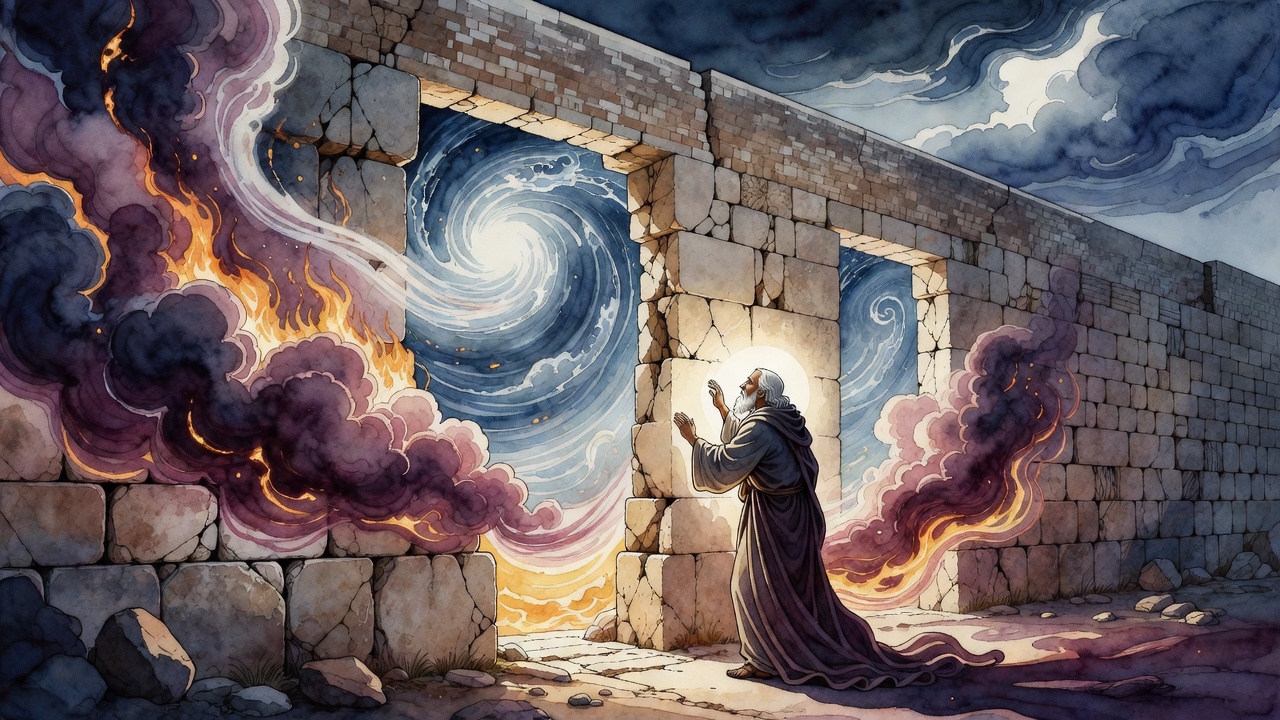
A Safed mystic rises at midnight to mourn the Temple until Jerusalem's stones open and the Shekhinah, the Divine Presence, speaks her grief aloud.
The first day of the week had the second. The third had the fourth. The fifth had the eve. The seventh counted them off and found itself standing alone.
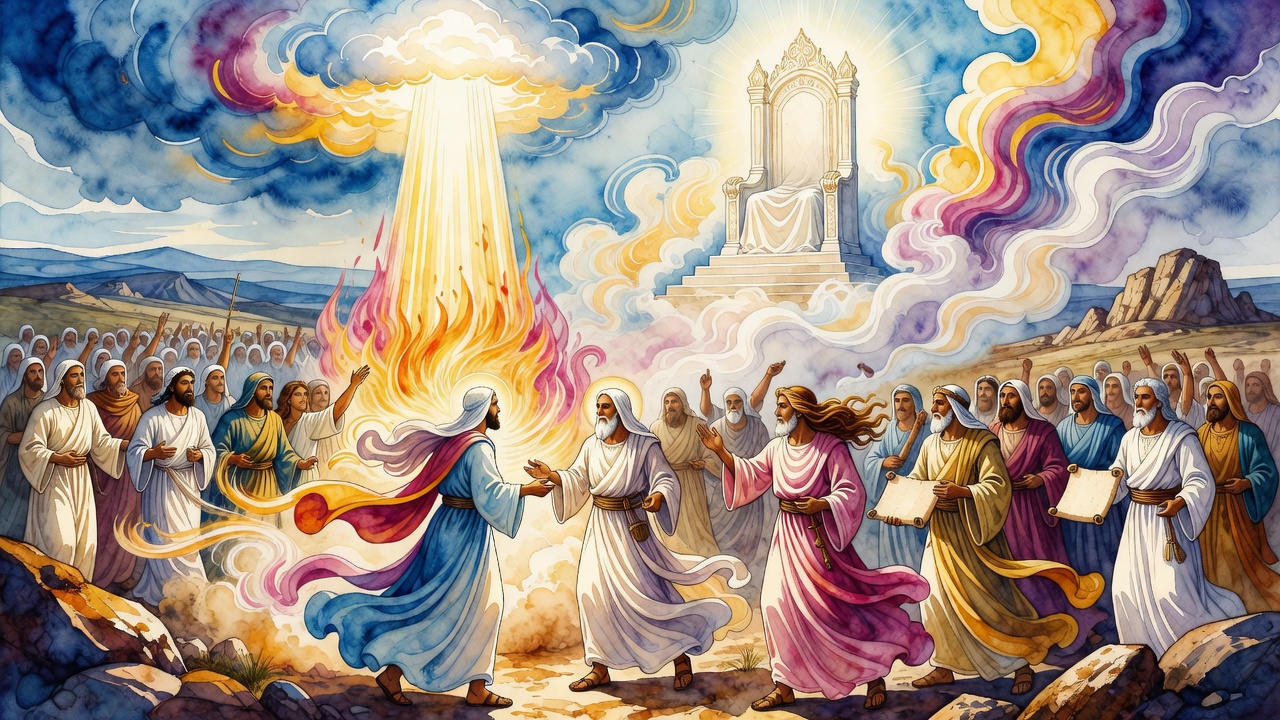
Moses asked for a man who would walk in front of the camp. After the Temple fell, the Presence did not stay in the ruin. She went with them.
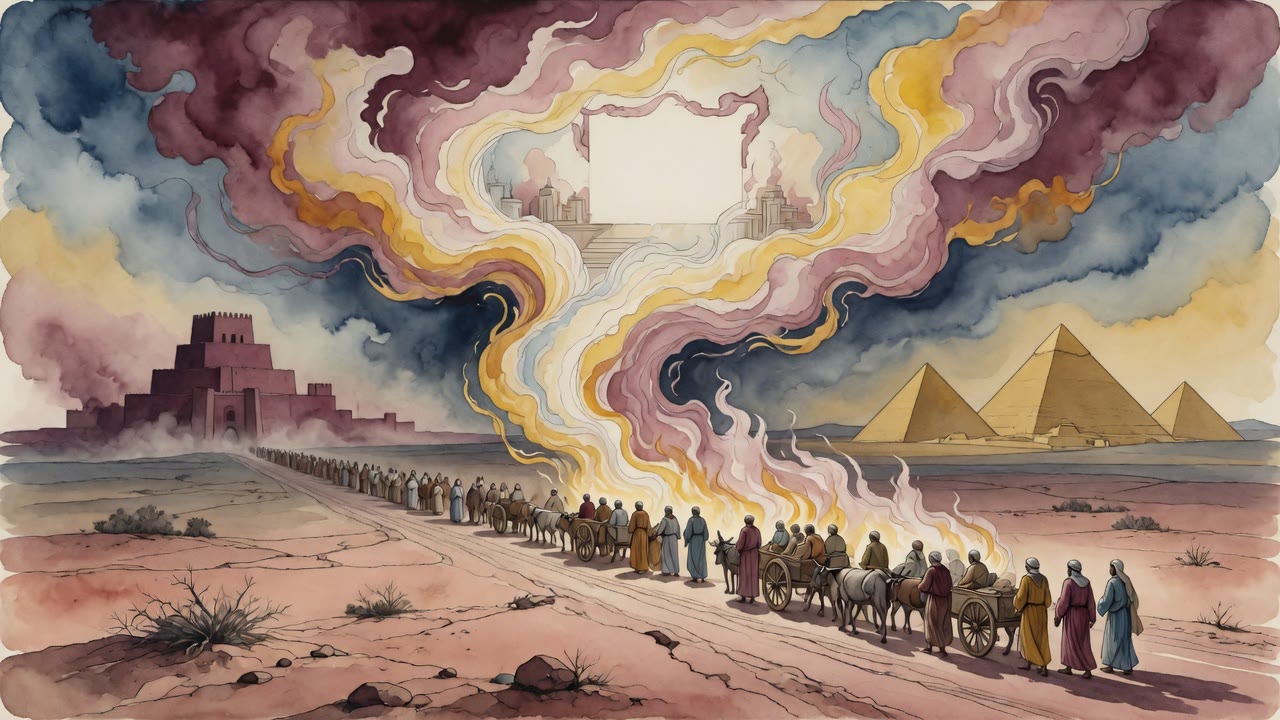
Abraham was ninety-nine and still sore from circumcision when three travelers came. He asked God to wait at the tent door until he had fed them.
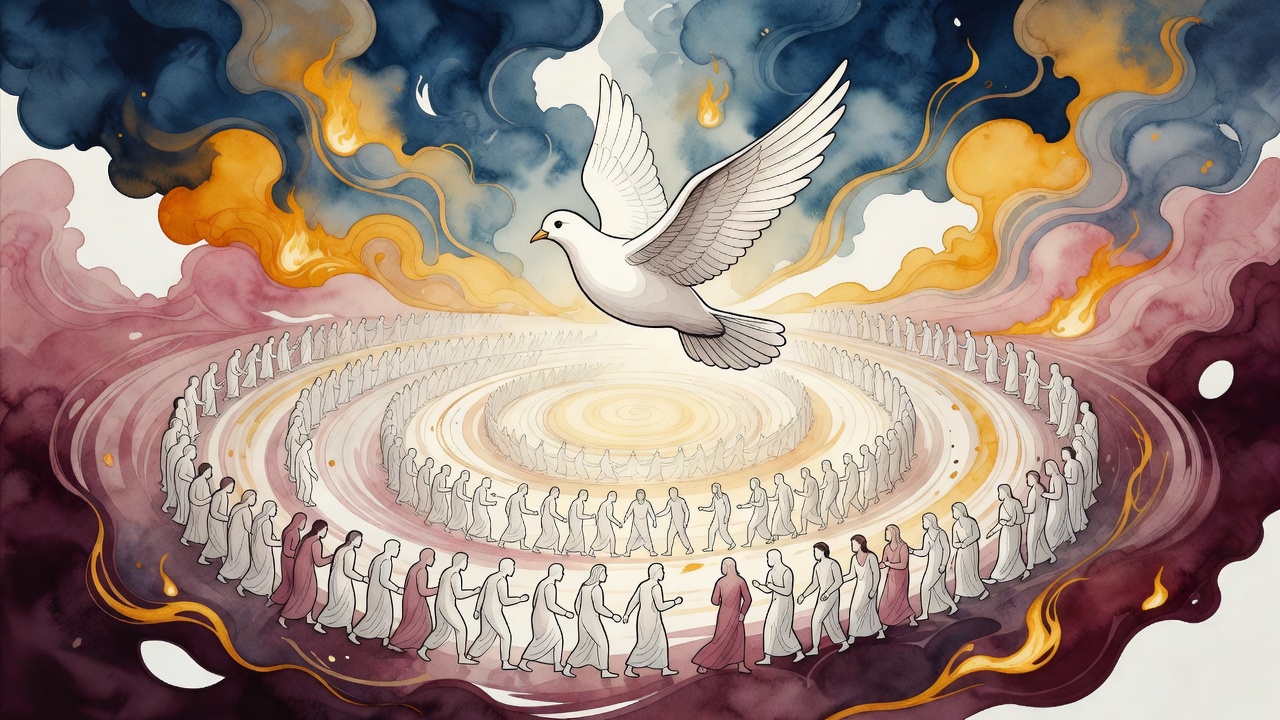
The Shekhinah, the Divine Presence, loses her resting place while Israel wanders, circling the nations like a dove with nowhere to land.
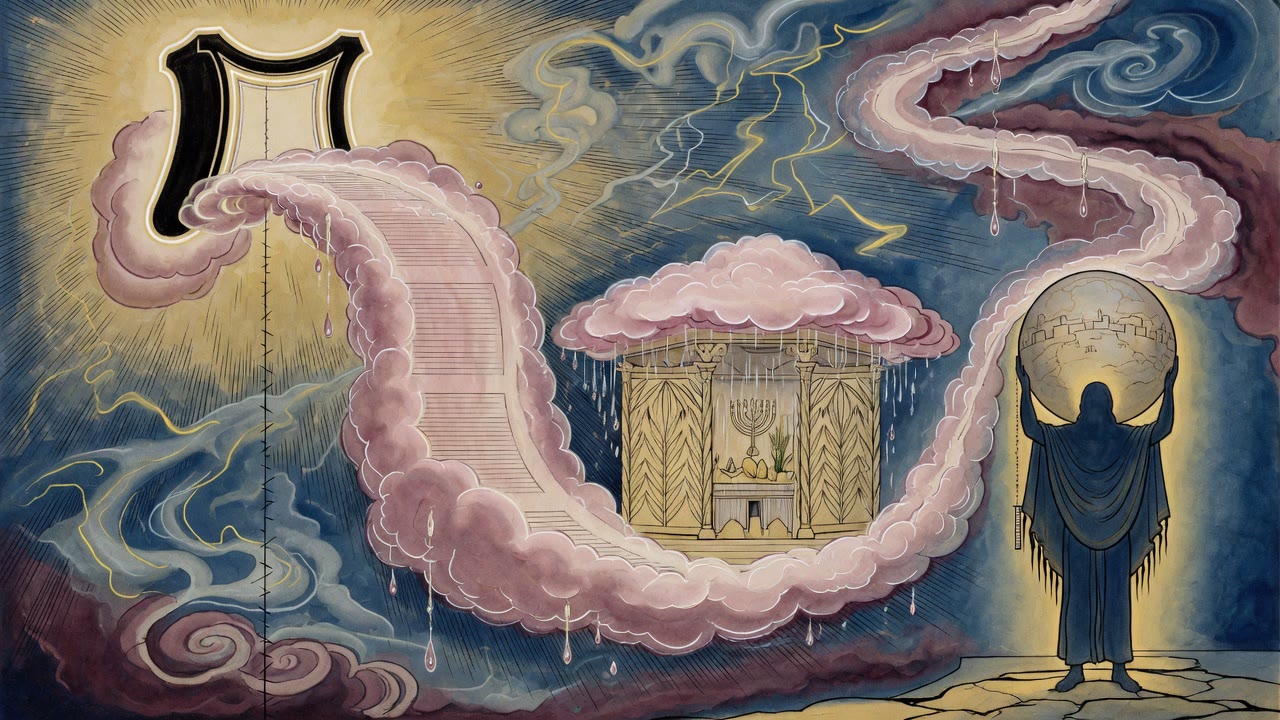
The etrog sat cool in a left hand. The Presence came down toward the righteous by measure, like manna poured, then went back up.
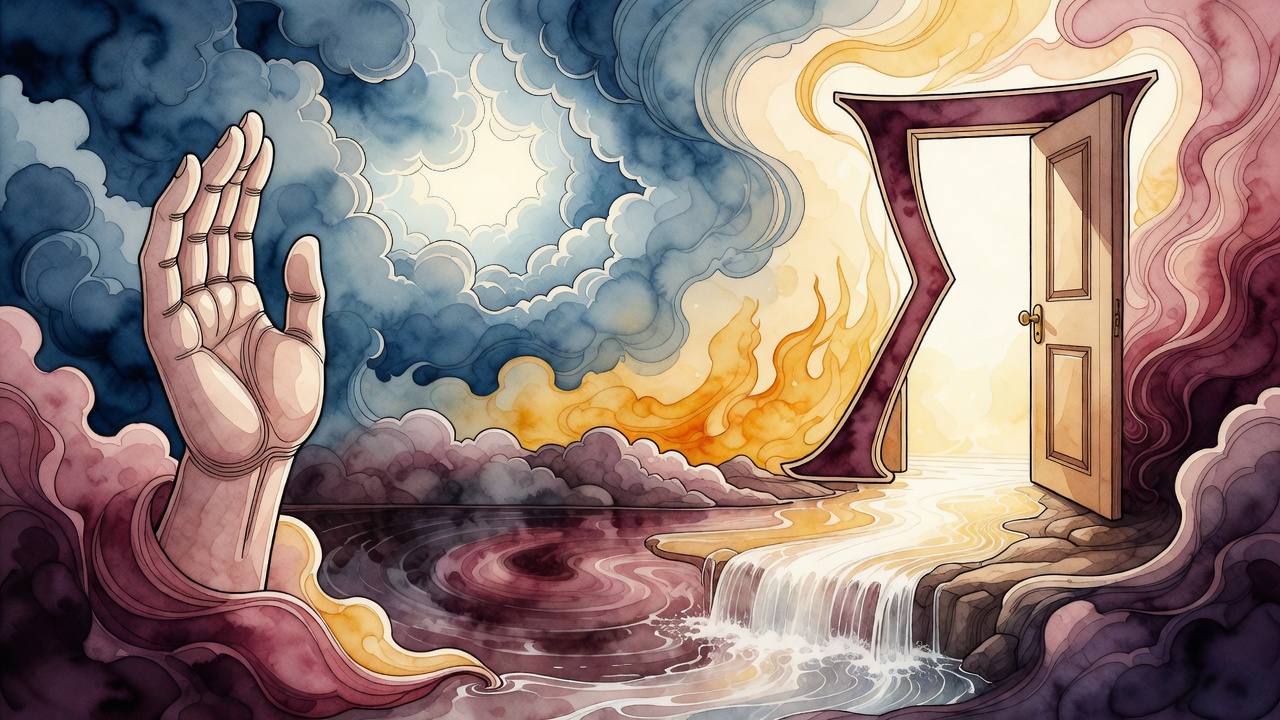
Israel had walked three days without water. At Marah the pool was bitter. Moses stood over it with a tree in his hand and a people at his back.
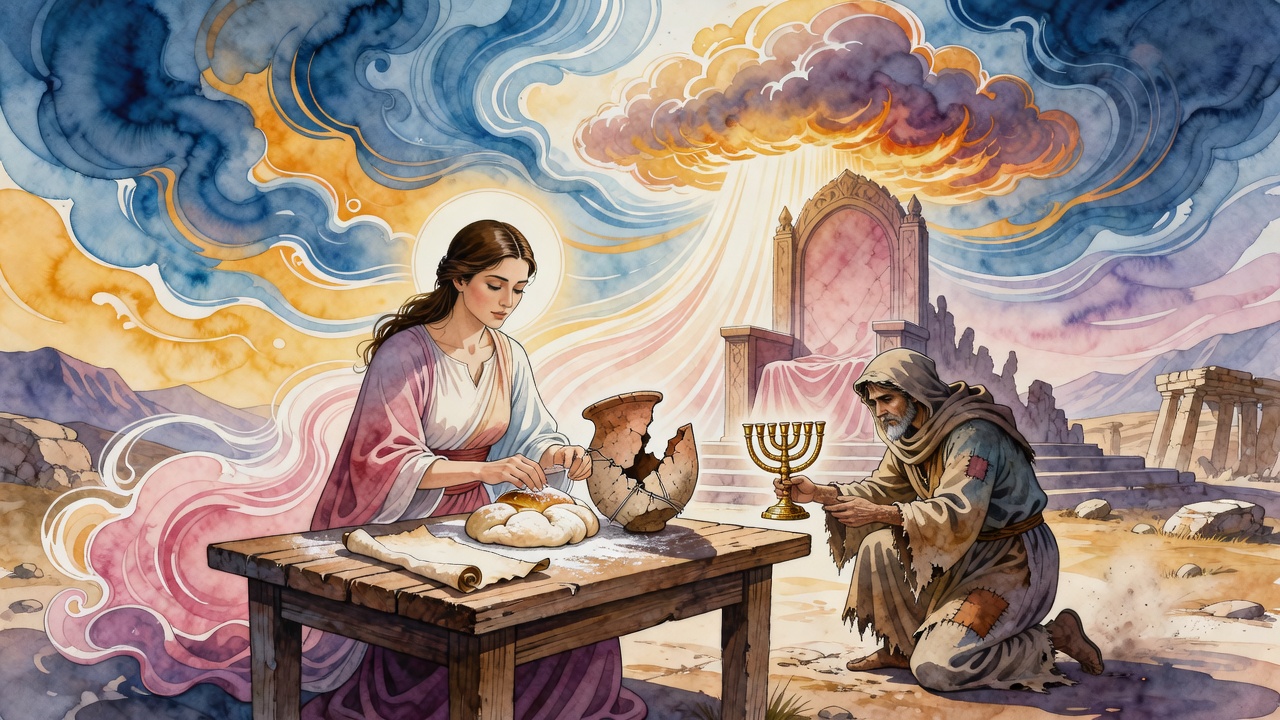
She pinched off a piece of dough before the loaf went into the oven. In another house a thief set a stolen cup back on the shelf.
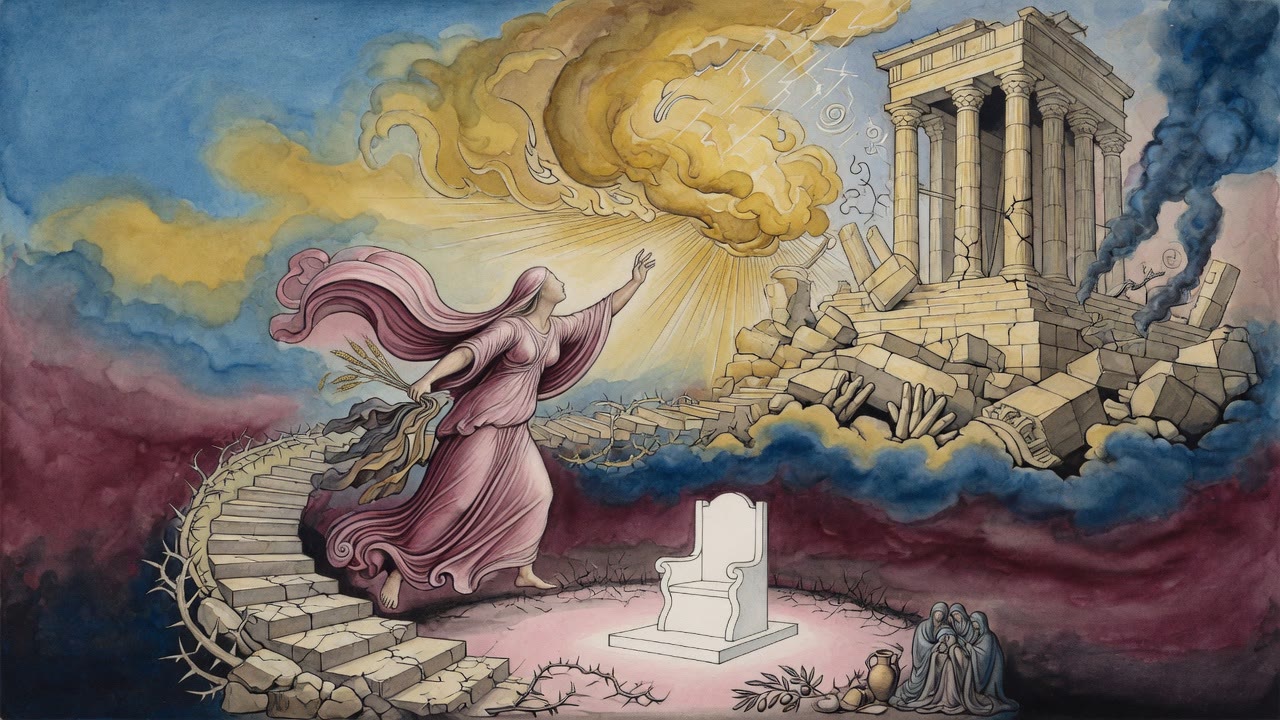
The Temple falls by human hands. The Shekhinah, the Divine Presence, argues for the poor, descends into exile, and waits for a house built from above.
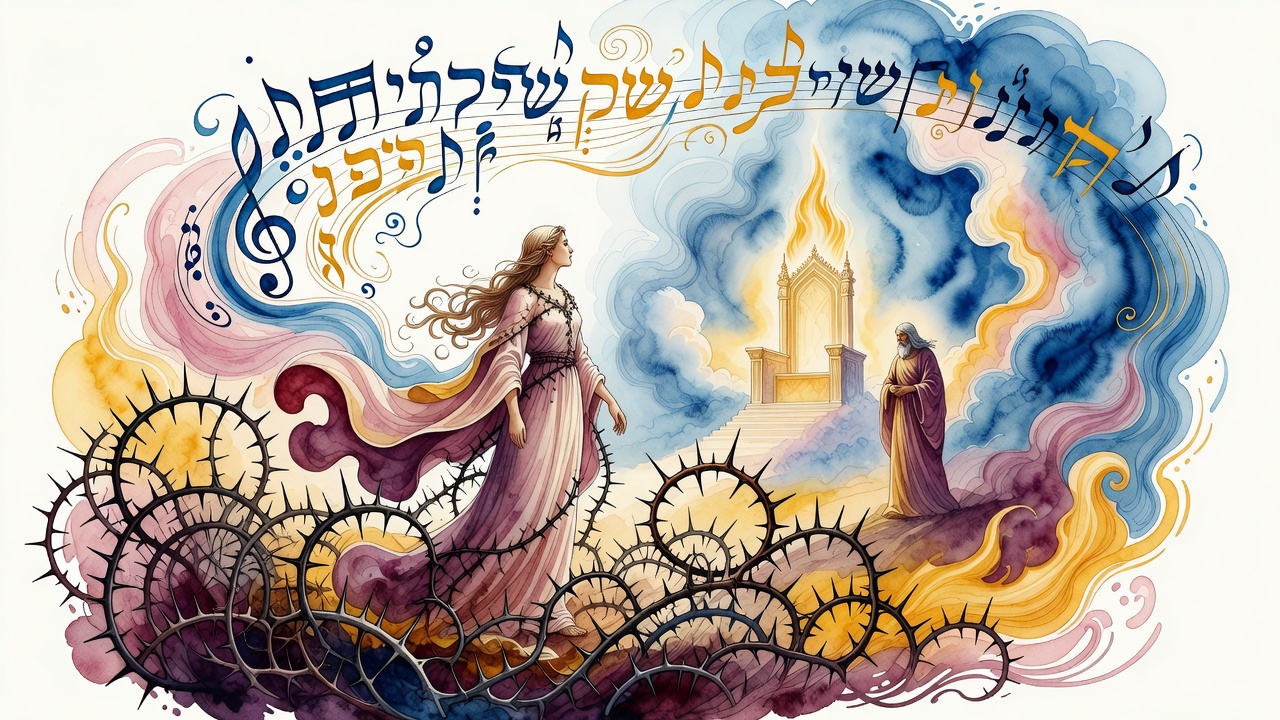
The Tikkunei Zohar teaches Jews to wait. The bride is in thorns. The cantillation marks carry secrets. The King Messiah stands just beyond the silence.
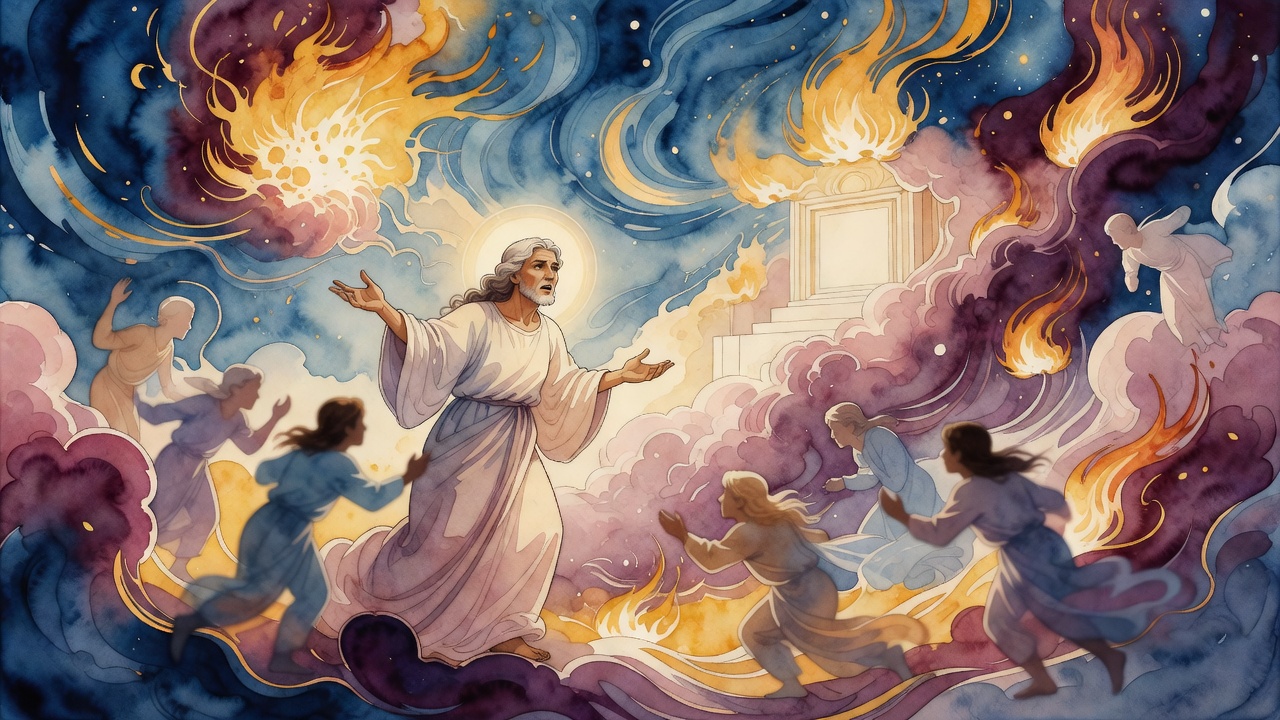
The armies in this vision turn out to be lawyers. When Jews rush their prayers, the Shekhinah, the Divine Presence, reaches the gates with empty hands.
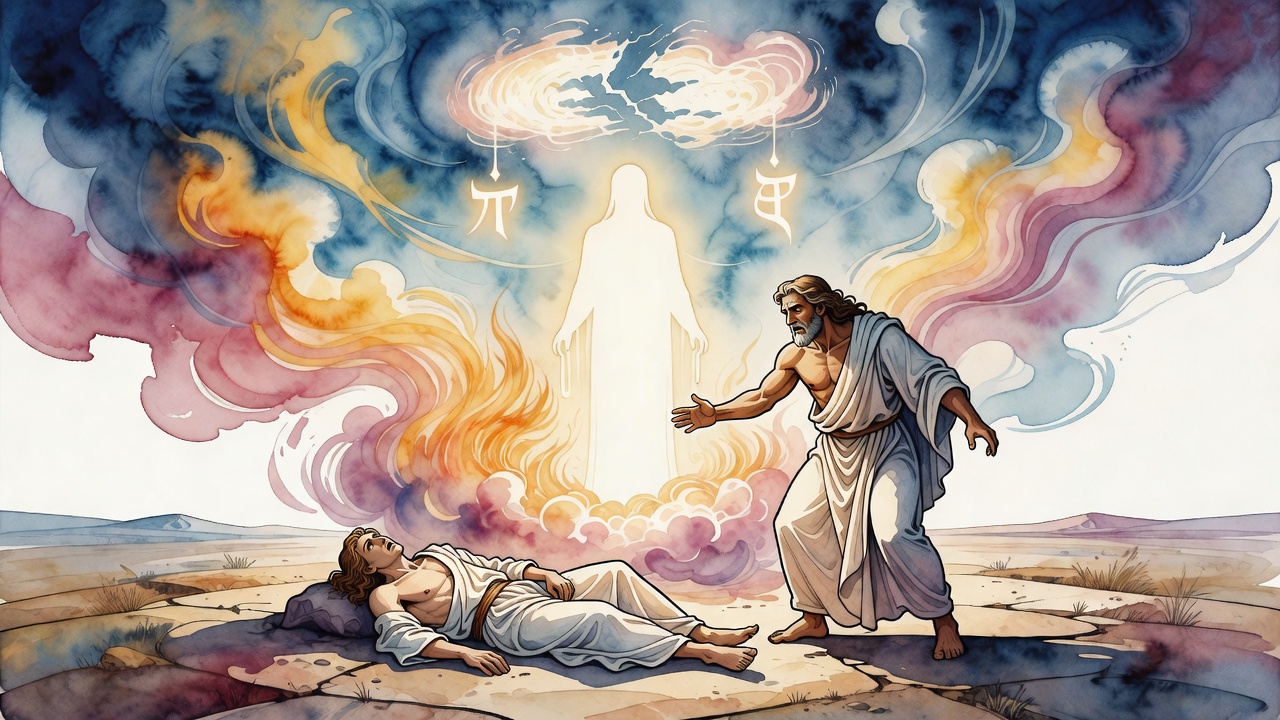
When Cain killed Abel, two letters fell out of a divine Name. Every mitzvah, every commandment, since has been putting them back.
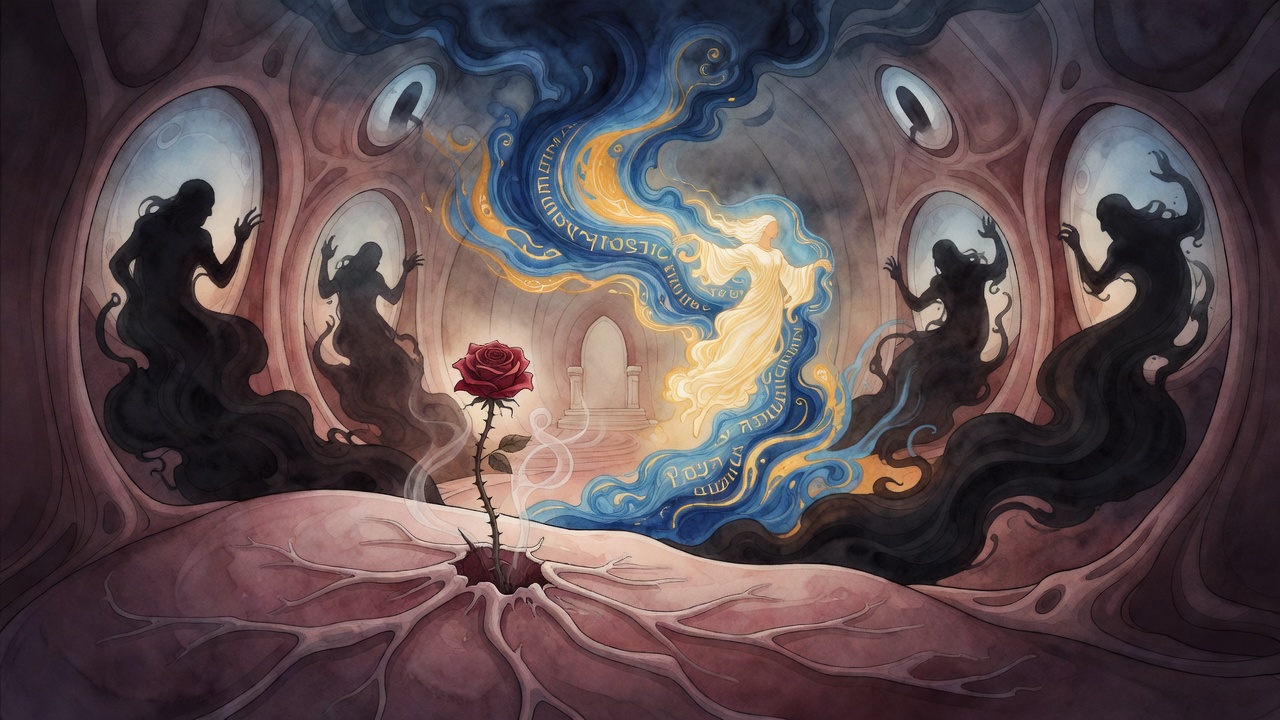
The slaughterer turned a lung and found a rose stuck where air should pass. That same cling had already taken hold in a living chest.
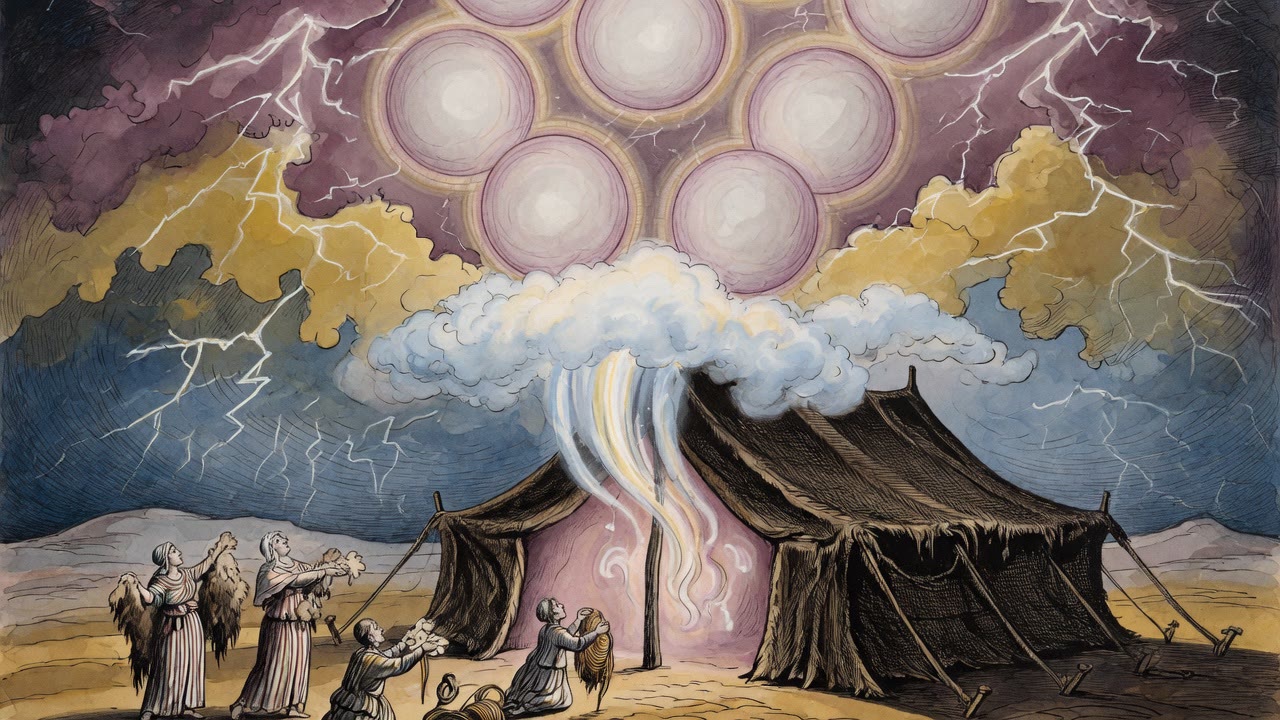
God's throne stood five hundred years above the seventh heaven. He left it all and asked freed slaves for scraps of wool so He could live among them.
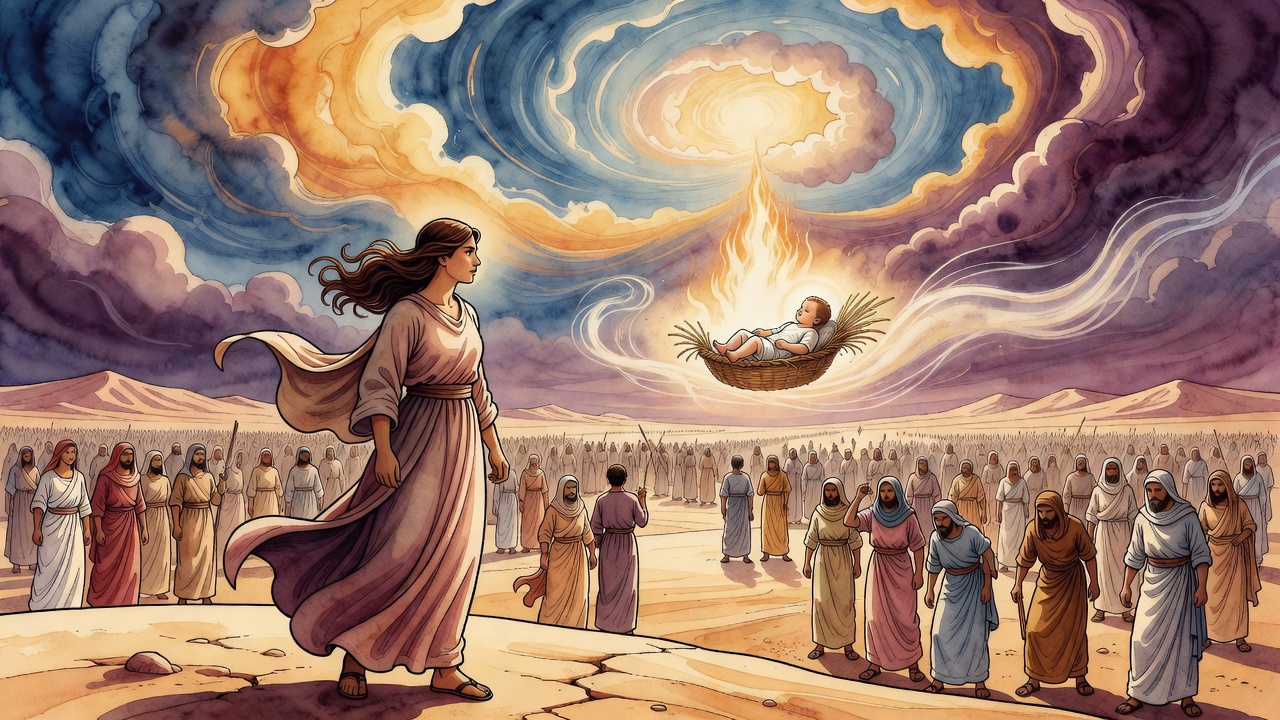
Miriam stood watch over her floating brother for an hour. Heaven paid it back at seven days interest, with the entire nation frozen in the desert for her.
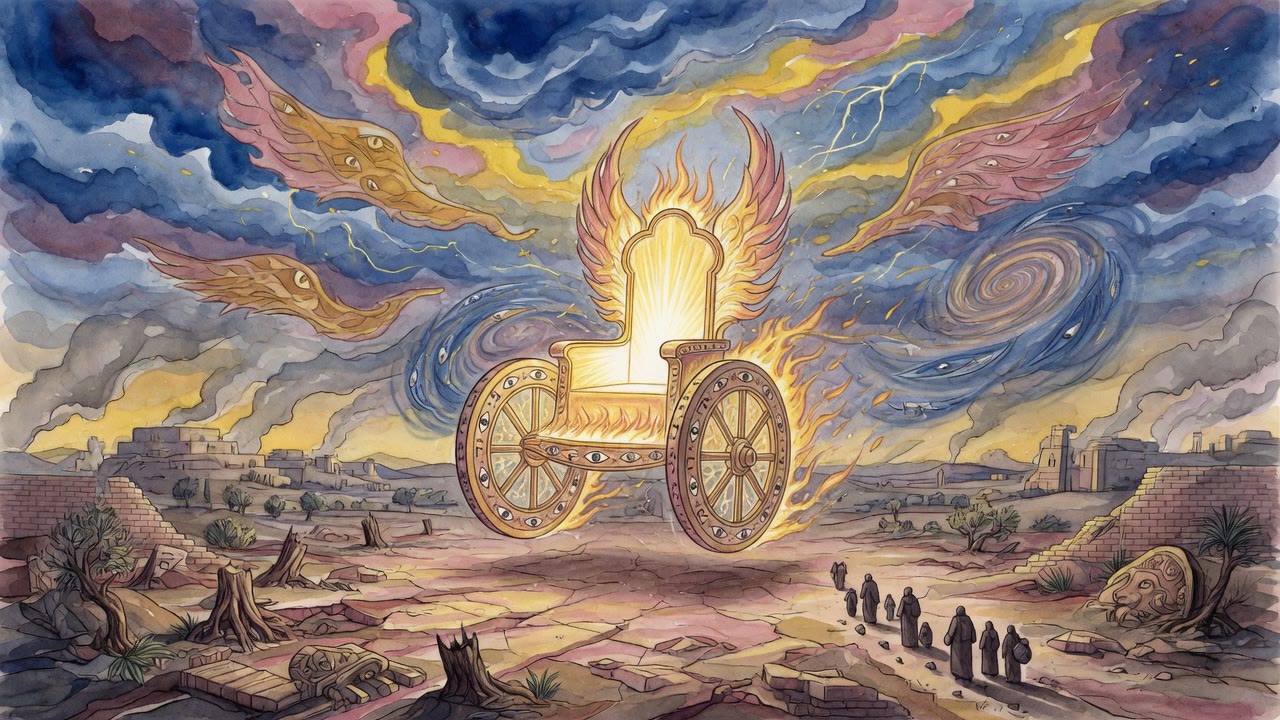
Targum Jonathan counts sixty-four faces and 256 wings on the throne. Ezekiel watches the glory move out through the east gate and waits for it to return.
