167 myths · Page 3 of 6
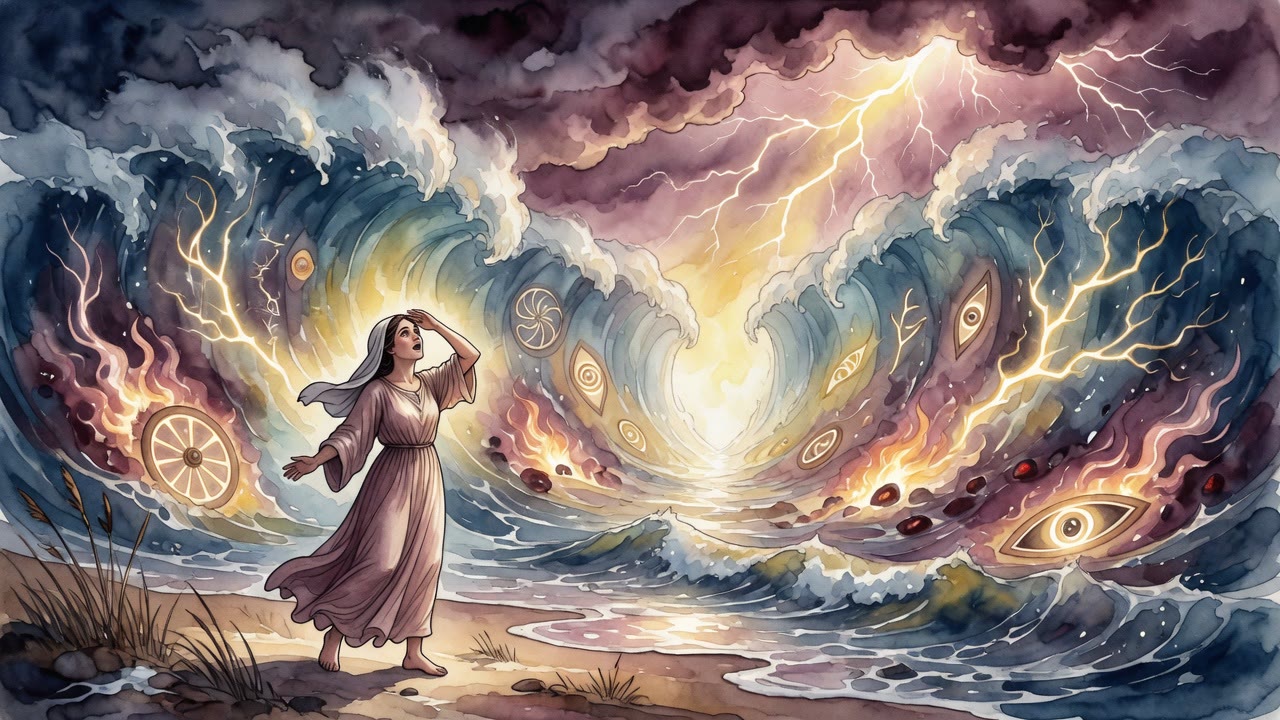
Six-winged seraphim hide their faces from the light while the living creatures carry the Throne and a creature named Israel leads heaven in praise.
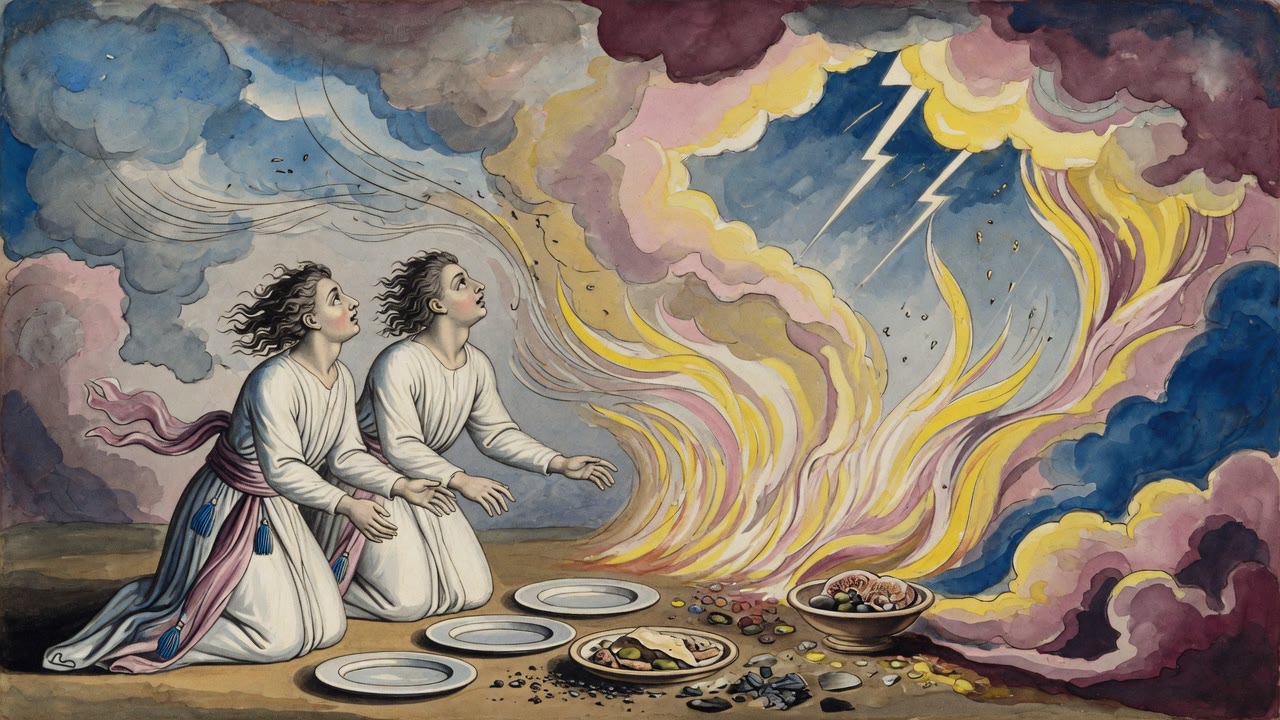
Aaron's two eldest sons reasoned that if Moses lived on the sight of God alone, they could feast their eyes and skip the body too.
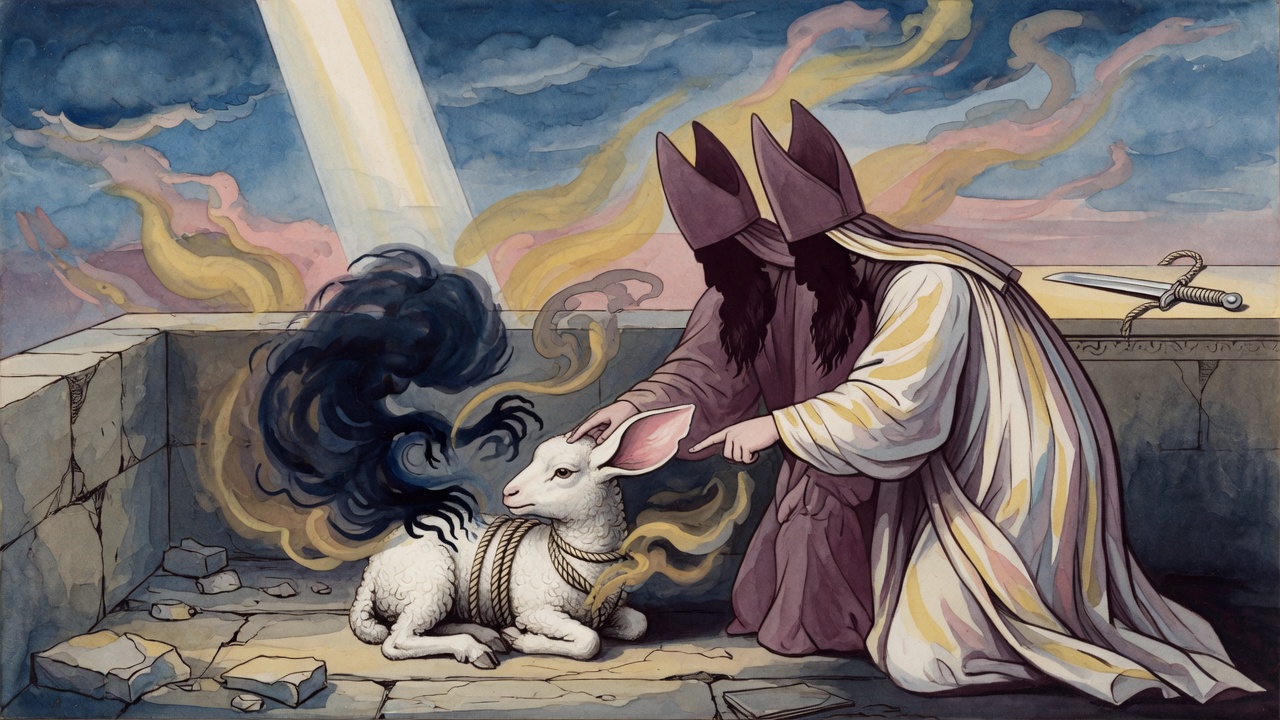
A gentile seer who could gaze on the Shekhinah, the Divine Presence, shoves past his servants at dawn to saddle his own donkey, hungry to curse Israel.
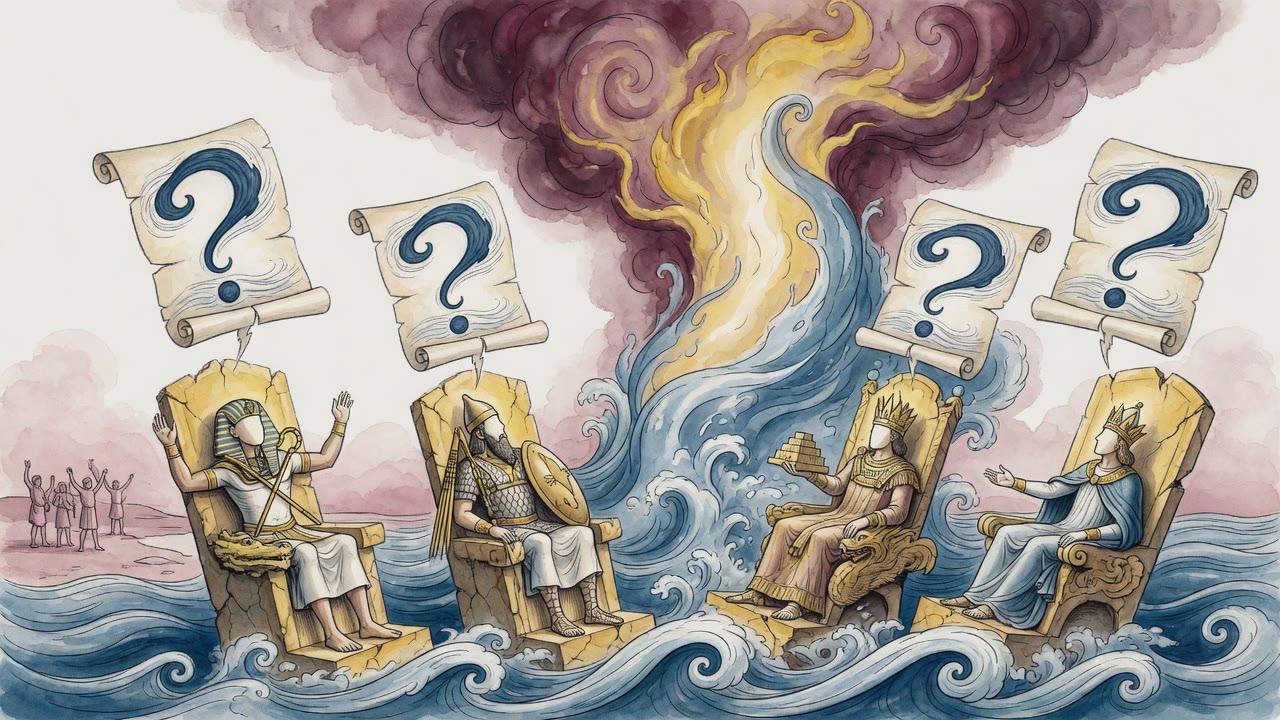
Jeremiah climbs the bloodied road and finds a woman weeping in black over empty cradles, and she is the burned land herself, the one God keeps His glory for.
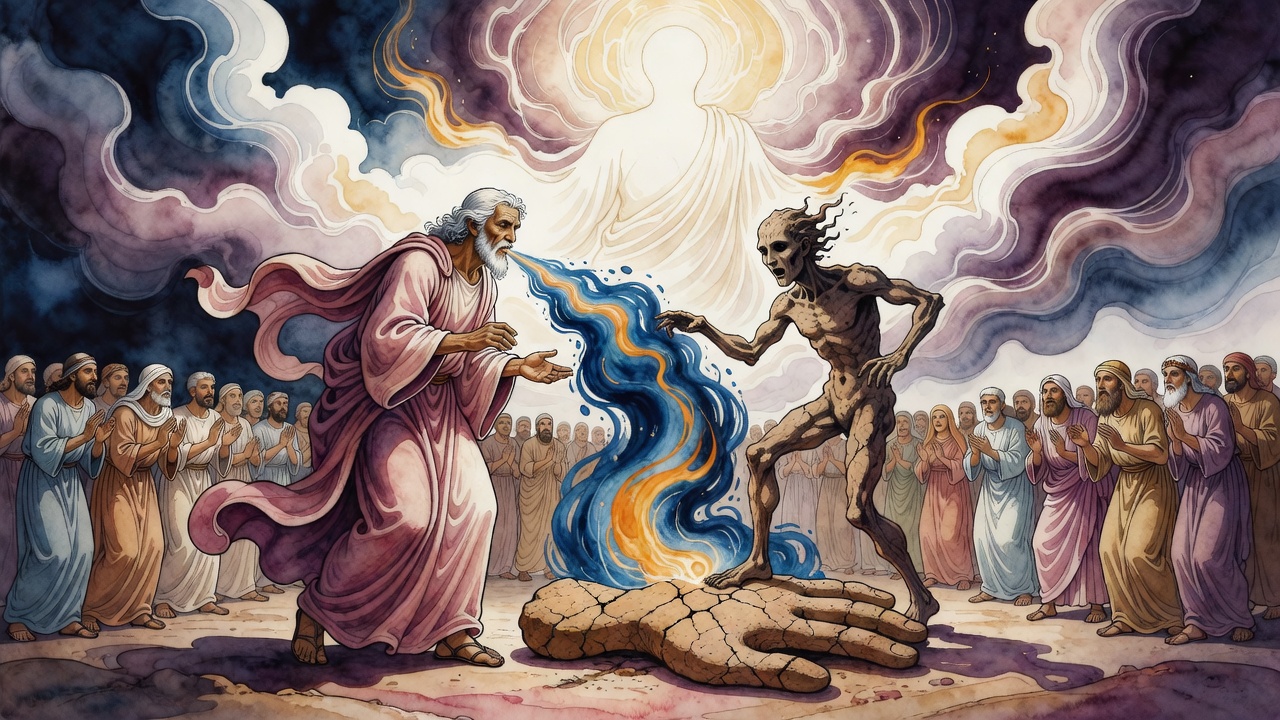
When the crowd demands proof of how God made man, Enosh breathes into clay, Satan enters it, and the first idol rises to its feet.
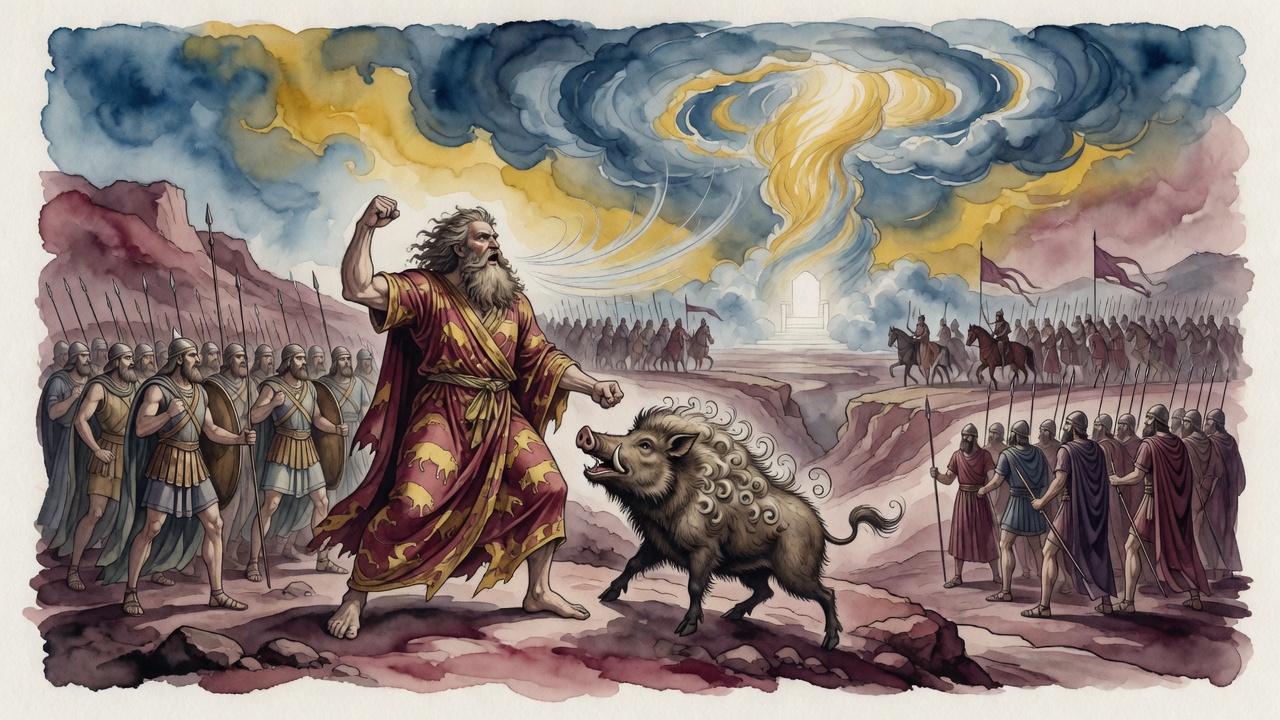
Job took his cry for God's abode as an address and marched east, west, south, and north, while the presence stood unseen in the west.
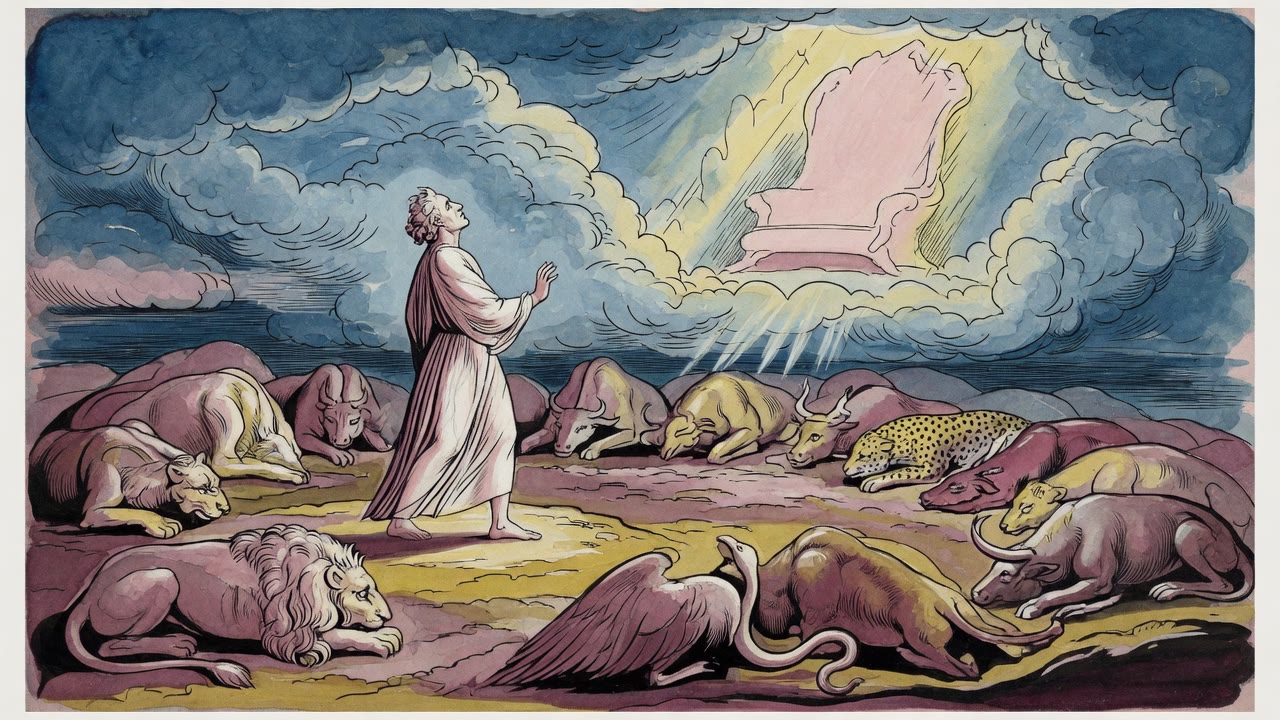
Adam pointed at Eve, Eve at the serpent, and no one would hold the guilt. Then five cries slipped loose into a world too deaf to hear them.
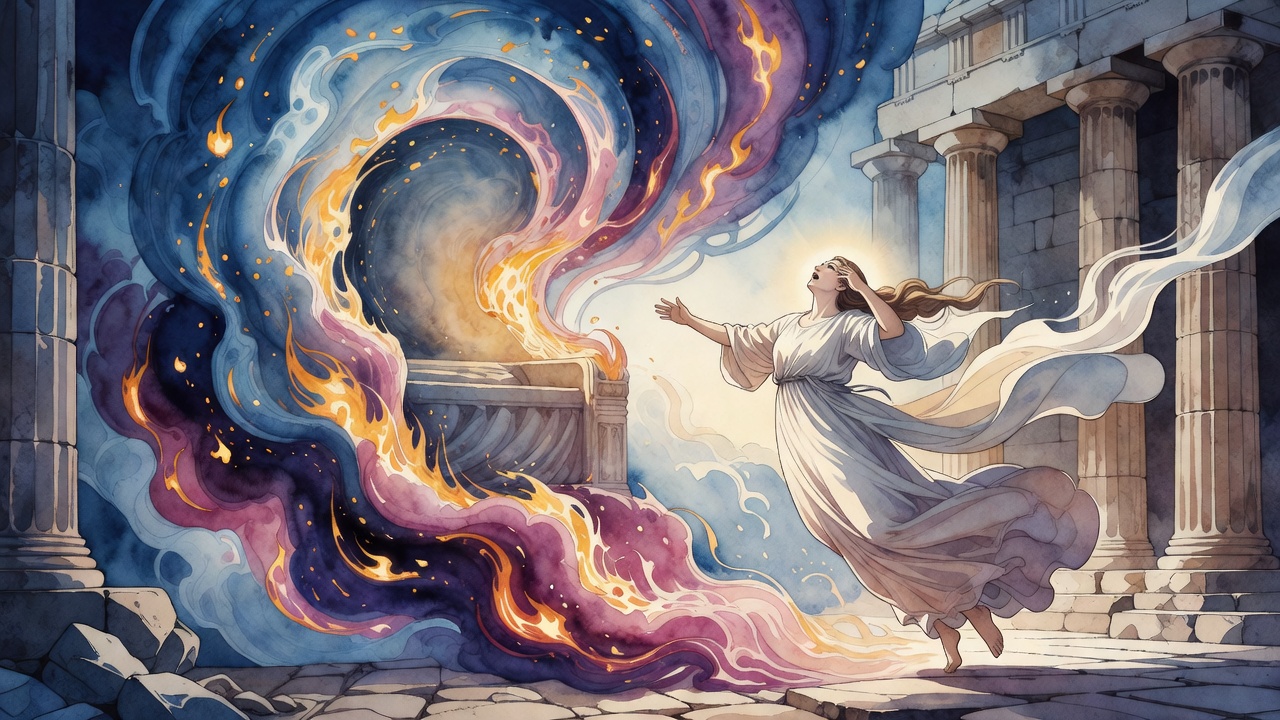
The Shekhinah, the Divine Presence, had led no revolt and carried no guilt. God reached for her anyway, and she wept the whole way down through the spheres.
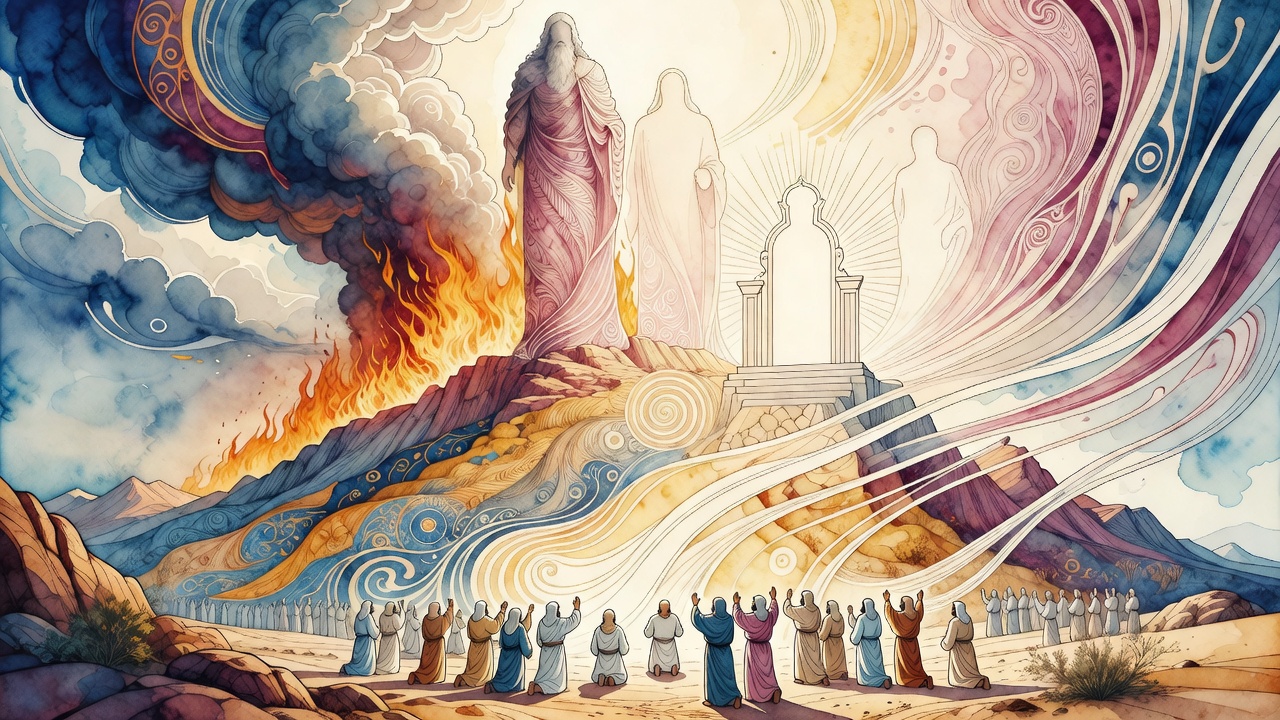
A kindness done in a low place with no witness rose as a thread of light. The Presence wore a robe cut from that cloth. When Israel turned, she wore black.
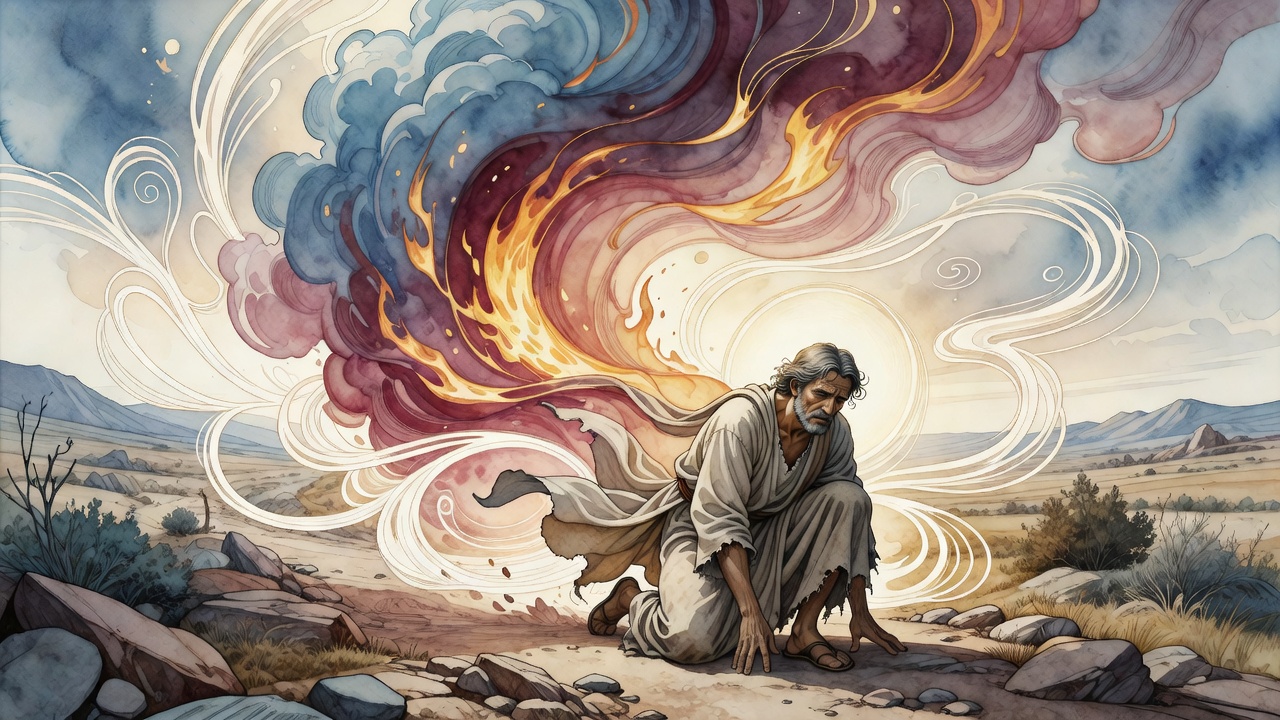
Jacob sat in the dust with Esau behind him and no prayer left. The presence that had ridden his life went out, and the road became only a road.
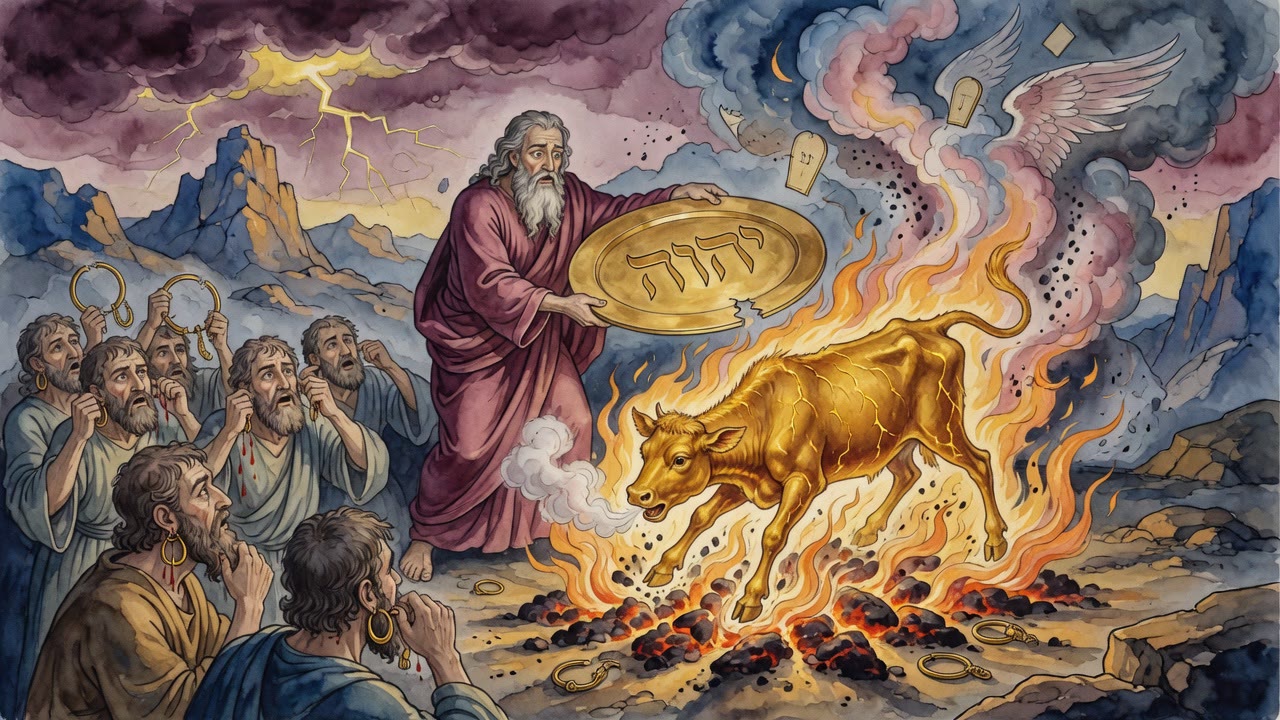
Priests knelt and tied gold around his ankle. He took nine steps into the inner room. Outside, a nation watched the slack line.
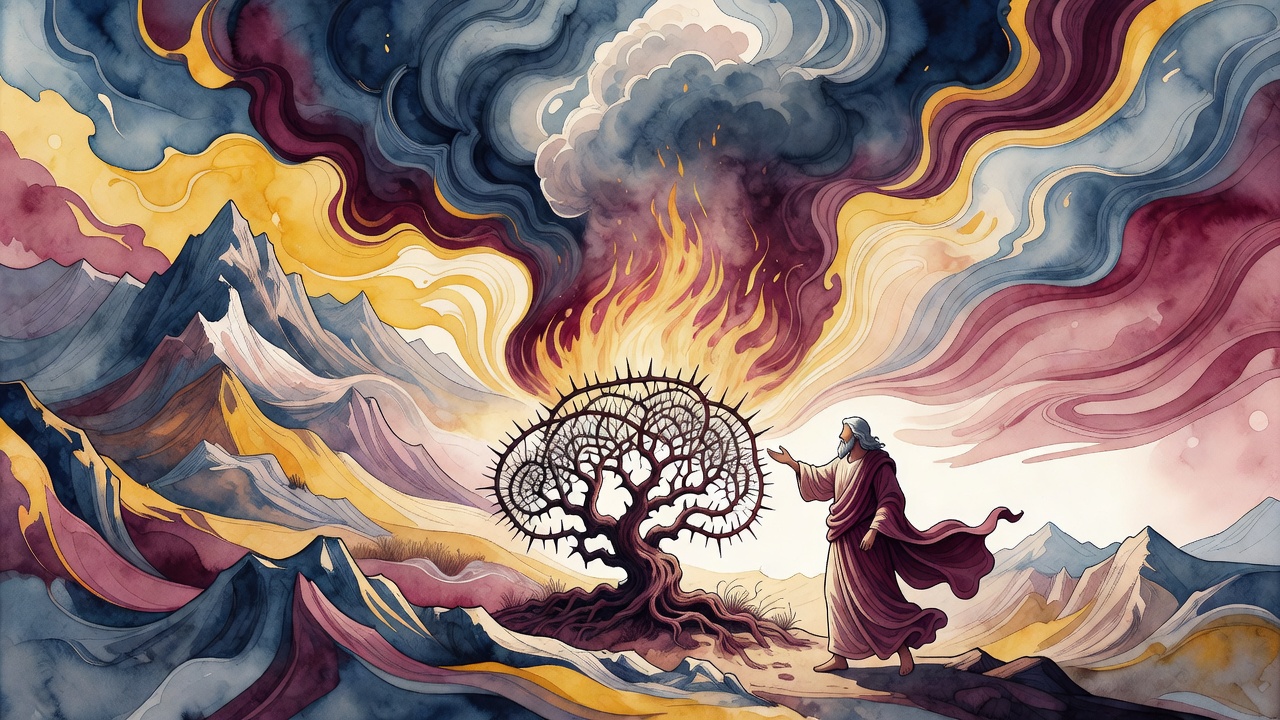
God abandoned the high slopes and settled in a shrub of thorns because Israel was in grief. Moses asked for an oath before he would go down.
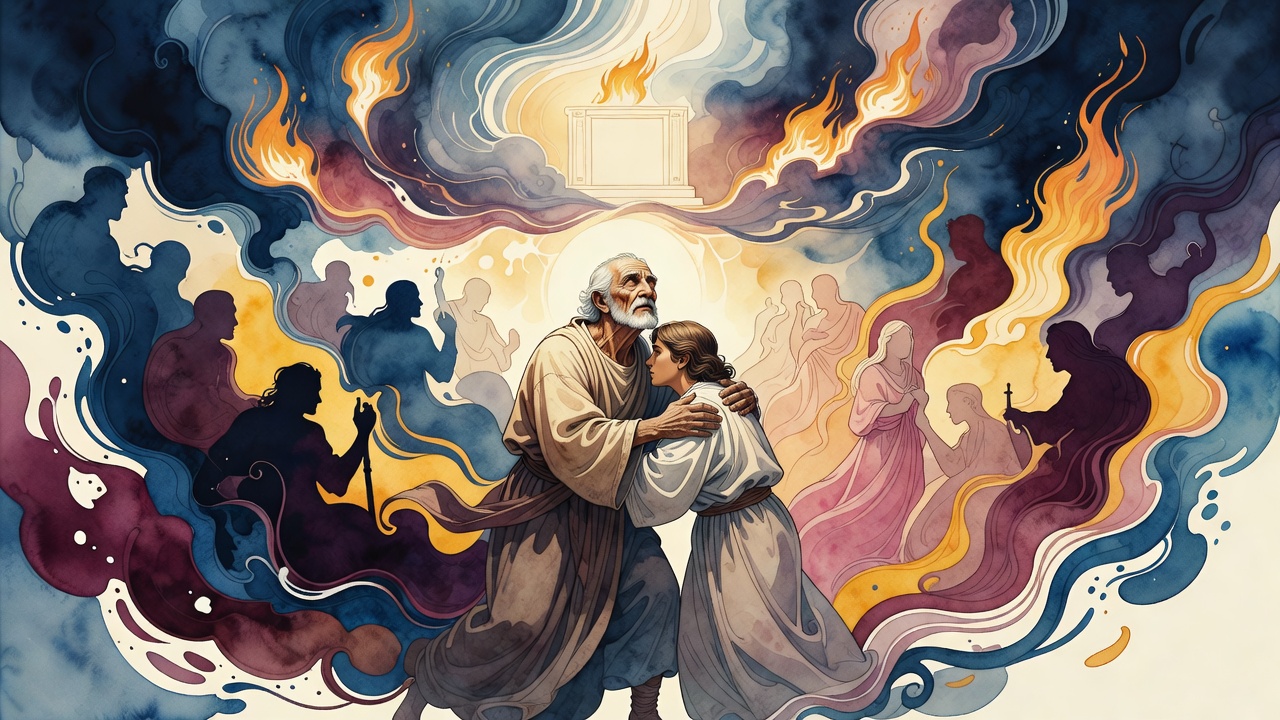
Jacob came in goat skins. Isaac's eyes were dim. The smell that rose off the clothes was not goat. It was a garden he had never walked.
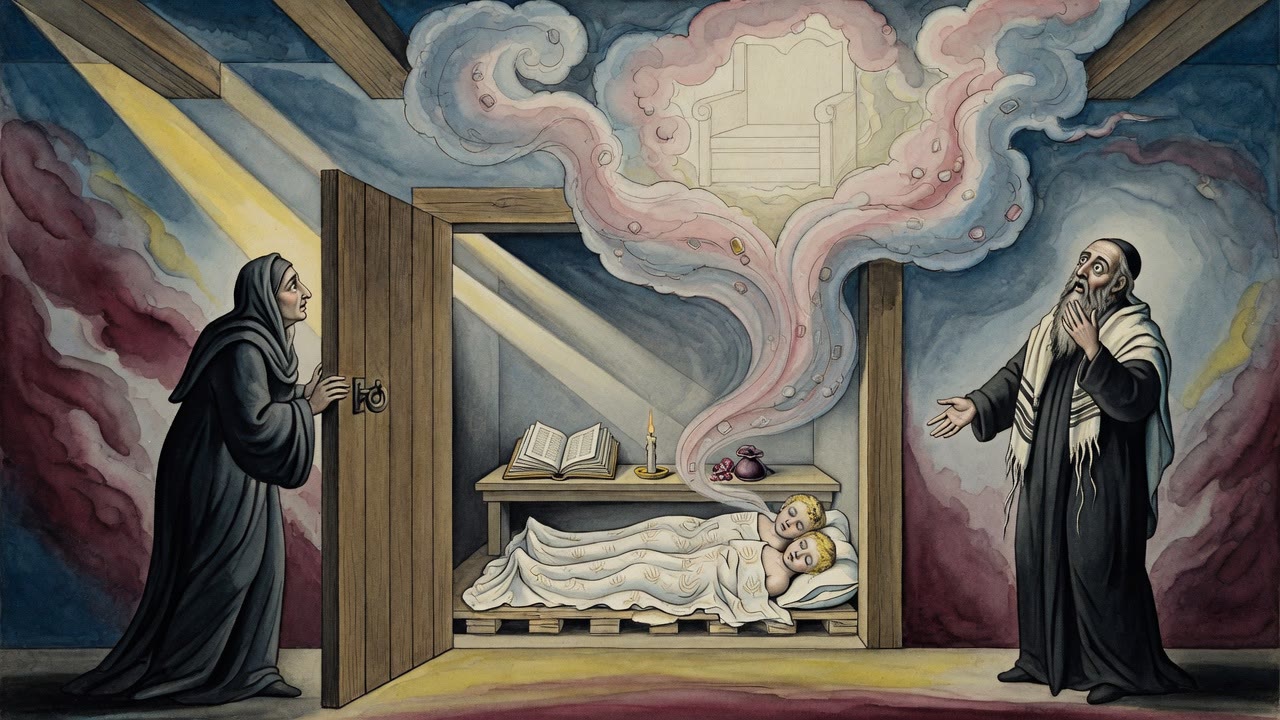
The sand burned under the first steps out of Egypt. Then a cloud spread under their feet, and the camp walked on it.
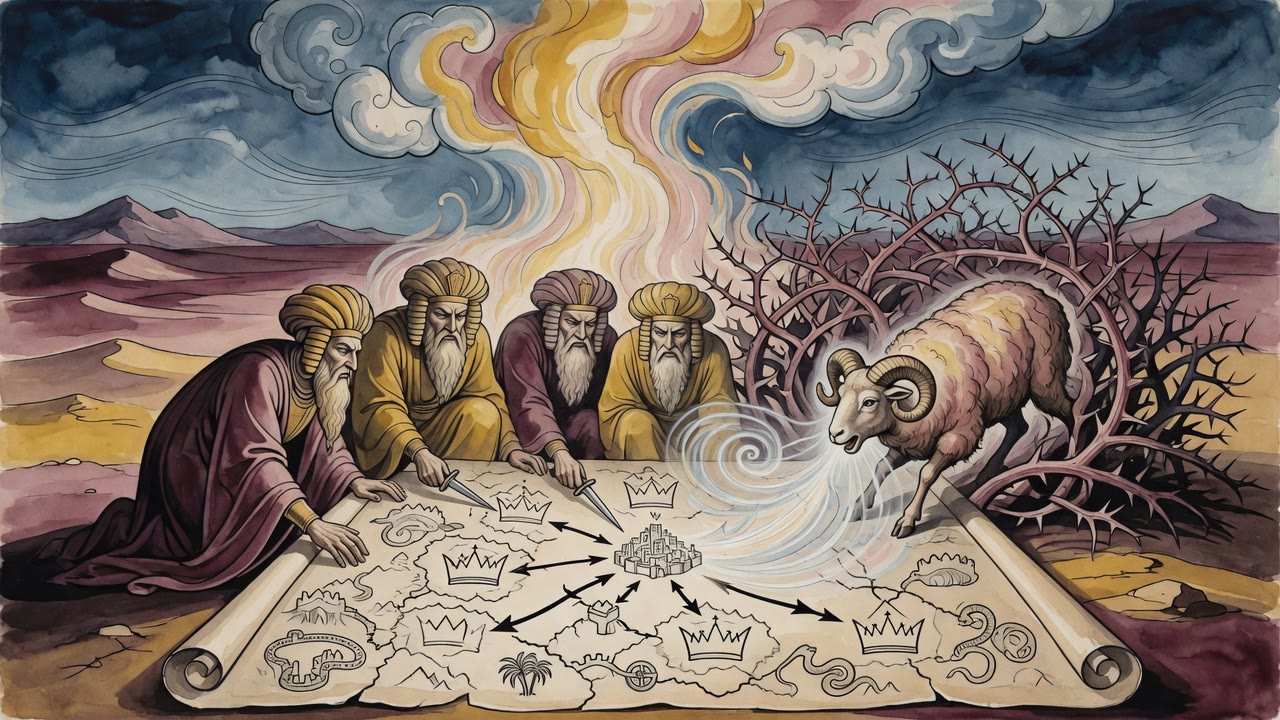
Isaac walked into his mother's tent and found the lamp dead. The cloud at the flap was gone. The dough sat like any other dough.
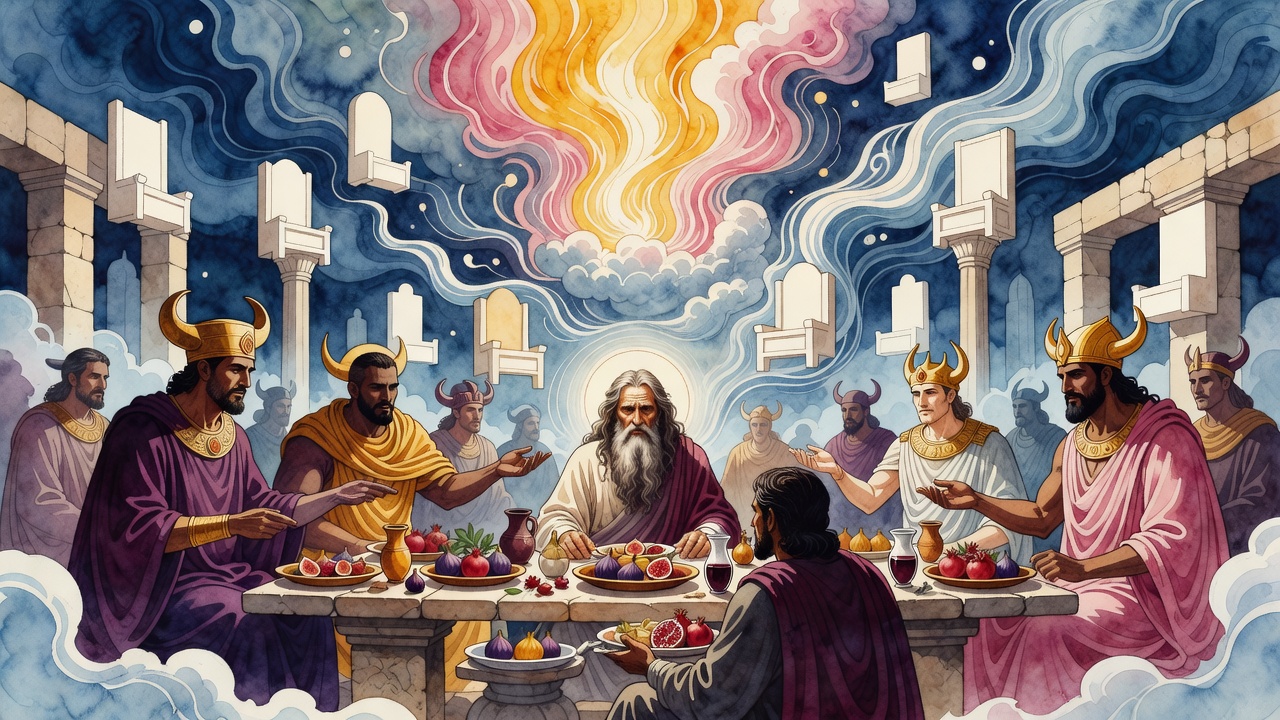
Joseph sent clothes up from Egypt, a turban among them for his father. Jacob put it on, then slaughtered sacrifices asking whether he should go at all.
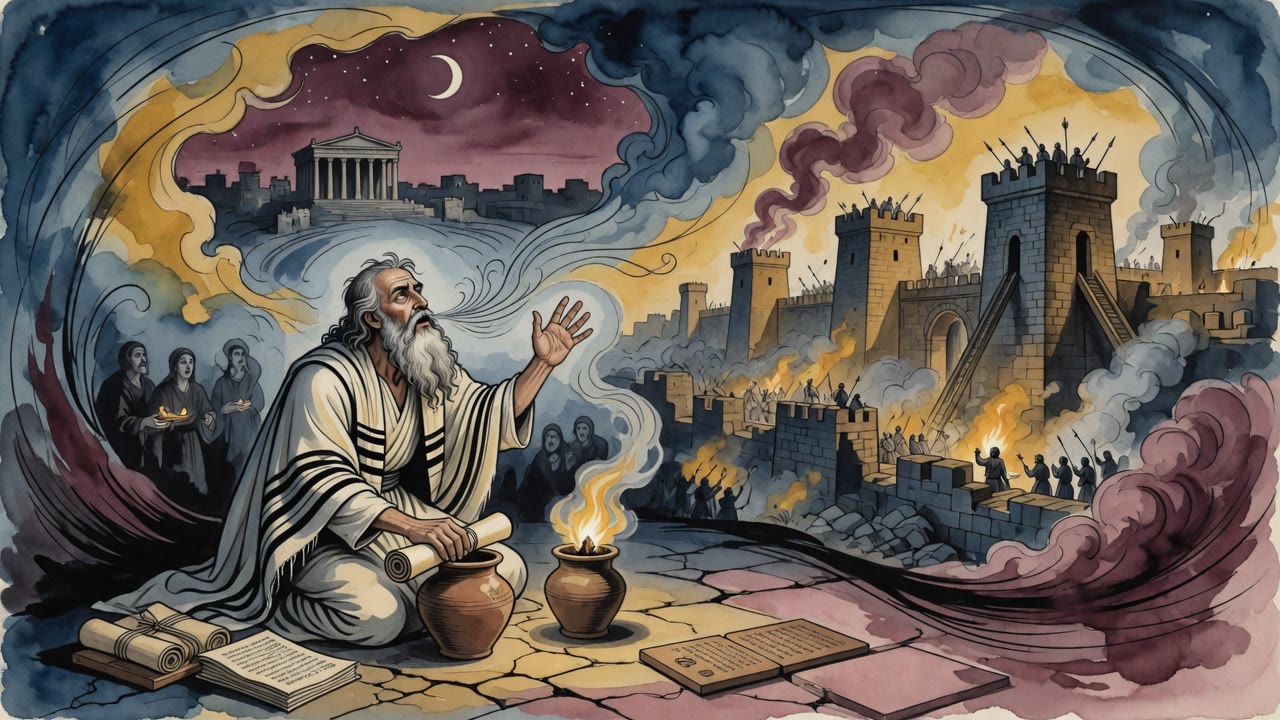
Before circumcision Abraham fell on his face at every word from heaven. After the covenant he stood, and the gate of Gehinnom (afterlife of judgment) closed.
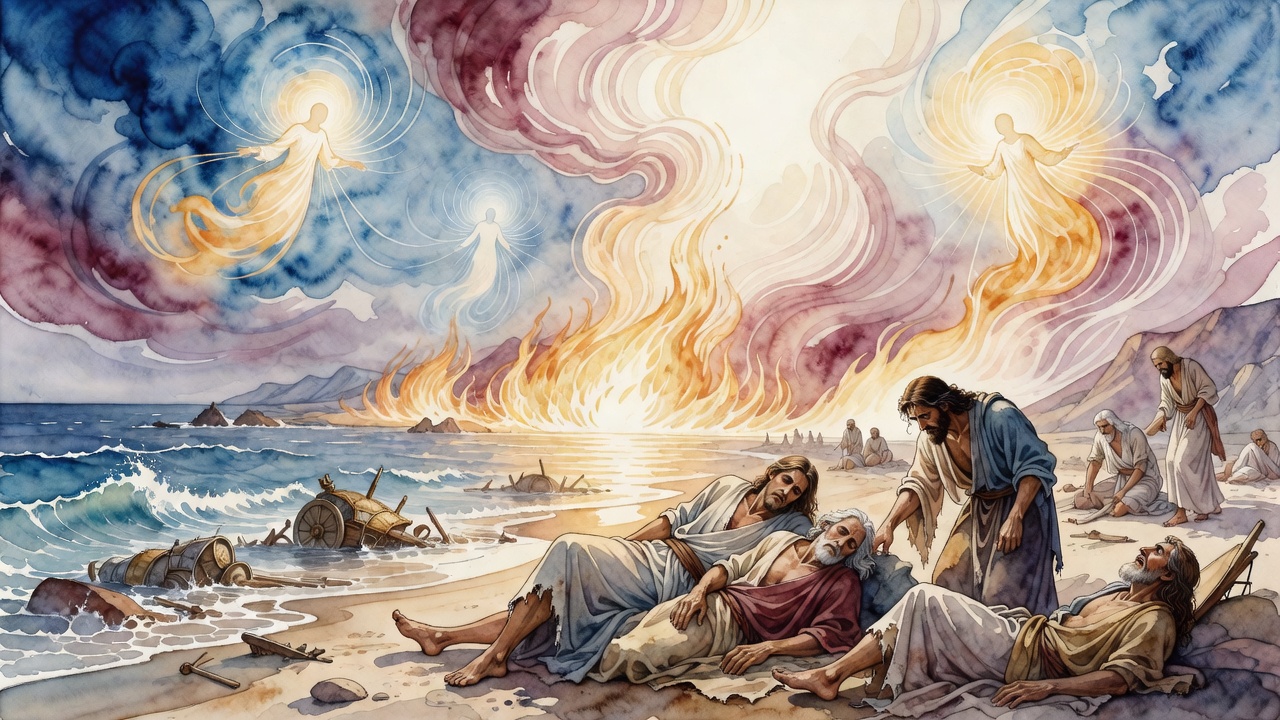
Pharaoh learned Israel would not return, the sea crushed Egypt's host, and freed slaves could not stand until angels and fragrance healed them.
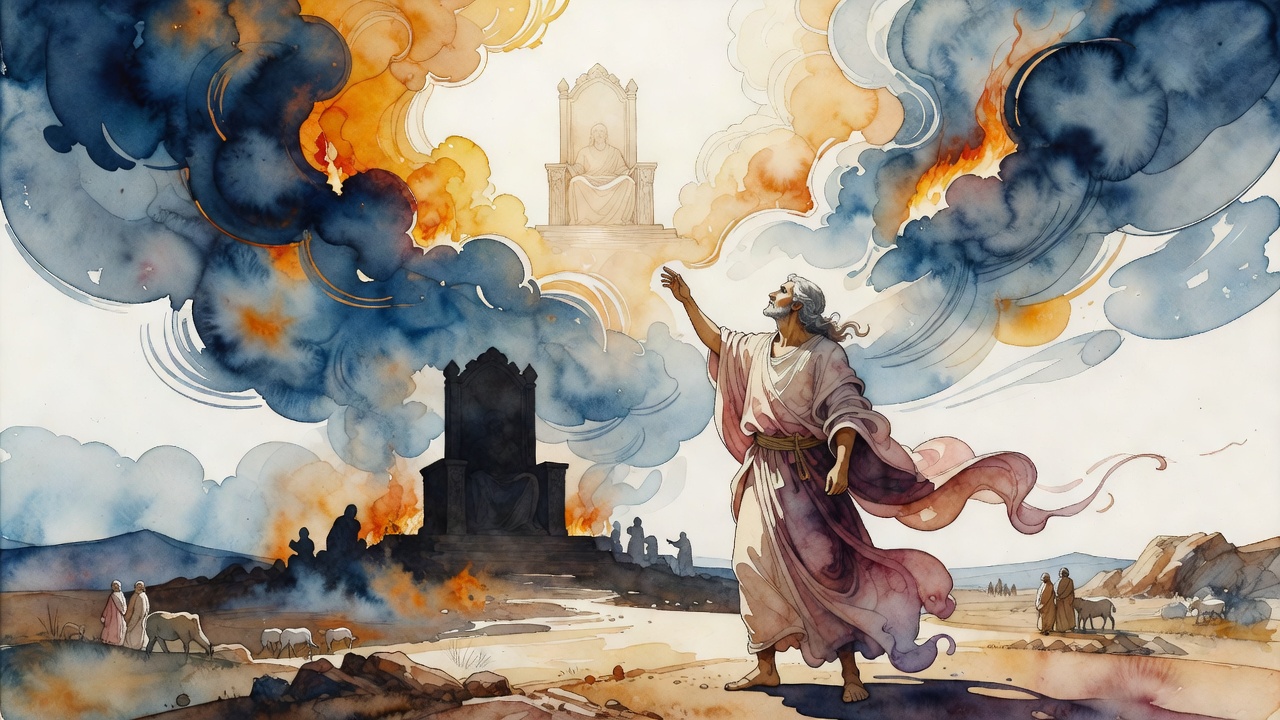
While shepherding at Abel-Meholah, Levi saw injustice enthroned and heaven open. Tanchuma places his tribe among God's chosen like Sabbath and the land.
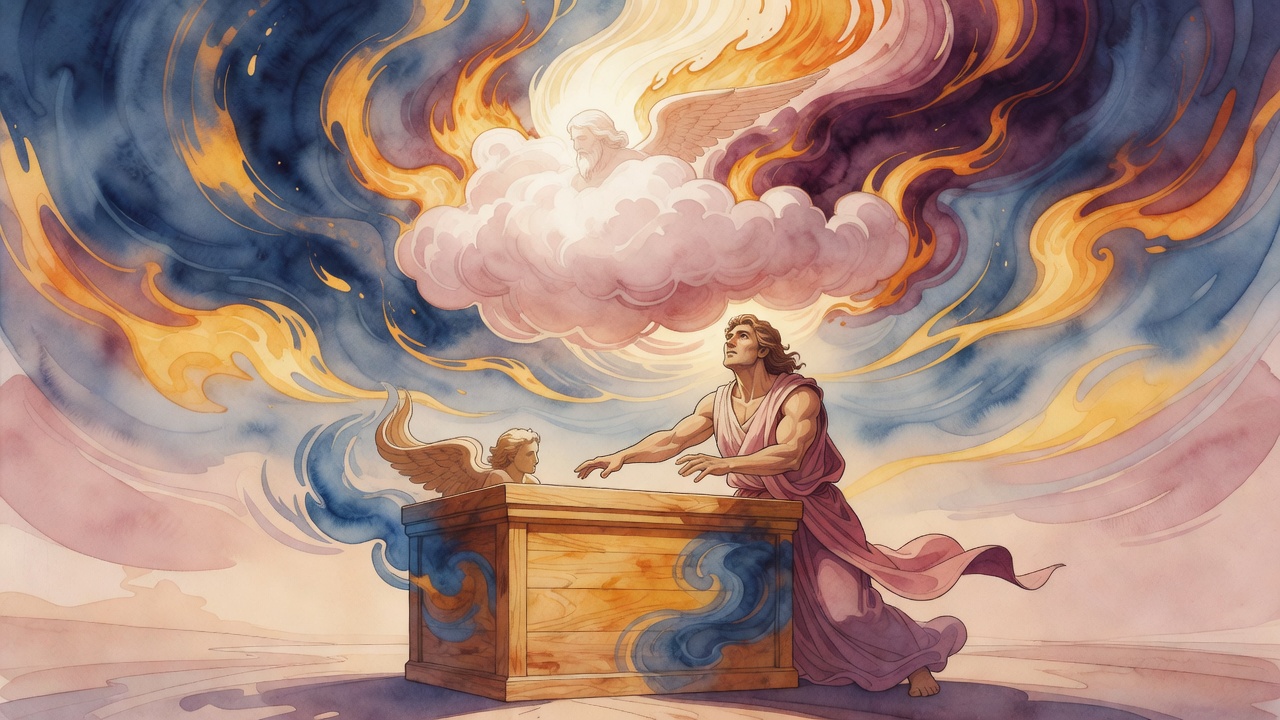
Bezalel of Judah bent over acacia in a camp that had just melted gold into a calf. Assistants could make hooks. The ark he would not give away.
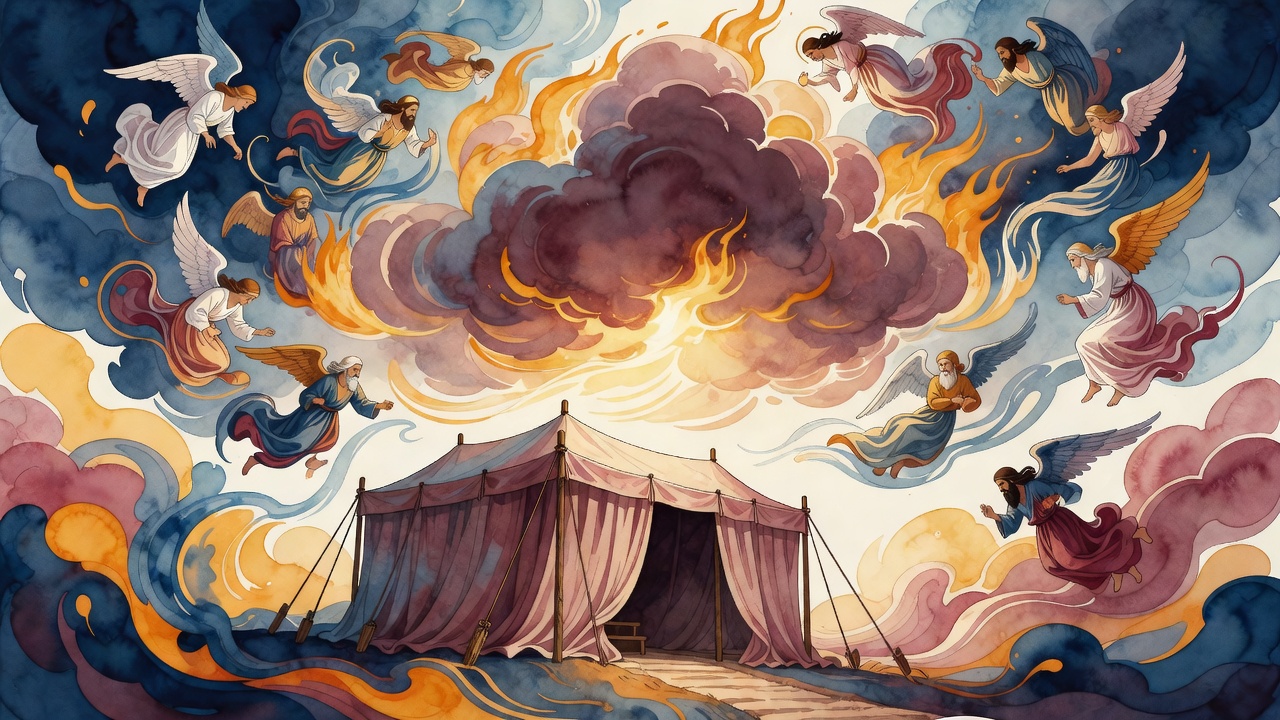
A king told his quarrelsome wife to make herself a royal robe. She sewed for months and never once picked a fight. Then he looked at it and said woe.
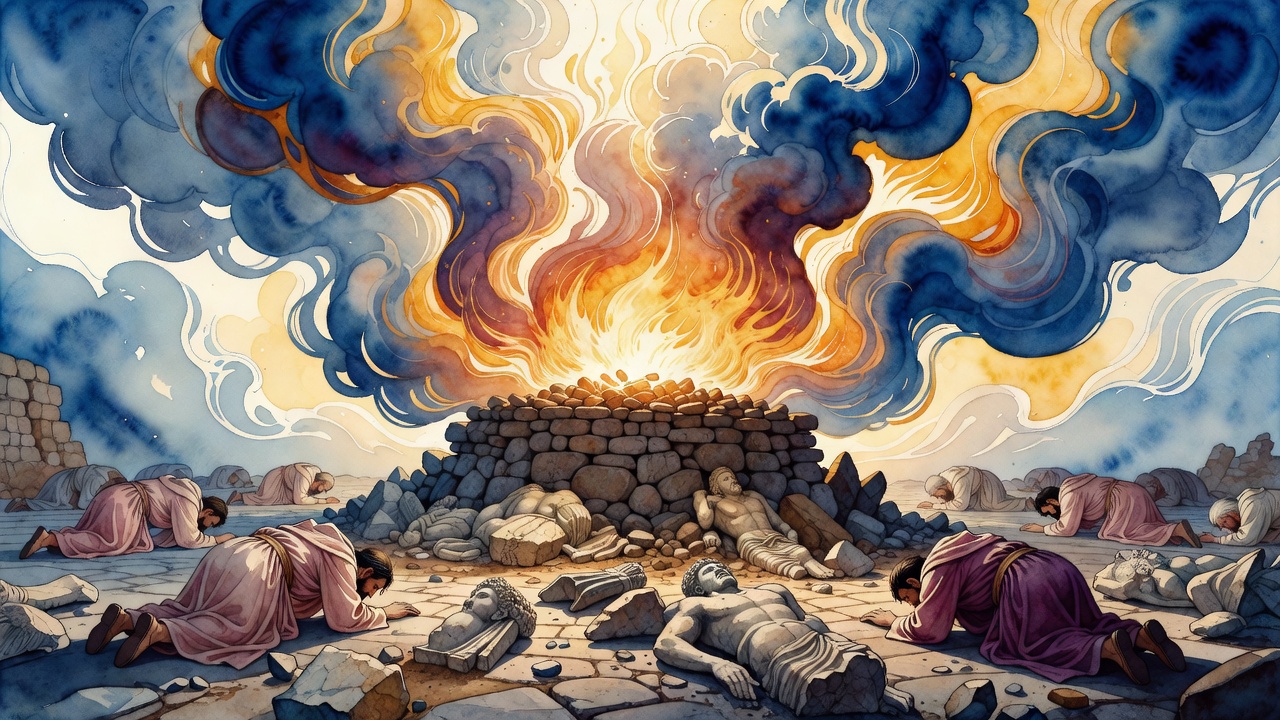
After idols leave the squares, a new altar rises from gathered stones. Priests fall on their faces until the sacrifice is consumed in smoke.
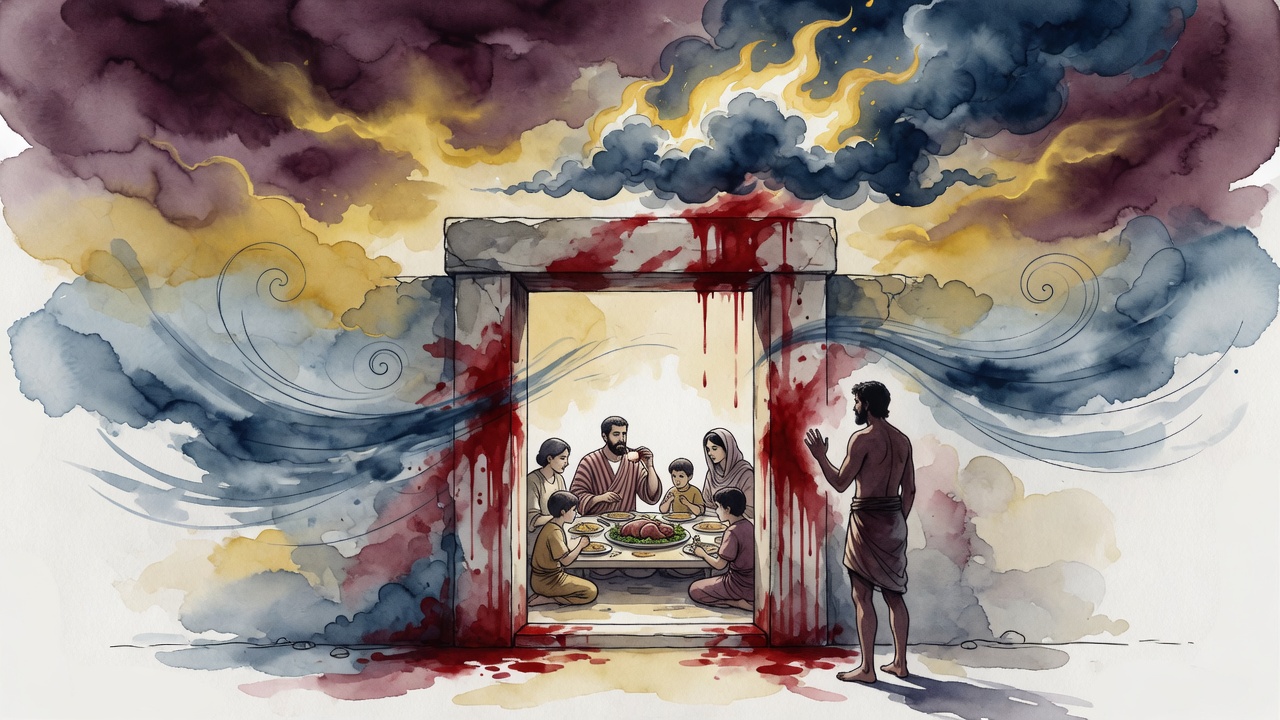
Israel stood at the water with the eighth-day mark in their flesh. Moses sang one word, and the sea tore along that cut.
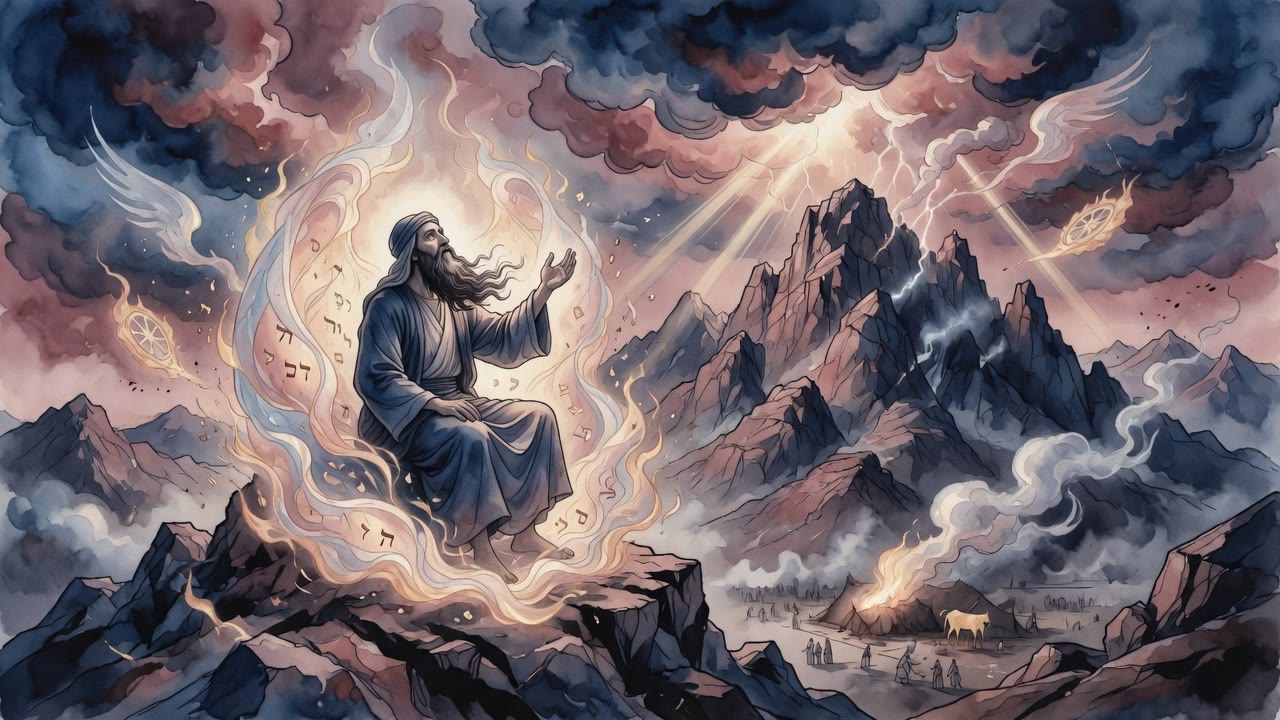
On Sinai Moses ate no bread. The Shekhinah, the Divine Presence, fed him while letters fled the first tablets and he carved the second set.
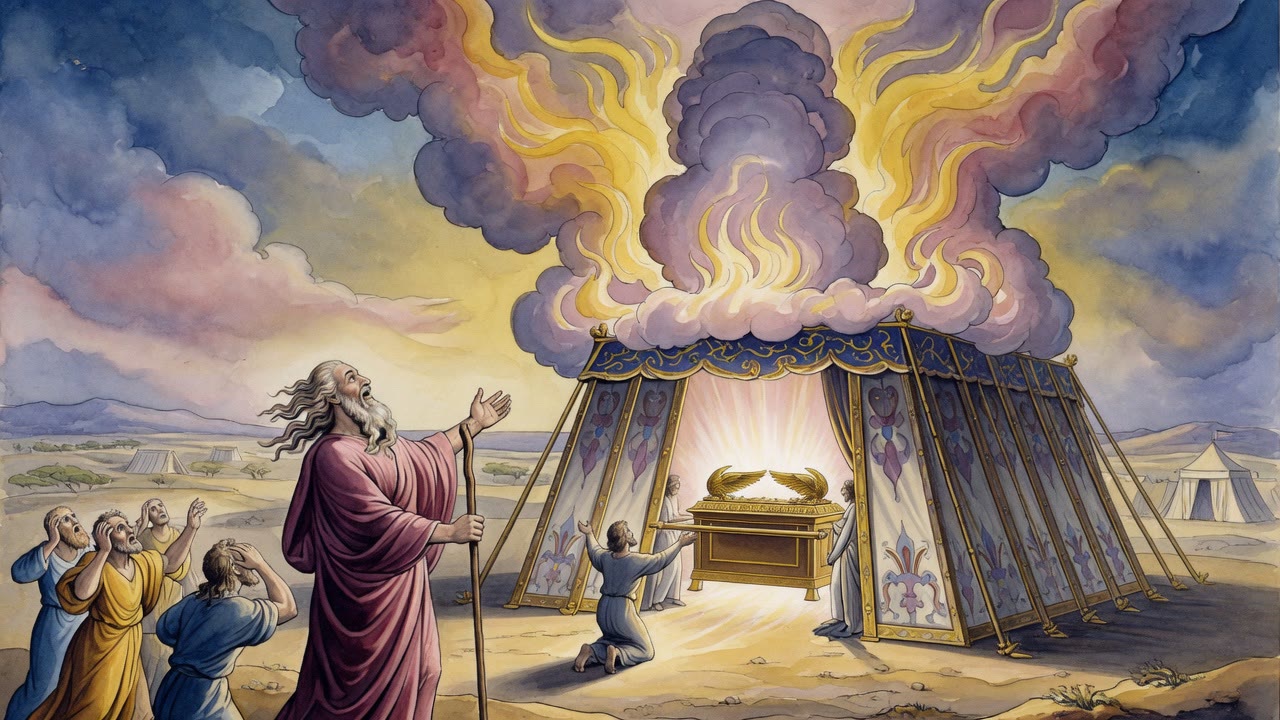
Scoffers mocked Moses until the Shekhinah, the Divine Presence, rested. Bezalel began with the Ark of light, and the dwelling rose alone.
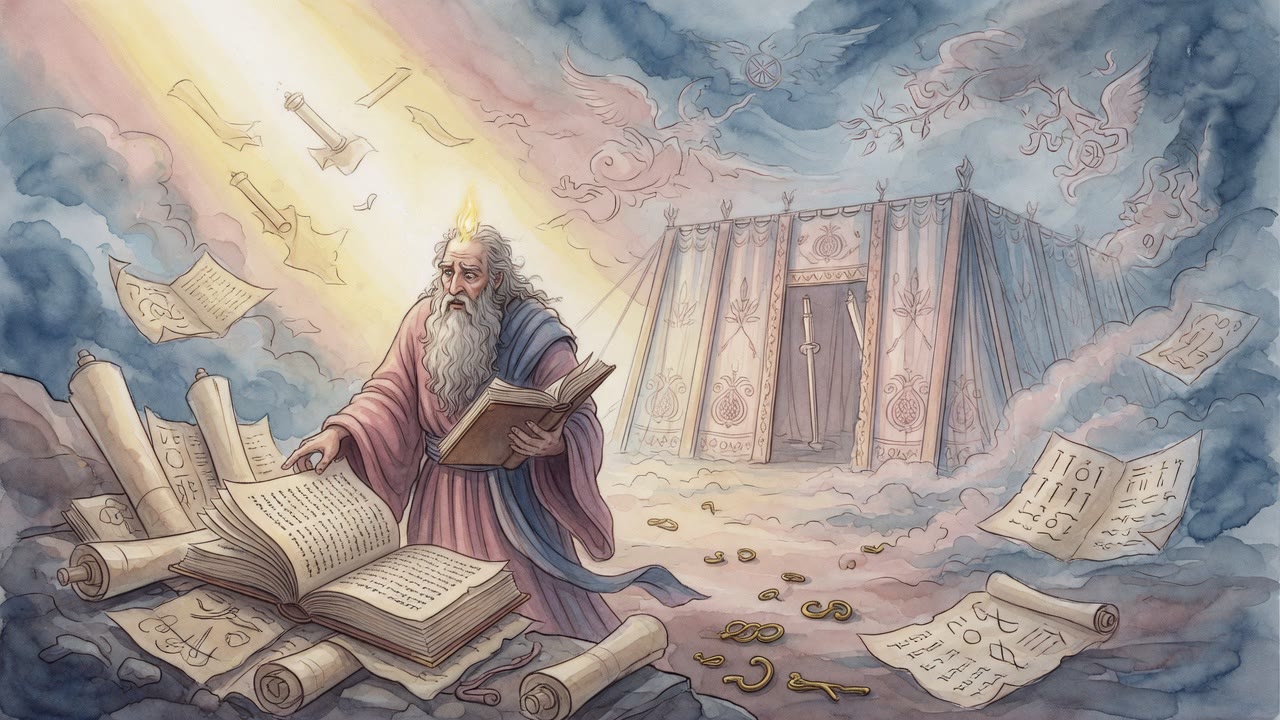
Cynics watched the nape of his neck and called him rich. One thousand seven hundred seventy-five shekels sat blank in the ledger.
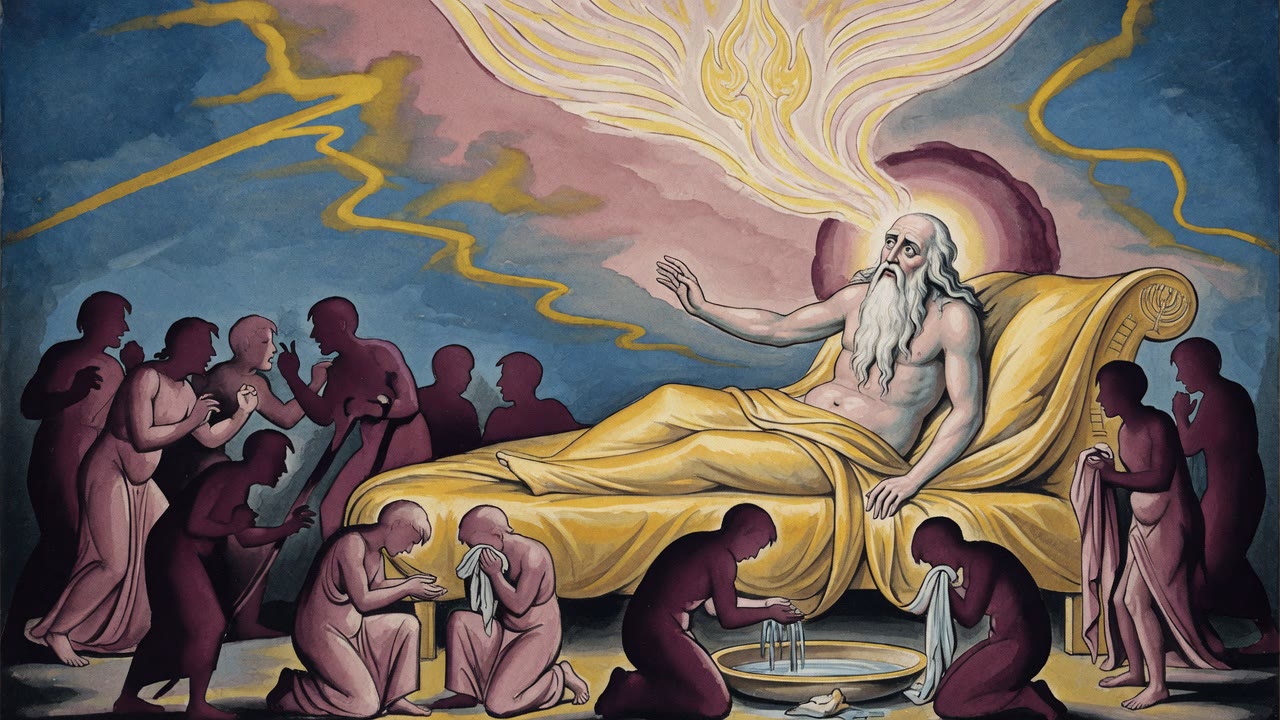
Levi's jaw tightened and Simeon's eyes found the floor. Their father opened his mouth to give them the date of the end, and the words left his head.
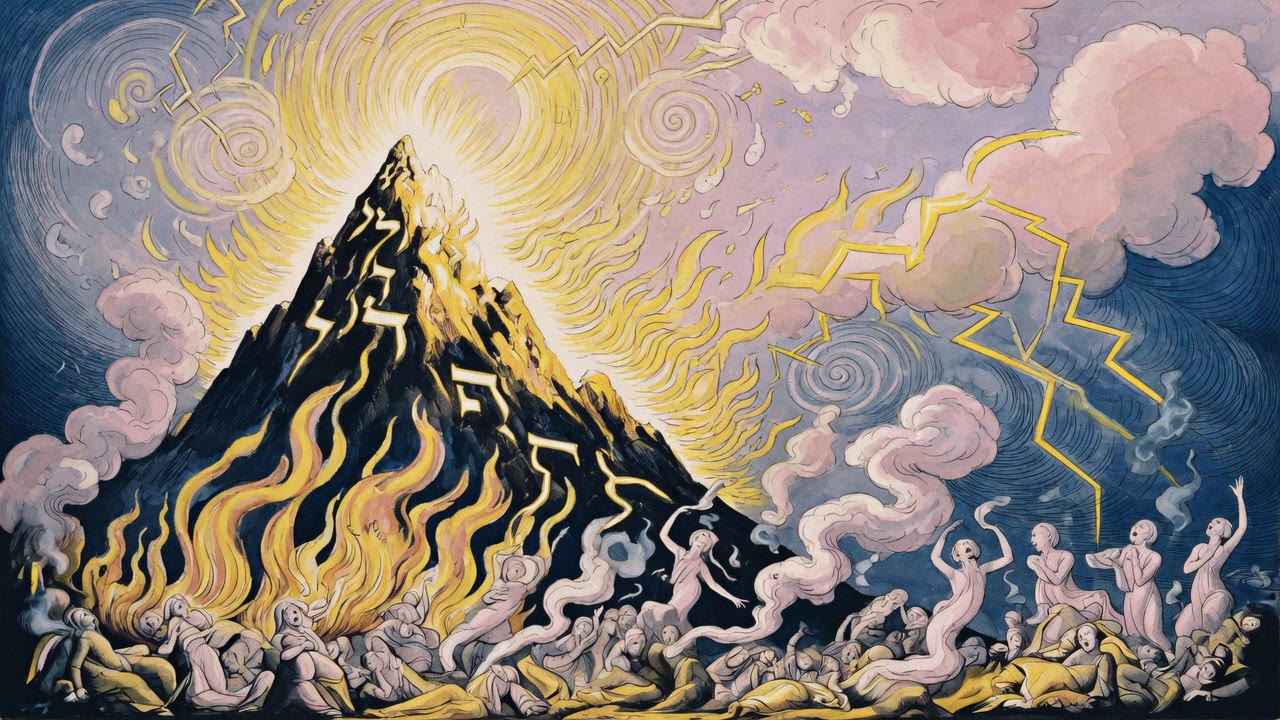
The Temple burned and God's presence went into exile too. She walked down into the dark shells to lift out the sparks trapped there.
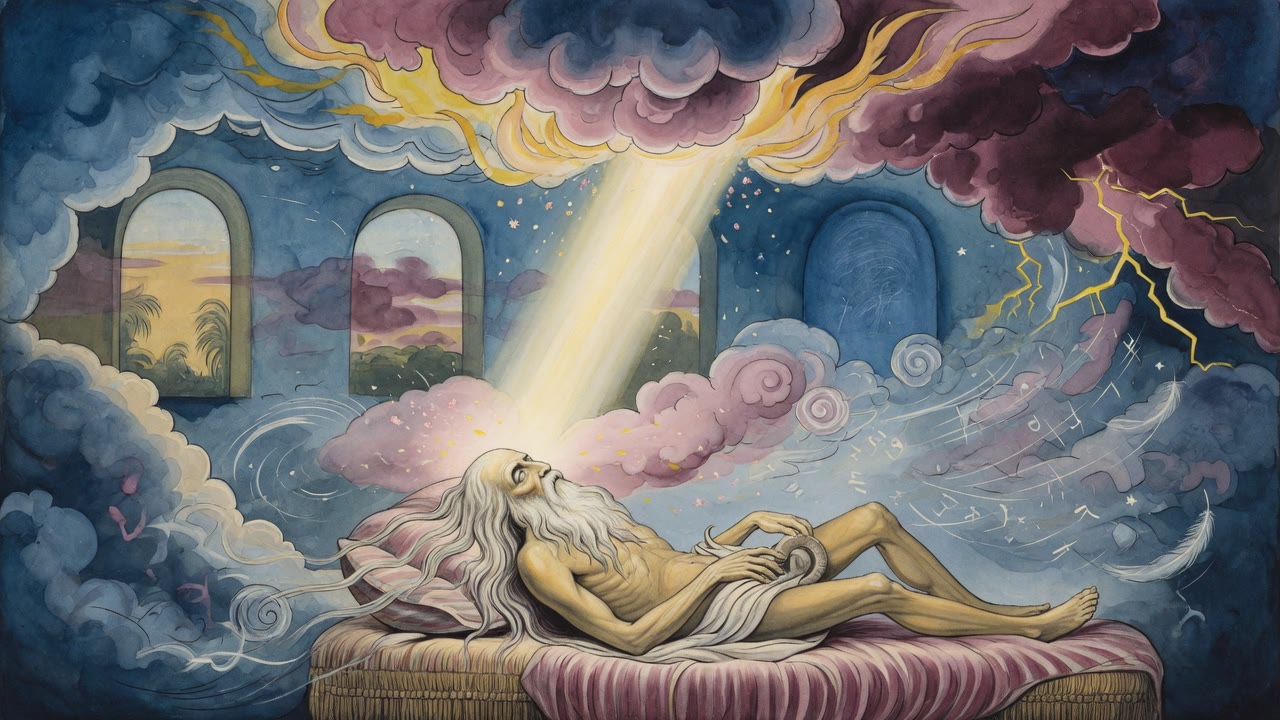
Old age shuts Abraham's windows and doors one by one. When death comes, it arrives as the kiss of the Shekhinah, the Divine Presence, not as decay's claim.
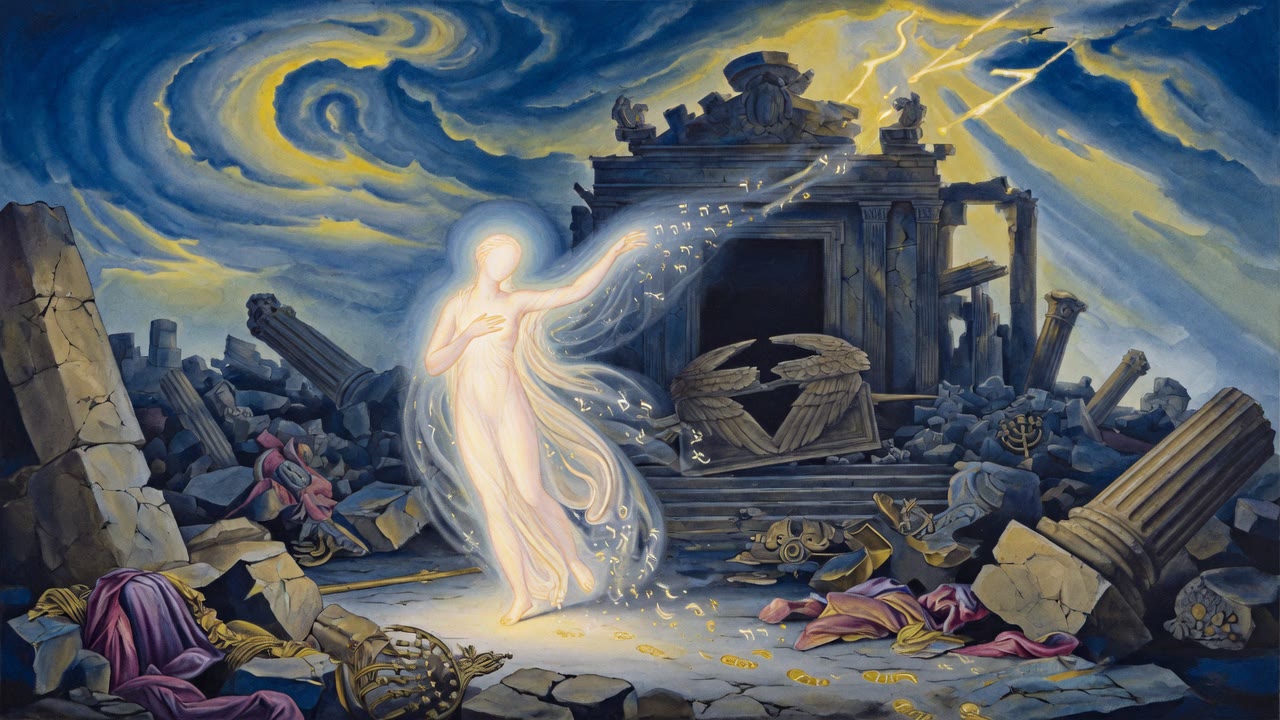
Night after night the Shekhinah, the Divine Presence, descends to the empty Holy of Holies, calling for the husband who vowed never to leave her arms.
