Hayim Vital Saw Jerusalem's Exile at the Wall
A Safed mystic rises at midnight to mourn the Temple until Jerusalem's stones open and the Shekhinah, the Divine Presence, speaks her grief aloud.
Table of Contents
 Click for full size
The Man Who Rose at Midnight
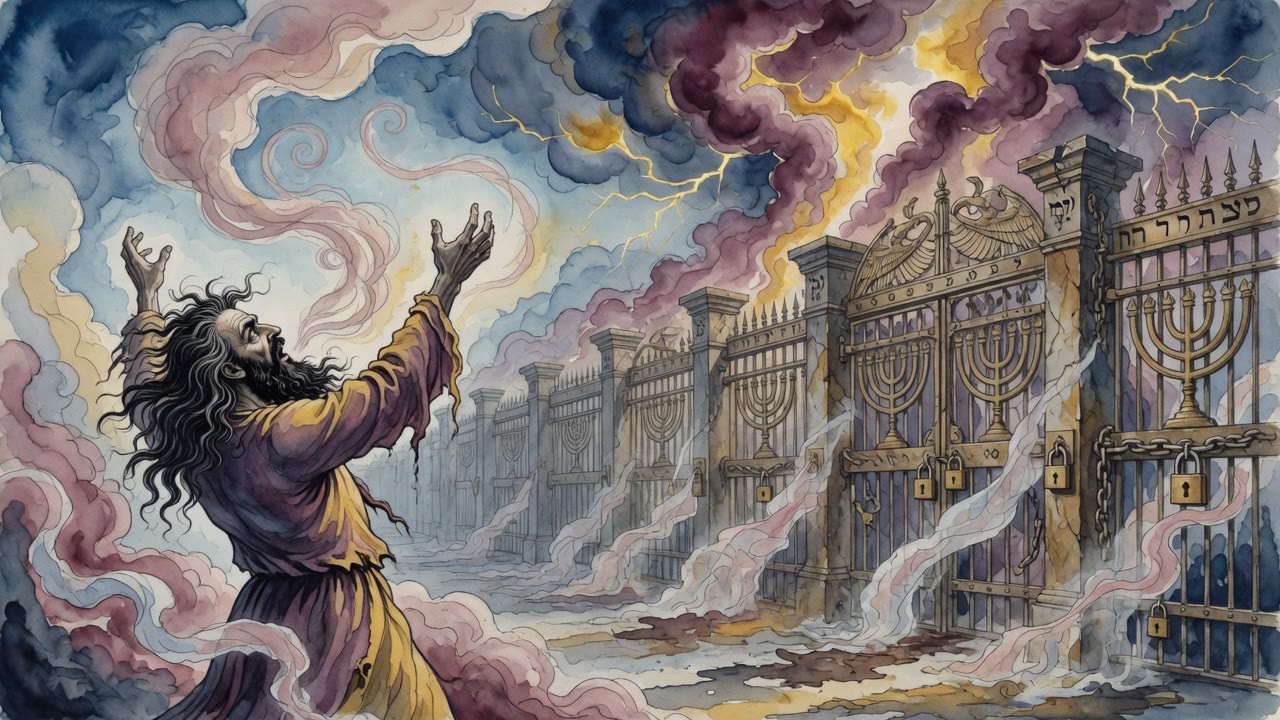
Night after night, Rabbi Abraham Berukhim rose from sleep and walked the streets of Safed in mourning. He performed Tikkun (a repair) Chatzot, the midnight vigil, the practice of rising at the hour when the Temple's absence is sharpest, when the city is quiet enough to hear what exile sounds like in the dark.
He did not treat this as a spiritual exercise. He walked it like a wound that needed attention every night or it would close wrongly. He cried through the dark hours. He addressed the destruction as something still present, still bleeding, not safely distant in history. The stones of Jerusalem were not old news to him. They were witnesses carrying an absence that had not healed in fifteen hundred years.
Luria, the Ari, told him he needed to go to Jerusalem. He needed to go to the Wall and stand before the stones directly and ask to see what was hidden there.
What the Stones Showed Him
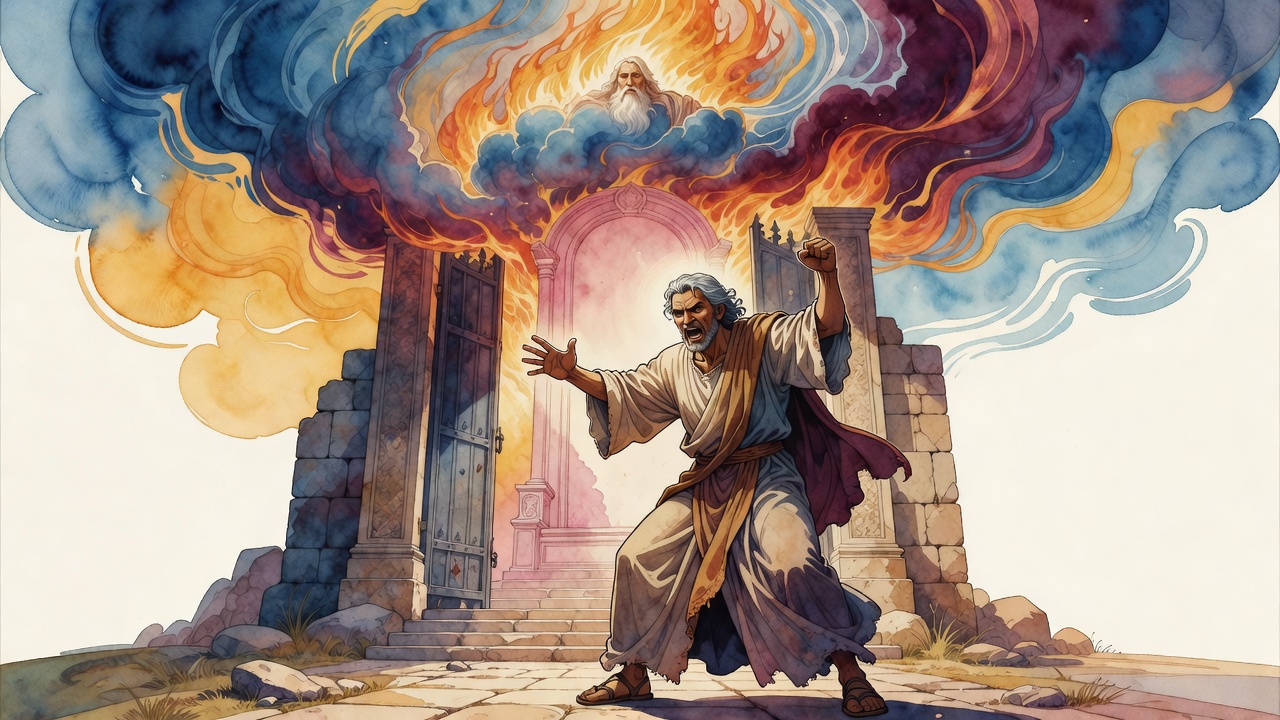
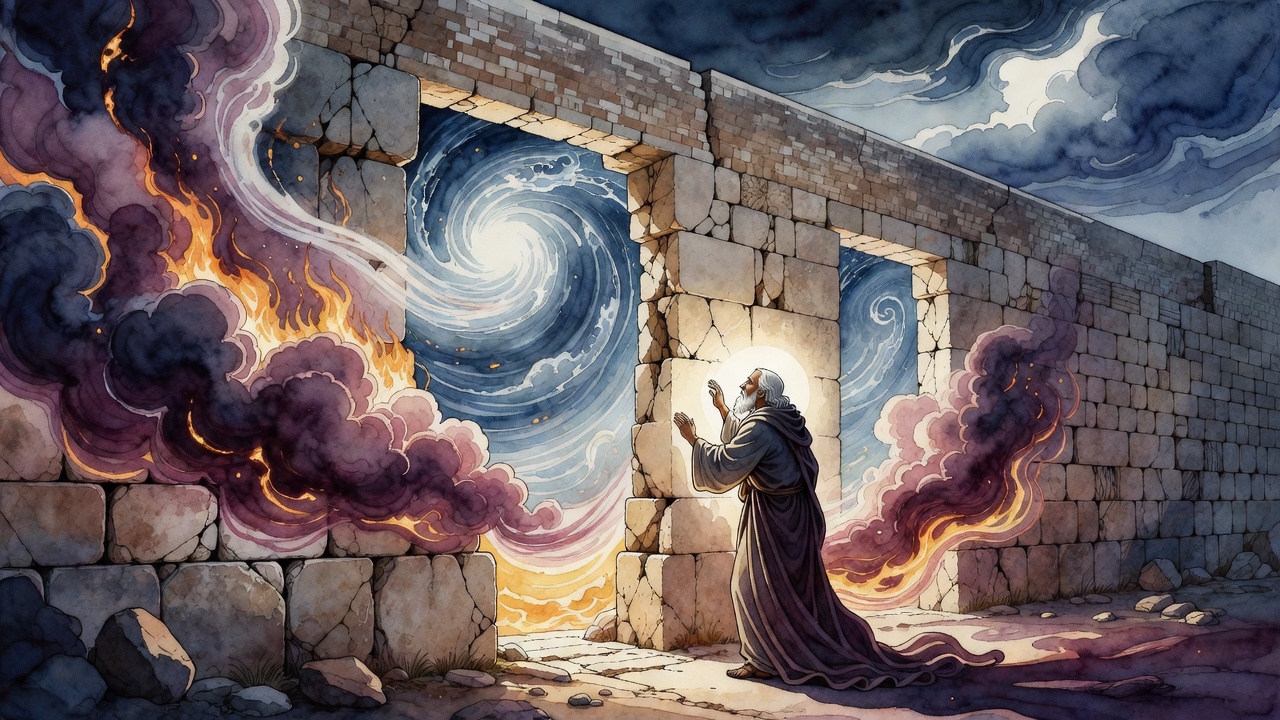
At the Wall, Rabbi Abraham stood before the ancient limestone and prayed. What he saw changed his face so completely that those who knew him could not look at him afterward without being shaken. A woman came to the stones that same day and turned away weeping, saying: the face of the Shekhinah (the Divine Presence) appeared in the Wall.
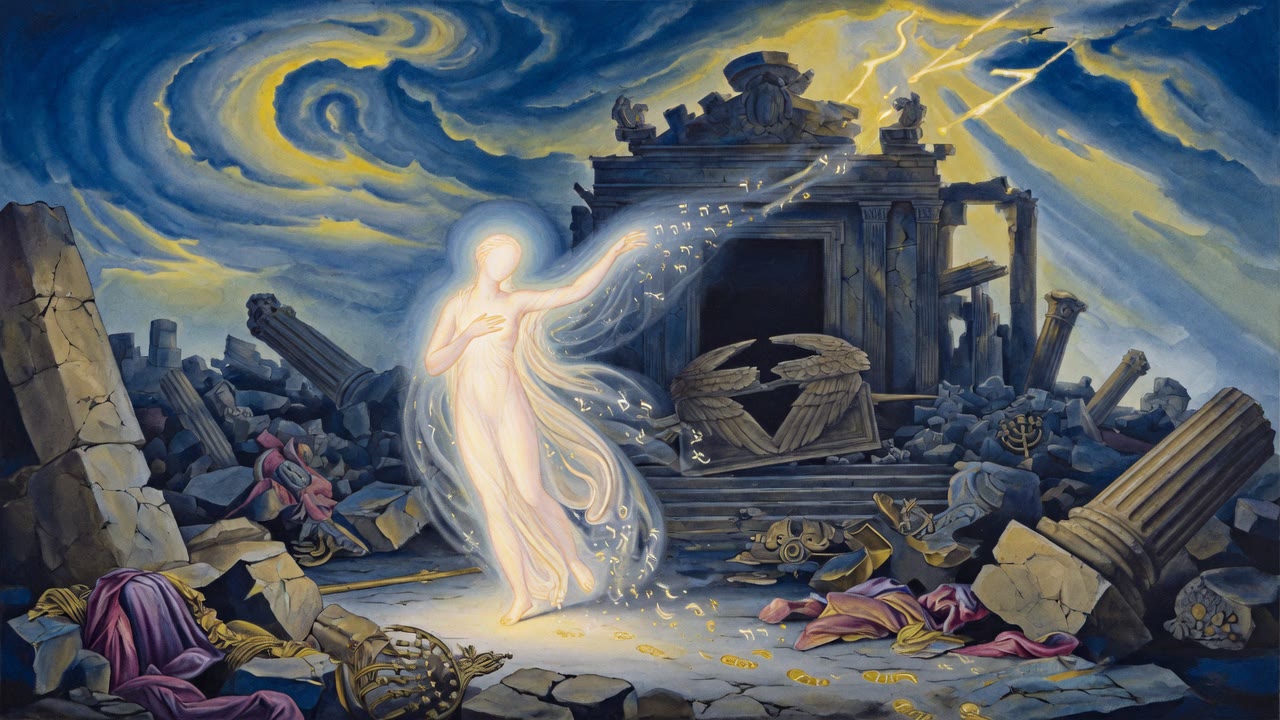
What Abraham saw, according to the account that reached Hayim Vital through Shlomel of Moravia, was a woman in black. Not an ordinary woman. A figure clothed in mourning, standing in the stone itself, her grief beyond the range of ordinary grief. This was the Shekhinah, the divine presence that had followed Israel into exile, that had wept at the Temple's burning, that had not returned to its full radiance because the exile was not yet over.
She was still there. Still in mourning. Still wearing black.
The Grief Was Not Over
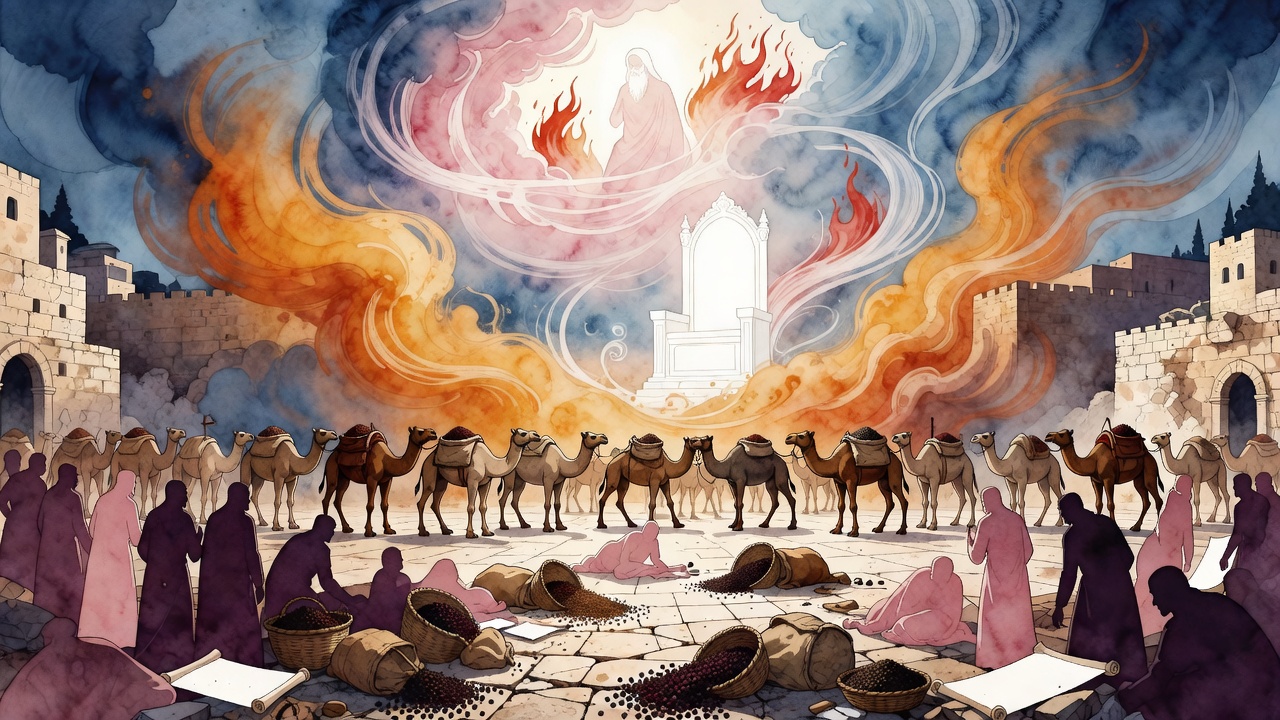
Tikkunei Zohar gives the exile of the Shekhinah a voice that runs through the night like water. The divine presence does not simply withdraw when the Temple burns. She goes out with the people. She follows the exiles into Babylon, into Persia, into Rome, into every place the scattered nation reaches. The exile is not God abandoning Israel. It is God choosing not to return to fullness until Israel can return to fullness also.
That is a different kind of theology than a God who watches from above. This is a God who goes down into the condition God is mourning. The Shekhinah stands among the ruins in black because the relationship between heaven and the world is not complete, not healed, not restored. Her grief is cosmic evidence that something still needs repair.
Rabbi Abraham standing at the Wall and the Shekhinah standing in the stones were both practicing the same posture: facing the absence directly, refusing to pretend it was over.
The Deeper Exile
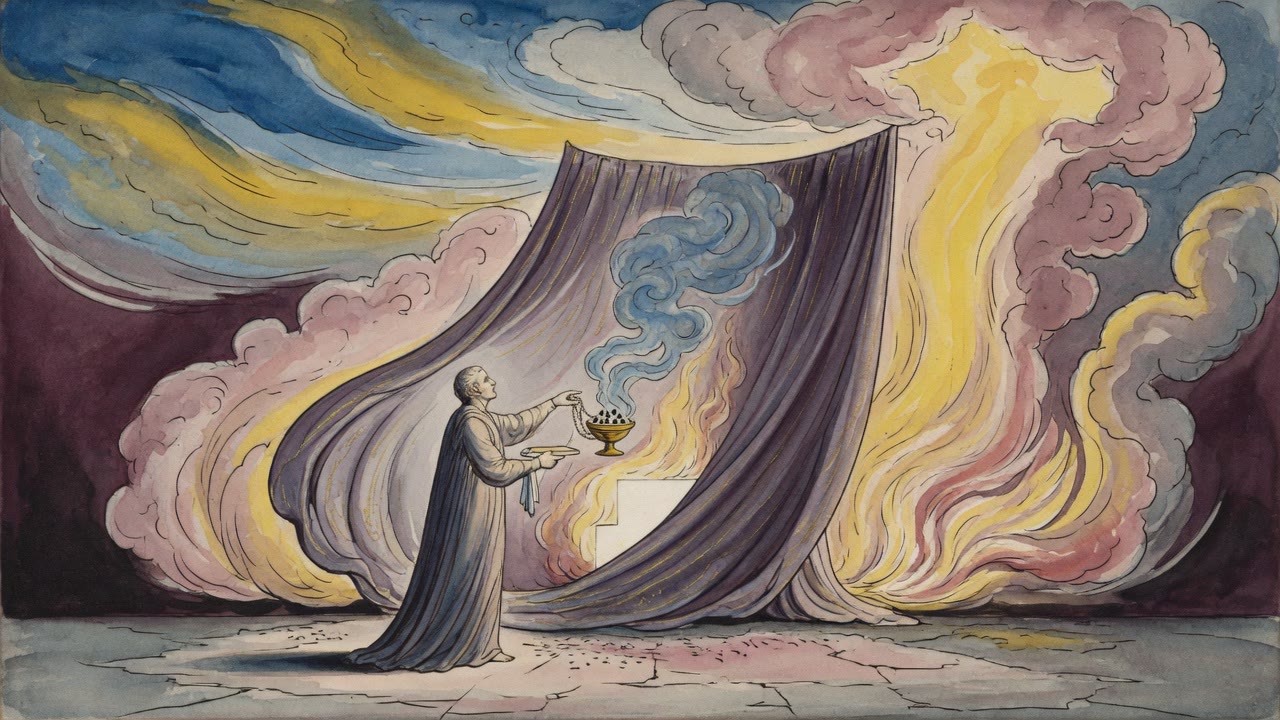
Tikkunei Zohar goes further than the image of a mourning woman in black. It speaks of an exile within the exile, the exile of the divine light itself, scattered into sparks that are hidden inside the material world, waiting for the acts of repair that will gather them back toward their source.
By this reading, Rabbi Abraham's midnight vigil is not only personal mourning. It is participation in the cosmic process of repair. Every genuine act of sorrow for the destruction, every prayer said at the right hour with the right intention, lifts a hidden spark. The stones of Jerusalem are not only old limestone. They are one of the concentrated locations where the exile of the Shekhinah is most legible.
← All myths