The Sabbath Bride Enters With Seventy Branches of Light
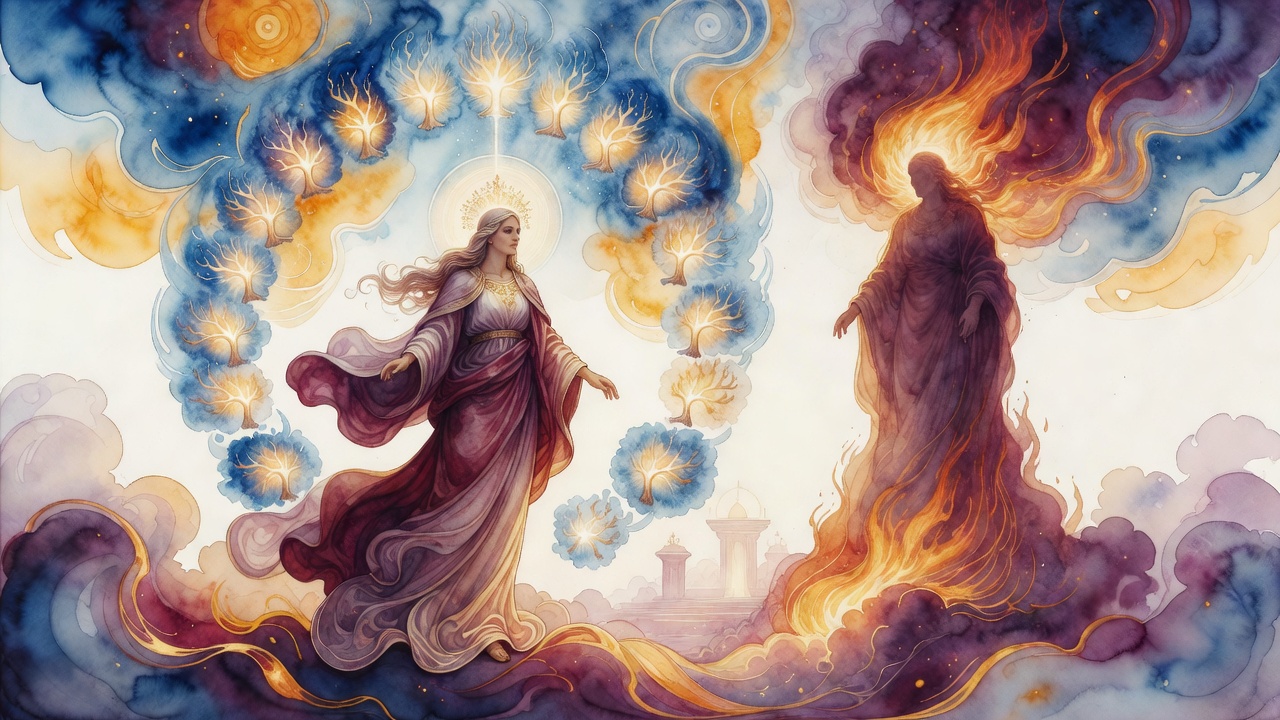
The Zohar sees Shabbat as a crowned Bride with seventy lights, adorned by commandments, escorted by the Shekhinah, the Divine Presence.
Table of Contents
 Click for full size
She Did Not Arrive Quietly
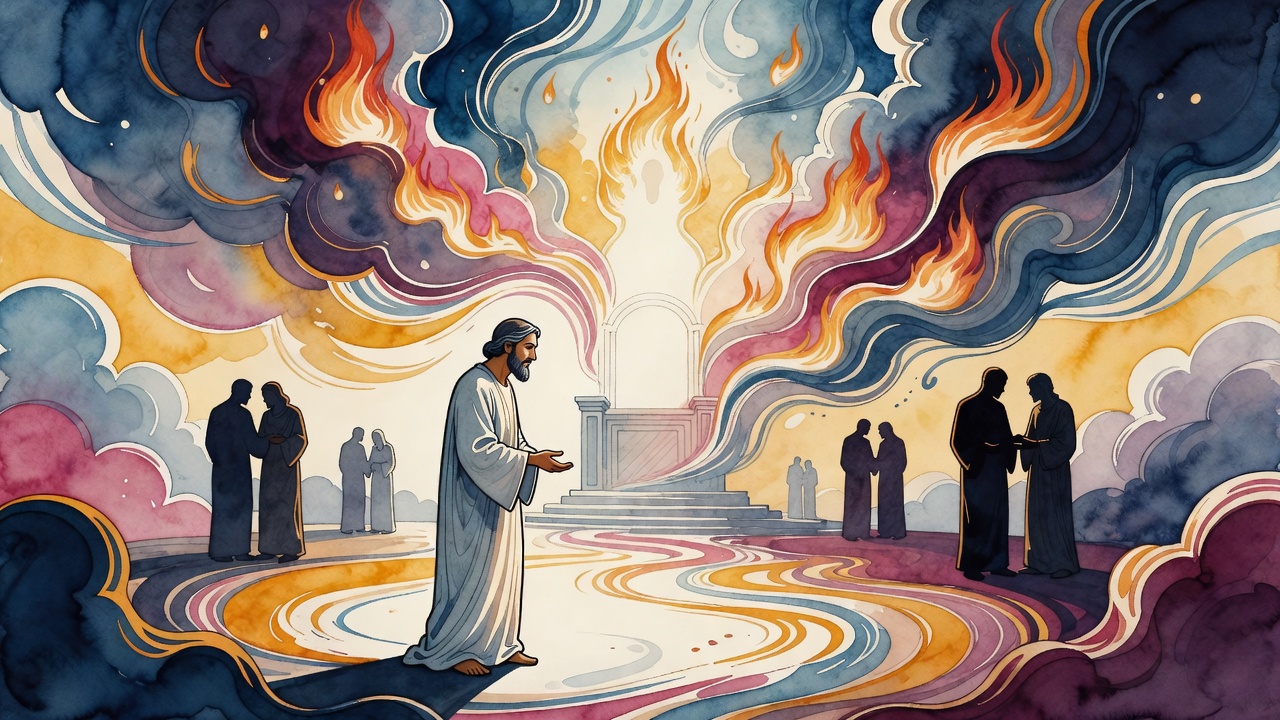
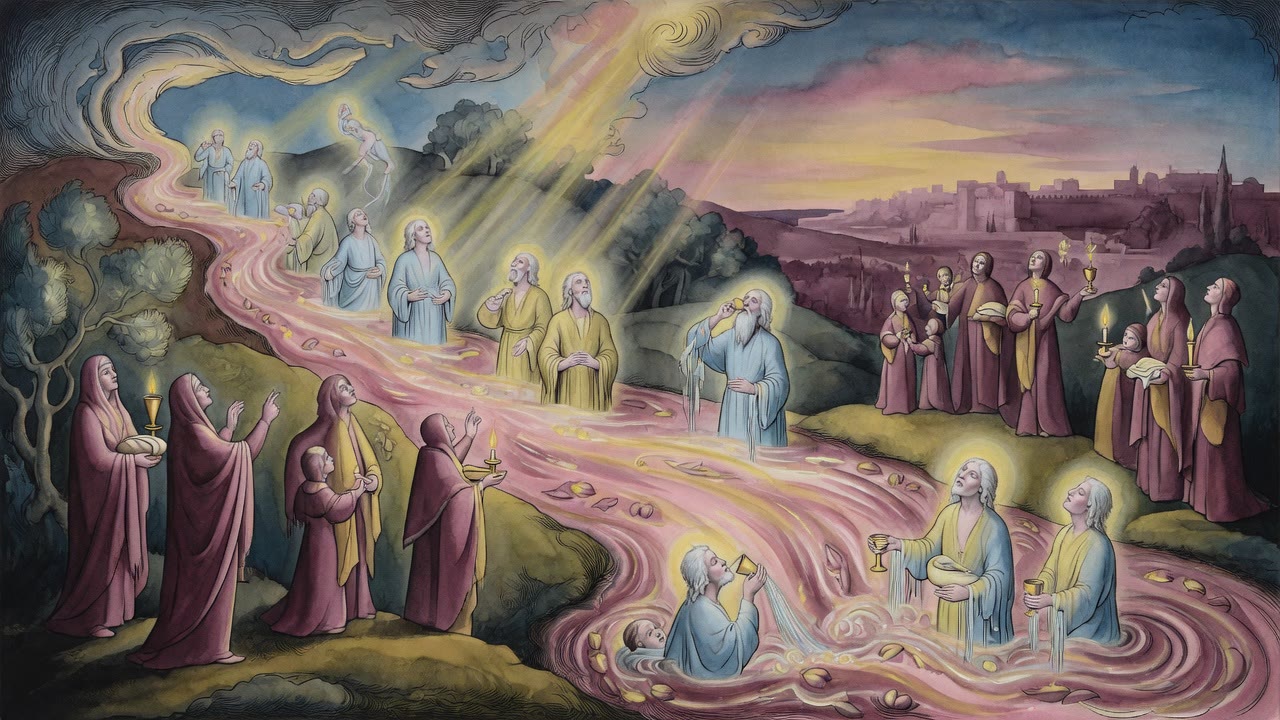
The Zohar does not describe Shabbat as a transition from work to rest. It describes an arrival. On Friday evening, as the sun pulls below the horizon, something enters the world that had not been in it during the six days before. She comes crowned. She comes escorted. She comes carrying seventy branches of light spreading outward from the Torah's commandments, judgments, and decrees that form her crown.
Seventy is not ornament in this tradition. Rabbinic teaching speaks of seventy faces of Torah, meaning that divine revelation has more angles than any single reading can reach. On Shabbat, those faces are not just present in the text. They become light. The day is luminous with the whole width of the covenant.
Her Garment Was Made of Commandments
The Bride enters wearing what she has been given. Commandments form the garment. Decrees and ordinances are stitched into her crown. The Zohar is not using these as decorative metaphors. It means that the legal structure of Jewish life, what a person must do and refrain from doing, is the actual material from which the Shabbat Bride is clothed.
A person who keeps Shabbat is not observing a rule. They are participating in the dressing of the Bride. A person who desecrates Shabbat is not merely breaking a prohibition. They are tearing the garment she is supposed to wear into the canopy.
That is a different kind of urgency than prohibition. It does not threaten punishment. It describes what is at stake: a Bride arriving underdressed because the people who should have clothed her did not.
The Shekhinah Walked With Her
The Shekhinah, the divine presence that dwells with Israel, is the one who comes into the world on Shabbat as its innermost light. On the six days of the week, the Shekhinah (the Divine Presence) is in the world but pressed, narrowed, available only through effort and attention. On Shabbat, she expands. The Bride and the Shekhinah move together, and what enters the room with the Shabbat is also the fullness of God's presence that the world manages to hold.
The household that has prepared for Shabbat, with candles lit and table set and the day's special meals ready, is receiving the Shekhinah along with the Bride. The preparations are not for a holiday. They are for a guest who is also a presence.
The Day Made Fragrant and Sealed
The Zohar describes the Shabbat day as fragrant, closed, and sealed. On Shabbat, the destructive forces that move through the other six days cannot enter. The judgment that operates in ordinary time is suspended. The gates of penalty are closed. The Bride brings with her not only light and adornment but protection, a day that is structurally different from what surrounds it, guarded by its own nature against what ordinary time allows.
The protection is not passive. It is the active peace of a day that has been consecrated. You do not enter Shabbat and then ask for protection. You enter Shabbat and the protection is already in place, because the Bride has already sealed the gates behind her arrival.
← All myths