The Night Before Shavuot Was the Wedding Night
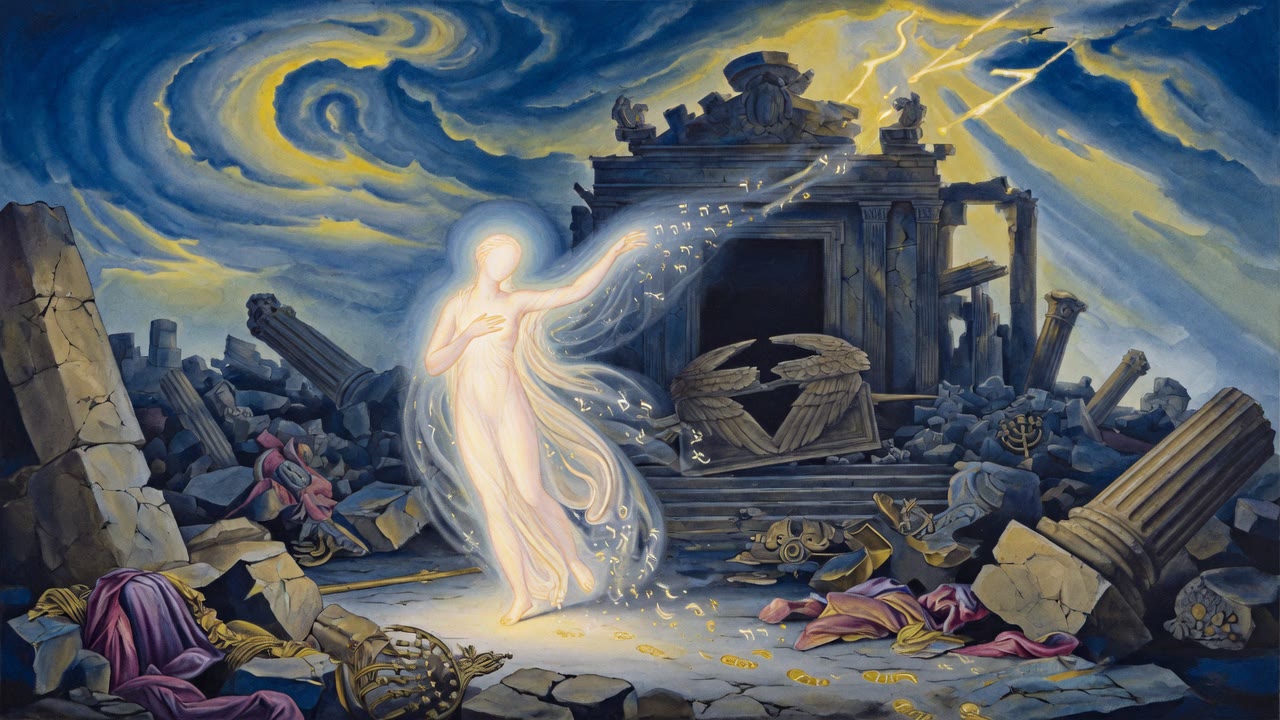
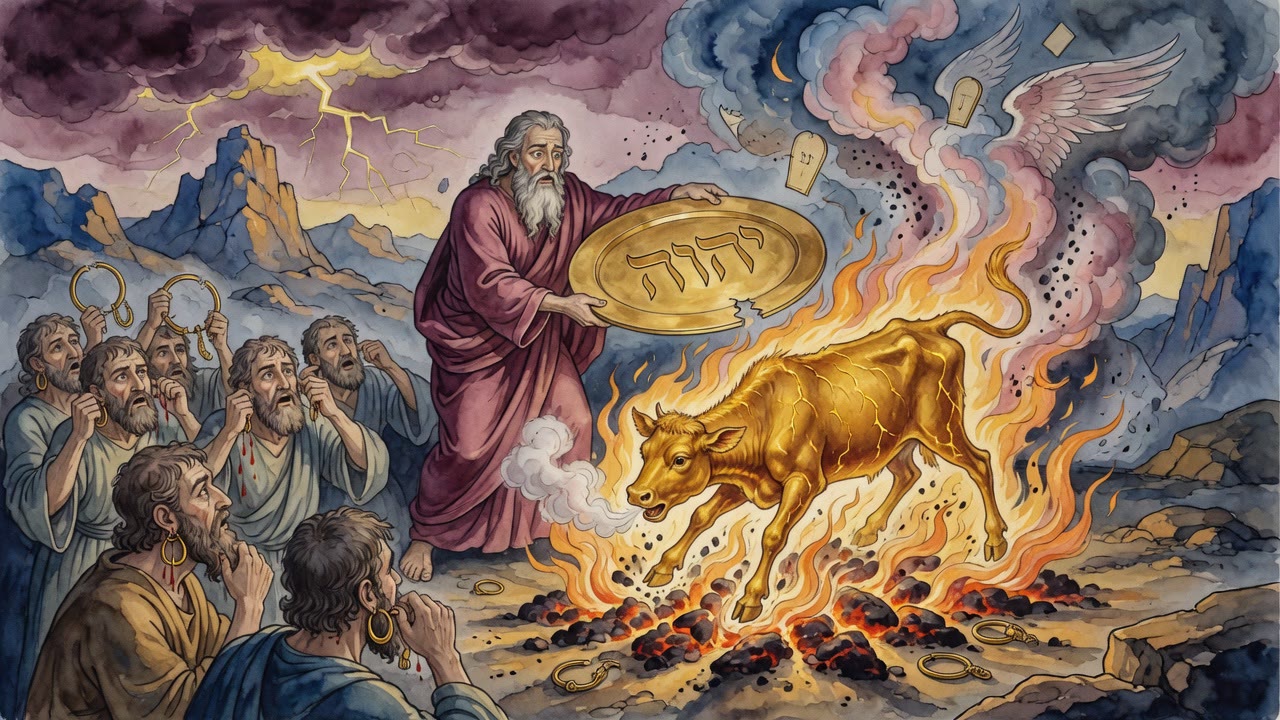
While the Temple stood, the King came down every midnight to the inner room. After it burned, His Bride went out into the road with nothing left to wear.
Table of Contents
 Click for full size
Midnight in the Innermost Room
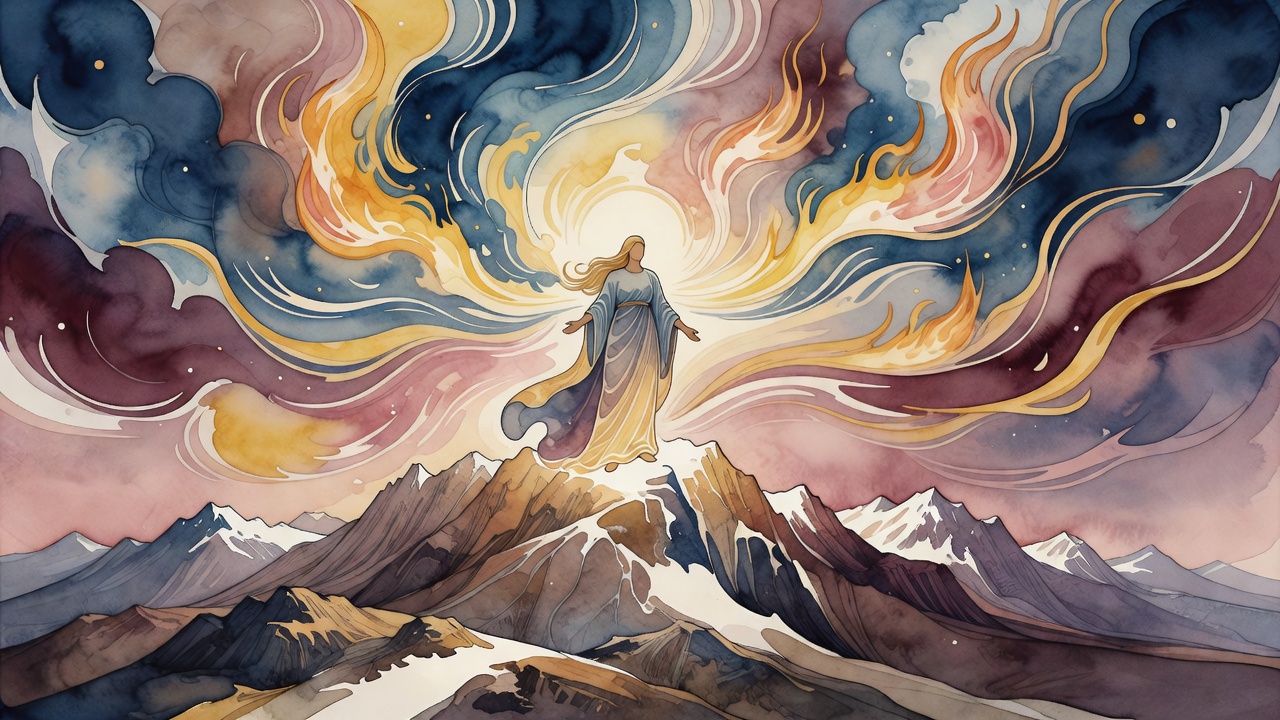
On the day Solomon set the last stone, the Shekhinah (the Divine Presence) (שכינה) walked into the house and her face lit, and the light went out of Jerusalem in every direction, over the world and under it.
After that she came every night. At midnight the King left the upper world and came down, and she went into the innermost room to meet him, and the doors shut. He slid his left arm under her head. He pulled her against him with his right. He took his rest there and wanted nothing else, and her shape pressed itself into him the way a seal presses into wax. Set me as a seal upon Your heart.
Israel slept through it. The priests locked the gates at dusk and went home, and the one room nobody was allowed to enter held the only marriage the world was standing on.
The House Burned and She Went Out Into the Road
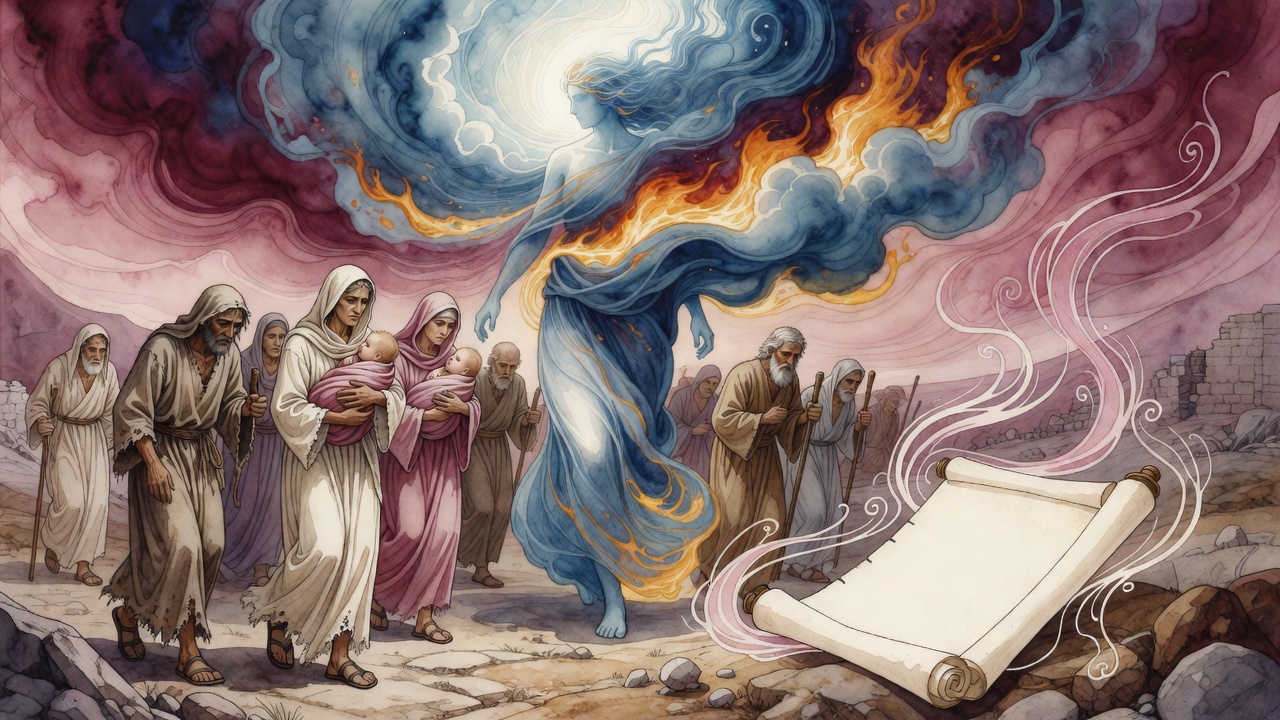
Then the Temple burned, and the room the two of them had was ash on a hill, and the Bride went out of the city behind her people and did not come back.
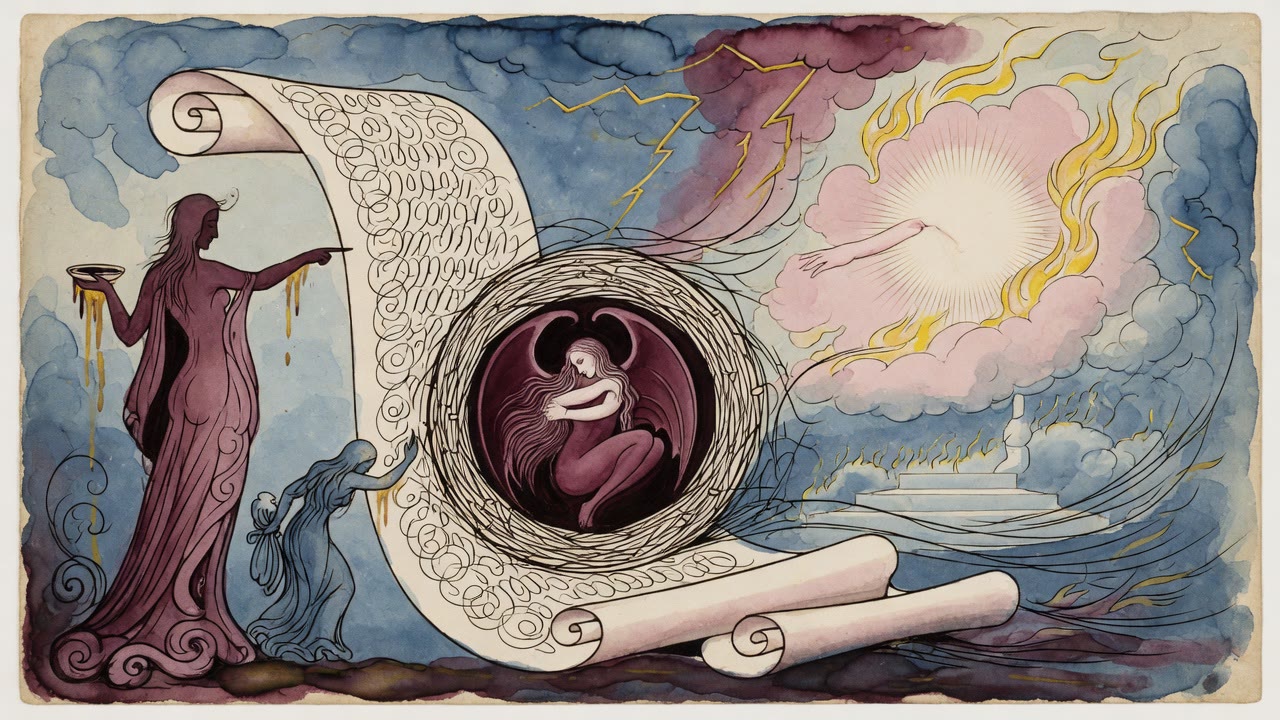
She went out badly dressed. The Zohar is exact about what she wears: Torah is her clothing, and nothing else is. Every commandment a person keeps is a thread laid into the cloth. Every sin tears a piece of it away. Had human beings never been made at all, she would be standing in the road with nothing on her, like a beggar. So she walks in exile in whatever Israel has left her, and most centuries that is not much.
The Companions Refuse to Sleep
One night a year they go to work on her.
On the eve of Shavuot, Rabbi Shimon bar Yochai and the men who follow him sit down together and do not lie down. They start at the beginning, in the five books, and they read out loud. They cross into the Prophets. They cross into the Writings. They open the midrash, and after the midrash they go into the readings that are not said in daylight, and they keep going while the lamps burn down and the town around them sleeps.
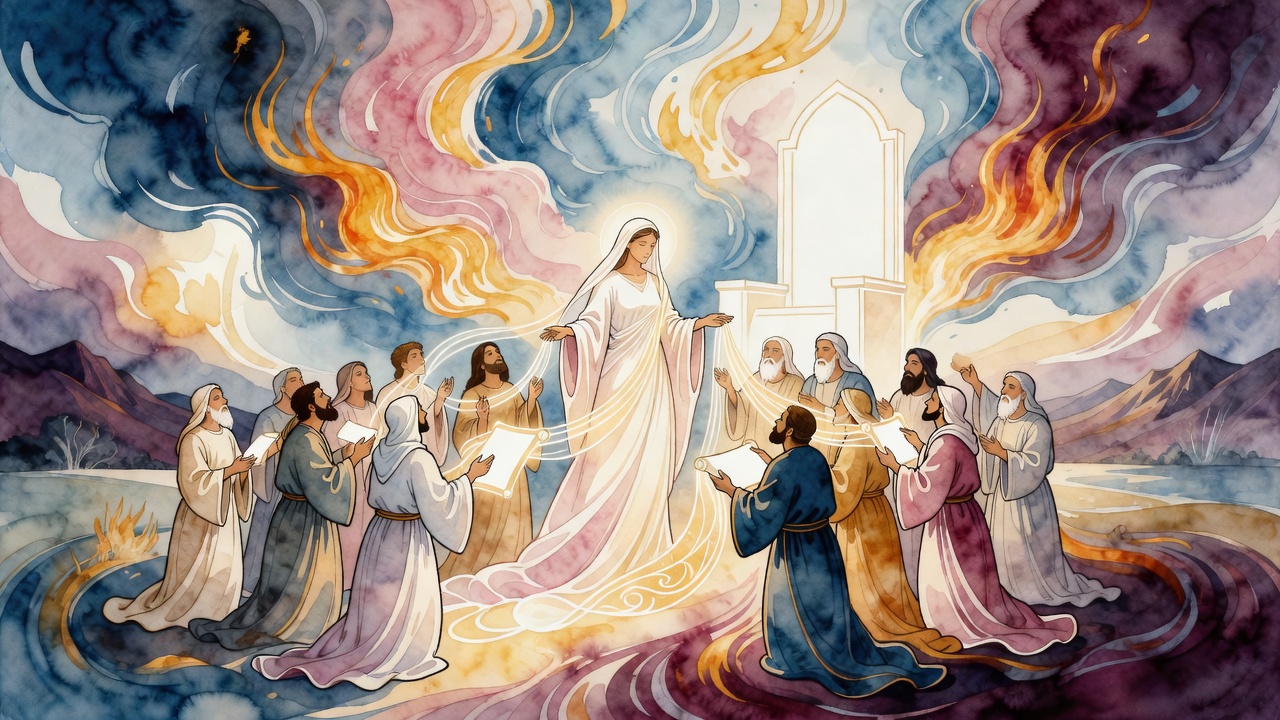
None of it is study for its own sake. Every passage they lift out is an ornament, and the ornaments are going onto her. A tractate becomes a stone in a crown. A line of prophecy becomes a ring. A hidden reading becomes the hem. The Bride spends the whole night with her attendants around her while a room full of exhausted men in another world sews her back together out of sentences.
Above them, God sends her gifts ahead of the wedding, the way a groom does. He sends bread down for the feast. He sets the table.
The Canopy Was Lit From One End of the World to the Other
At first light she enters the canopy.
It is not cloth. The canopy burns with the color of sapphire and throws that color to both ends of the world at once, and she stands under it dressed in everything that was said in the dark. Then she waits. She does not go in to her husband yet. She waits for the men who dressed her.
The sun climbs into the canopy and strikes her, and at that exact moment each of the companions is called out loud by name. Not counted. Named. God blesses each one where he stands, and sets a bridal crown on his head, so that the men who spent the night as servants of the wedding are standing inside it wearing the wedding's own crowns.
The King Enters and the Heavens Say So
Then the Bridegroom comes in.
He speaks the seven blessings over her and joins with her, and the Queen and the King are one thing again for as long as the morning lasts. The heavens declare the glory of God, which is the loudest anyone above ever says it.
The lamps in the study room have gone out by now. The wine is finished. The men who sat up have crowns on their heads that were not there at sundown, and a year of ordinary nights in front of them before she needs dressing again.
← All myths