Ruth Fell in the Dust and the Shekhinah Recognized Herself
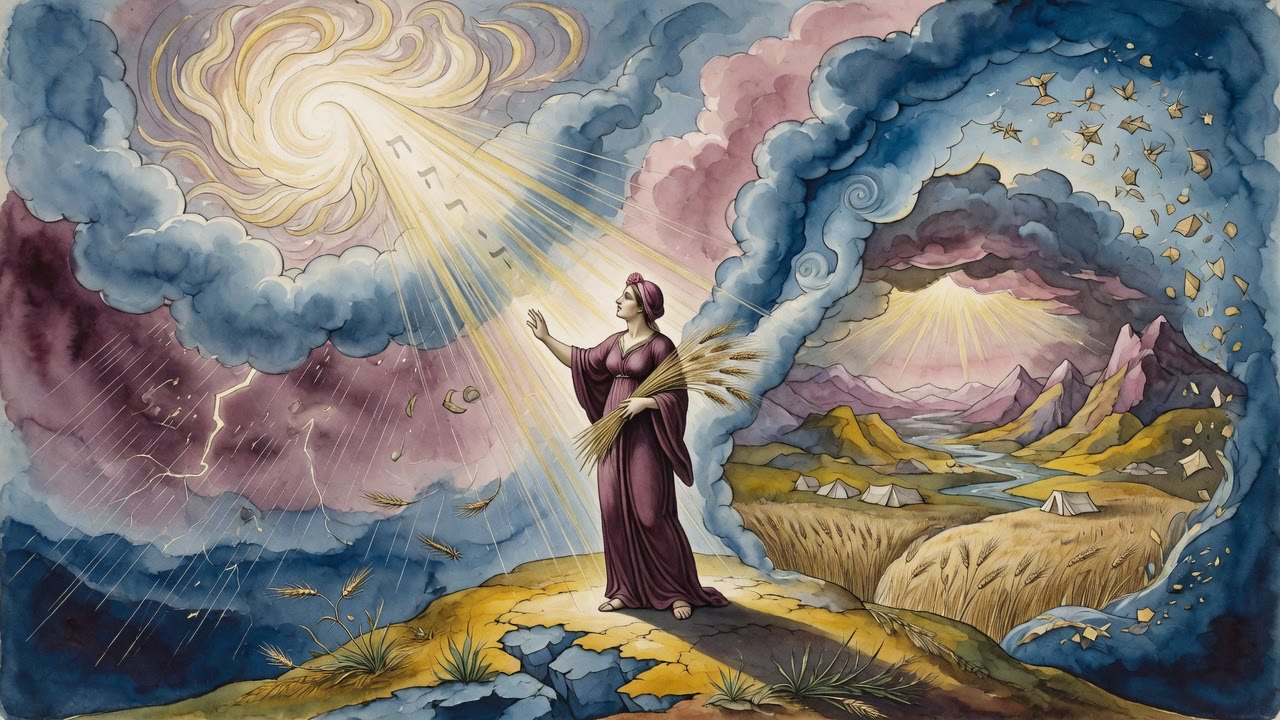
Ruth bowed in Boaz's field and asked why he had shown her kindness. The Tikkunei Zohar saw the Shekhinah, the Divine Presence, in her posture.
Table of Contents
 Click for full size
Before the Threshing Floor, in the Field
This happened before the midnight scene, before the legal proceedings at the gate. Ruth had come to glean in Boaz's fields because gleaning was what the poor were permitted to do, moving through the harvested rows and gathering what the reapers had missed. Boaz noticed her. He told his servants to leave sheaves deliberately for her, to let her drink from the water vessels, to not rebuke her. He had heard about her, he said. He had heard what she had done for her mother-in-law after the death of her husband, how she had left her own people and her own land and come to a people she had not known before.
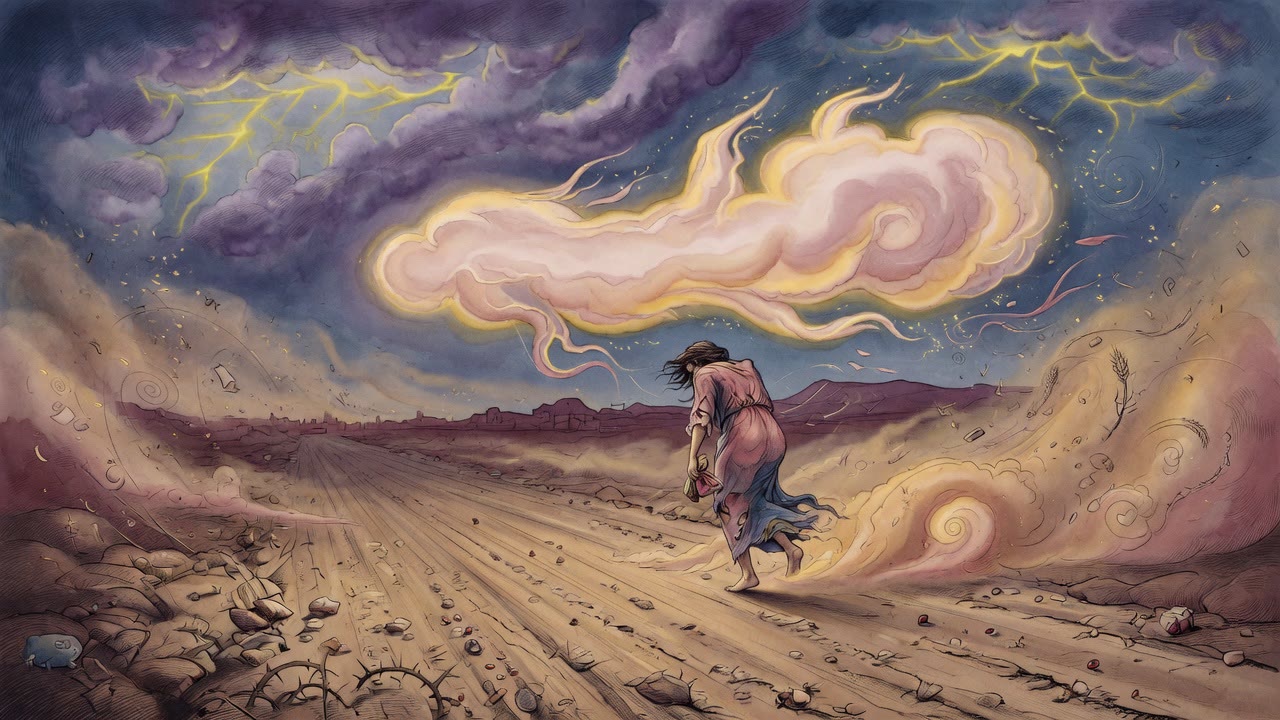
Ruth heard this and fell on her face before him, bowing to the ground. She asked: "why have I found favor in your eyes, that you take notice of me, when I am a foreigner?" It was a genuine question. She had no claim on him. She was a Moabite widow in an Israelite field, and his attention was surprising and unaccountable. She prostrated herself in the dust and waited for his answer.
The Posture of a Severed Connection
The Tikkunei Zohar, compiled as a companion to the main Zohar in thirteenth-century Castile, Spain, reads Ruth's posture in this scene as the posture of the Shekhinah (God's indwelling presence in the world) in exile. Not as metaphor but as structural identification. The Kabbalistic tradition holds that the body and the divine structure are built on the same geometry, that the positions of the body correspond to states of the divine flow, and that a woman face down in the dust of a foreign field is performing, in her body, the condition that the Shekhinah (the Divine Presence) inhabits when the connection to the upper sefirot (the ten channels of divine energy) has been severed.
The Shekhinah does not fall because she is weak. She falls because the flow from above has been cut. Malkhut, the lowest sefirah (a divine emanation), the domain of the divine presence that dwells in the world with the people, depends entirely on receiving from Yesod, the Foundation above it. When the connection between Yesod and Malkhut is open, the Shekhinah stands. When it is closed, by sin, by exile, by the separation that human behavior creates between Israel and their God, she falls. Ruth's posture in the dust is the image of that falling: a woman in a foreign field, far from home, asking why someone is kind to her, her face in the ground because the ground is where she has landed.
Ruth Is Not a Symbol. She Is Living the Pattern.
The Tikkunei Zohar is careful here. Ruth is not simply an allegory for the Shekhinah. She is living the same pattern in the human register. She left Moab. She followed Naomi into Judah. She gave up whatever claim she had on a second husband in her own country, a future in her own land, and took the risk of starting again in a place where she would always be a foreigner. She made herself vulnerable in a way that could not be undone. And in that specific vulnerability, that specific falling to the ground in a foreign field and asking why someone has been kind to her, she embodies the condition of the divine presence in exile.
The Shekhinah chose to go into exile with the people. She was not forced. The tradition is consistent on this: the divine presence did not stay above while the people suffered below. She accompanied them into Egypt, into Babylon, into every dispersal. Her choice to descend to wherever the people descend is the same choice Ruth made when she told Naomi: "where you go I will go, where you die I will die." The pattern is the same because the same will animates both: the refusal to remain in safety while the ones you love are in the dust.
What Boaz's Answer Means
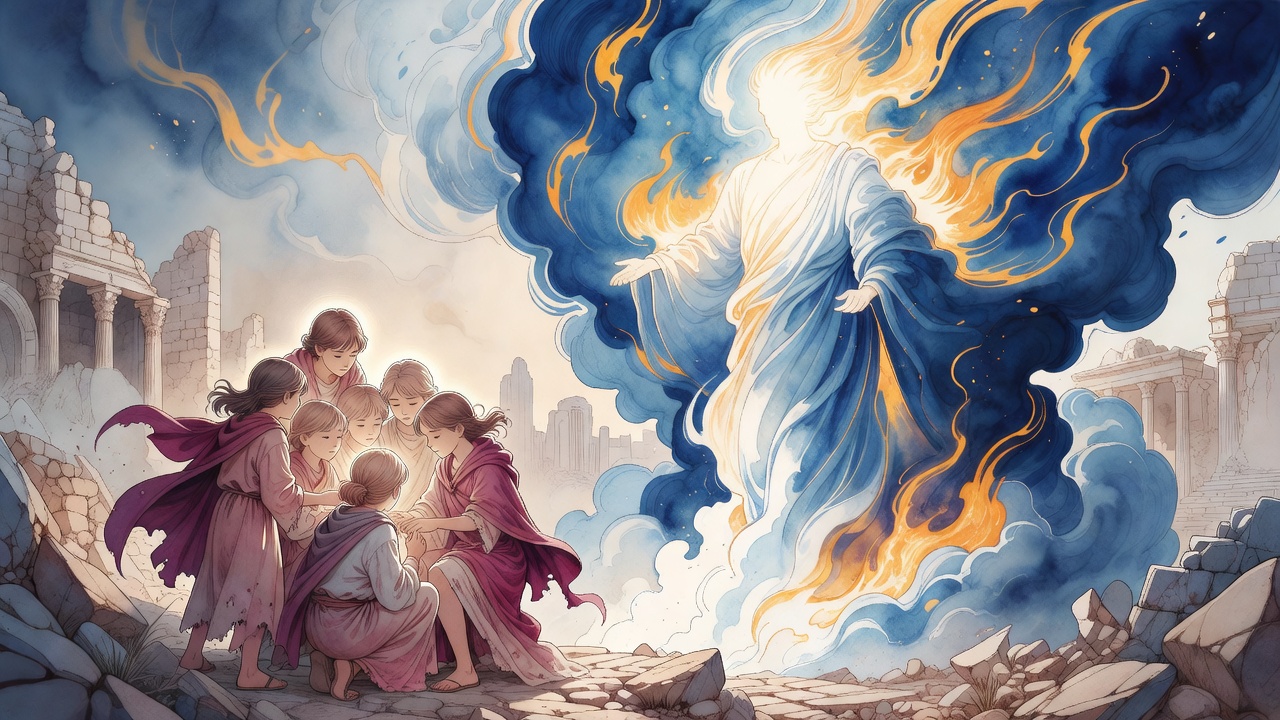
Boaz answered Ruth's question with a description of her faithfulness. He said the Lord would reward her for what she had done, and that she had come under the wings of God. The phrase is tachat kenafav, under His wings, the image of refuge that Psalms uses for shelter from danger, the place under the divine canopy where the vulnerable are protected. To a woman lying face down in the dust of a field asking why anyone is kind to her, the answer is: you are already under the wings. You came here under the wings. The kindness you are receiving is the recognition of the kindness you already performed.
For the Tikkunei Zohar, Boaz's answer to Ruth is the answer the divine gives to the Shekhinah in her fallen state: your faithfulness is seen, your descent is not abandonment, the wings are still above you even when you are in the dust. The moment before Boaz speaks, Ruth is in the posture of the Shekhinah severed from above. After he speaks, she has been reconnected by the recognition that her act of loyalty was itself a divine act, that she was under the wings the whole time.
← All myths