Shem Divided the East and Moses Would Inherit the Borders
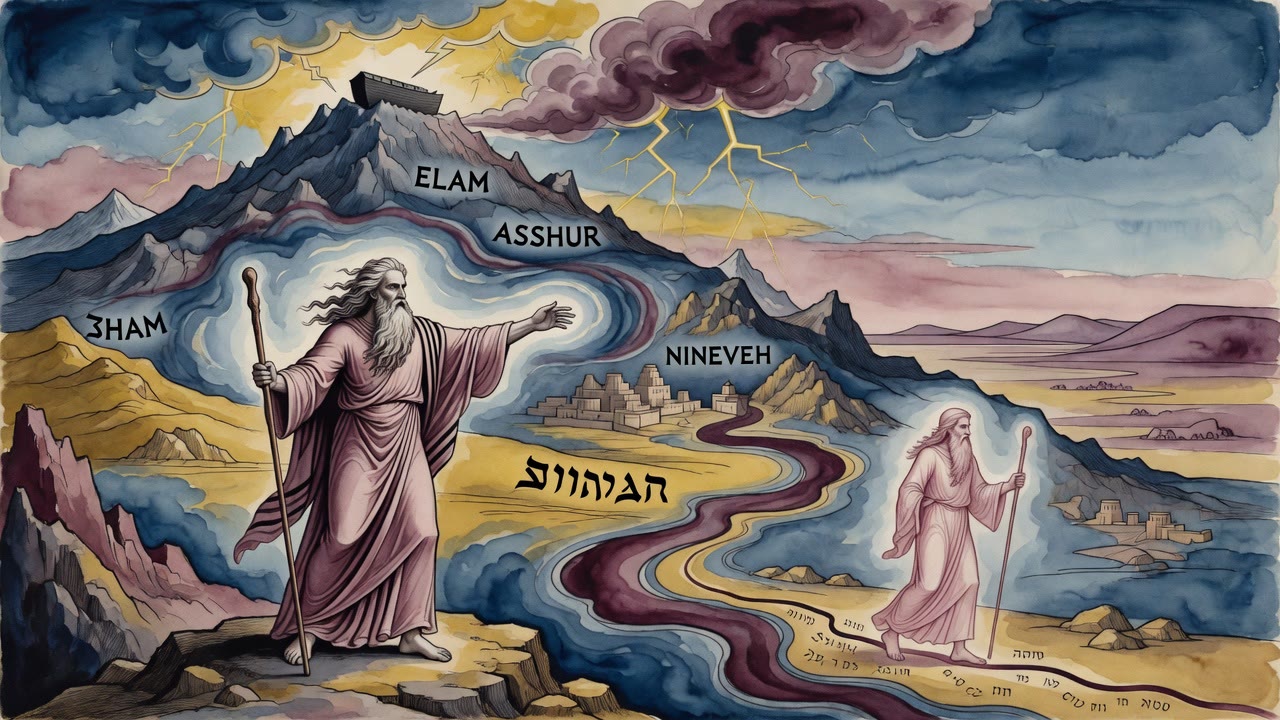
On the mountain of Ararat the lots were read aloud: Elam, Asshur, Nineveh, Shinar. Shinar was where the tower would rise. Nineveh would come for Israel later.
Table of Contents
 Click for full size
The Map That Preceded the Journey
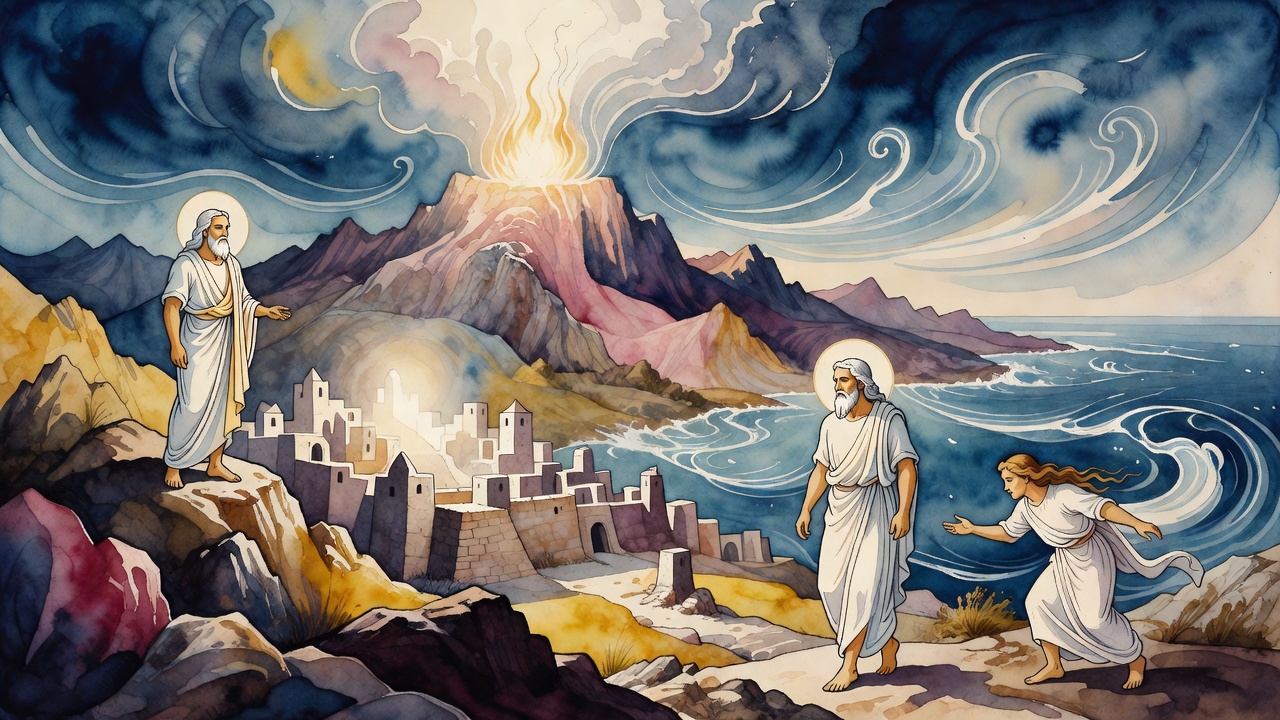
The lots were cast on the mountain of Ararat and Shem's portion was read aloud and the names fell into the air like a prophecy no one yet understood. The first portion for Elam and his sons, eastward to the river Tigris, the whole land of India, the Red Sea coast, the waters of Dedan, the mountains of Mebri and Ela, the land of Sushan, and the river Tina. For Asshur: all the land of Asshur and Nineveh and Shinar, to the border of India.
The angel who delivered this record to Moses on Sinai paused. Moses was being given not only the history of the law but the history of the land, the original distribution, the first borders, the names that had been assigned before the empires that would bear them were built. Elam. Asshur. Nineveh. Shinar. These were not abstract geography. These were the backdrop of everything the Torah would subsequently describe.
The World Moses Would Walk Through
The names from Shem's lot were the names of the world the Torah moved through. Shinar was where the tower rose and fell. Nineveh was where Assyria would build its power and threaten Israel centuries later. The Tigris and the border of India were the eastern edges of the world as the ancient imagination mapped it. Moses, standing on Sinai receiving this recitation, was being told that the geography he would lead a people through had been assigned and named and witnessed in the heavenly tablets before any of those peoples existed to inhabit it.
Shem's lot was the backdrop of the covenant. The patriarchs would wander through it. The prophets would preach against the cities it named. Israel would be born and exiled and redeemed inside the territory whose borders Noah had traced when the world was still empty and the ink on the heavenly tablets was fresh.
The Name That Carried Everything
Shem means name. The man whose inheritance encompassed the most sacred geography in creation bore a name that meant the act of naming itself. He was the son who stayed close to his father on the mountain, who built his city near Noah's city and named it after his wife, who walked backward into the tent with his brother to cover their father's nakedness without seeing it. He was the reliable son, the one who did not transgress, the one who kept the boundary the lot had assigned him.
And the tradition gave his name to the whole of the people descended from him. Semites. The children of Shem. The name echoed through every subsequent generation of the family that would stand at Sinai and receive the law that had always been written, the calendar that had always been fixed, the land that had always been theirs in the heavenly tablets even when other people were living in it.
Moses Receiving His Own History
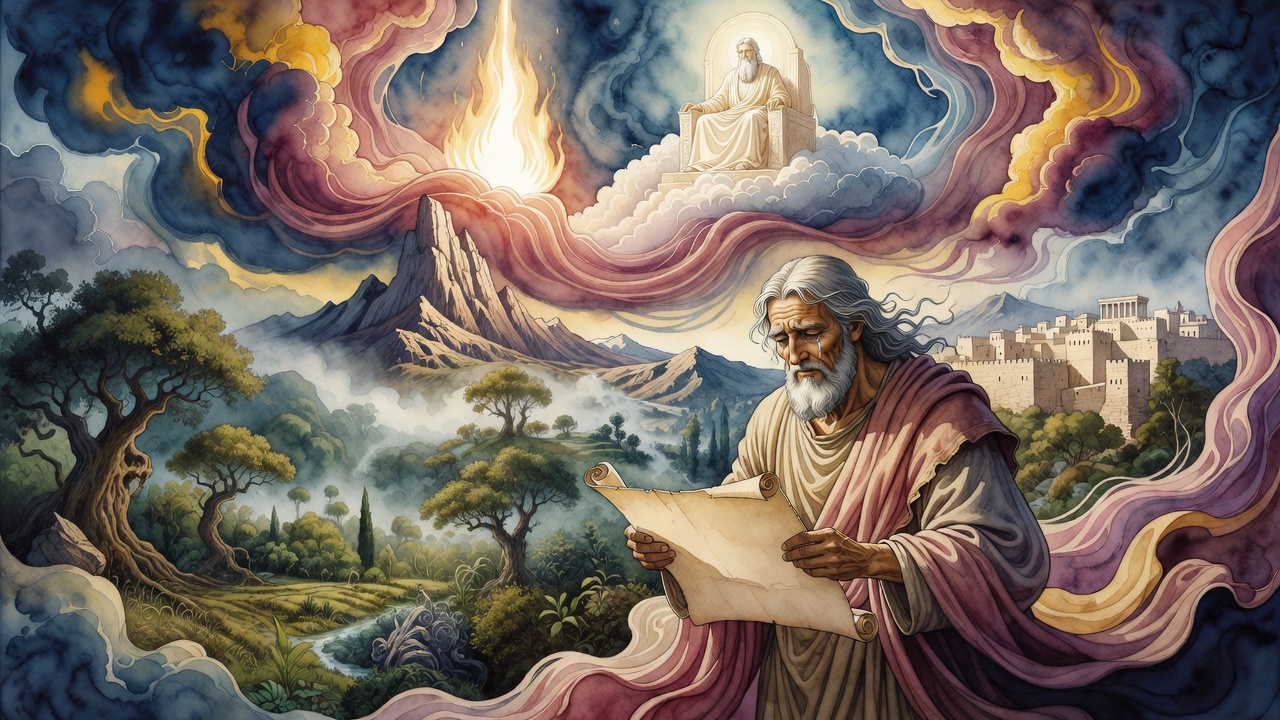
The Book of Jubilees is framed as a dictation: an angel of the presence speaks to Moses on Sinai and recites what the heavenly tablets contain. Moses learns the entire history of creation and the flood and the land distribution and the patriarchs as a single continuous record, as if he is being shown not just what happened but why the geography of the world is arranged the way it is and why Israel's claim to its particular territory is written into the structure of the earth itself.
When Moses read the borders of Shem's portion, Elam to the east, Asshur and Nineveh to the north, the Red Sea to the south, he was reading the borders of the world he would spend the rest of his life trying to reach. The land promised to Abraham, confirmed to Isaac and Jacob, was already named in the original lot. Noah had declared it Shem's portion before Abraham was born. Moses would bring the descendants of Abraham to its edges and die with his eyes on the landscape that had been designated, in the heavenly tablets, for the line he was leading home.
← All myths