Jochebed Built the Ark and Miriam Stayed at the River
Jochebed pitched the outside only so her son would not breathe the smell of pitch. Then she set him in the Nile and walked away.
Table of Contents
 Click for full size
The Morning She Built It
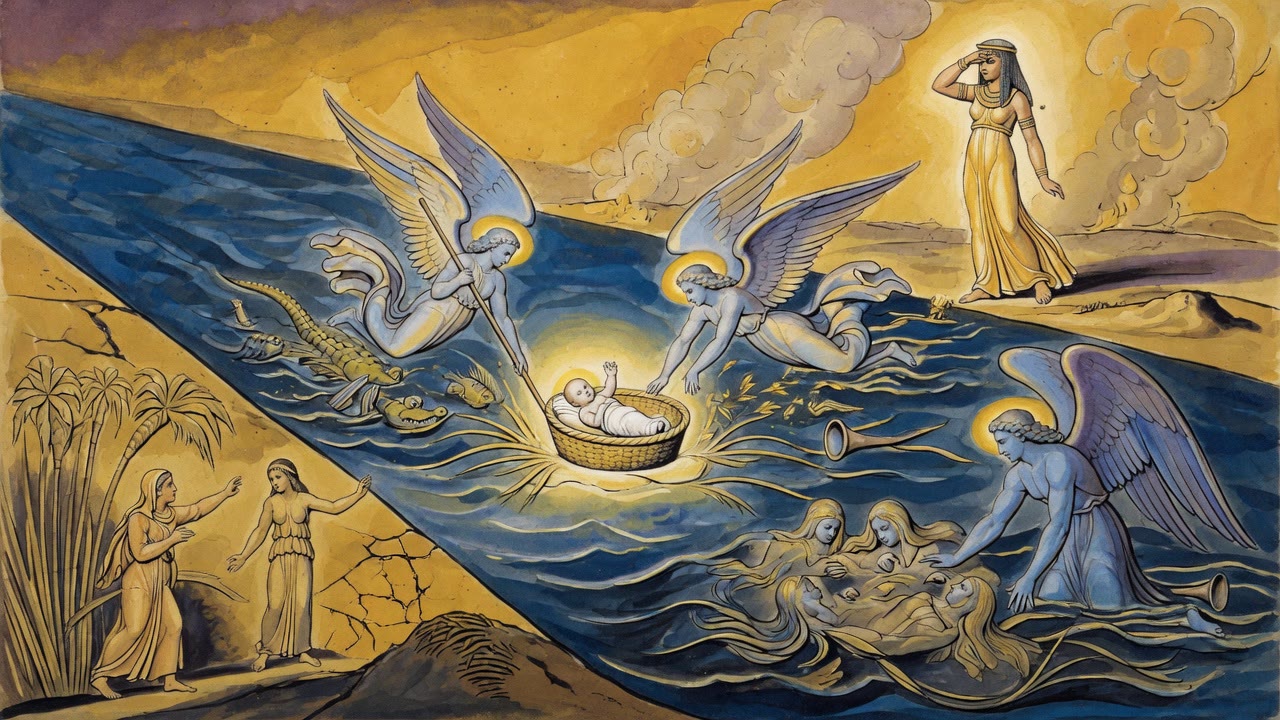
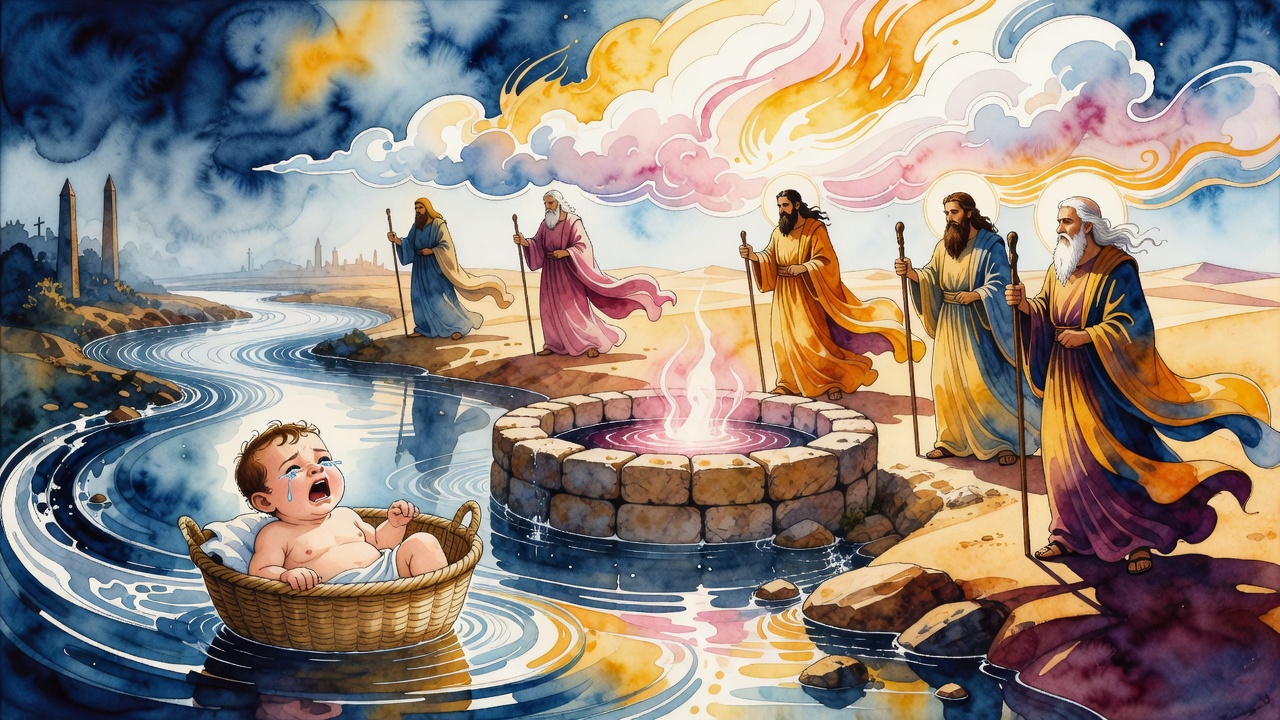
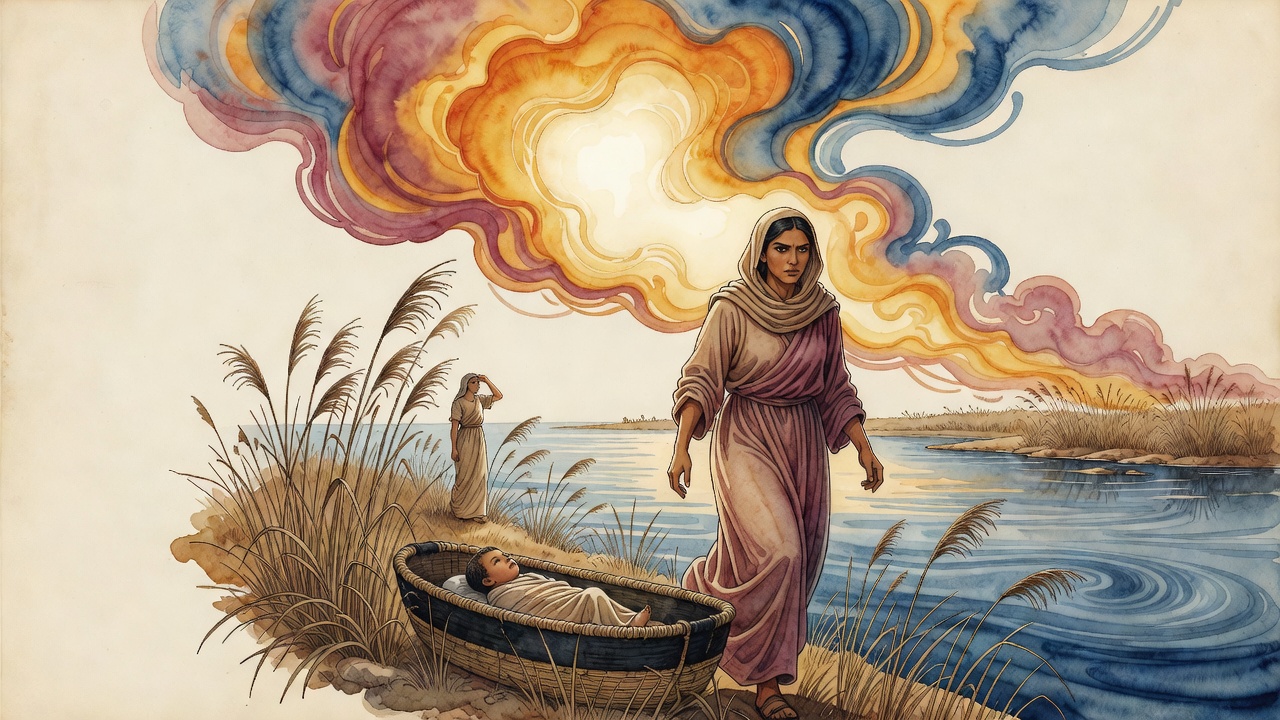
Jochebed built the ark from bulrushes because bulrushes float. She pitched it on the outside with bitumen and pitch, not the inside, because she did not want her son to breathe the smell of pitch during however long he would be on the water. She spread a small canopy over the child to block the sun. Then she picked him up and carried him to the river and set the basket down among the reeds at the bank. Before she left she said, half to the child and half to God: perhaps I will not live to see him stand under a marriage canopy. She walked away without looking back, because looking back would have ended her.
The day was the twenty-first of Nisan. The tradition records this date with care: it is the same day on which the children of Israel would stand at the far shore of the sea centuries later and sing their praise for the redemption from Egypt. The teachers who noticed this did not think it was a coincidence. The moment the ark went into the Nile was already folded into the moment the people would come out of the sea.
Miriam at the River's Edge
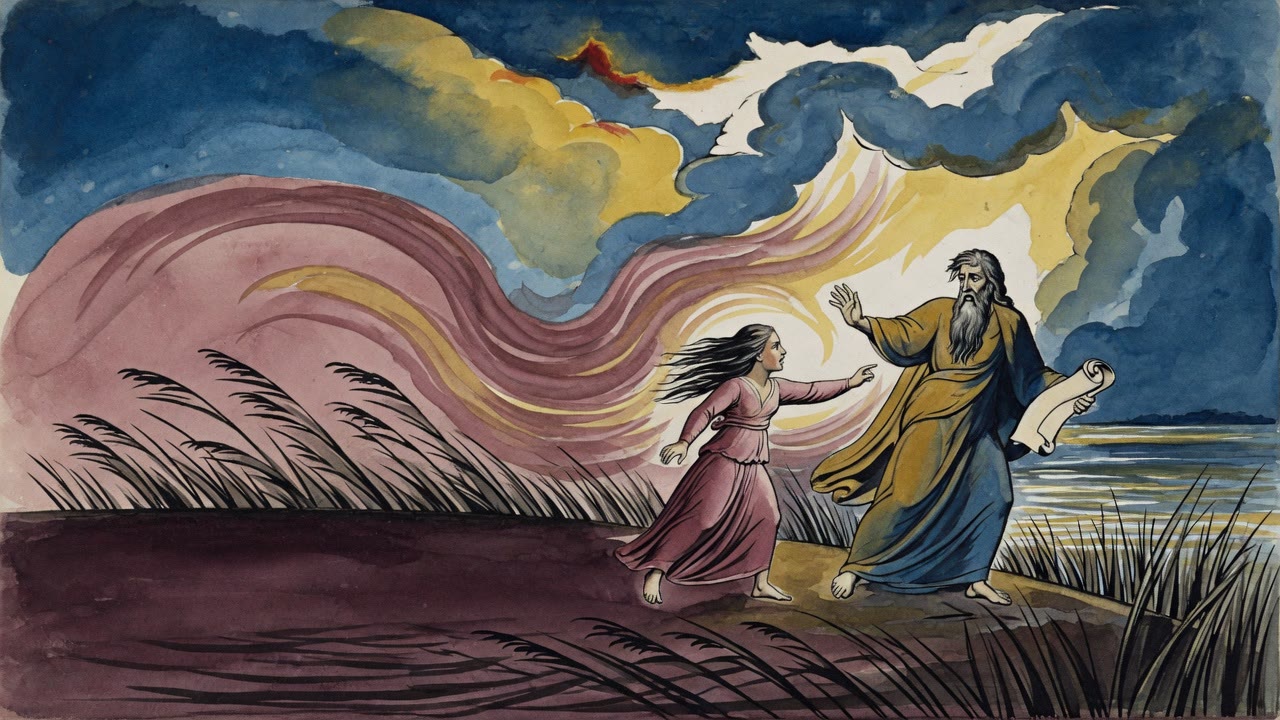
Miriam stayed near the water. She had prophesied before Moses was born, while she was still a child herself, that her mother would bear a son who would redeem Israel. When the pregnancy came, her father Amram had kissed her on the head with a father's gratitude toward his prophesying daughter. When Jochebed was forced to place the baby in the river, Amram struck Miriam on the head and said: what has become of your prophecy now? Miriam stayed at the river's edge to find out. The tradition names this as one of the seven acts of waiting in the Torah that were rewarded: Miriam waited, and Israel waited for her in the wilderness at Hazeroth when she was struck with leprosy, measure for measure.
The Princess at the River
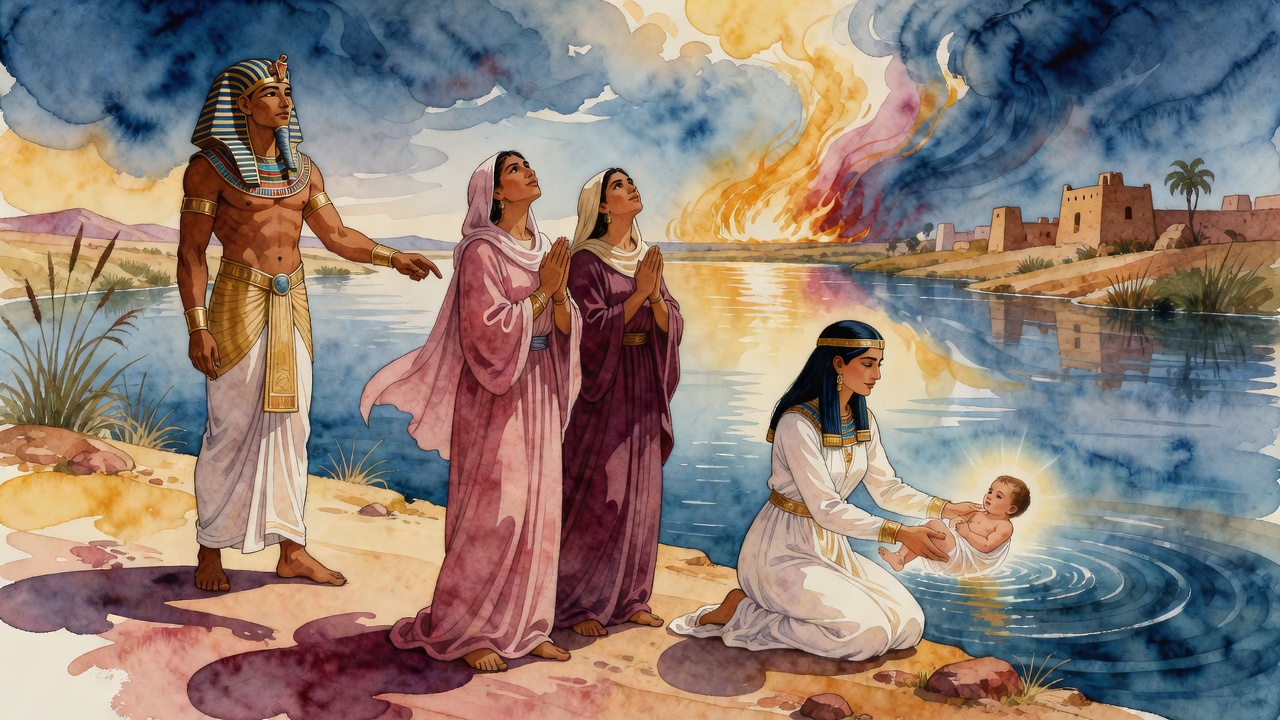
God sent a scorching heat on Egypt that morning. The people suffered with skin ailments, burning and leprosy. Thermutis, the daughter of Pharaoh, came to the Nile for relief from her burning skin. She also came, the tradition says, because she had no children and had heard there was a power in the sacred river that could open a barren womb. She came for healing, not knowing that the healing she would find was a child in a basket floating in the reeds.
She saw the basket. She sent her maidens to fetch it. When she opened it, the child was weeping, and the Shekhinah (God's indwelling presence) was with him, and Thermutis was moved by compassion. She said: this is one of the Hebrew children. She knew exactly whose child this was and what the decree about Hebrew sons required. She set the decree aside. She drew the child out of the water and held him. Her skin ailment healed at the moment of contact, and she understood what had happened and why.
The Name of Adoption
Miriam came forward from her watching-place and offered to find a Hebrew nurse for the child. Thermutis agreed. Miriam went and brought Jochebed, and Jochebed nursed her own son in Pharaoh's house, paid wages by the daughter of the king who had ordered Hebrew sons drowned. The tradition savors the irony: the decree produced the opposite of what it intended. The child who was supposed to die returned to his mother's arms with a royal guarantee.
Thermutis named him Moses: because I drew him from the water. The name in Hebrew, Moshe, echoes the verb to draw out. He would one day draw an entire people out of Egypt, but that was later. First he was a drawn-out child in a borrowed name, being nursed by his mother in the palace of his enemy.
← All myths