Moses Glimpsed the Knot of God's Tefillin from Behind
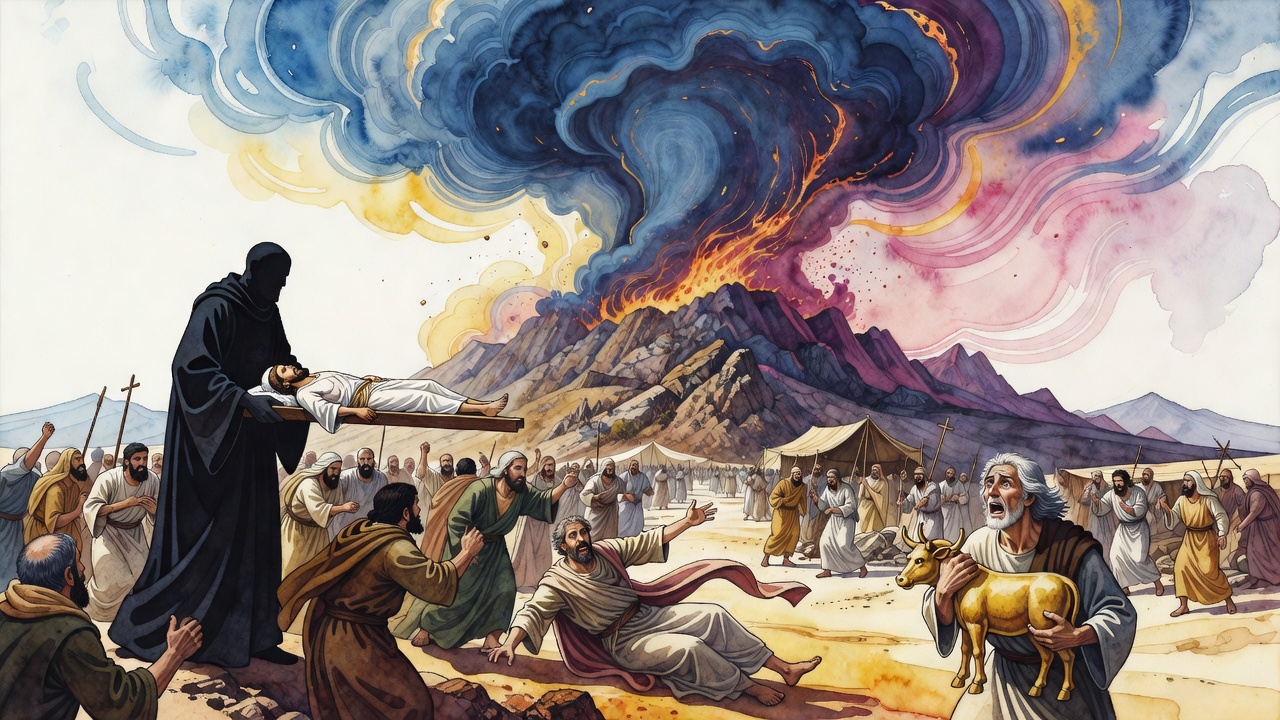
After the golden calf, Moses asked to see God's glory. What he saw from behind, pressed into rock, was the knot of the divine tefillin, prayer straps.
Table of Contents
 Click for full size
The Ornaments Removed After the Calf
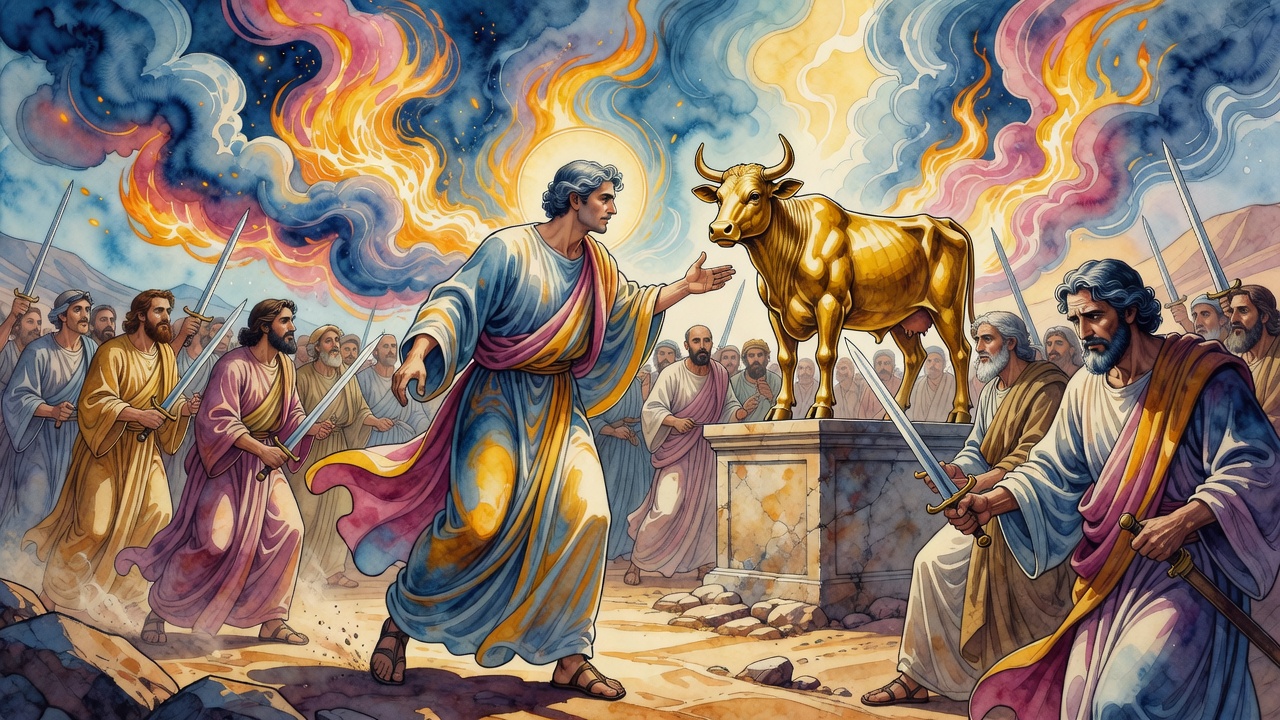
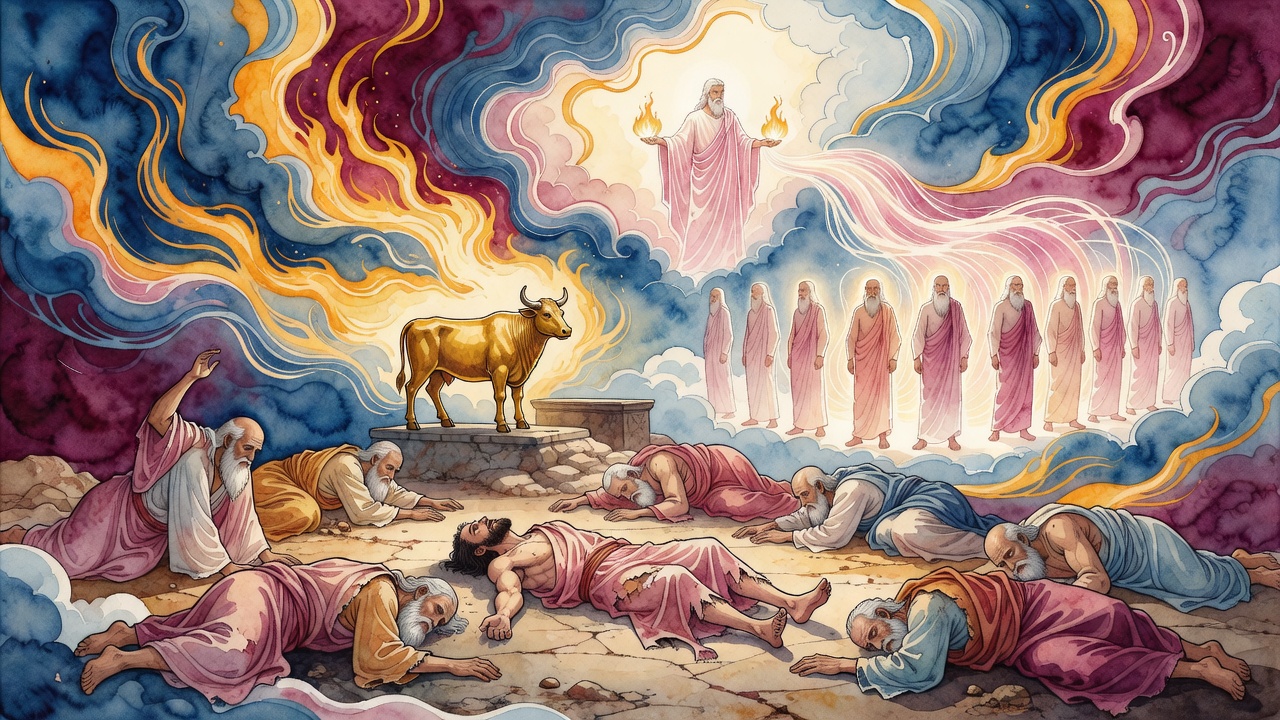
Before anyone asks about God's glory, there are the ornaments to reckon with. At Sinai, the Israelites had been given jewelry on which was inscribed the great and holy Name. These were not decorative items. They were Name-bearing talismans, carrying the ineffable letters on the bodies of 600,000 people. The revelation had been physical and intimate in this way: God's Name pressed against Israel's skin.
After the golden calf, God told the people to take them off (Exodus 33:5-6). The Name could not remain on a people who had just prostrated themselves before their own metalwork. Targum Jonathan on Exodus 33, the Aramaic Torah paraphrase shaped in Palestine between the second and seventh centuries CE, records that Moses understood the weight of this command and stripped his own ornament first as the people grieved. He then took all the ornaments and used them to build the Tent of Meeting, the private place of consultation outside the camp where Moses would speak face to face with God while the cloud came down and the people watched from a distance.
God Wears Tefillin
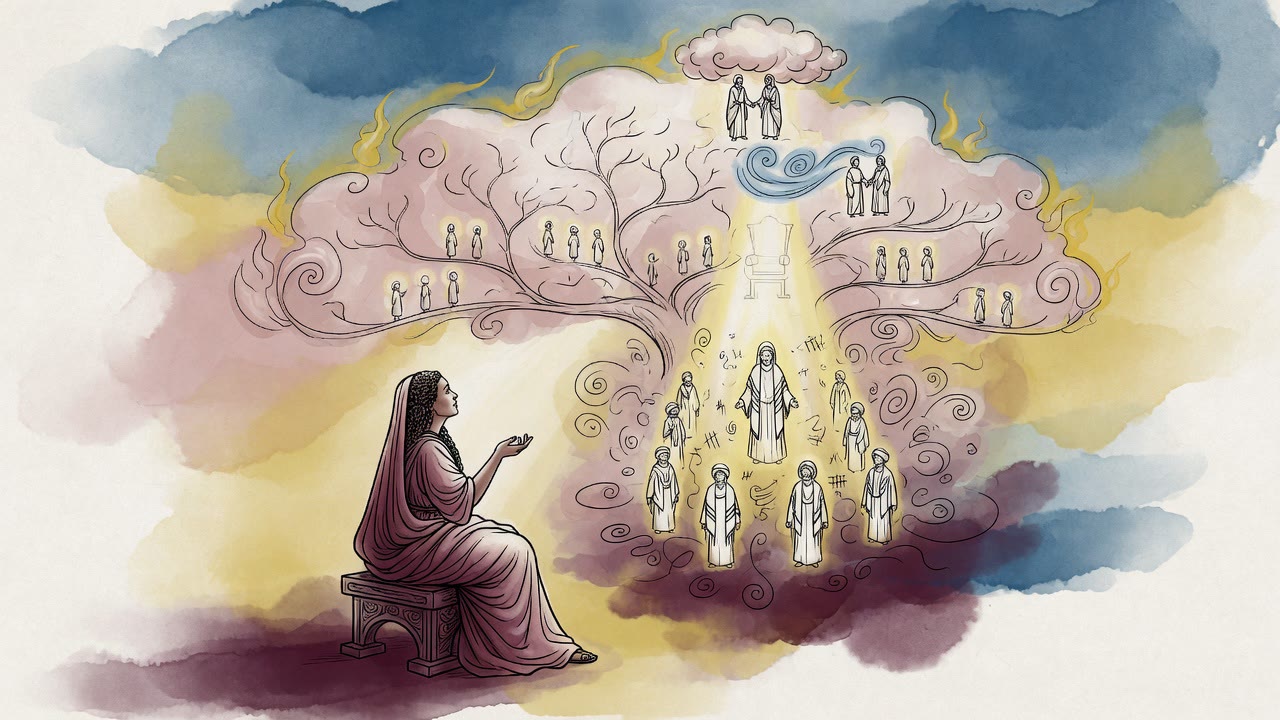
The Talmud, tractate Berakhot 6a, states this plainly: God wears tefillin (small leather boxes of scripture bound on the head and arm). This is not a metaphor. The question in the Talmud is what the divine tefillin (prayer boxes bound on arm and head) contain, and the answer is a verse from Psalms 29:11 about God giving strength to Israel, the same structural role that Israel's tefillin fulfills in reverse, carrying scriptural portions about Israel's obligation to God. The divine and human tefillin correspond to each other. Each side wears the other's name.
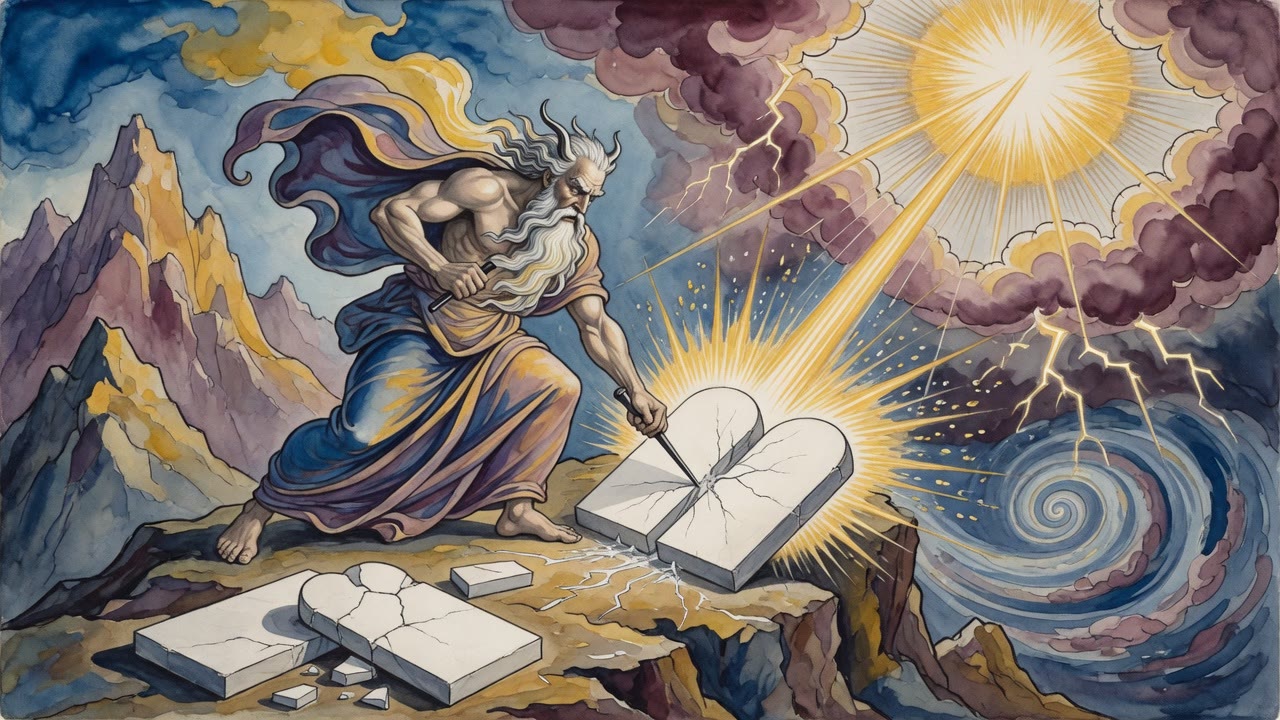
Moses had survived more than anyone before him. He had stood at the burning bush without dying. He had stood on Sinai for forty days without eating or drinking. He had stood before Pharaoh ten times. He had argued with God's face to face. And now, in the wreckage after the calf, he asked for more: show me Your glory (Exodus 33:18).
The Back, Not the Face
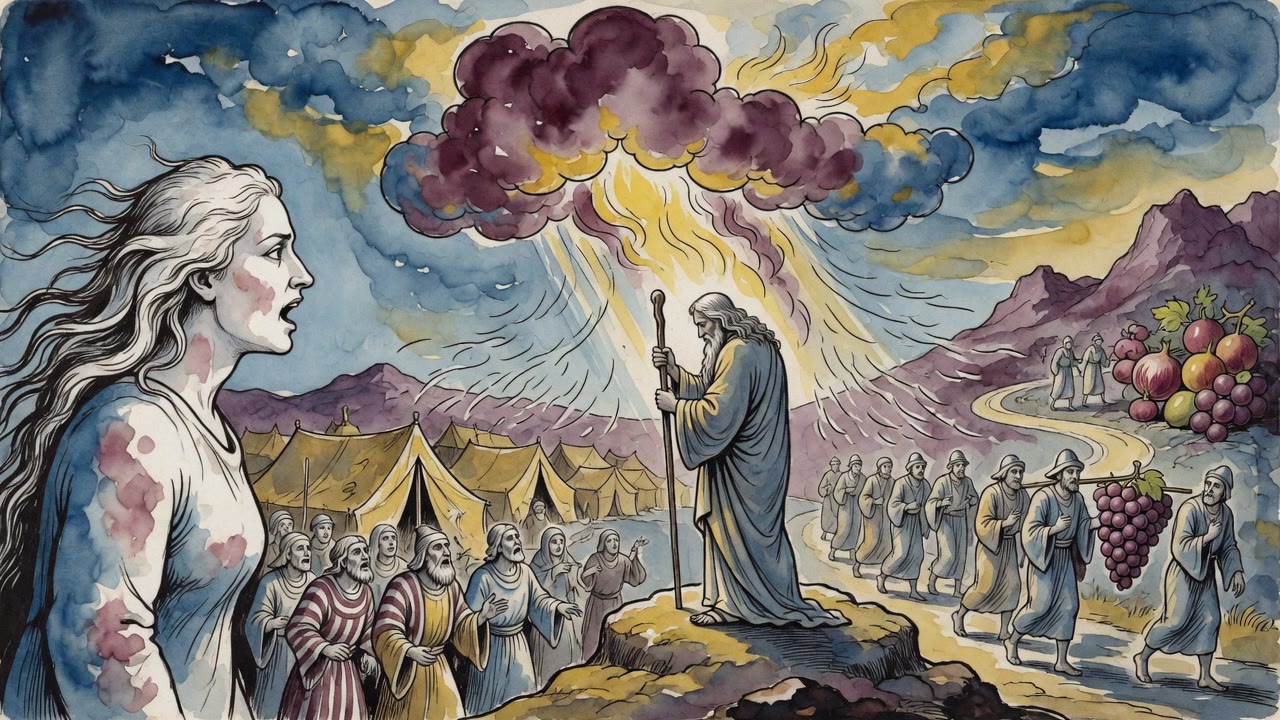
God's response is precise. You cannot see My face, for no person can see Me and live. But I will place you in the cleft of the rock, and I will cover you with My hand while I pass, and then I will remove My hand and you will see My back, but My face will not be seen (Exodus 33:20-23).
Targum Jonathan fills in what the back contains. What Moses saw, pressed into the cleft of the rock with a divine hand over his eyes until the right moment, was the knot of God's tefillin. Not the boxes, which face forward. The knot, which sits at the back of the head. Moses saw what no one else had seen or would see: the rear aspect of the divine tefillin, the place where the binding closes.
The detail is staggering in its intimacy. God shows Moses not majesty but a fastening. Not the words inscribed inside the boxes but the knot that holds everything together. Philo of Alexandria, the philosopher who wrote extensively on Exodus in the first century CE, frames the command to bind tefillin on the hand as a reminder that every act must be performed in righteousness with the memory of divine presence. The hand bound with tefillin is a hand reminded of its obligations. Moses saw the hand of that obligation at its most private point, from behind, after the worst failure of Israel's young history.
Moses Defends the People He Had Just Led Through a Catastrophe
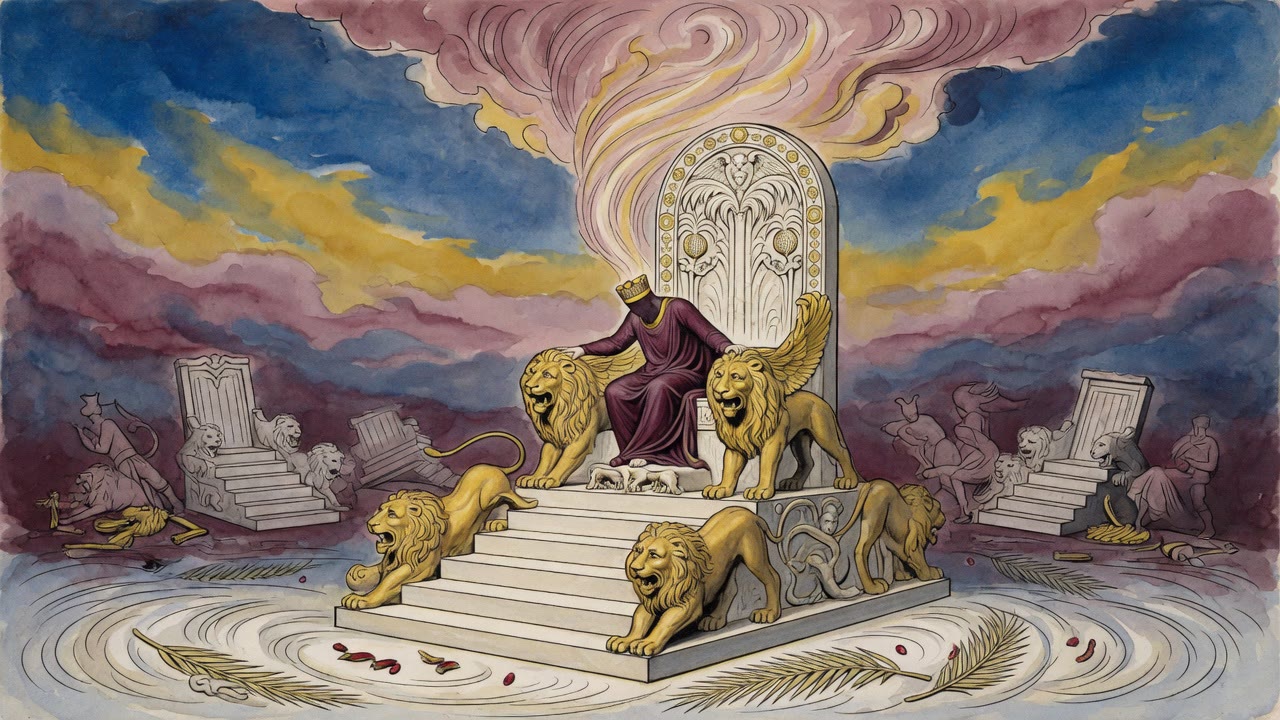
Shemot Rabbah 43, the Midrash Rabbah on Exodus, a compilation of Palestinian midrashic material assembled around the sixth to seventh centuries CE, gives the argument Moses made when God threatened to destroy Israel after the calf. Moses pointed at the Exodus: you took them out of Egypt (Exodus 32:11). Why bring up the Exodus at this moment? Rabbi Avin, citing Rabbi Shimon ben Yehotzadak, explains through a parable. A king owned a neglected field and hired a sharecropper to transform it into a vineyard. The sharecropper worked it, the vines grew, but then something went wrong. The king threatened to destroy the whole thing. The sharecropper asked: whom exactly will you hold responsible for this, the vineyard or me? I am the one you assigned to it. If it went wrong, the responsibility tracks back to who set up the arrangement.
Moses was saying: these are the people You brought out. You chose the assignment. The failure is connected to the choice You made when You took them from Pharaoh. God, in the tradition's account, accepted this argument. The nation survived.
← All myths