Moses Made King by the Clothes Off His People's Backs
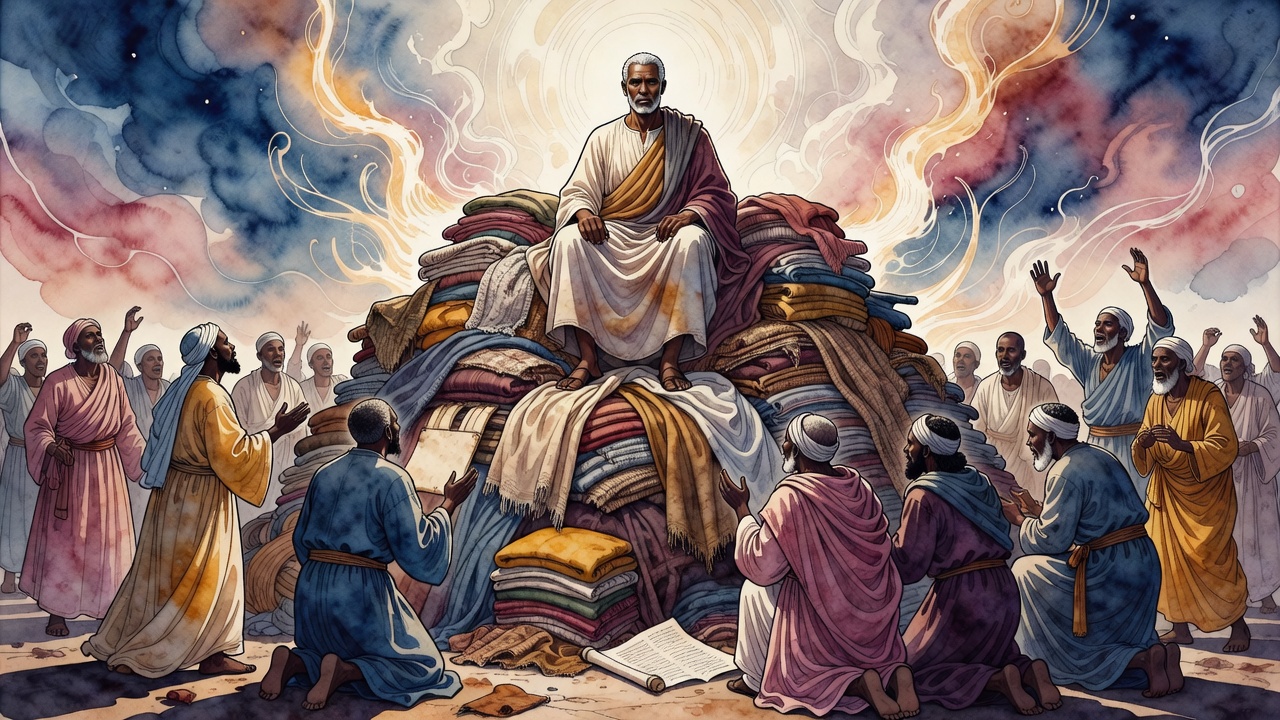
The Ethiopian army had no throne to offer Moses, so they stripped their garments, piled them into a seat, and crowned the man who had freed their city.
Table of Contents
 Click for full size
A Throne Built of Garments
The soldiers stripped their outer garments. They piled them on the ground in the open field. They built a seat out of cloth and leather and the specific dignity of men who had nothing more appropriate to give but were determined to give it with ceremony. They placed Moses on top of the pile, blew their trumpets until the sound crossed the field, and declared him king.
Then they brought him everything they had managed to reclaim from the city: gold, precious stones, onyx, pearls, silver. The kinds of gifts that take days to gather and that, when presented all at once in a single afternoon, mean something exact. They were not paying tribute to a conqueror who had taken their city from them. They were expressing a relief so large and so long deferred that it had become ceremony without anyone deciding to make it so.
Nine Years in the Field
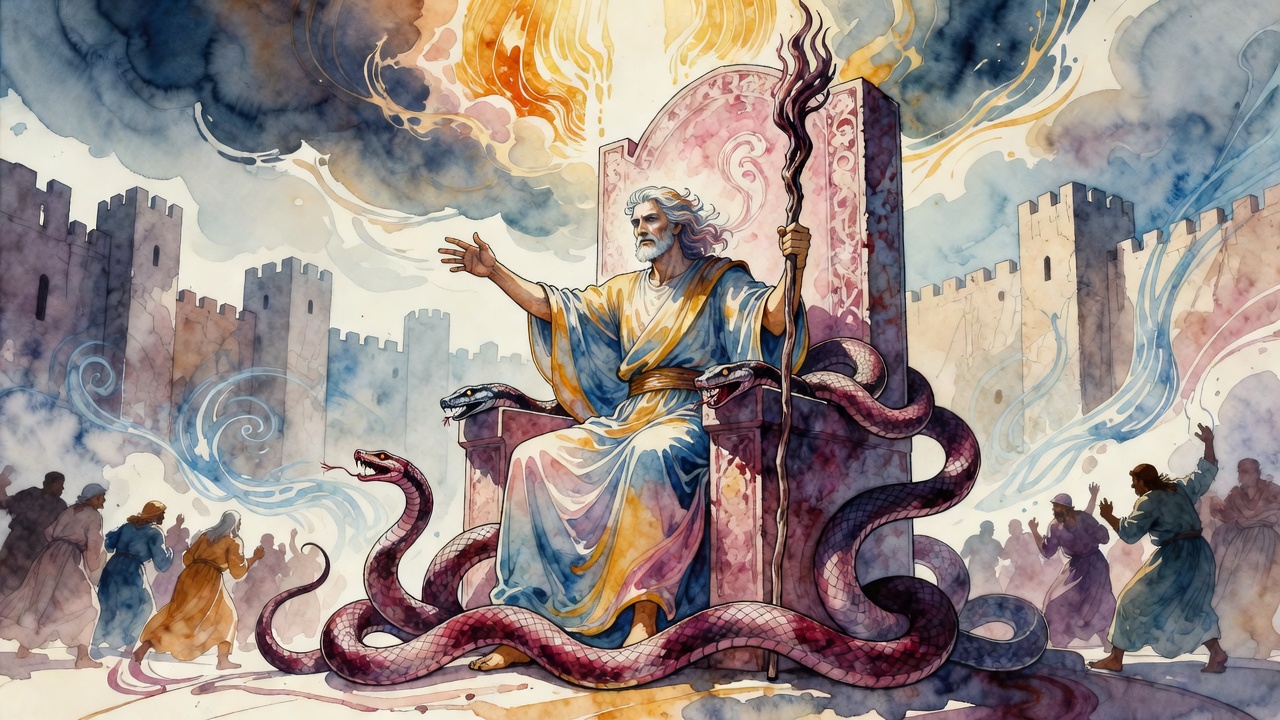
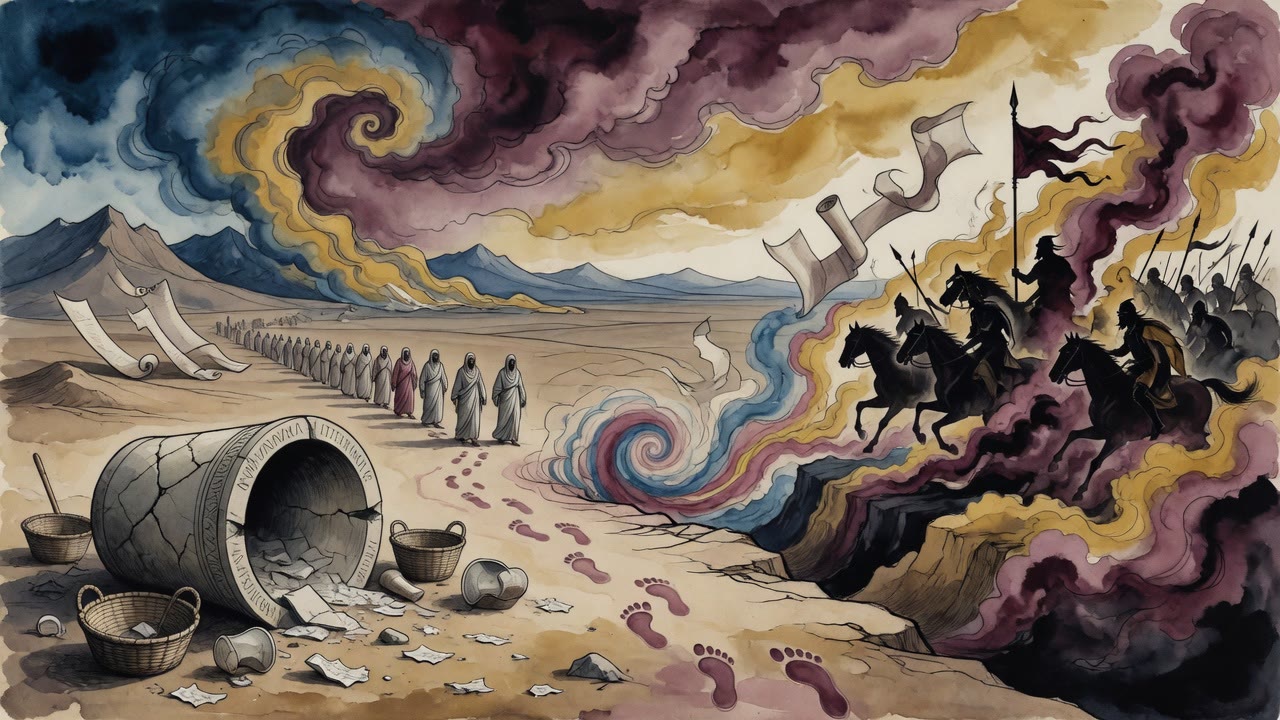
These men had been camped outside their own walls for nine years. Their king Kikanos had died in the camp, worn down by illness and by the particular despair of watching your own city from a distance you cannot cross. The eastern approach was held by the snakes Balaam had planted in the earth. The western approach was sealed by Balaam's water sorcery. The walls were manned by hired soldiers who answered to the man who had stolen the city while its rightful king was away at war.
Nine years of this. Nine years of waking up in a camp that was not a home and looking at walls that had been home and knowing that every conventional military solution had already been tried and had failed. By the time a fugitive arrived from Egypt with the manner and abilities of someone who might know how to solve this problem, the army had long passed the point where pride would get in the way of listening. They told the stranger everything and asked what he could do.
The Strategy That Opened the City
Moses had grown up in Pharaoh's palace, which meant he had grown up watching power operate and had learned to read terrain the way people who survive powerful environments learn to read it. He looked at the two approaches, the snakes to the east and the sorcery to the west, and he looked at the army in front of him, and he asked what the army had that Balaam had not thought to account for.
The answer was birds. The tradition preserves the specific strategy: Moses directed the soldiers to hunt storks and train them to carry things in their talons. Then he led the army against the eastern wall from above the ground level, using the storks to deal with the snakes that had held the approach for nearly a decade. The eastern wall fell. The city opened. Balaam and his sons Jannes and Jambres fled south through the gap before the army closed around them, running toward Egypt and toward the longer arc of their story there.
What the Coronation Actually Was
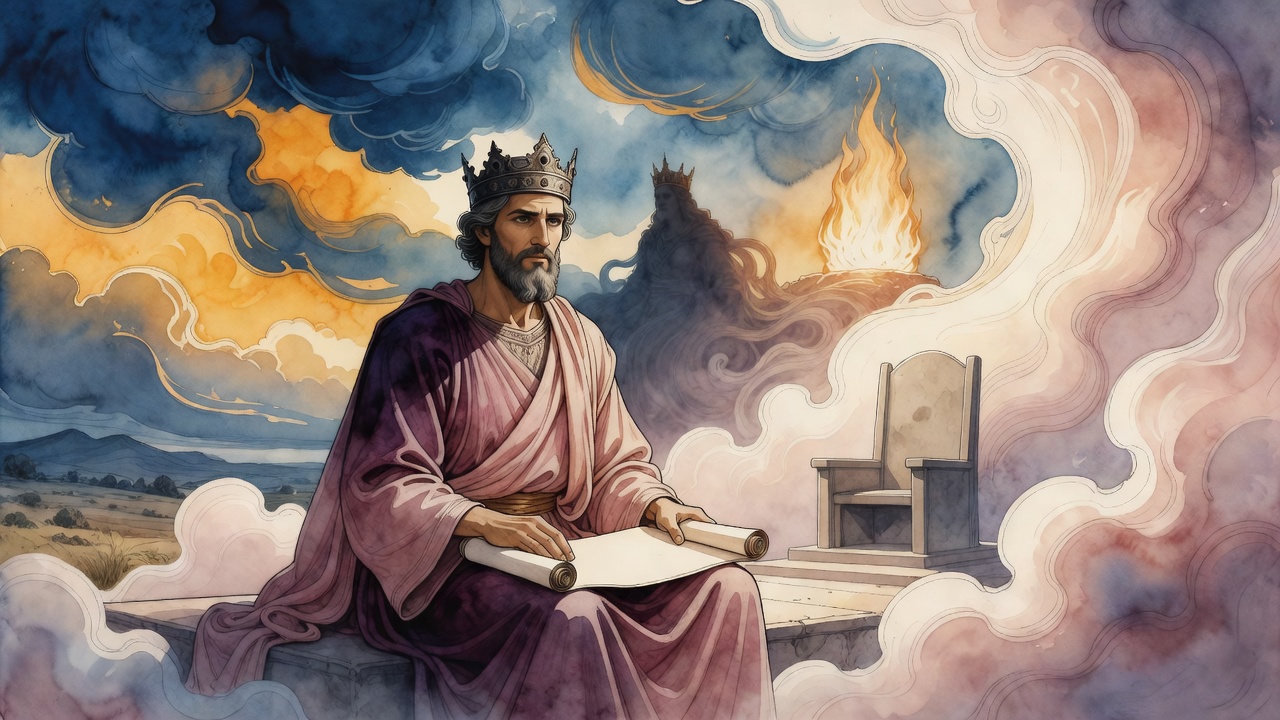
The pile of garments in the field was not a makeshift substitute for a proper throne. It was the only throne that made sense after nine years of waiting in the wrong place. A palace throne has the weight of inheritance behind it. It says: the person who sits here sits where others sat before him, and that continuity is the authority. The throne of garments said something different. It said: this army chose this man with the most personal things they had, the clothes off their backs, because he solved a problem that their dead king and nine years of their own efforts had not been able to solve, and the choice itself is the authority.
Moses was twenty-seven years old. He had come to Ethiopia as a fugitive with no army and no allies and nothing to recommend him except the manner of a man who had grown up inside power and had learned what it required. He would reign for forty years. The woman he would eventually not marry, Adoniah the widow of Kikanos, would remain at his side as the queen who kept the practical operations of the kingdom functioning while Moses, as the tradition records with a kind of precise care, observed the laws of his fathers and did not touch her.
← All myths