Moses Cited the Burning Bush and God Cited Adam
Moses pleaded to enter Canaan by recalling the bush where he was sent. God answered by tracing Moses's mortality back to Eden and the first refusal.
Table of Contents
 Click for full size
The Argument Moses Made
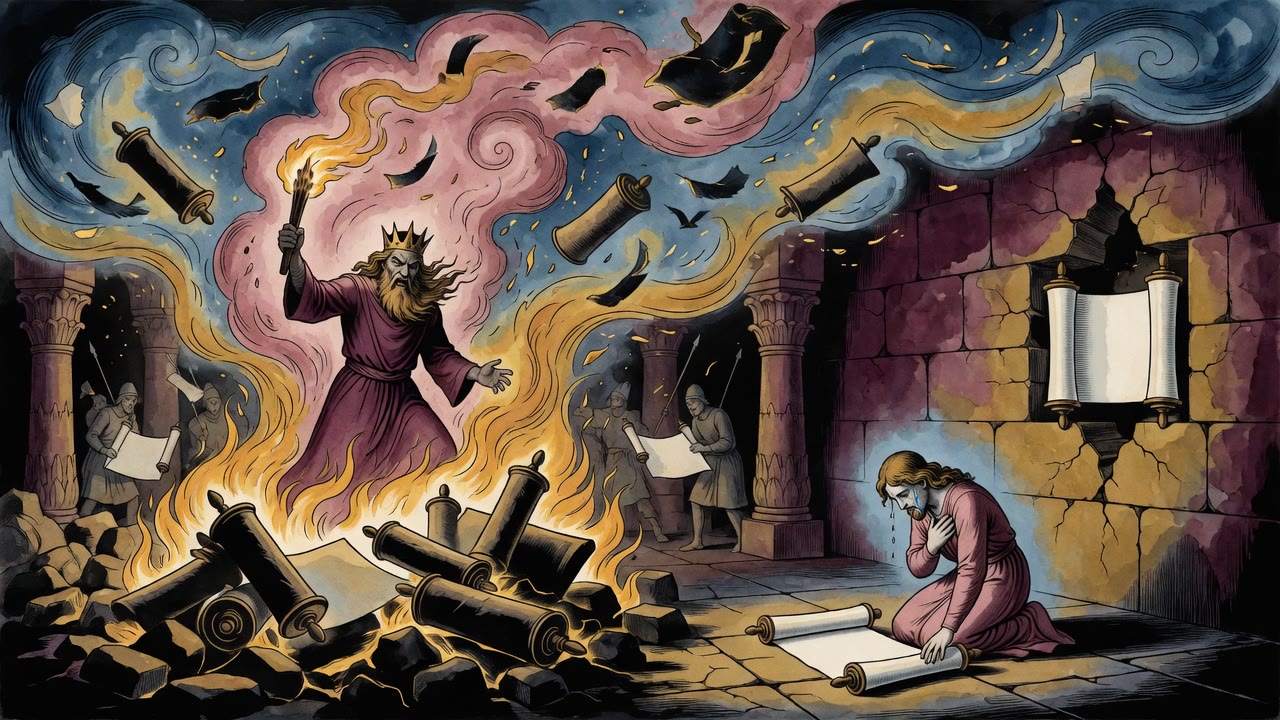
Moses had led them out. That was not a small thing. Pharaoh's court, the ten plagues, the sea split open, forty years in the wilderness with two million people who complained about the food and built idols when his back was turned, and he had brought them to the edge of the land. He could see it from the mountain. He wanted to cross. He made what sounded like a reasonable argument: God had called him from the burning bush, sent him to Pharaoh, placed the entire weight of Israel's rescue on his shoulders. A man who begins a task has a claim to finish it.
Louis Ginzberg's Legends of the Jews, his early twentieth-century synthesis of midrashic and Talmudic sources, preserves Moses's plea before God with its full urgency. Moses recalled the bush. He recalled the commission. He asked that the mission that began at Horeb should be allowed to end on the western bank of the Jordan. His argument was not personal. He framed it as the completion of an obligation God had assigned to him.
God Points to the Bush Itself
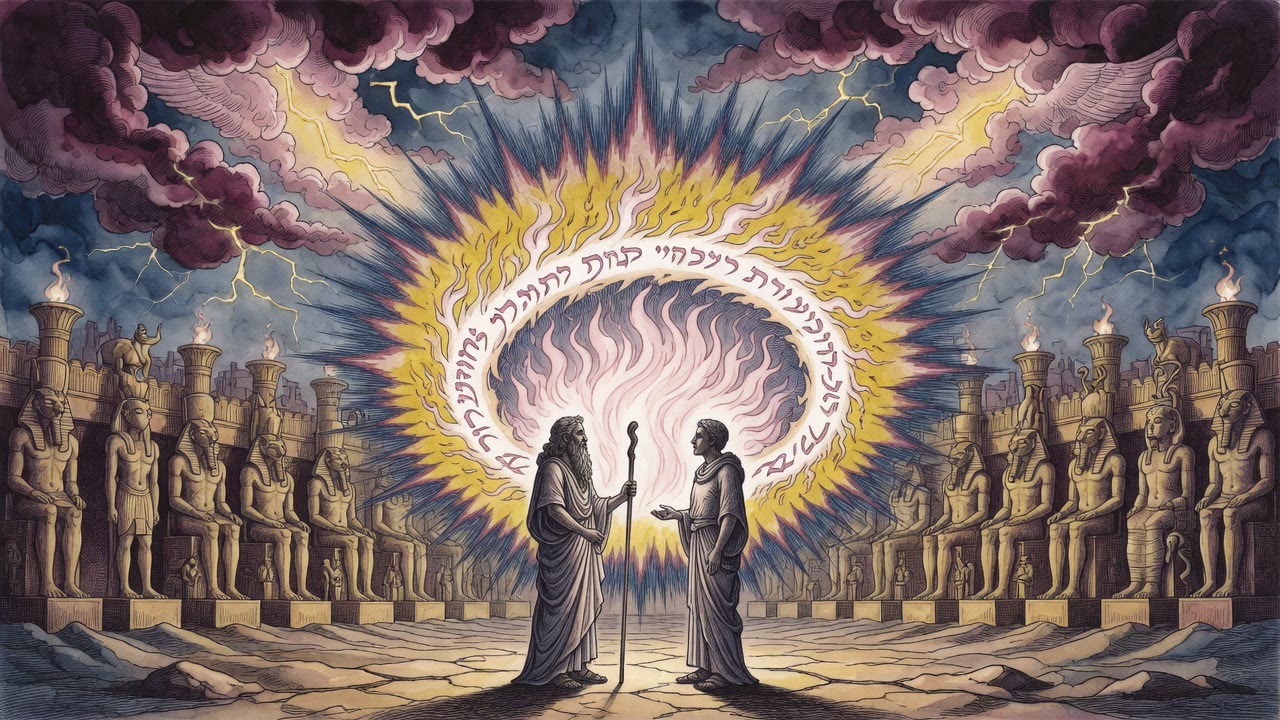
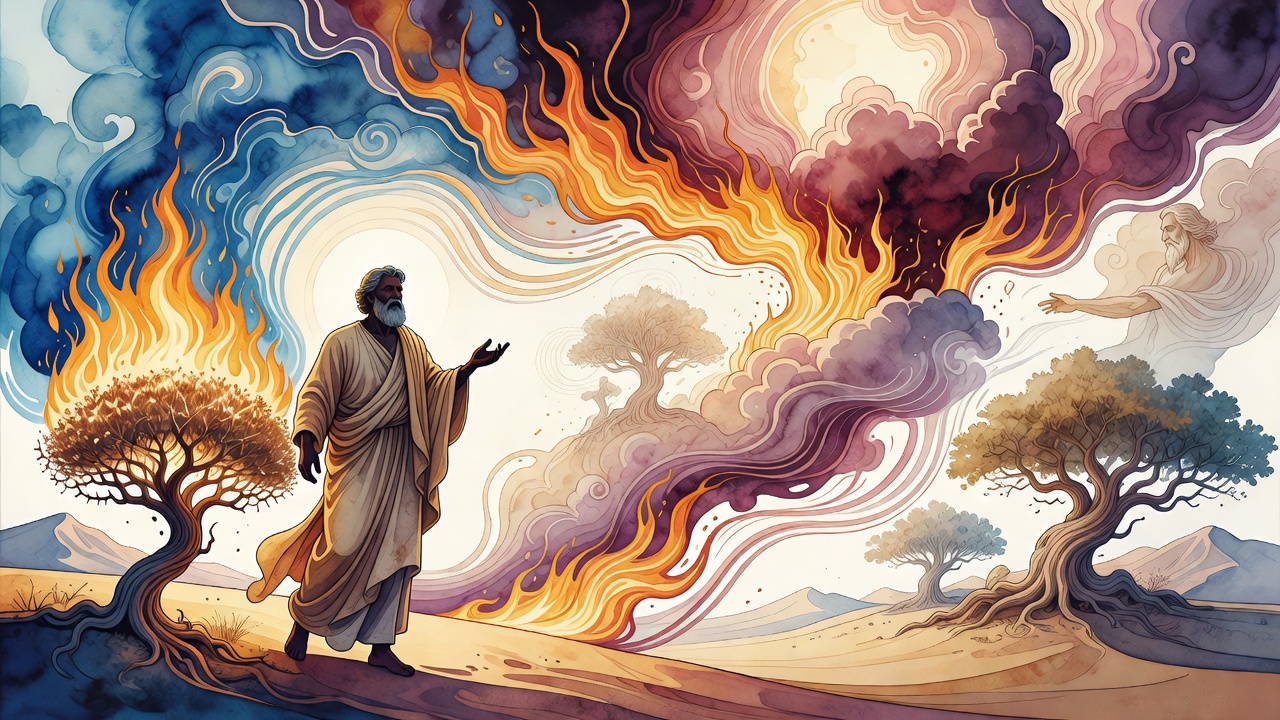
God did not deny the memory. He answered with the same memory, from a different angle. At the bush, Moses had resisted. He had said: send by the hand of whomever You will send. He had tried to pass the commission to someone else, to push the mission away from himself before accepting it. That hesitation, small as it seemed, had been recorded.
The measure Moses had used at the moment of appointment returned to him at the moment of completion. He had not rejected God. He had not refused outright. He had hesitated at the edge of obedience, and the tradition heard that hesitation echo across forty years and arrive in the decree that the man who had once tried not to be sent could not claim full ownership of the sending's conclusion. Elazar's son, Pinchas, had burned with the zeal Moses had initially withheld. The completeness of entry belonged to another.
The Serpent in Egypt
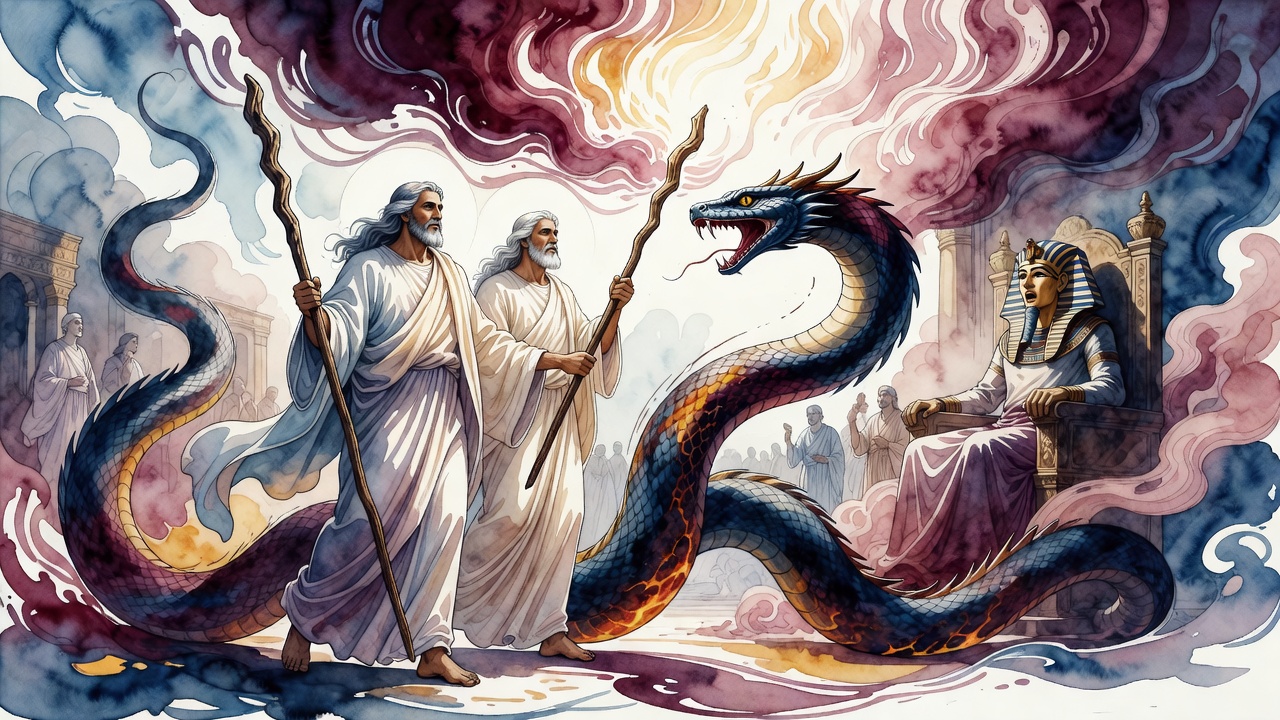
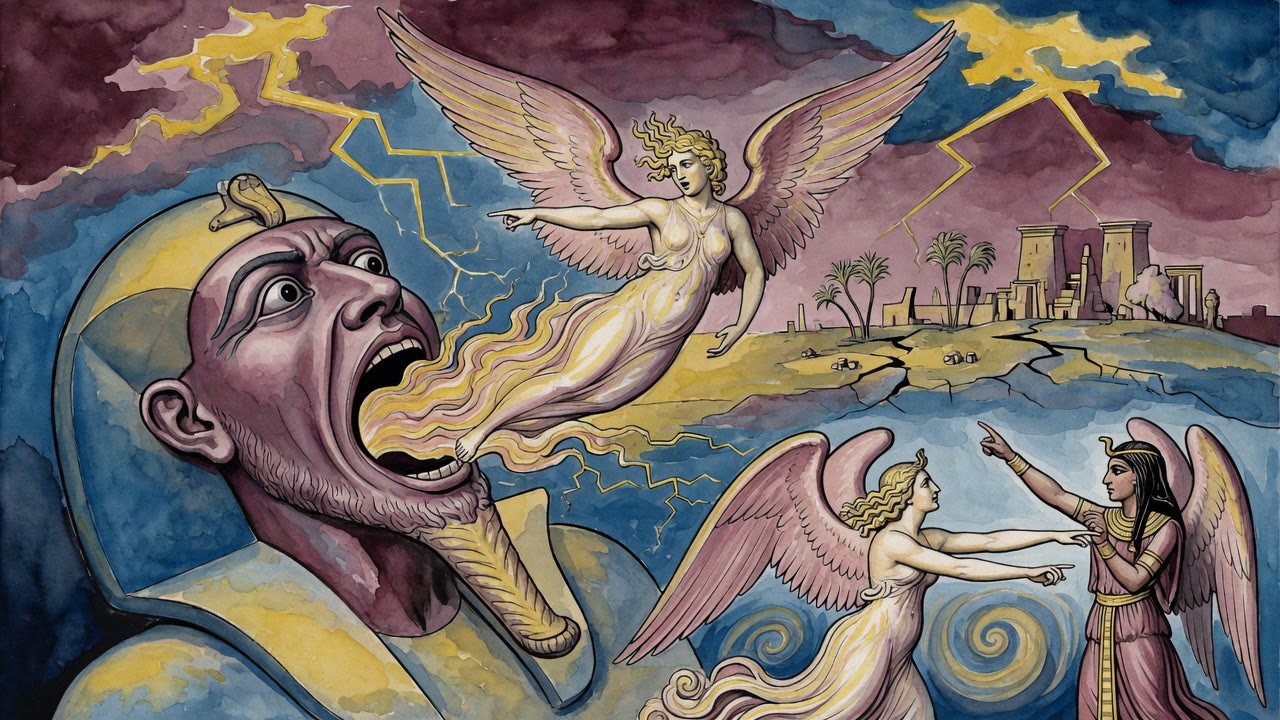
A second source in Ginzberg draws a different thread into Moses's situation: the humans of Egypt and their connection to the first humans. The Midrash preserves traditions about the Egyptians that link their spiritual condition to the fall in Eden, not in the sense of cosmic punishment, but in the sense of a people who had inherited the damage that began with the serpent's entrance into human affairs. The golden calf in the wilderness draws on the same symbolic register: Egypt had given Israel something that Israel could not entirely leave behind.
Moses stood between two inheritances. He carried the commission from the bush, but he also carried mortality. God traced that mortality back past Egypt to Adam: the decree of death had entered the world at Eden, and it applied to Moses as to every human being descended from that first disobedience. The bush burned and was not consumed. Moses had been the flame inside it for forty years. But fire that serves a purpose still ends when the purpose is complete.
The Answer Moses Did Not Want to Hear
The tradition in Ginzberg's synthesis does not soften the verdict. Moses was told he would see the land from Pisgah. He would look across. He would understand what his people were inheriting. He would not cross. The decree was not cruel for being firm. It was firm because the logic behind it was complete: the hesitation at Horeb, the mortality from Eden, the measure of what had been withheld at the beginning. All of it had accumulated into a single outcome that no amount of subsequent faithfulness could reverse.
Moses died on the mountain, alone, with God. No one found his grave. The tradition says God buried him. The man who had argued with God from the burning bush to the border of Canaan received a burial that no other human being received, from the same hand that had refused his final request.
← All myths