Israel Picked Up Eden's Jewels at the Red Sea Before It Split
The Egyptian army was closing in, and the people at the water were picking up pearls. The river Pishon had washed them out of Eden.
Table of Contents
 Click for full size
What Was Already Waiting on the Shore
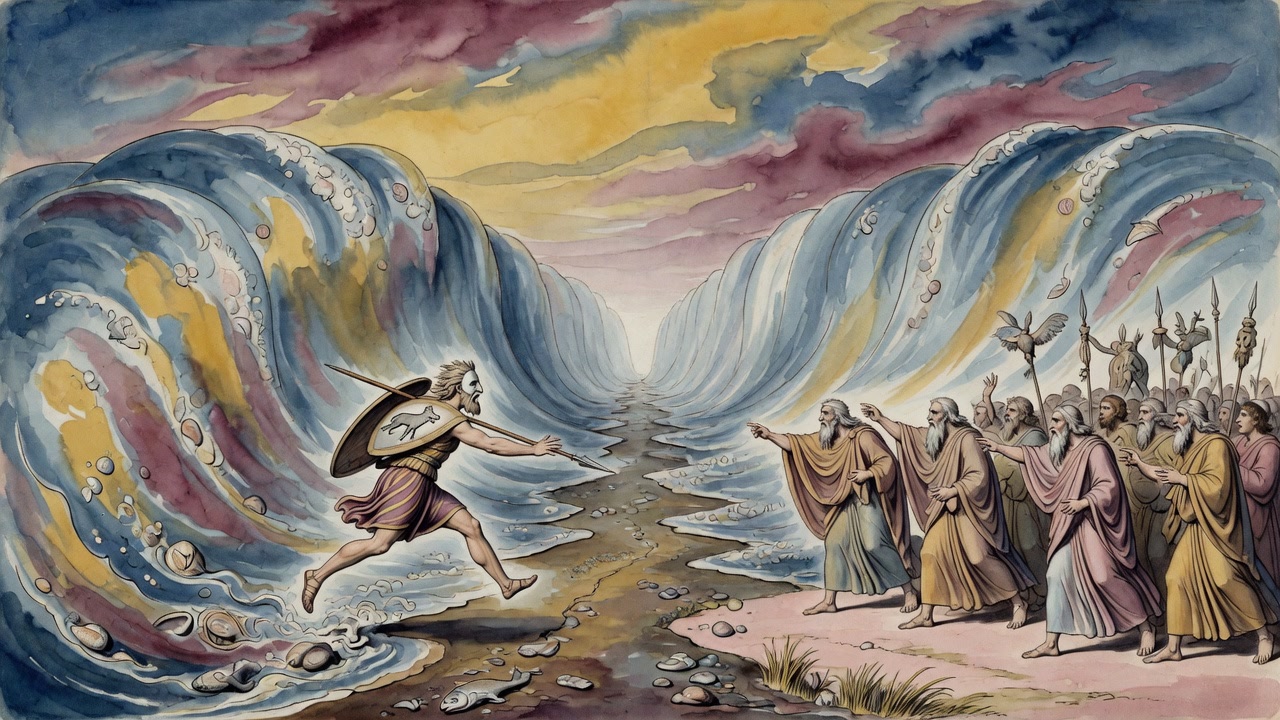
The people arrived at the sea with an army behind them. There was nowhere to go except forward into water or backward into the soldiers. The standard reading of this scene is terror followed by miracle. The Israelites freeze. The sea splits. Israel crosses on dry ground. That is the shape of the event as the Hebrew Bible records it.
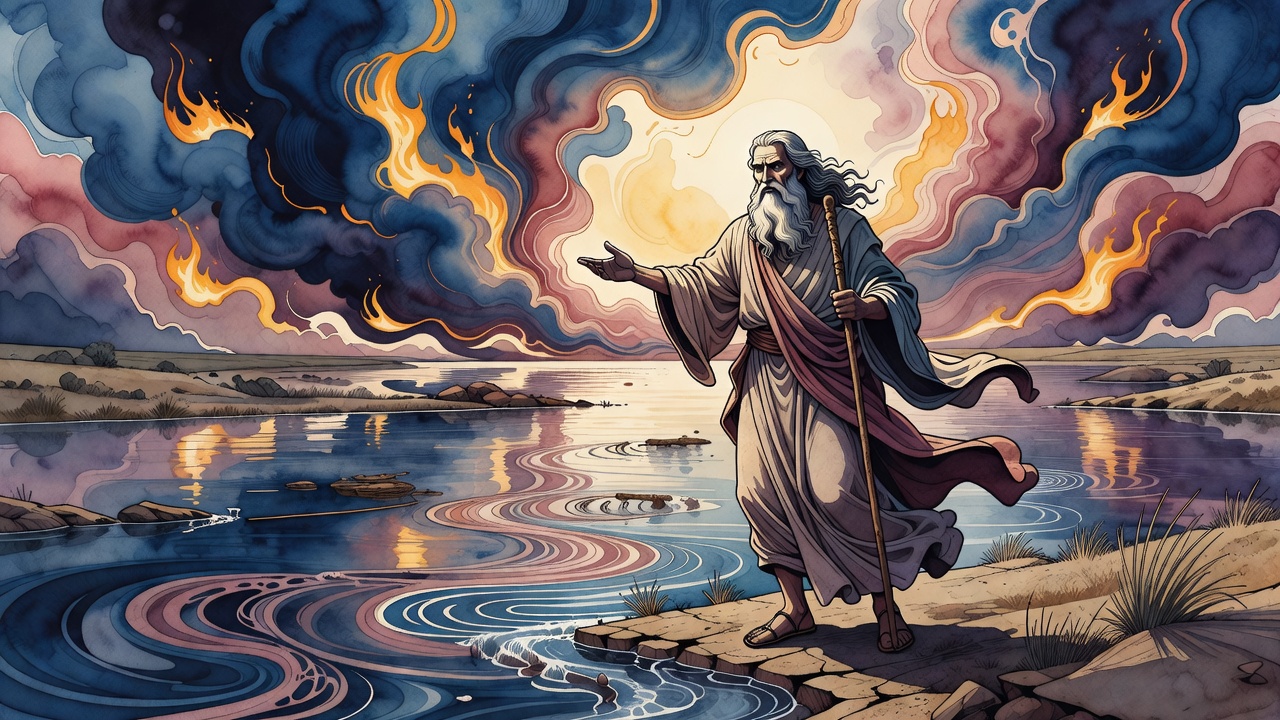
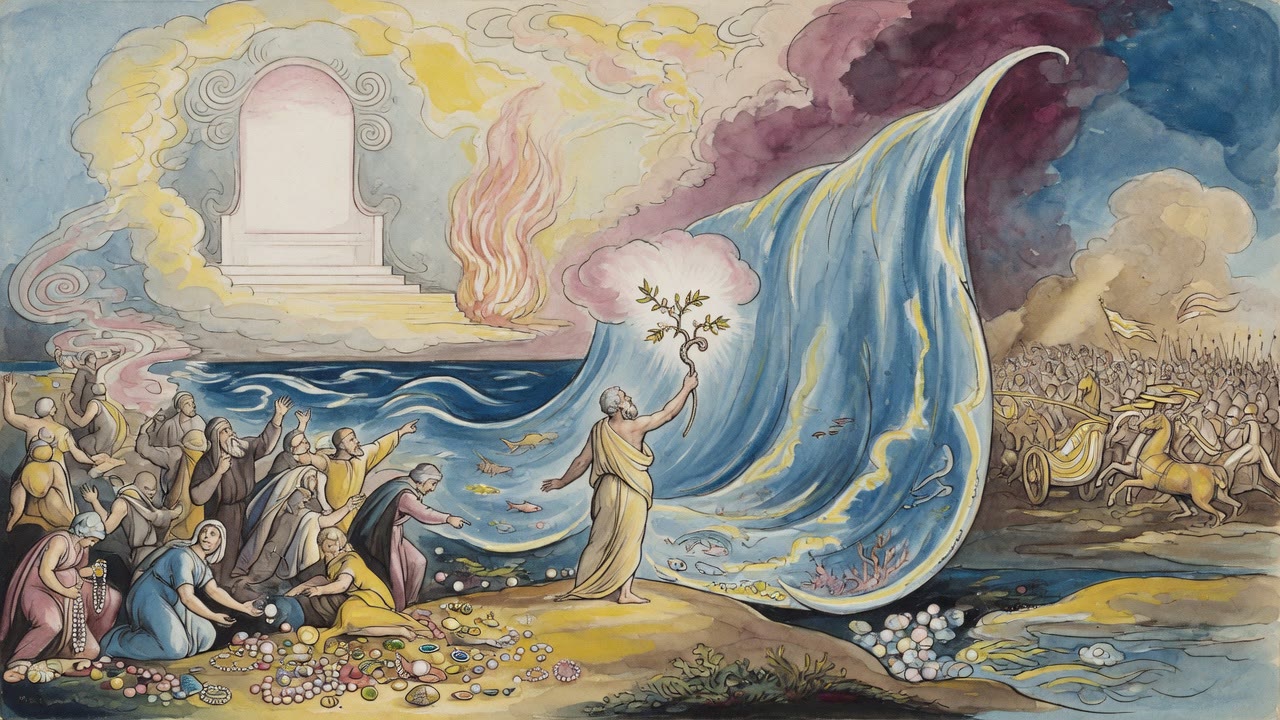
Targum Jonathan on Exodus 14, the Aramaic Torah paraphrase shaped in Palestine between the second and seventh centuries CE, gives the shore a much longer prehistory. The beach at the Sea of Reeds was not an empty stretch of sand between the Israelites and the water. The river Pishon, one of the four rivers that flowed out of Eden at the beginning of the world (Genesis 2:11-12), had been carrying its cargo across the river systems of the earth since the expulsion from the garden. Pearls, precious stones, gems of every kind, Eden's overflow had been working its way through the Gihon and finally into the Sea of Reeds for the entire span of human history.
When Israel camped at the water's edge, they were standing in the middle of an accumulation that had been building since before they were a people. The Targum says they gathered the stones while they waited. The army was coming and Israel was picking up jewels from Eden on the beach.
The Four Factions
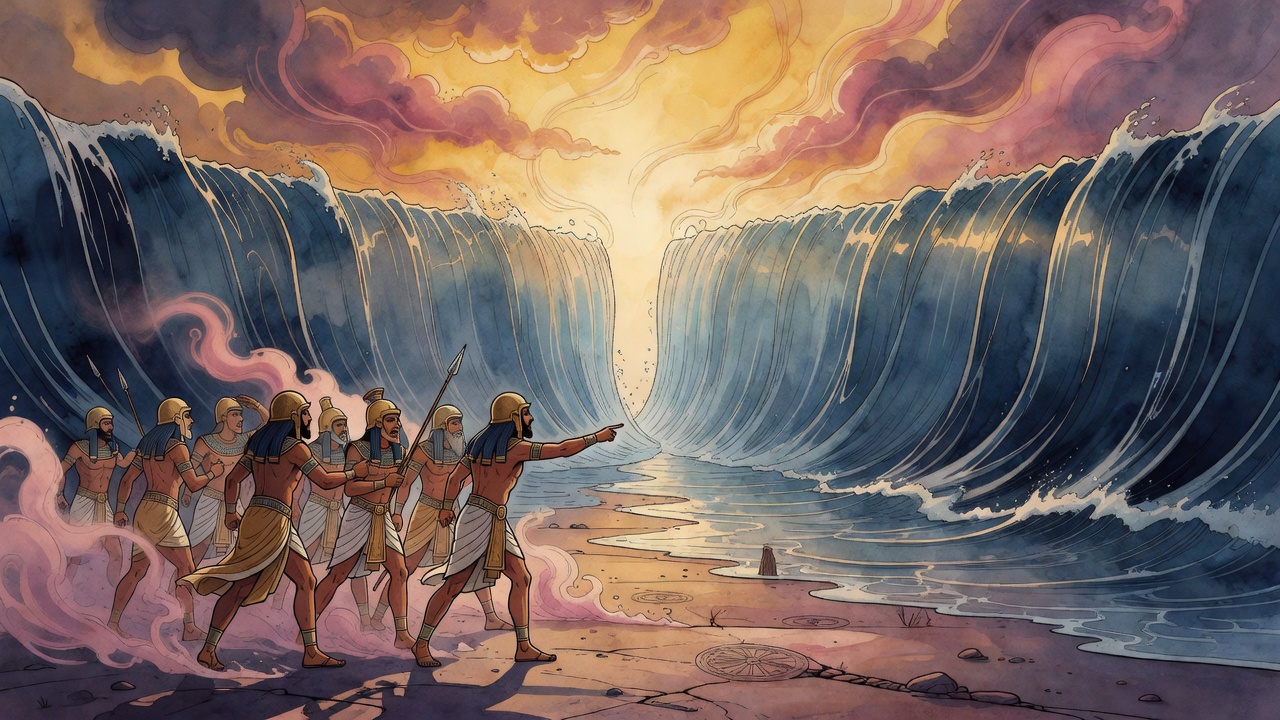
When the Egyptian army appeared on the horizon, the camp split. Targum Jonathan preserves four distinct positions that formed among the Israelites at that moment, four different proposals for what to do with no good options visible.
One faction said to march into the sea. Another said to return to Egypt. A third said to stand and fight. A fourth said to shout and confuse the enemy. Four readings of the same impossible situation, and only one of them turned out to be correct, the first, though it required walking into water that had not yet moved.
Moses told them to stand still and watch the deliverance of God. It was a rebuke to all four factions, including the most courageous one. Even the group willing to charge into battle had chosen its own action over waiting for the divine signal. None of the four plans was the plan. The rod went up. The sea split. The path appeared.
The Rod Opens the Water
The rod Moses held at the shore was the same rod from Reuel's garden in Midian, the one inscribed before creation with the names of the ten plagues and the divine name. Targum Jonathan specifies that Moses stretched it over the sea, and the Tikkunei Zohar, the Kabbalistic expansion of the Zohar compiled in the late thirteenth century CE, adds a dimension to this moment: Moses transfers Israel over the sea so they do not drown in it. This is not only a physical act of parting water. The language implies something like a transfer of protective capacity, Moses placing his people on the other side of a boundary that would be fatal to cross without his mediation.
The Shir HaShirim Rabbah, the Midrash Rabbah on the Song of Songs, a compilation of Palestinian rabbinic interpretation assembled around the sixth century CE, preserves a darker reading of the same moment. Rabbi Tanhuma, citing Rabbi Yehuda ben Rabbi Simon, insists that the fear at the sea was not only about Pharaoh's army. The tradition he recalls involves the Israelites seeing the bodies of the Egyptians who had drowned, and the text asks a hard question about whether a people can celebrate the suffering that purchased their freedom. The answer is complicated and the midrash knows it.
What Was Carried Through
On the far side of the sea, Israel carried Eden's stones. The jewels gathered on the beach while waiting for the miracle went with them into the wilderness. The rod that had split the water went with them. The memory of what had been given up to cross that water went with them too. Freedom has weight, and what you carry out of the place of your rescue matters as much as the crossing itself.
← All myths