The Tribe That Split in Two and Why Moses Saw It Coming
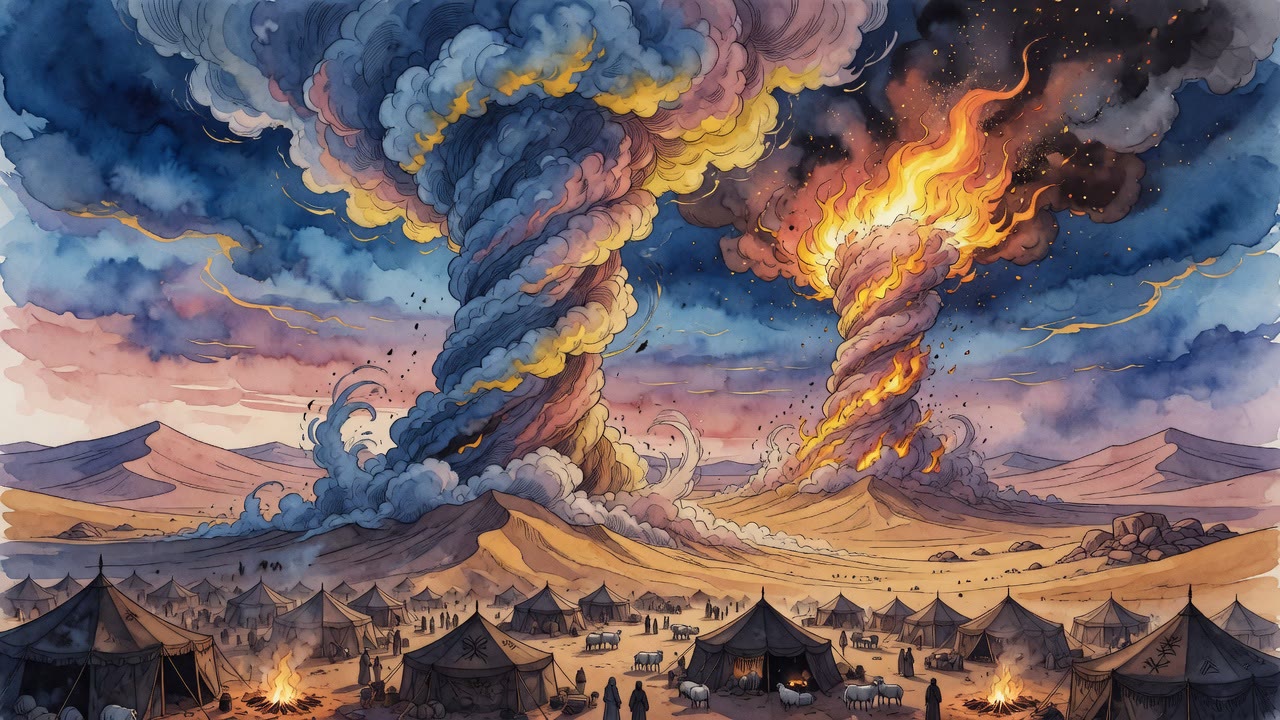
Moses blessed Dan as a lion leaping from the Bashan. The Sifrei Devarim reveals this was a prophecy: the tribe would divide and claim two separate territories.
Table of Contents
 Click for full size
Moses Blesses Dan on the Heights of Moab
Moses stood on the heights of Moab and delivered his final blessings to the twelve tribes. He would not enter the land. He had made his peace with that. What he gave the tribes instead of his presence was his sight: the prophetic capacity to see not just what they were but what they would become.
When he reached Dan, what he said was short: Dan is a lion's whelp; he shall leap forth from the Bashan. Dense language. Easy to hear as standard tribal praise, the kind of military metaphor any leader might use to bless a fighting force. The Sifrei Devarim, the early rabbinic commentary on Deuteronomy, looked at those words through the lens of what actually happened to the tribe of Dan in the generation of Joshua and found that every phrase was a specific encoded truth about a split that had already happened by the time the rabbis were reading.
Why the Blessing Needed to Be Said at All
The Sifrei Devarim begins with a question the verse itself seems to invite: why was Dan's blessing even recorded? Moses blessed all twelve tribes, but the text specifically notes, of Dan he said. The word that calls attention to the saying suggests there was something about Dan's blessing that needed special accounting for.
The answer begins in Genesis. When Joseph brought some of his brothers before Pharaoh, the Torah says he chose them from the edge, the Hebrew word miktzeh, meaning the outermost end. The rabbis noticed that the names described as being at the edge all shared a certain quality, a repeated or doubled sound within the name itself. Dan carries this quality. The name is brief but internally doubled in its sound pattern. This small philological observation establishes Dan's relationship to the idea of splitting, of being simultaneously at two ends of something at once.
The Territory That Would Not Hold Together
When Joshua divided the land, the tribe of Dan received a coastal territory in the west, between Judah and the sea. It was fertile and positioned. But the Amorites pushed Dan back, refusing to let them down into the valley. Dan ended up squeezed against the hills, unable to hold what they had been given.
Part of the tribe went north. They found the city of Laish, a prosperous and isolated place with no alliances to protect it, and they took it. They renamed it Dan. From that moment the tribe existed in two places simultaneously: some in the original southern territory, some in the far north near the foot of Mount Hermon, on the slopes of the Bashan.
Moses, blessing the tribe forty years before this happened, said: he shall leap forth from the Bashan. The leap was not a metaphor for military prowess. It was a description of a physical movement across the land, from one end to the other, a tribe springing from the place in the north to its presence in the south. The blessing named the split before the split occurred.
Caleb and Joshua Who Held the Line
The Sifrei Devarim places this tradition in a larger context about faithfulness under pressure. When the twelve spies came back from Canaan, ten of them saw giants and concluded that the land could not be taken. Two of them, Caleb and Joshua, saw the same giants and maintained that Israel could do what God had promised. The difference was not in what they observed but in what they believed about the promise behind the observation.
Dan's divided settlement is, in one reading, the result of the same kind of pressure. The Amorites pushed back and the tribe adapted by splitting. This was not necessarily a failure of faith. But the rabbis held Caleb and Joshua up as the standard: the ones who held to the promise and refused to redistribute their territory in response to opposition.
← All myths