How Balaam Seized a Throne With Snakes and Sorcery
Kikanos came home from a war he had won and found his own gates shut. It took nine years, a king's death, and a flock of starving birds to open them.
Table of Contents
 Click for full size
The Man Left in Charge of the City
Kikanos, king of Cush, marched east with an army the old books count like sand. Aram and the children of the East had stopped paying him, and he intended to make them start again.
He left the capital to Balaam son of Beor, along with Balaam's two sons, Jannes and Jambres, and the poorest people of the city, who were not worth taking to a war. Then he rode out and won it. He beat Aram, took captives, camped on their land until the tribute was counted, and turned for home.
Balaam had not spent those months guarding anything. He had spent them talking. He went among the people who had been left behind and made a case, and the people swore to him and set him on Kikanos's throne and made his two sons captains of the army.
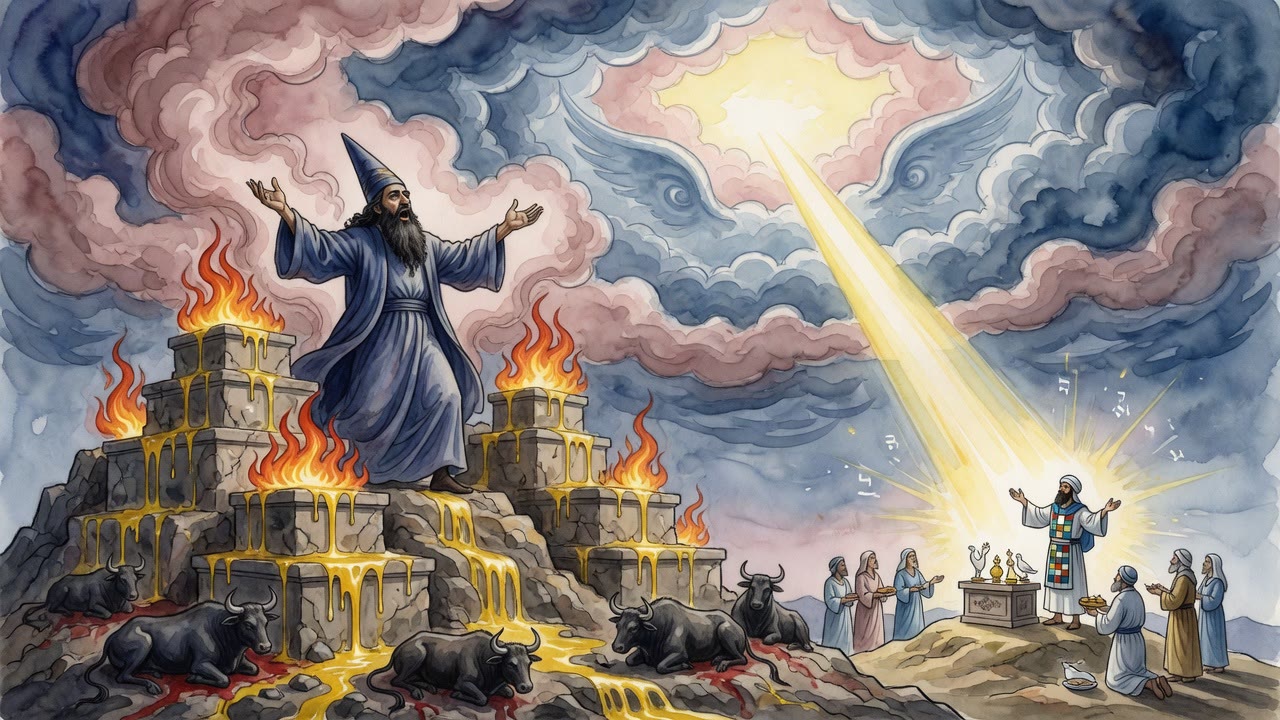
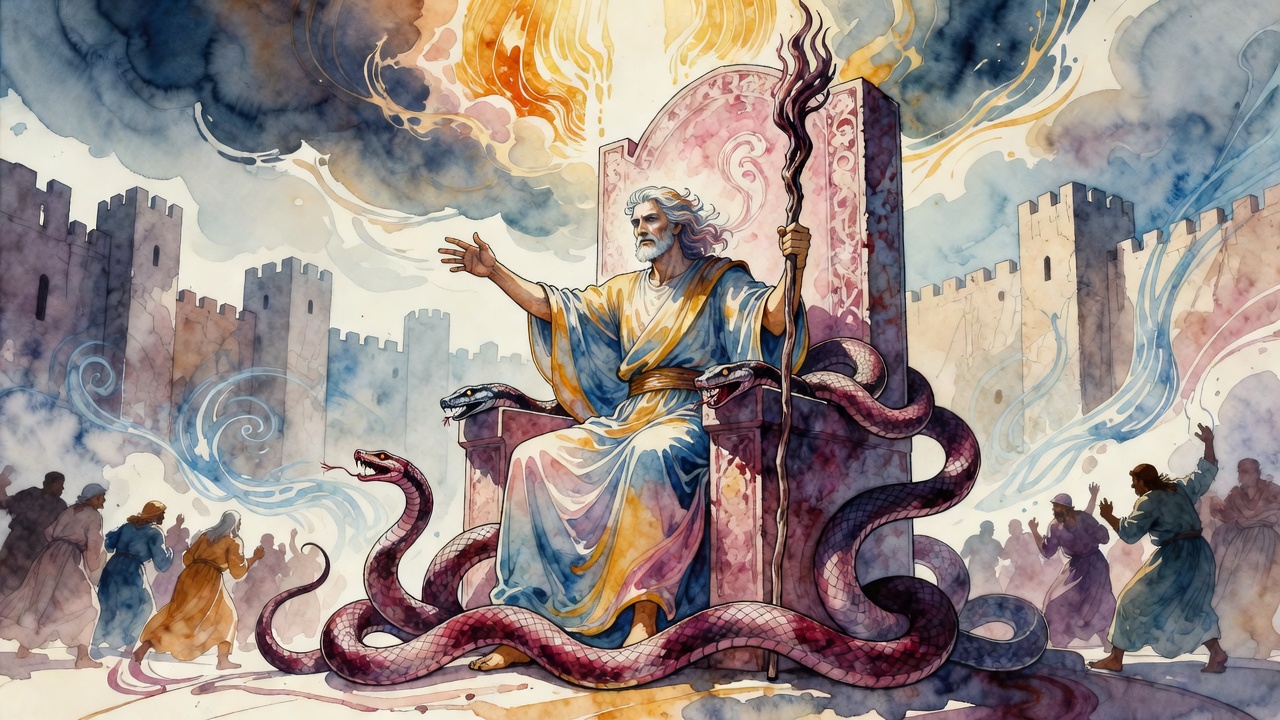
Then he prepared for the king's return. On two corners of the city he raised the walls and built them up higher than any siege ladder. On the third corner he had ditches dug past counting and broke the river into them, so that the ground on that side became water. On the fourth corner he worked his sorcery and called snakes up out of the ground, and they came, and they stayed. After that nobody walked in or out of the capital of Cush. Balaam had seized a kingdom with a speech and meant to hold it with water and snakes.
Three Days Against His Own Walls
Kikanos and his captains came up the road and lifted their eyes and stopped. The walls were taller than the walls they had left. The men worked it out among themselves the way men do: the war kept us away a long time, the city got frightened, they built it up so the kings of Canaan could not come at them. It was a good explanation and it lasted until they reached the gate.
The gate was shut. They shouted up to the sentries to open it. The sentries had their orders from Balaam and did not answer.
They fought at the gate that day and lost a hundred and thirty men. The next day they went at the water side, and the riders who tried to swim their horses across sank in the pits and drowned. Kikanos ordered trees cut and rafts built, and when the rafts came into the ditches the water turned in circles like a millwheel and pulled two hundred men off ten rafts. On the third day they attacked the corner where the serpents were, and the snakes killed a hundred and seventy of them before anyone touched the wall.
Kikanos stopped attacking. He set his army in a ring around the city he had ruled his whole life, and no one went in or out for nine years.
Nine Years in the Field
In the first year of that siege a young man came into the camp from the west. He had killed an Egyptian overseer and run, and he was eighteen years old. His name was Moses.
He stayed nine years. The soldiers came to like him, then to depend on him. His height was like a lion's and his face was like the sun, and the king took him on as a counselor. He went out and came in with them, year after year, looking at the same walls.
Then Kikanos took ill. It went through him fast and he was dead on the seventh day, outside his own gate, in sight of his own roof. His servants embalmed him and carried him north and buried him, and they built a strong high house over the grave with great stones set beneath it, and the king's scribes cut into those stones every battle he had ever won.
A King Crowned on a Heap of Clothes
The army sat down with the problem. Nine years in the wilderness away from their houses. Attack the city and be killed at the wall. Sit still and be killed by boredom and by whoever heard first that the king of Cush was dead. Aram would hear soon.
They decided they needed a king before the news traveled, and when they looked around the camp for one there was nobody they wanted except the Egyptian fugitive.
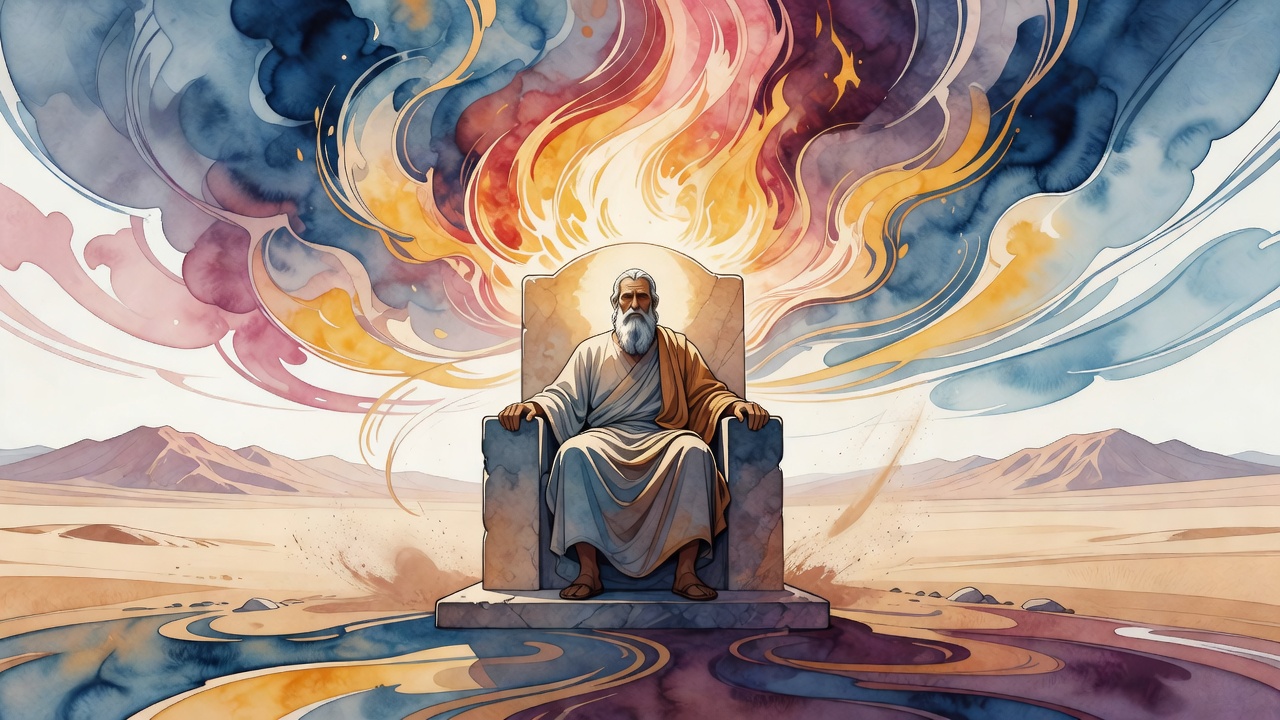
Every man pulled off his outer garment and threw it on the ground until the pile was high enough to stand on. They set Moses on top of it, blew the trumpets, and shouted, "May the king live." They swore to give him Adoniah, Kikanos's widow, as a wife. Then they made a proclamation that every man must give the new king something out of what he owned, and they spread a sheet across the heap of clothes, and it filled up with gold earrings and coins and onyx and pearls and silver, thrown in by soldiers who had been living in a field for nine years.
Moses was twenty-seven years old.
The Storks
On the seventh day of his reign the whole army came and asked him what to do about the city.
Go to the forest, he said. Every man is to come back with one young stork in his hand, and any man who comes back without one loses his life and everything he owns. Then keep the birds. Feed them until they are full grown, and teach them to fly the way a hawk flies.
They did it. When the storks were grown, Moses had them starved for three days.
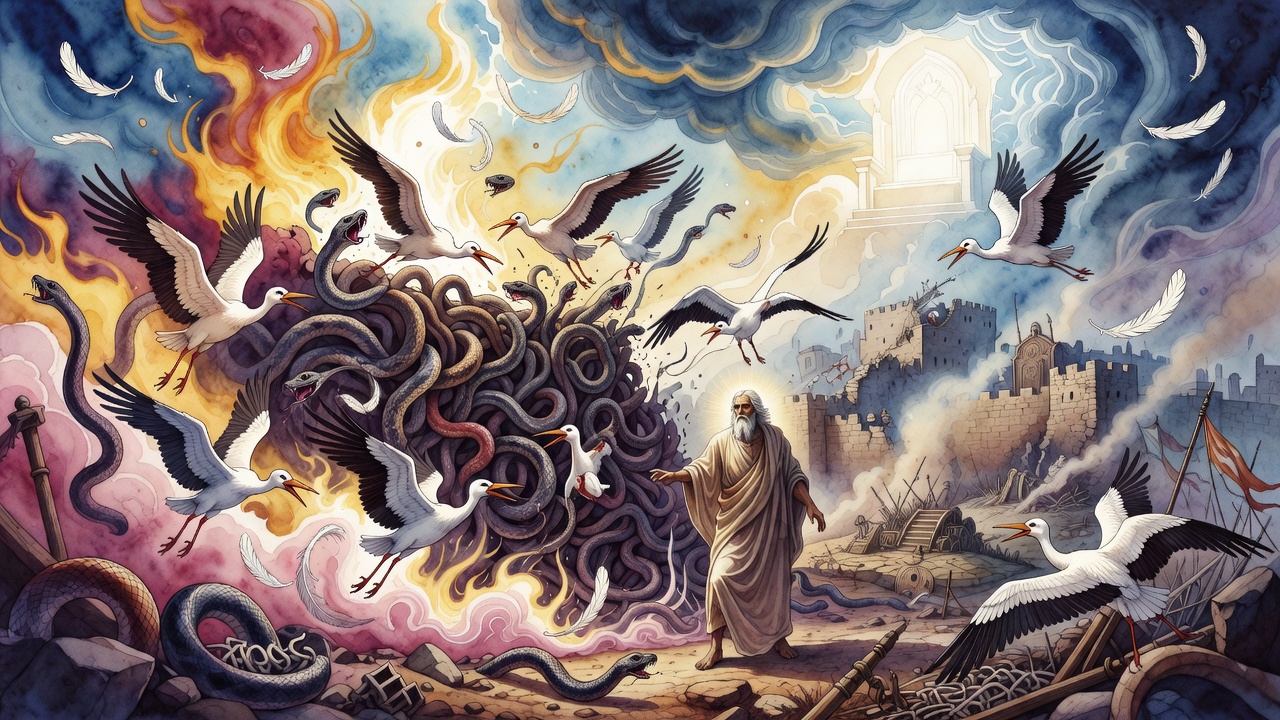
On the third day the order came: armor, sword, horse, and one bird on the fist. They rode to the corner of the city where the snakes were. Then every man on the line threw his stork forward at the ground, and the birds went down into the moving carpet at the foot of the wall and ate.
When the snakes were gone the army went over the wall. They took the city and killed the people in it, and of the men who had been sitting outside those walls for nine years not one died that day.
Balaam watched the fighting come through the gate he had sealed. He had one more art left. He worked it, and he went up into the air, and he took Jannes and Jambres and his eight brothers with him, and the whole family flew out of Cush and came down safe in Egypt, where a Pharaoh was building something and would need sorcerers.
← All myths