The Sinai Covenant Was a Mutual Oath Neither Side Could Break
Moses divided the blood of sacrifices at Sinai in a ceremony that bound both Israel and God. The rabbis read it as a two-way oath sworn at sword-point.
Table of Contents
 Click for full size
The Oath That Ran in Both Directions
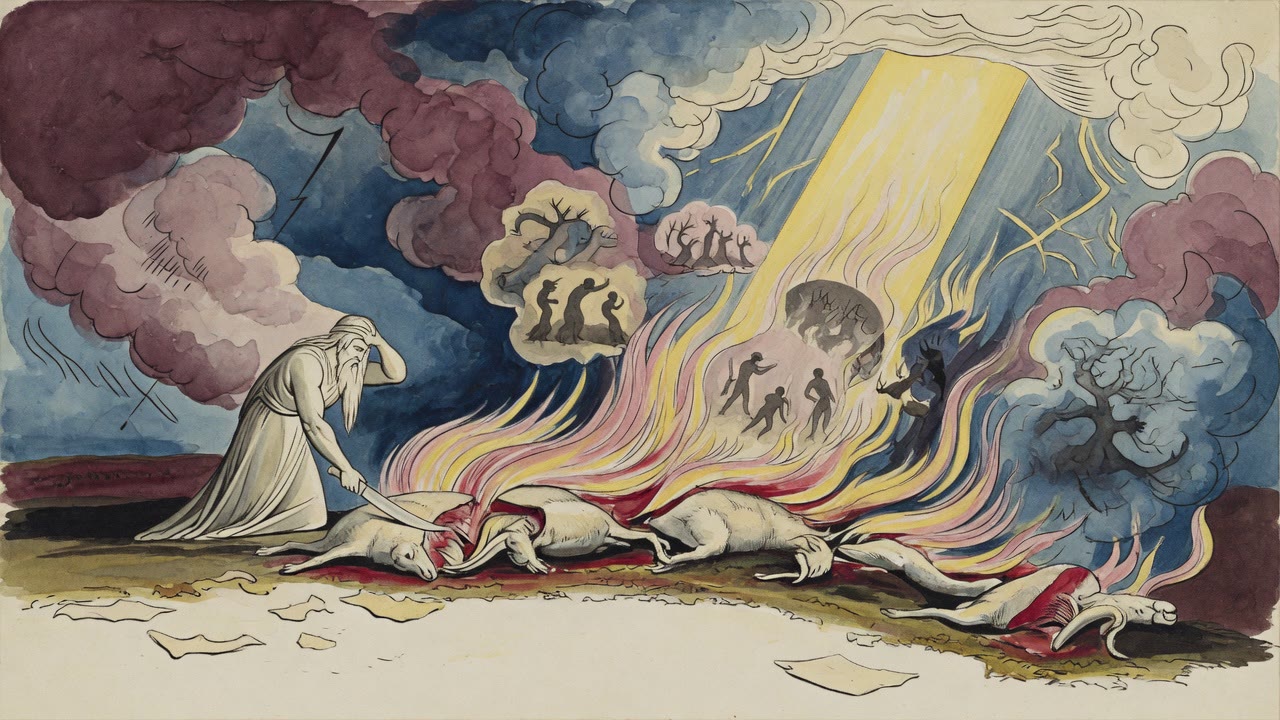
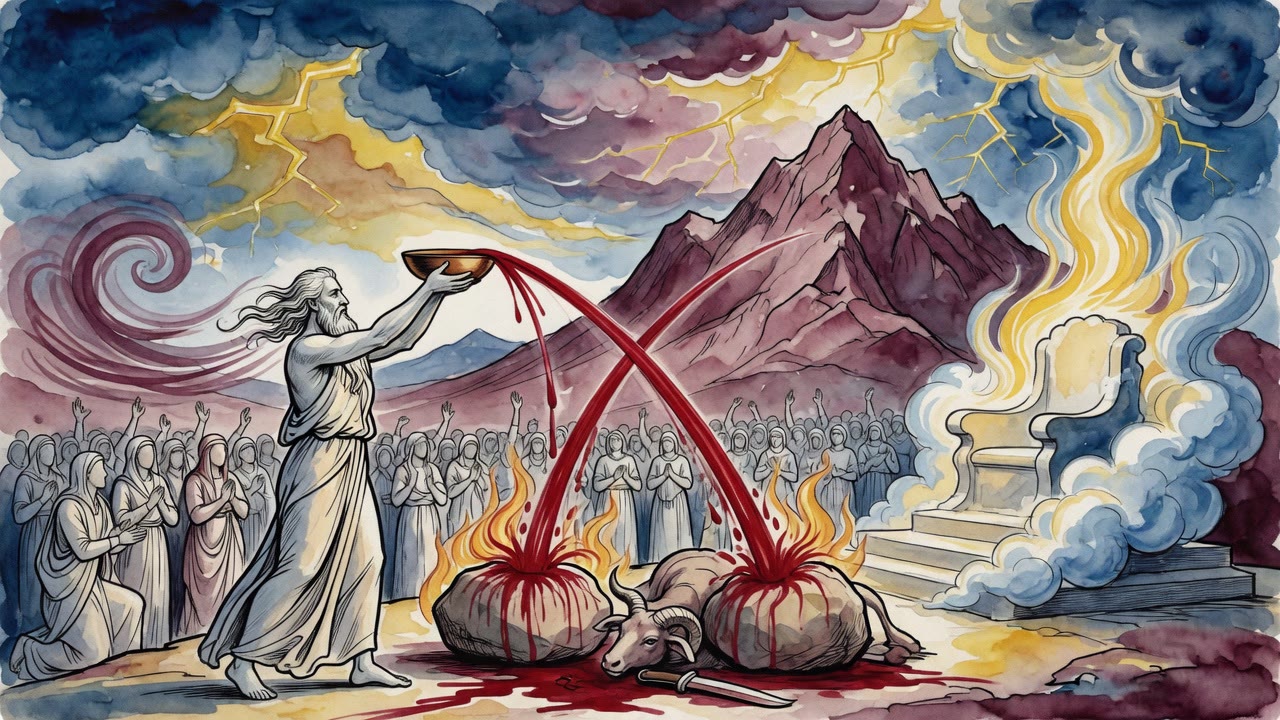
Moses takes the blood of the sacrificial animals and divides it. Half he throws against the altar. Half he sprinkles on the people. This is the blood of the covenant that the Lord has made with you (Exodus 24:8). The verse is stark and strange, and the rabbis did not pass over it lightly.
Vayikra Rabbah, the fifth-century Palestinian midrash on Leviticus, reads the covenant at Sinai as binding in both directions. Rabbi Yochanan cites Deuteronomy 29:12 and says plainly: this was a commitment made on both sides. God would not disavow Israel. Israel would not disavow God. The word is not a promise to be good. It is a renunciation of the option to walk away.
A King With a Sword at the Oath-Taking
Rabbi Yitzchak offers an image for what the ceremony looked like from the inside: a king administering an oath to his legions at sword-point. The sword is not exactly a threat. It is the visible weight of consequence, a reminder that the words being spoken are not casual, that they bind in ways that cannot be undone by regretting them later. The sword is present at the oath not to coerce but to mark the seriousness of what is happening. You can walk away from a promise. You cannot walk away from what is sworn at sword-point without acknowledging what you are leaving.
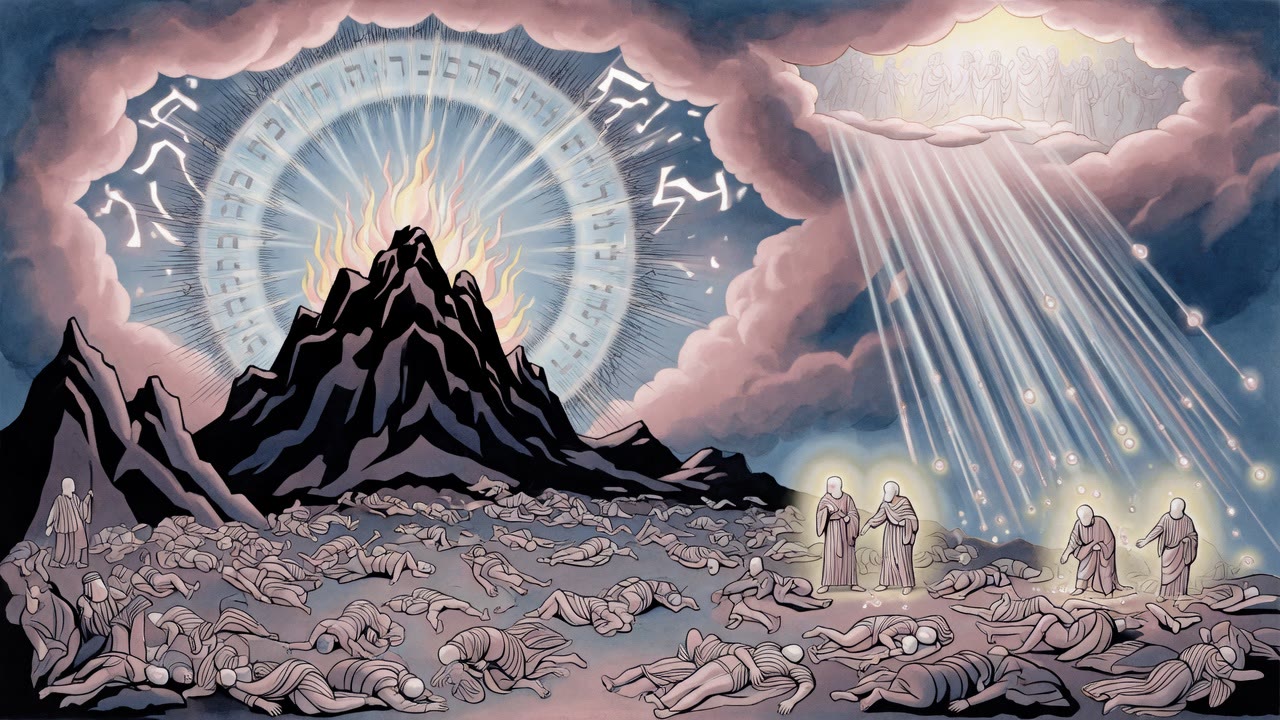
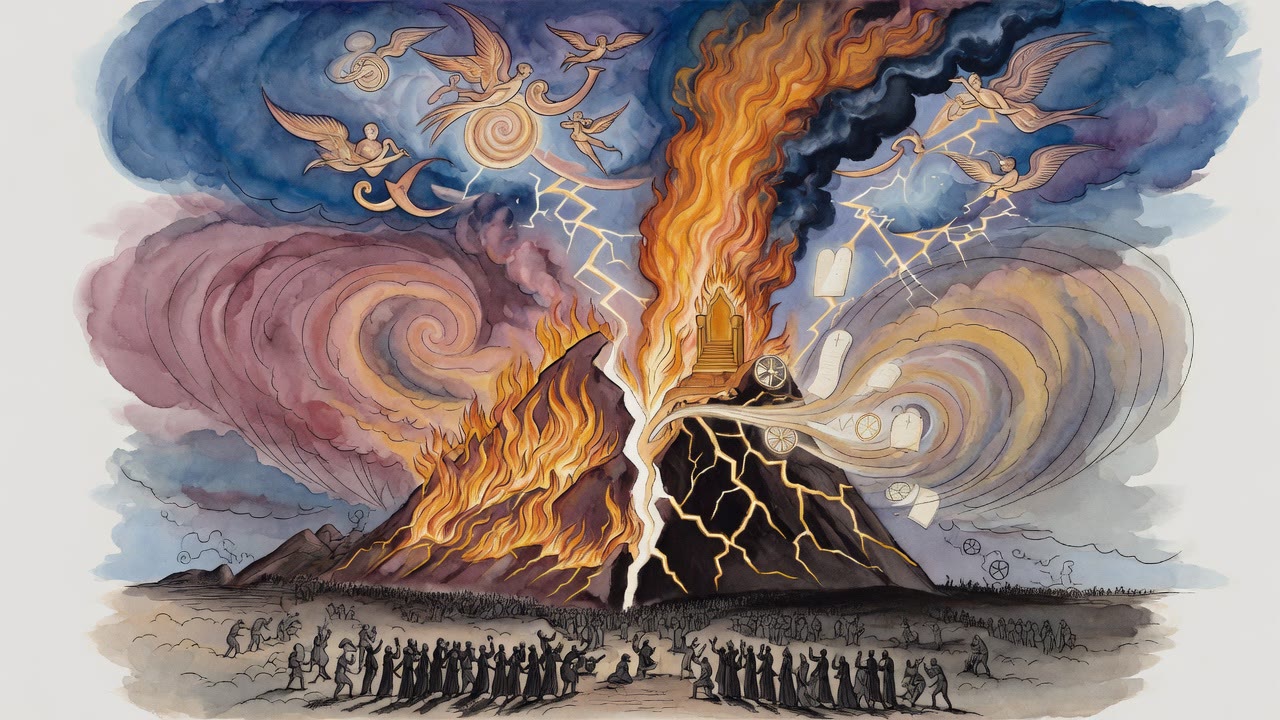
The fire is the other component. Rabbi Phinhas, in Vayikra Rabbah, points to the voice of adjuration Israel heard at Sinai from the fire. The fire is both revelation and witness. What was spoken in the fire was not advice. It was sworn testimony, spoken in the presence of something that consumed what it touched.
How Moses Divided the Blood
The question of how Moses managed to divide the blood in perfectly equal portions became itself a matter of rabbinic debate. The rabbis were genuinely curious about the mechanics, not because the mechanics mattered practically, but because the precision of the division was part of the meaning of the act. If the blood represented the covenant binding both parties, then an unequal division would have implied an unequal covenant. Moses had to divide it exactly, and the tradition that he did so without error was taken as evidence of something beyond his own ability to measure liquid.
The First Torah and Its Angel
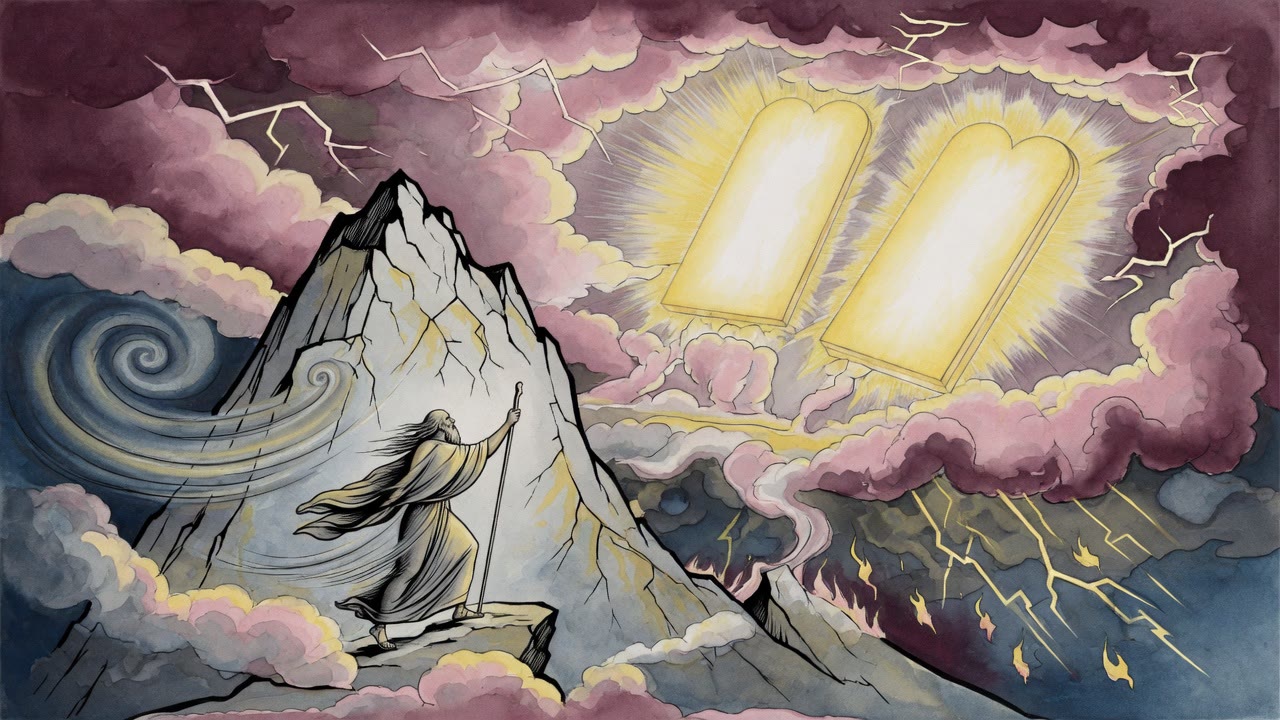
The Book of Jubilees, a non-canonical Jewish text from the Second Temple period, frames the Sinai moment differently but with related weight. It presents God commanding the Prince of the Presence, the angel often later identified as Metatron, to write down the entire history of the world, from creation until the sanctuary is built. What Moses received was not dictated to him from nothing. It was the record that had been written before the creation of the world, now being transmitted through human hands. The covenant sealed in blood was the formal acceptance of what had existed eternally.
The angel-mediator tradition and the blood ceremony are two ways of marking the same thing: Sinai was not the beginning of anything. It was the moment when what had always been true about the relationship between God and Israel was made formal and public and sealed with physical evidence that neither party could pretend away afterward.
← All myths