Zimri Dragged a Midianite Princess to Moses and Challenged Him
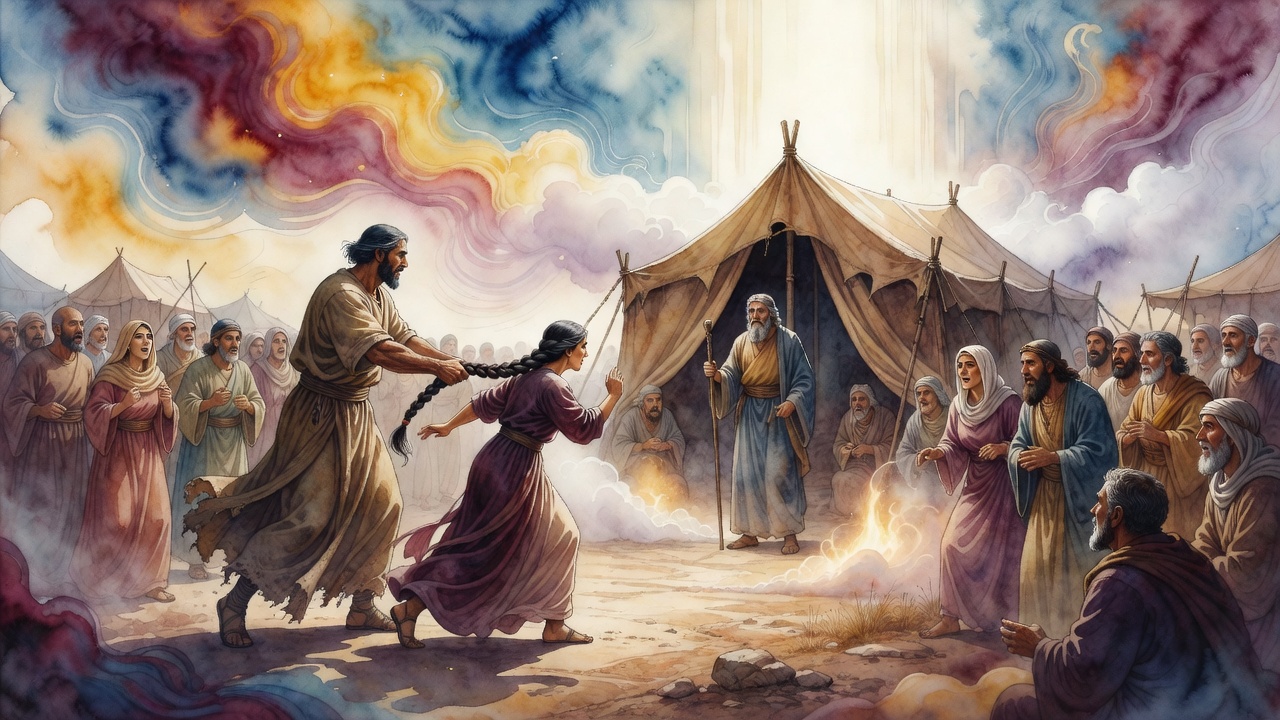
Cozbi had named her price. Moses or the High Priest. He still walked her through the weeping elders to the Tent door, braid in his fist.
Table of Contents
 Click for full size
She Would Take Moses or No One
Cozbi was the daughter of Zur, one of the five chiefs of Midian (Numbers 25:15). When a prince of Simeon came to her with his offer, she did not bargain like a woman of the camp. She named the top of Israel and stopped there.
"I will give myself only to Moses, or to Eleazar the High Priest," she said.
She was a king's daughter. A Midianite princess does not become an ornament for a man who cannot match her father's house. If Midian had sent her into that camp to break something, the break had to land at the height of the people, or it was wasted.
Zimri son of Salu answered with his own house. He was a prince of Simeon. If rank was the price, he said, he could pay it. He would prove it in front of Moses himself.
He Took Her by the Braid
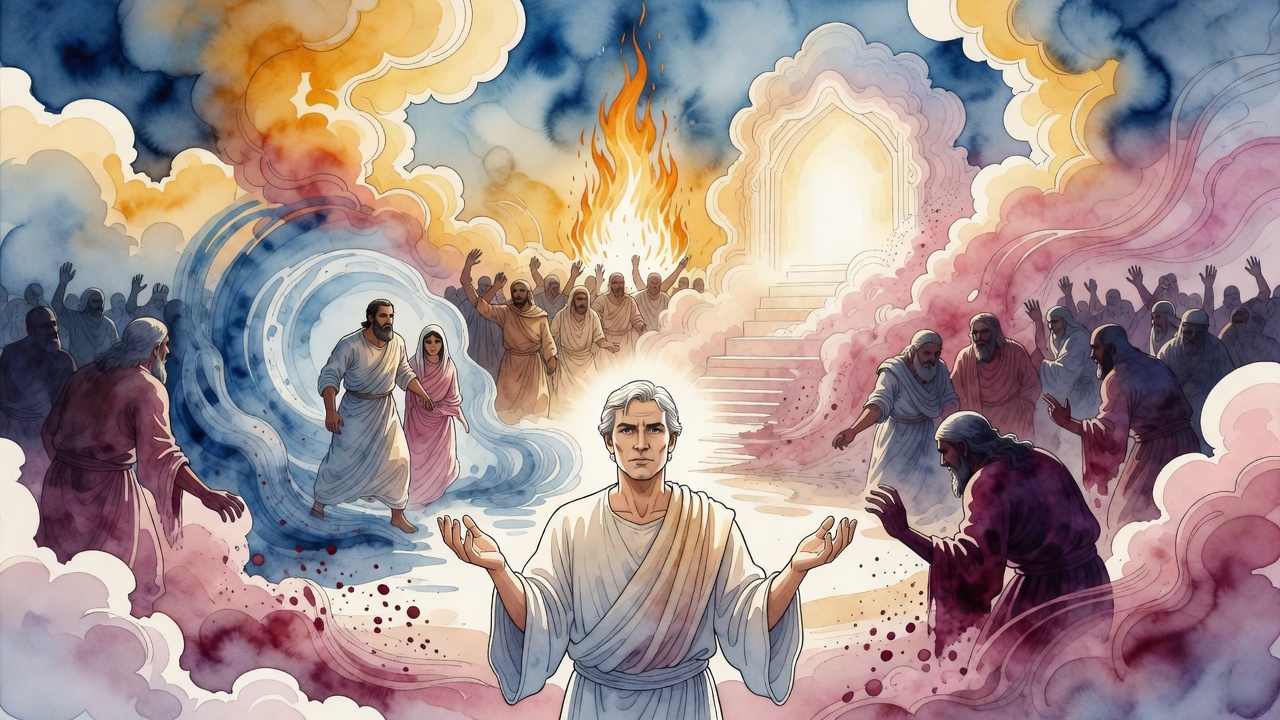
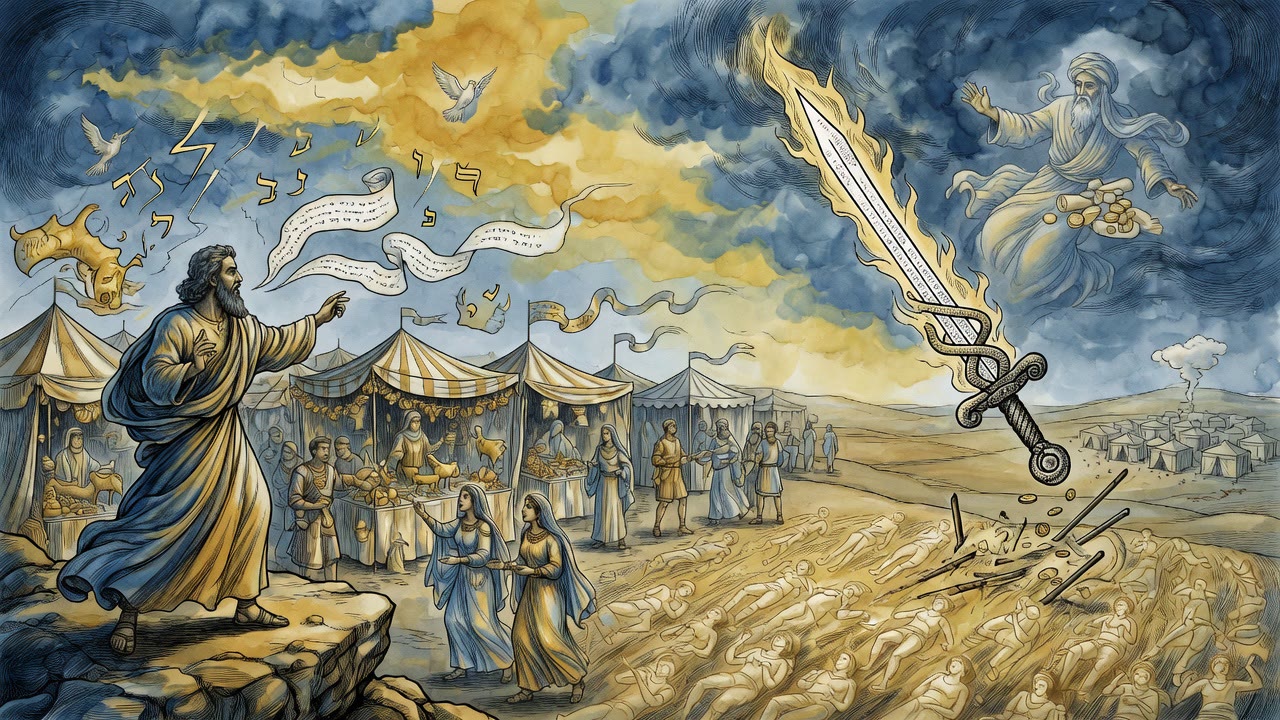
The elders were already weeping at the entrance of the Tent of Meeting. The plague was moving through the courtyards. Twenty-four thousand would be dead before it stopped (Numbers 25:9). Baal Peor still sat on the camp like smoke that would not lift.
Zimri did not take her around the back of the tents. He seized Cozbi by the braid and dragged her through the congregation to the holiest doorway they had.
People made room because they did not know how to stop a prince who had decided not to be stopped. Her hair was in his fist. Her feet moved because his did. He chose that door the way a man chooses a witness. Heaven was there, and Moses in the doorway with the leaders around him.
Moses Had No Answer
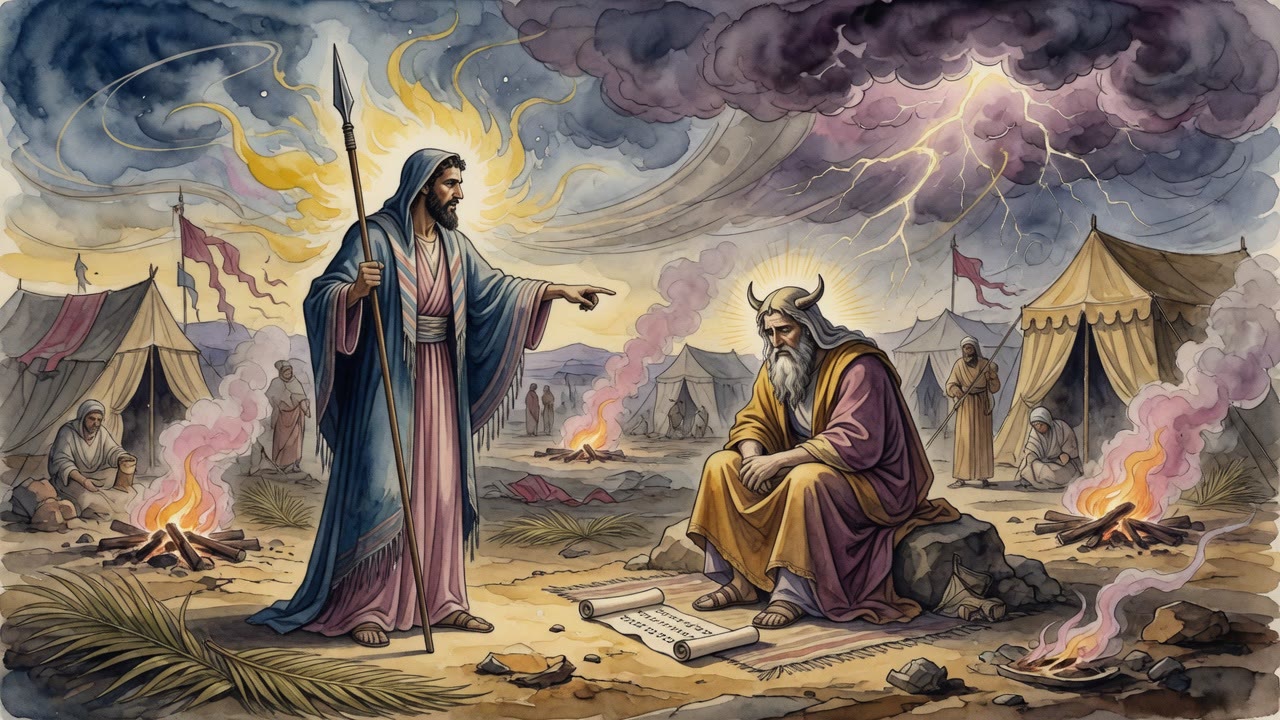
He stopped in front of Moses and did not lower his voice.
"Son of Amram," he said. "Is this woman permitted to me, or is she forbidden?"
The question cut both ways on purpose. If Moses said forbidden, Zimri had the next line ready. "Your own wife Tzipporah is a Midianite. You married a foreigner. The rule you put on me you lifted off yourself." If Moses said permitted, the camp would hear that the door was open in the middle of a plague that had begun with foreign women and foreign worship.
Moses opened his mouth. Nothing came. The ruling stuck in his throat. He stood at his own door and wept.
The congregation froze with him. Zimri did not wait for the tears to finish. He walked past the weeping into the inner tent, Cozbi still in his hand.
Phinehas Took the Spear
Only Phinehas moved.
He saw Moses weeping and the prince already gone inside. He remembered a teaching Moses himself had given them. A zealot may strike a man who does this in public. He took a spear. He followed them in. He did not ask again for a ruling that would not come.
He pinned Zimri and Cozbi through the belly, the two of them still together, and carried them out on the spear to the door where the elders had been crying. The plague stopped. Twenty-four thousand were already gone. The camp had its silence back, and it was a worse silence than the weeping.
They Found One of Their Own Among the Dead
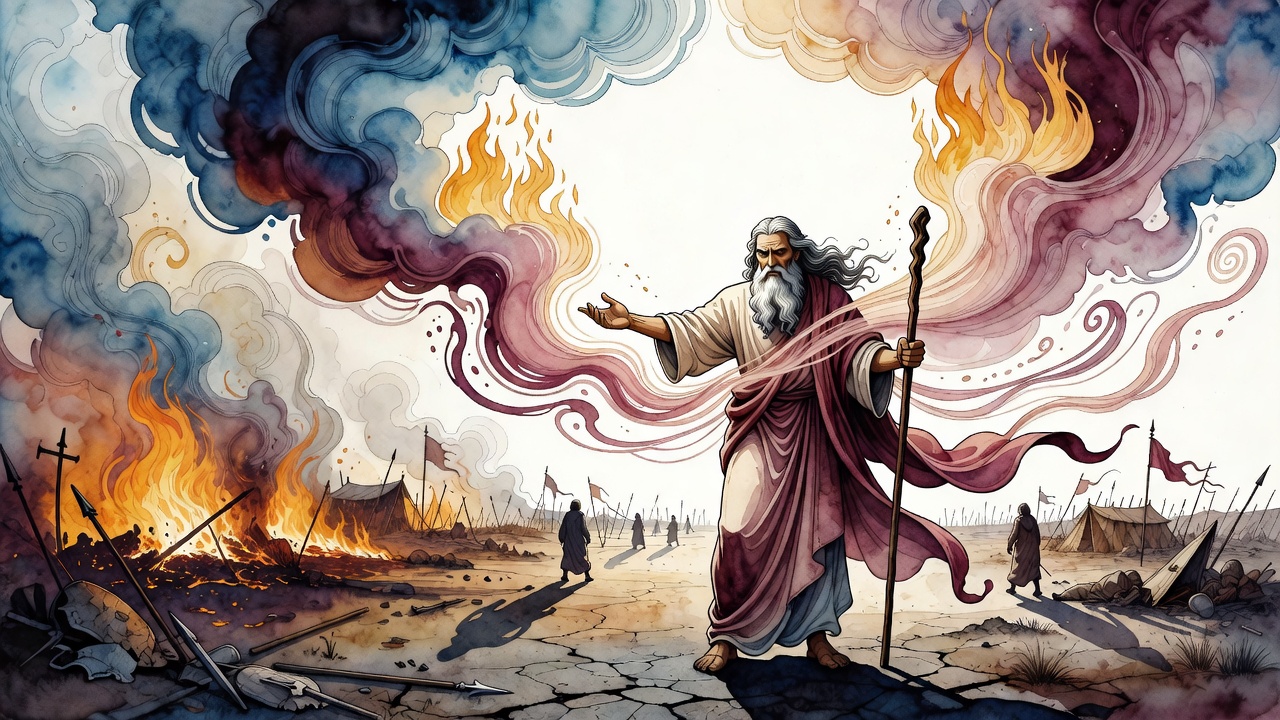
The war with Midian came after. When it ended, the returning men found an Israelite among the Midianite dead. One of their own had crossed all the way over. He was not a man who had stumbled at Baal Peor and come home ashamed. He was a corpse on the enemy side, and his presence made the warriors impure. They could not walk straight back into the camp.
Moses went out to them. He did not come with a song. He came because the contamination had run both ways, and the men who had done the killing now had to stand outside until they were clean. Cozbi's braid at the Tent door had not been a private sin. It had opened a road some Israelites walked all the way into Midian's graves.
← All myths