Moab and Midian Buried Their Hatred to Stop Israel
Hadad had once struck Midian on Moab's own plain. Now the elders sat at one table, because an ox was licking their field clean of grass.
Table of Contents
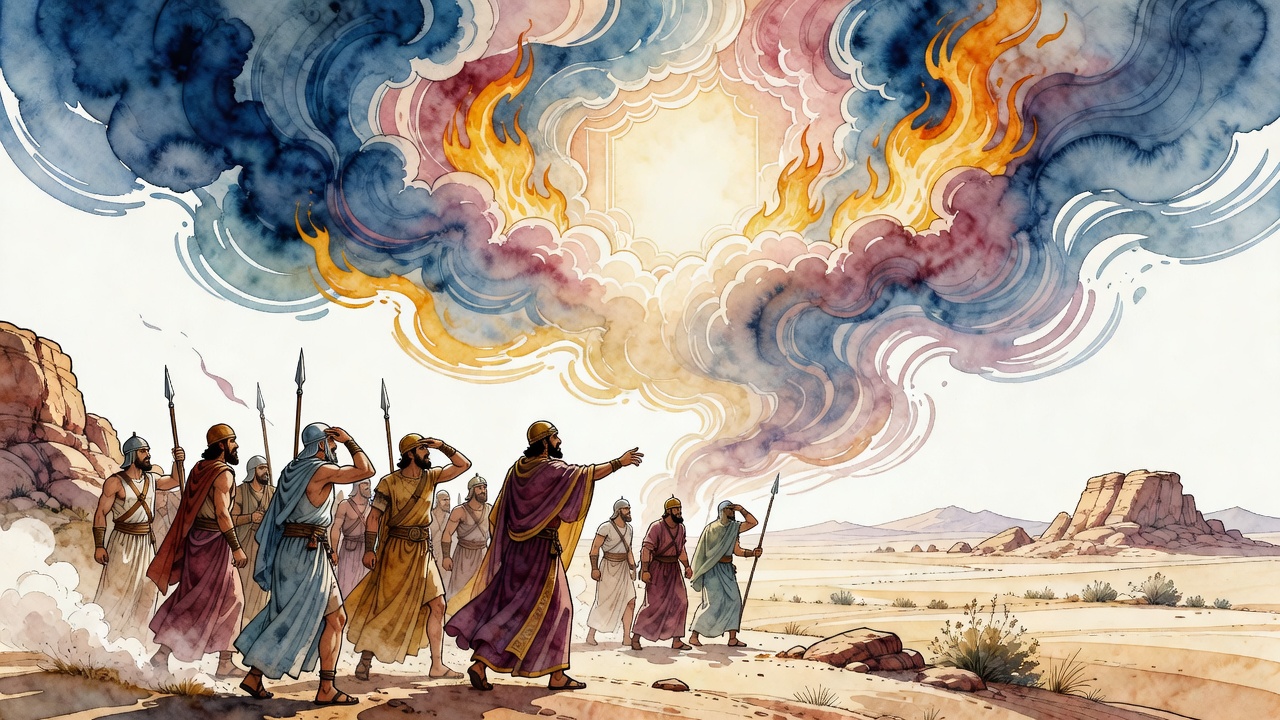
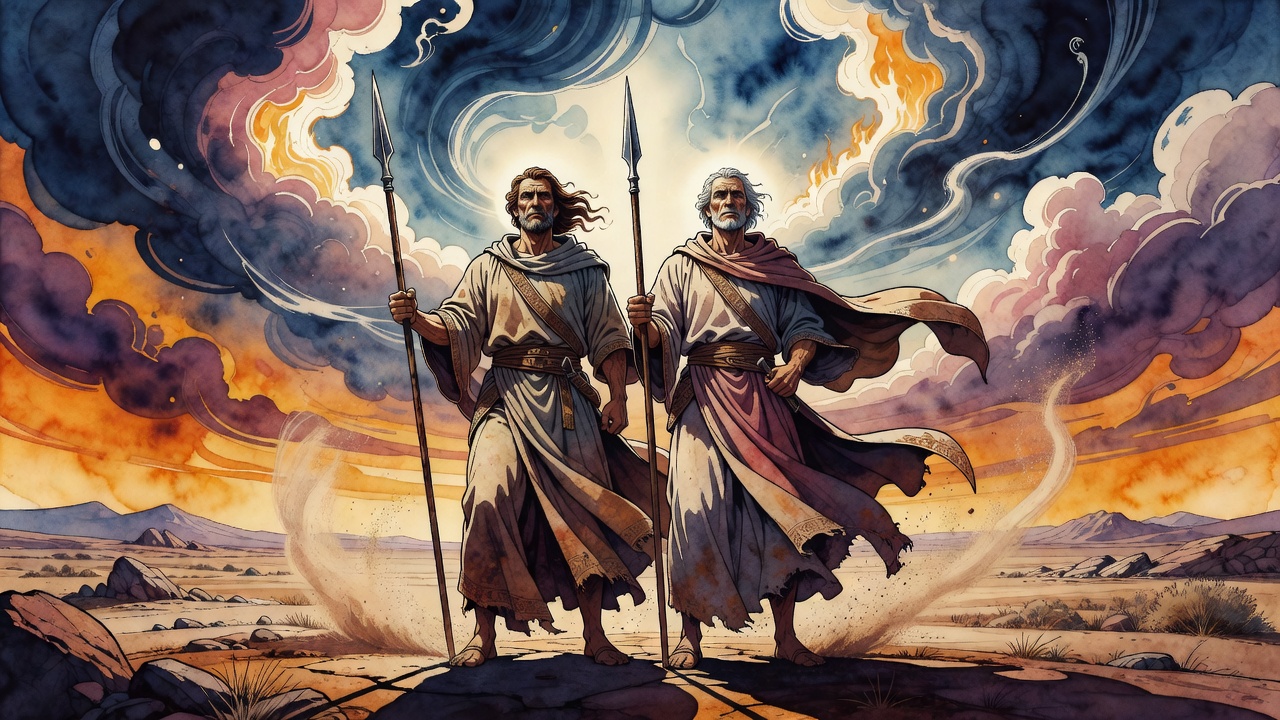
The elders of Midian sat down in Moab. The last time their people had met on this ground, a king named Hadad had struck Midian in Moab's own plain (Genesis 36:35). Blood had soaked that grass. The hatred had not been a rumor. It had a place.
 Click for full size
Now they shared a table, because something worse than an old enemy had come over the horizon.
Blood Dried on the Plain of Moab
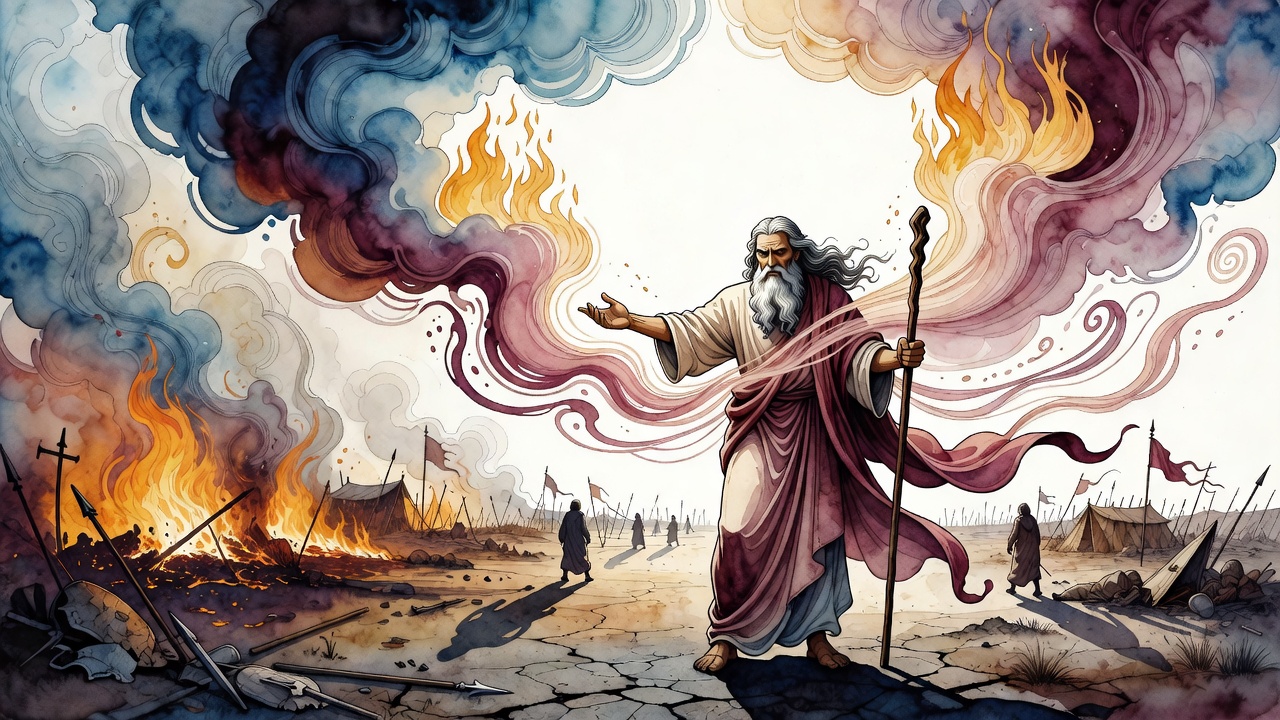
Israel had just torn down Sihon and Og. Those were not small kings. They had armies and walls. They fell in a way that did not look like ordinary war. Moab watched the camp move and could not name the force inside it. Terror sat in the palaces. Who could match a people that seemed to be conquering the whole rim of the world?
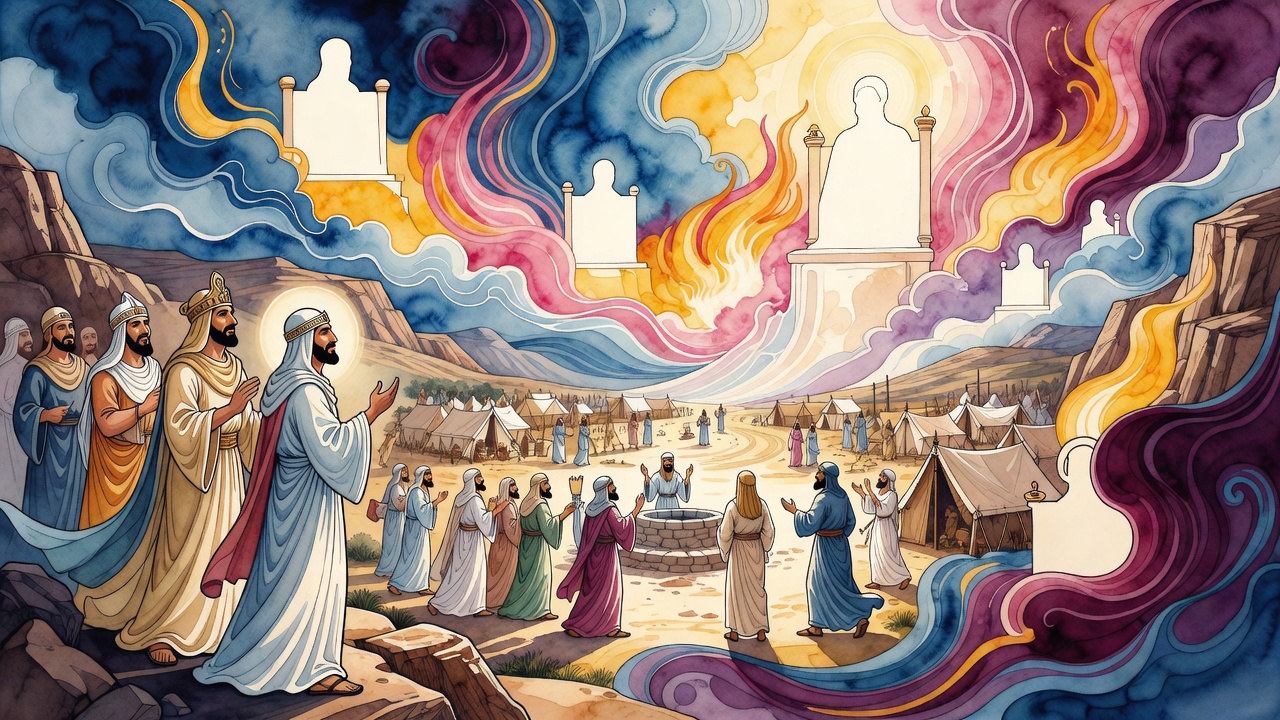
So Moab sent for the elders of Midian. Not because they loved them. Because Moses had been raised in Midian. He had married there. He had kept flocks on Midianite stone. If anyone knew what kind of man he was, it was the house that had housed him.
The Midianites came. They sat in rooms they had once raided. No one pretended the old graves were forgotten. They only agreed that the graves would not matter if the new camp licked the country clean.
Two Dogs Faced a Wolf
An elder of Midian put the matter in a picture, because a picture would travel farther than a speech about fear.
Two dogs despised each other. Each kept his corner. Neither would share the yard. Then a wolf took one of them by the throat. The other dog stopped and reasoned: if I do not help my enemy today, the wolf will kill him, and tomorrow those same jaws will close on me. Better a living enemy, whom I know how to fight when the wolf is gone, than a dead one who leaves me alone at the edge of the pack.
The dogs sided together against the wolf.
That is what Israel looked like from the table. Not a border raid. A wolf. Sihon was gone. Og was gone. The camp kept coming. Ancient hatred bowed, not because it had healed, but because each nation feared it was next.
His Power Is Only in His Mouth
Moab asked the question it had crossed a feud to ask. "Their leader was raised among you. What is his character? By what power does he conquer?"
The elders of Midian did not speak of swords. "His power is only in his mouth." Not iron. Not numbers. The word he speaks and the prayer he lifts. This nation carries neither sword nor spear the way other nations do. They overcome with speech.
Moab heard it and drew the only lesson it wanted. "If his might is in his mouth, then we will bring against them a man whose strength is in his mouth." The road opened toward Balaam of Pethor, a prophet hired to answer prayer with curse, mouth against mouth.
It was in that same hour of fear that they set a crown on Balak son of Zippor. He was never fit to be a king. The moment demanded a leader against Israel, so they crowned him because of the time, not because of the man.
An Ox Licked the Field Clean
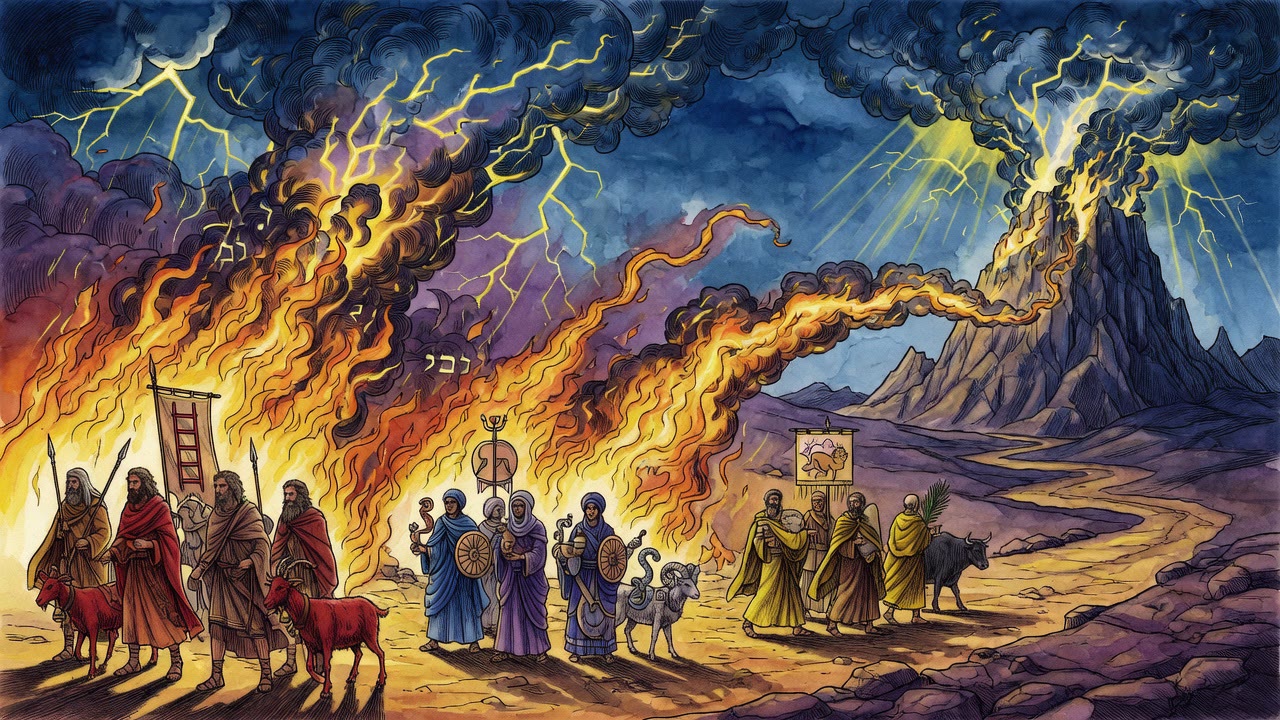
Balak's message to the elders was not a war plan. It was a picture of hunger. "This assembly will lick clean all our surroundings the way an ox licks the grass of the field" (Numbers 22:4).
An ox does not pick a soldier. It does not storm a gate. Its tongue takes the field in long even sweeps, blade after blade, until the ground is bare and there is nothing left to defend. Whatever an ox licks bears no sign of blessing after. So too, they said, whatever Israel takes leaves no remnant.
Just as the ox has its power in its mouth, so did this camp. Just as an ox gores with its horns, so this people had a second blow waiting after the tongue. The elders of Midian sat inside Moab's borders and heard themselves described as grass.
They had buried the feud to stop Israel. What they built instead was a hiring. Balaam would stand on the hills and try to do with his mouth what Sihon had failed to do with walls. The dogs had joined against the wolf. The wolf, as they would learn, did not live only in swords. It lived in a mouth they could not shut, and in another mouth they would pay to open.
← All myths