The Song Moses Wrote Belongs to Every Age at Once
Sacred song does not stay inside the moment that produced it. The rabbis said shira moves freely through past, future, the messianic age, and the world to come.
Table of Contents
 Click for full size
The Song at the Sea
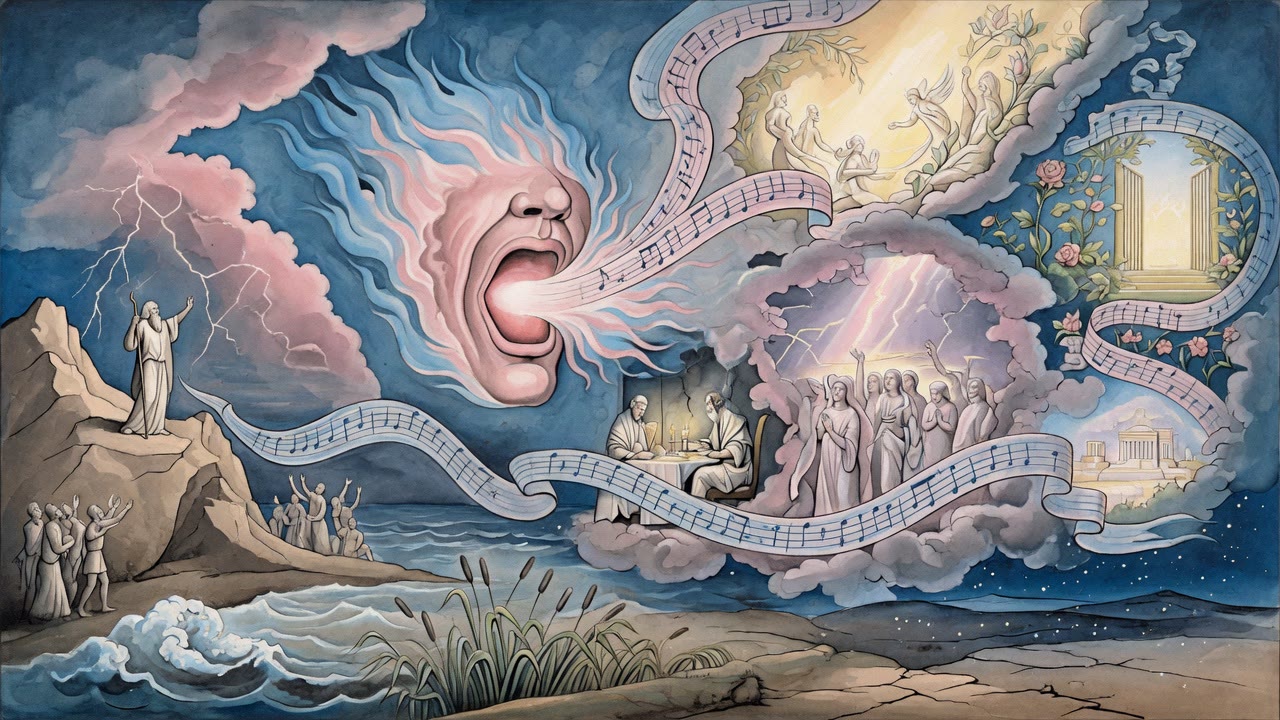
The water split and they walked through on dry ground, and when the last of them had crossed and the army behind them was gone beneath the waves, Moses opened his mouth and sang. The people sang with him, verse by verse, women with drums, everyone moving together in the call and response of the earliest recorded liturgy in Israelite memory. The Song of the Sea was not composed after the fact. It was sung in the moment, on the eastern bank, still wet, still breathing hard.
What the rabbis wanted to know was: where does a song like that go when the moment ends?
Their answer was that it does not go anywhere. It persists. Not as a memory and not as a text but as a living thing that occupies all times simultaneously, that was there before the crossing and will still be there after history concludes. The sages of Sifrei Devarim stated it directly: sacred song obtains in the past, and in the future, and in the messianic age, and in the world to come.
Four Dimensions of Shira
The word they used was shira. Not music in general. Not lyric poetry. Shira as a specific category of sacred utterance, the kind that arises at the intersection of human experience and divine action so overwhelming that ordinary speech cannot contain it.
Each of the four times has its own song. The past holds the Song of the Sea, the Song at the Well in Numbers 21, and the final Song of Moses in Deuteronomy 32. These are the songs that happened, that are recorded, that the tradition can point to and say: there, in that moment, shira entered the world.
The future holds Joshua's song after the Amorites were defeated, the songs of the prophets whose fulfillments had not yet arrived, the liturgies for events the tradition expected but had not witnessed. These songs were already composed. They were already true. They simply needed the events to catch up with them.
The messianic time holds the song of the ingathering, the song that will be sung when the exiles return from every direction and the nation reassembles in its fullness. The sages debated exactly what that song would sound like, which psalms and which new compositions would belong to it. But they agreed that it would be shira, the same category as the one Moses sang, continuous with it across the centuries.
What Joshua's Victory Song Adds
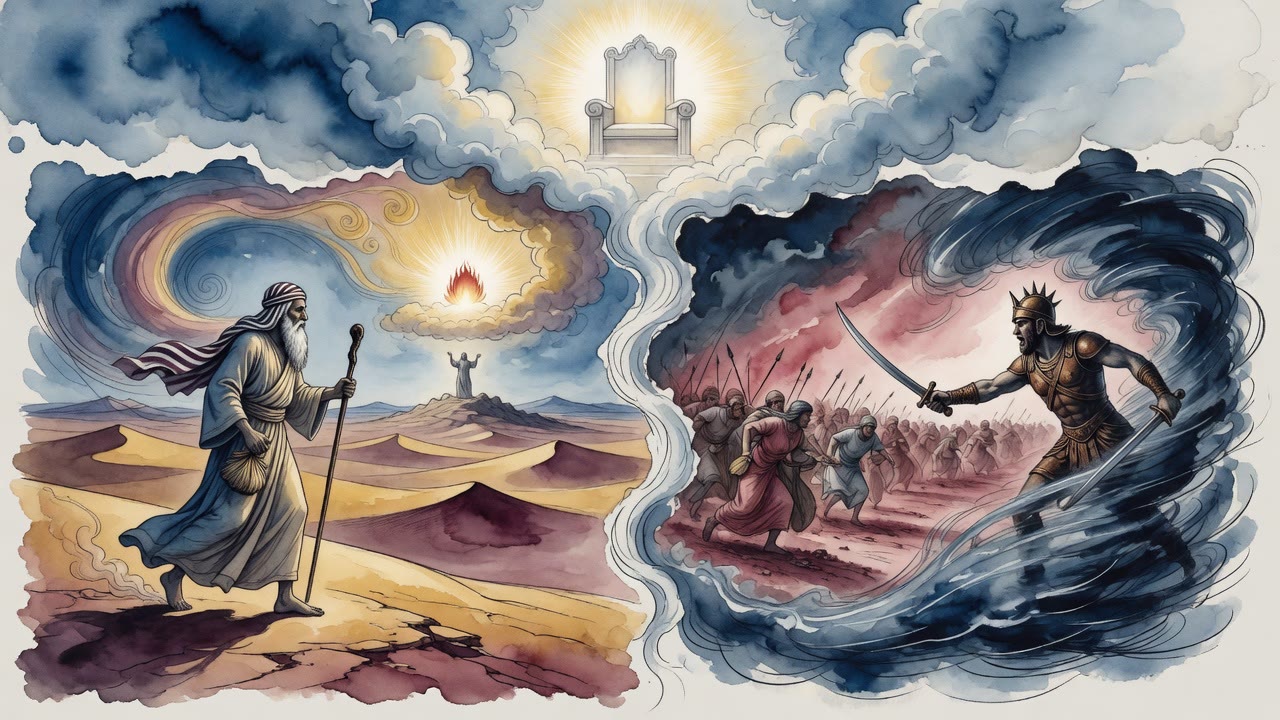
After the Amorites were routed, Joshua sang. His song has not the weight of the Sea crossing, does not shake the same foundations. But the tradition places it in the same lineage. Joshua was Moses' successor, the man God told Moses would lead what Moses could not complete. When Joshua opened his mouth after a military victory and sang, he was participating in the same category of utterance Moses had inaugurated at the Sea.
The transmission is not metaphorical. The sages understood the Song as a form that passed from generation to generation like the leadership itself. Moses to Joshua. Joshua to the judges. The judges to the kings. Each time the form reappeared, it connected the singer to every previous singer who had stood at the edge of something impossible and found that language turned into song.
The World to Come
The final dimension is Olam Ha-Ba, the world beyond the one we inhabit, the state of existence the tradition describes as entirely good, as the permanent condition after all the provisional arrangements of history have resolved. The sages believed that shira would be present there too. Not because singing would happen in that world, though perhaps it would, but because genuine sacred song, the kind born in moments of absolute rupture between what was and what suddenly is, participates in the nature of the world to come. It is already made of that material.
Moses wrote his song on the plains of Moab knowing he would not cross the river. He was writing, in that act, for every generation that would sing it after him, for Joshua on the battlefield, for the exiles by the rivers of Babylon, for the age that is coming. The song did not belong to his moment. His moment was only where it entered.
← All myths