Moses Was Punished Not for What He Did but What He Caused
The Torah says Moses trespassed against God at Meribah. The rabbis read the Hebrew causative and found a heavier charge: he caused others to trespass.
Table of Contents
 Click for full size
At the Rock Without Miriam
Miriam had just died. The well that had followed Israel through the wilderness because of her merit dried up the moment she was gone. The congregation had no water, and they came to Moses and Aaron the way they always came: in anger, in accusation, in the register of people who had decided someone else was responsible for their suffering.
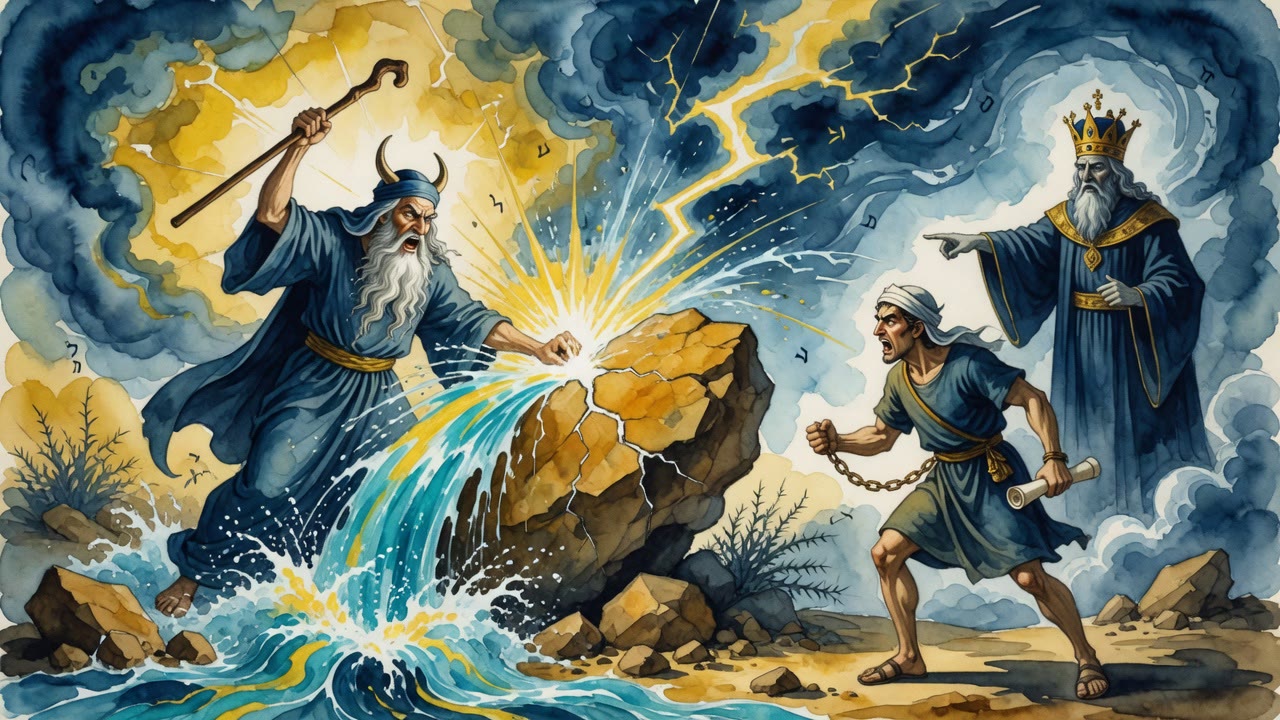
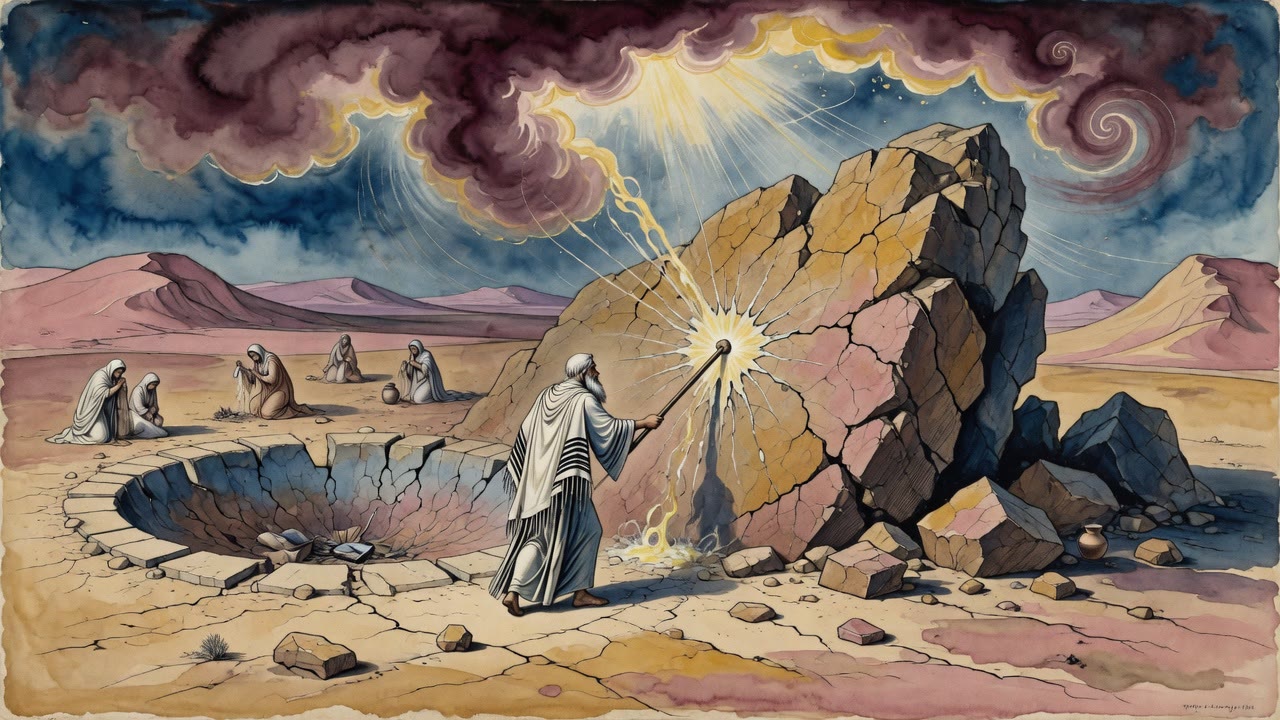
Moses went to search for the right rock. The one Miriam's well had drawn from was different from the others, recognizable to him after forty years of watching the water come from it. He found a rock. God told him to speak to it. He stood before the congregation, raised his staff, and struck the rock instead.
The water came out. The congregation drank. And God told Moses he would not enter the Promised Land.
What the Hebrew Actually Says
The Torah's explanation for Moses' punishment uses a causative construction: Moses had caused trespass, had brought others into violation. The sages of Sifrei Devarim, compiling their commentary on Deuteronomy in Roman Palestine around the second century CE, parsed this form with the precision of legal scholars who understood that a single grammatical choice could carry the entire weight of a judgment.
The distinction they drew has a long history in Jewish law. A person who sins bears responsibility for that sin. A person who causes another to sin bears a different and often greater responsibility, because they have extended the damage beyond their own life and into someone else's. They have not only acted wrongly; they have made wrongdoing available to people who might otherwise have remained outside it.
What did Moses cause at Meribah? He caused the congregation to misunderstand how God works. He struck when God had said speak. The water came out either way, so the crowd saw a miracle but did not see the right miracle. They saw force working, a staff striking stone, the drama of a man with a stick winning against inanimate rock. They did not see the more difficult thing God had intended to demonstrate: that address, speech, relationship, is what draws the divine response. God's intent was the opposite of force: not striking the world into yielding what was needed, but speaking to it.
The Weight of Misleading a Nation
Moses had spent forty years as the medium through which God communicated with Israel. His face shone after Sinai. His words carried authority no one else possessed. When he acted, the congregation did not see a man making a choice. They saw the authorized representative of the divine will. His strike of the rock did not read to them as a human error. It read as instruction.
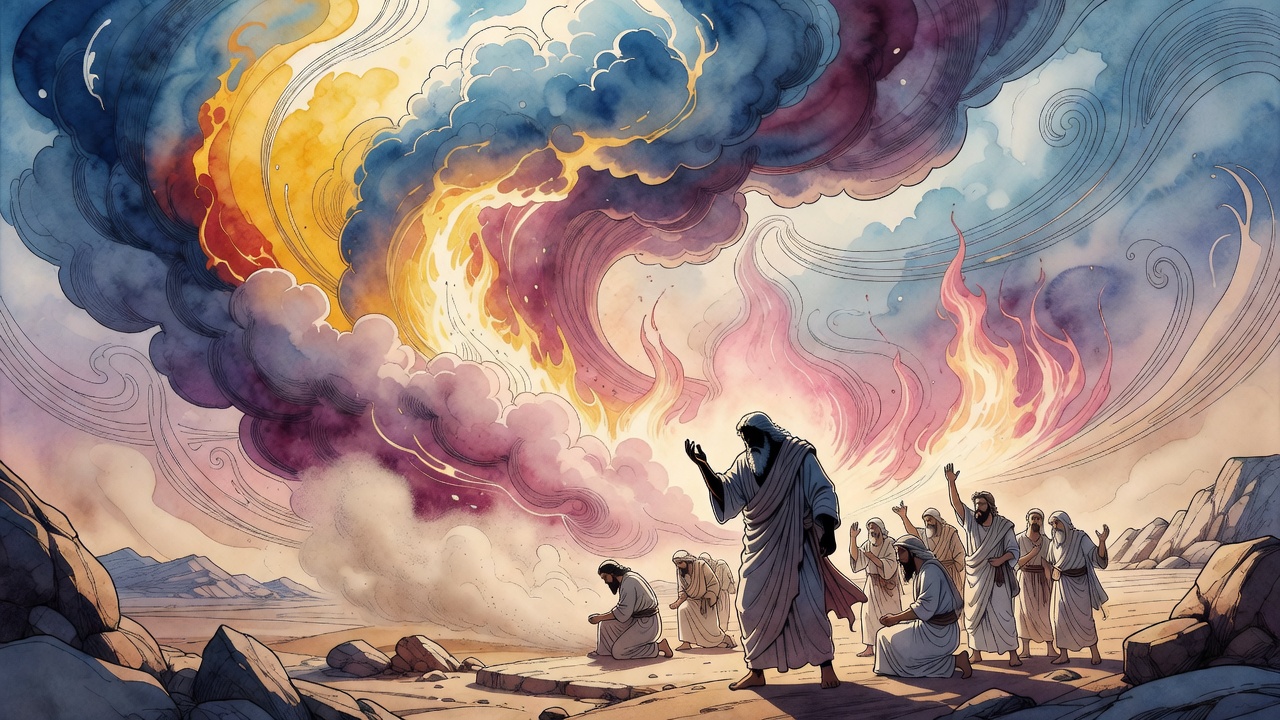
This is what Sifrei Devarim finds unforgivable, not in the register of moral censure but in the register of consequence. Moses was too central to the nation's understanding of God for his mistakes to be private. There is no such thing as a private error when you are the one everyone is watching to understand how God behaves. His fury at the rock, his staff coming down twice, the water pouring out afterward as though the violence had been validated: all of that became part of what the nation carried with them into the land. Moses could not enter behind it to correct it. He had to stay on the eastern side while the lesson played out.
Tanchuma's Reading
The Midrash Tanchuma looks at the same events and adds a detail about Moses searching after Miriam died for the rock that had sustained them. He knew which rock it was. He had been watching it for forty years. The search itself is a mourning gesture, the way a man who has just buried his sister goes back to the work because the work is the only solid thing left. He found the rock. He struck it. He was punished. The Tanchuma does not soften this. It places the moment of striking in the context of grief and holds the two things together without resolving them into each other.
← All myths