The Sea Split and Moses Sang in the Future Tense
The sea split and Moses sang, but the Torah wrote will sing. From one future verb, an ancient proof that the dead will rise.
Table of Contents
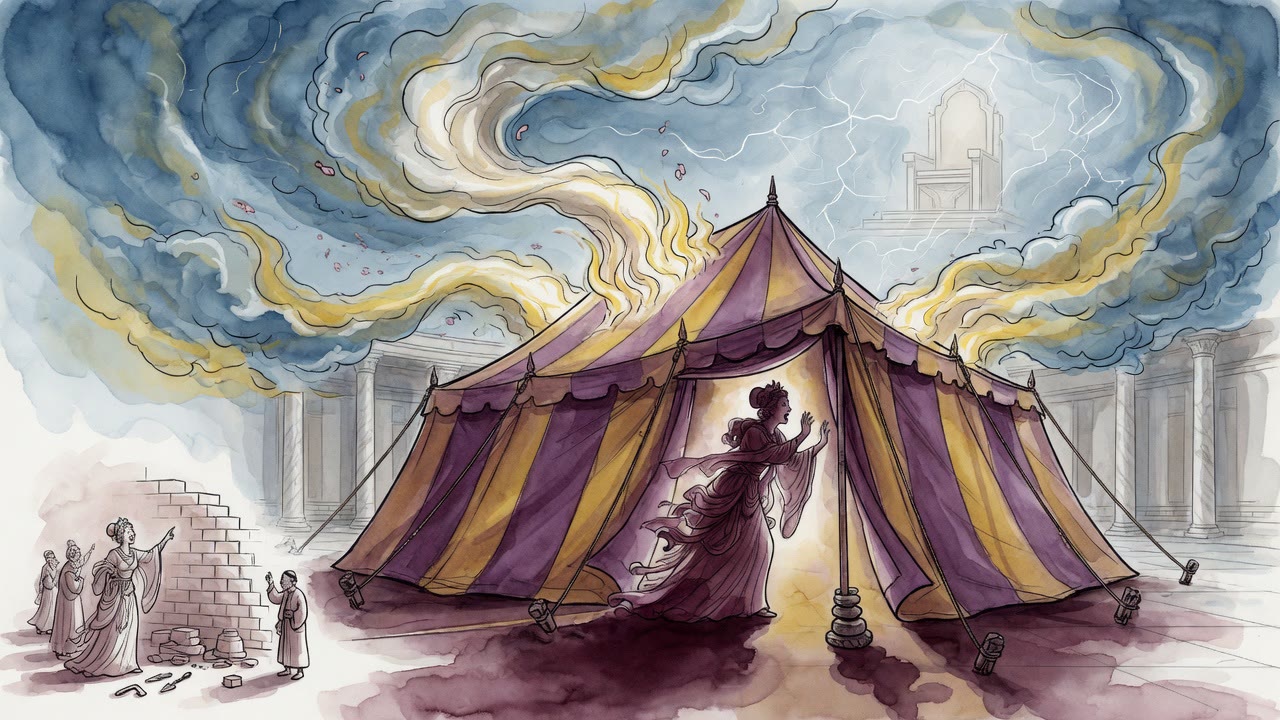
The sea was still closing behind them when Moses opened his mouth. Sand still wet underfoot. The army of Egypt swallowed. He sang, Israel sang with him, and the words poured out (Exodus 15:1). But the Torah wrote something strange. It did not say az shar Mosheh, "then Moses sang." It said az yashir Mosheh: then Moses will sing. Future tense. Every other verb in that passage looks backward. This one does not. It points forward, past the far shore, past the bodies floating in the surf, past the moment itself, toward something that has not yet arrived.
 Click for full size
A Single Verb at the Far Shore
The sages who studied this passage pressed the word hard. If the Torah wanted to say "Moses sang," it knew how. It used that form everywhere else. The shift to future tense was not a slip. It was a signal. Moses did not just sing that day. Moses will sing again. The question that opened behind that verb was not small: when? When will Moses open his mouth a second time and lead the song?
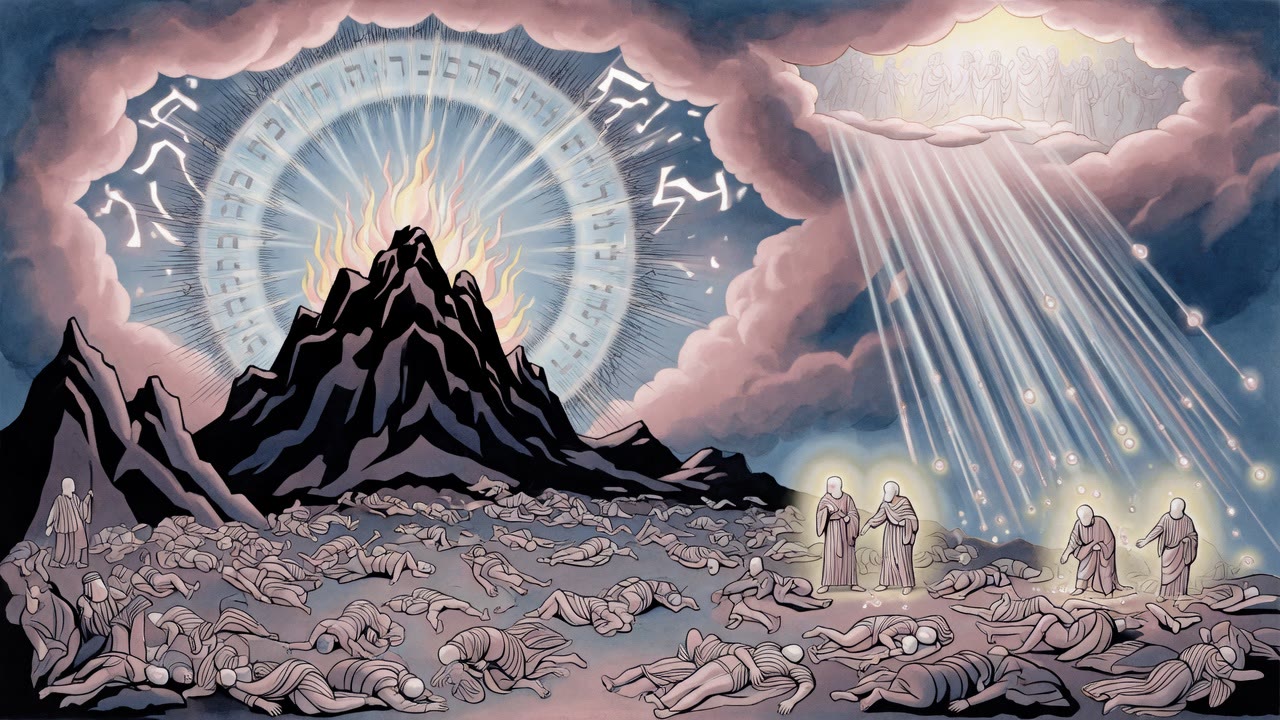
The answer is the most audacious claim in all of rabbinic literature. Moses will sing again at the resurrection of the dead. Techiyat ha-metim (תחיית המתים), the rising of the dead at the end of days, was already encoded in a single verb tense at the shore of the sea. The Song at the Sea was never finished. It was an opening note.
What the Future Tense Carries
The proof mattered. The Mishnah's tractate Sanhedrin declares that anyone who denies the resurrection has no share in the World to Come, and among the key verses cited is precisely this one: yashir, not shar. Will sing, not sang. There had to be evidence that resurrection was written into the Torah itself, not imported from somewhere foreign. Here it was, in the grammar. A future tense buried inside a past event. God let it sit there in the text, waiting to be noticed.
Moses sang at the sea and would stand silent for the rest of his life, never quite reaching the land he could see from every ridge, carrying the promise forward. The verb at the shore told the full story before the story was done.
The Second Song, Darker Than the First
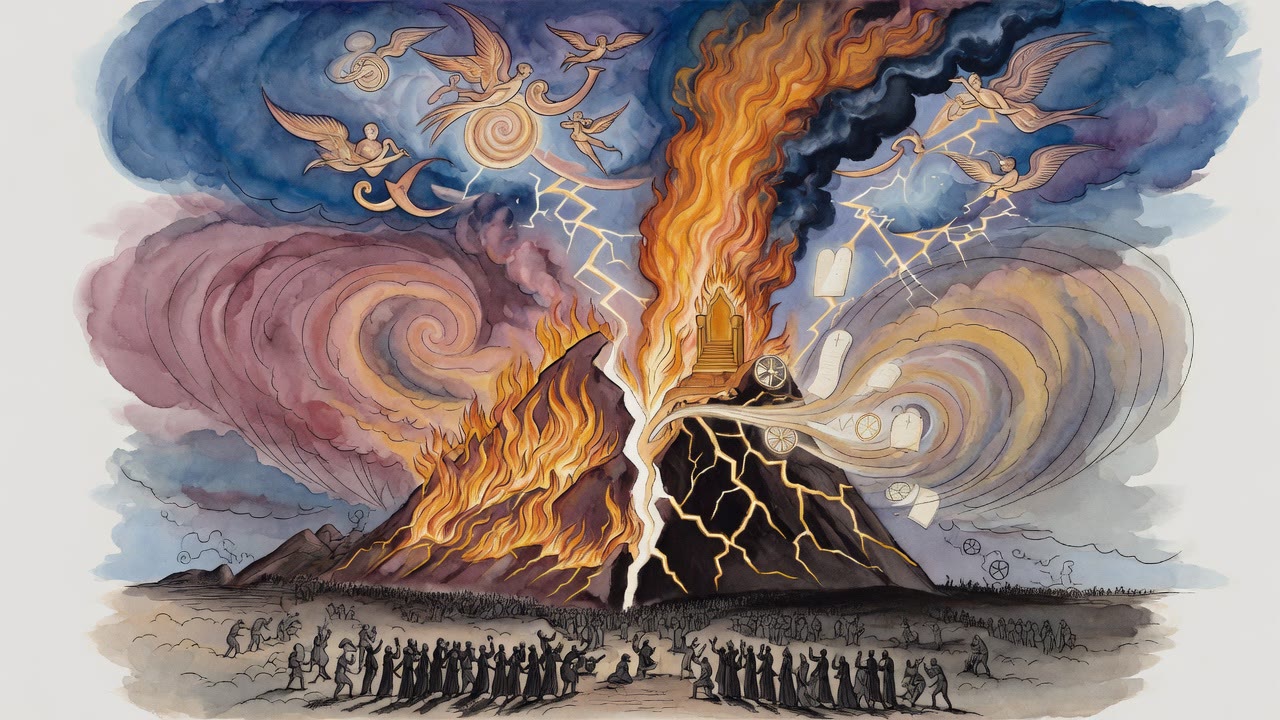
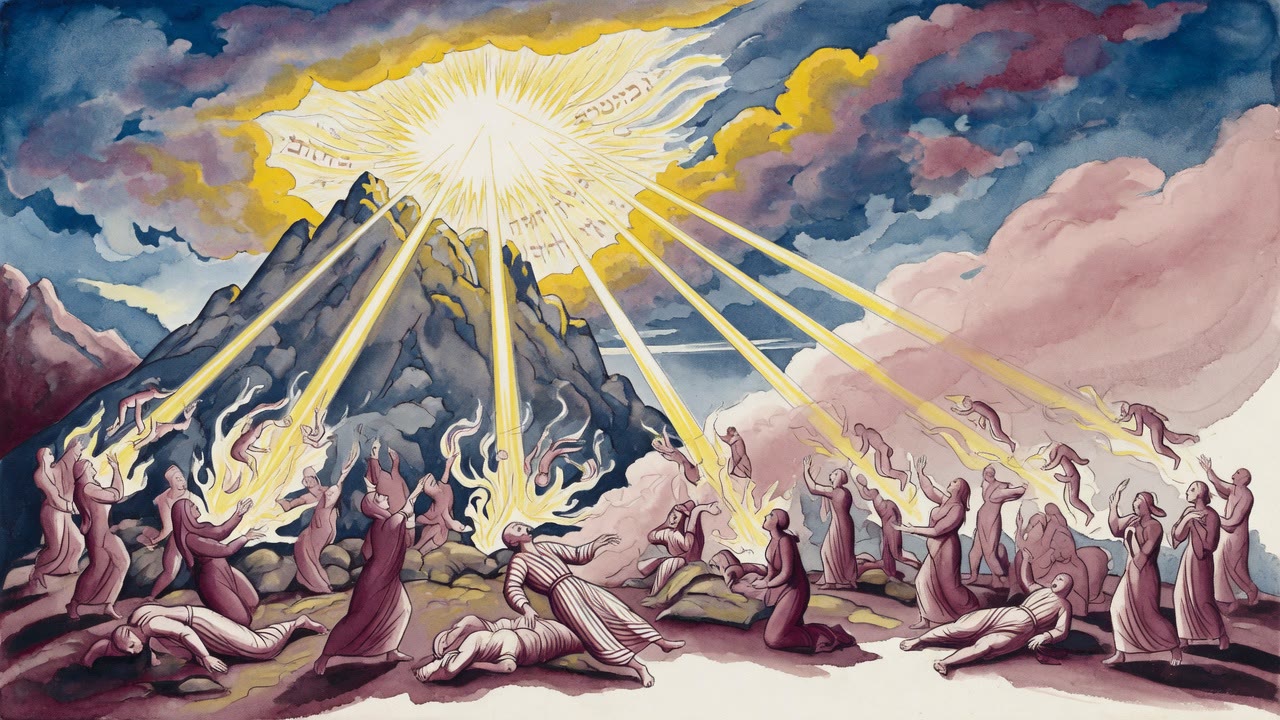
Moses sang a second song before he died. No water, no triumph, no tambourines on the far bank. He stood before the assembled people of Israel and delivered a poem of warning that did not spare them anything. "It shall consume the earth and its produce," he said, "and it shall set ablaze the foundations of the mountains" (Deuteronomy 32:22). Fire reaching the roots of the hills. Every evil gathered and brought at once, not gradually. "I will join evils upon them" (Deuteronomy 32:23): all of them, simultaneously, without relief.
Those foundations of the mountains, in the reading preserved by Sifrei Devarim, are not geology. They are the four great exiles: Babylon, Persia, Greece, and Rome. Zechariah had seen four chariots emerging from between two copper mountains (Zechariah 6:1), and those mountains were the same empires. The foundations that would blaze were the powers that would disperse Israel across the world, one after another. Moses knew this as he stood there. He knew he would not live to see the first of them, let alone the last. He told the people anyway.
The song that preceded his death was not comfort. It was testimony from a man who could see forward and chose not to soften what he saw.
The Mountain Called Passages
After the song, the mountain. God told Moses to climb Mount Avarim and look at the land he would not enter (Deuteronomy 32:49). He had led Israel through the wilderness for forty years with the land always ahead, always the destination, always not yet. Now he would stand on a peak and see it laid out below him, the fulfillment of every promise, visible and out of reach.
The tradition refuses an ordinary framing of this moment. It preserves a precise instruction from God: "It is an ascent for you and not a descent." Moses goes up. That is the operative word, and the sources insist on it. He does not fall toward his death. He rises toward it. The summit is not a ceiling but a height he earns. From there he sees the whole land, from Dan to the sea. He dies on the mountain with his eyes open.
Avarim means passages, or crossings. Moses spent his whole life at thresholds, and now he stood on the last one, and the Torah called it an ascent.
The Verb That Did Not Close
Two songs and a mountain. The first song ends in a future tense, proof of resurrection locked inside a single verb. The second song ends in a warning that has not yet fully run its course. The mountain ends in an ascent, not a descent.
Moses never arrived at the final destination. He led a people to the edge of their inheritance and climbed a peak and looked at it from above. Every major moment of his life bent toward something coming, not something already there. The future tense at the shore of the sea was not an accident of syntax. It was the shape of the whole life, told in a single word: will sing, not sang. The song is still open. It closes when the dead rise, when Moses stands at another shore and lifts his voice a second time, and the verb finally becomes past tense.
← All myths