Moses Spent Ten Years in a Pit Before He Found the Rod
Jochebed was 130 years old when she conceived Moses. Her body returned to youth overnight, and her son was born in six months.
Table of Contents
 Click for full size
Jochebed Was 130 When Amram Returned to Her
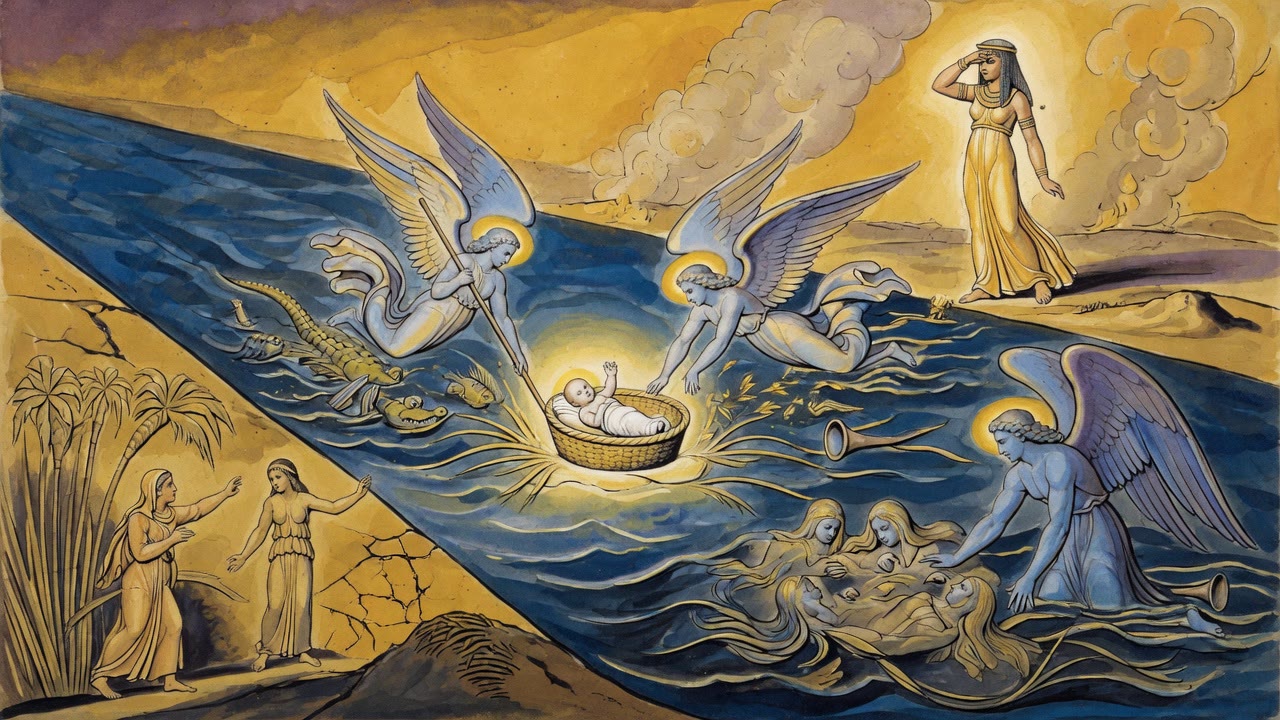
Amram had made a calculation. Pharaoh's decree condemned every Hebrew son to the Nile, so Amram divorced his wife rather than father children into death. He reasoned it was better to end a line than to feed it to the river. His daughter Miriam argued back from childhood: the decree targeted boys, but his divorce harmed girls too, and would break the chain entirely. Amram relented. He walked back to Jochebed.
What Targum Jonathan on Exodus 2 records about that reunion is extraordinary. Jochebed was 130 years old. The moment Amram returned, something happened to her body that could only be called a reversal. Wrinkles left. Gray left. The weight of more than a century fell away overnight. Moses was born six months after conception, not nine, and the Targum tracks the arithmetic carefully: six months in the womb, three months hidden in the house. Nine months accounted for in the end, but arranged strangely, as if the child's time in the world had already begun before his mother was ready to carry it.
The Pit in Midian
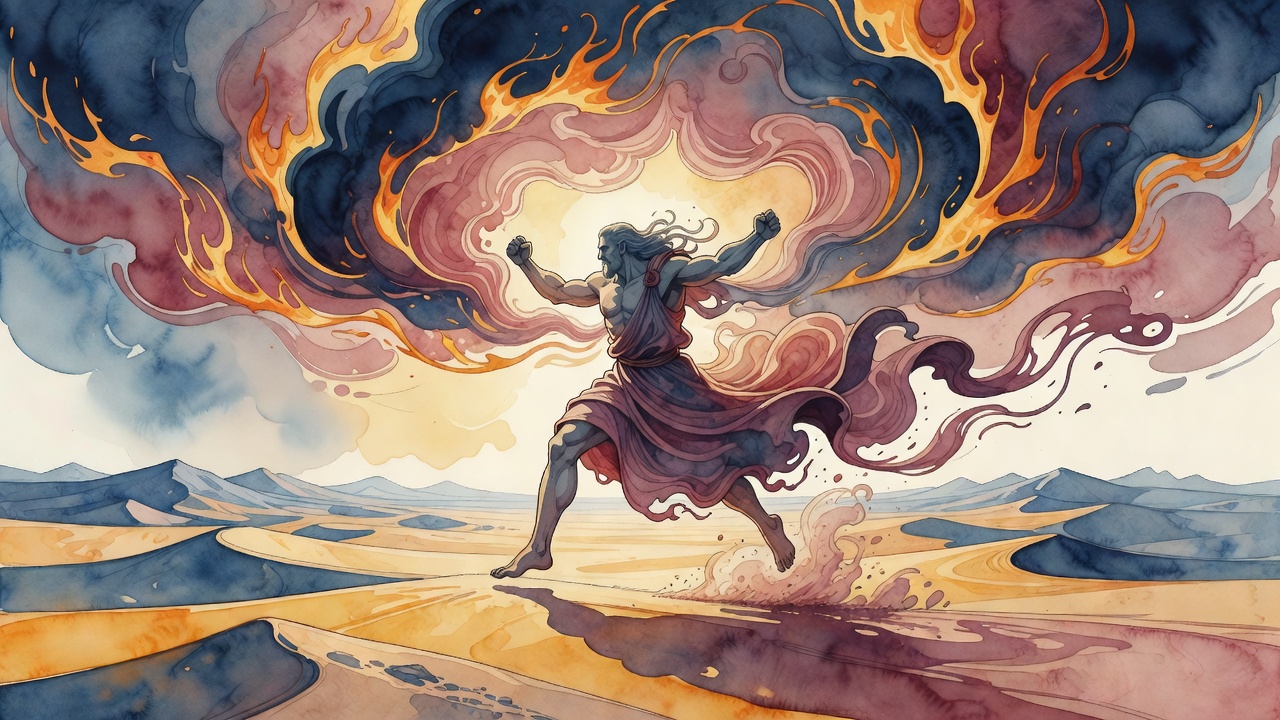
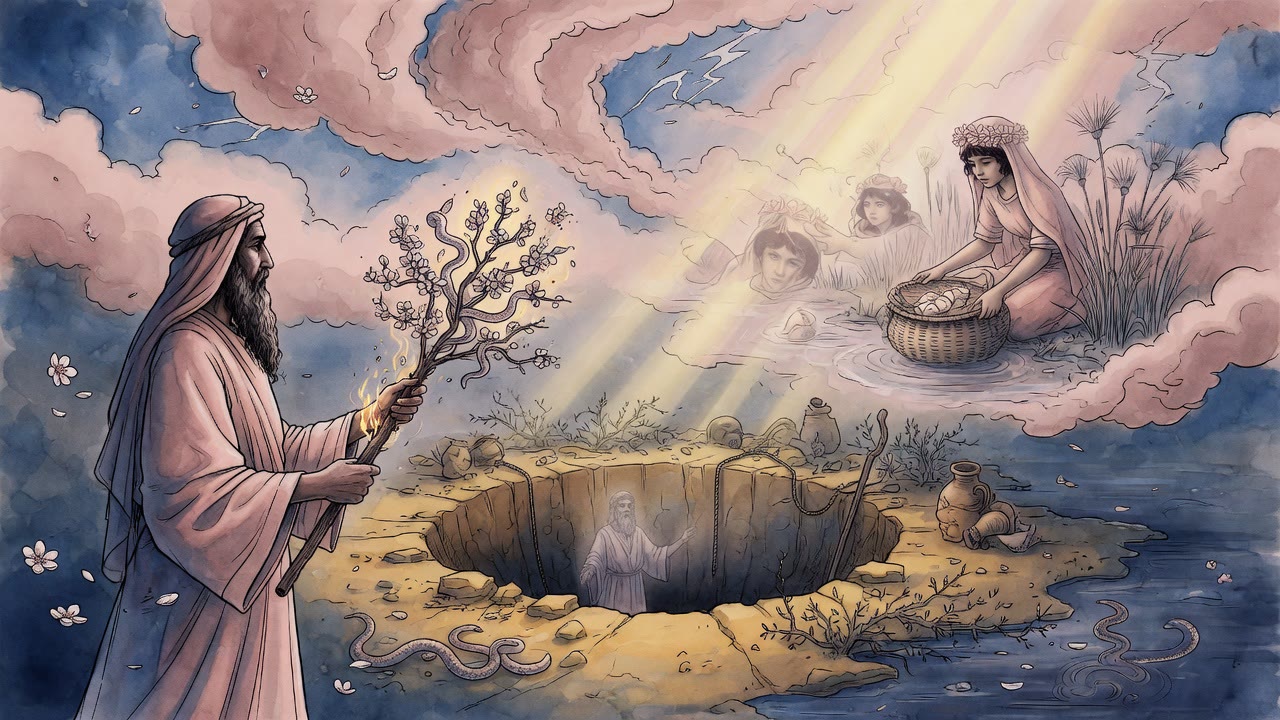
The Torah does not explain the decade Moses spent in Midian before the burning bush. It gives him a marriage, a son, and a flock to tend. Targum Jonathan fills in what the Hebrew skips. Zipporah's father, called here Reuel, had been told that a Hebrew exile would one day inherit his land. To prevent the prophecy from landing, he imprisoned the man who arrived at his well. Moses spent ten years in a pit beneath Reuel's house. Ten years underground in Midian while the burning bush had not yet burned.
Zipporah fed him in secret. She kept him alive through a decade of captivity and persuaded her father, finally, to release him. When Reuel came down into the pit and Moses was alive and unbroken, the old man read it as a sign and gave up his resistance. Moses came out of the ground.
The Rod That Came From Eden
In Reuel's garden, set into the earth, stood a rod. The Targum traces its history back to the sixth day of creation. It had passed through Adam's hands, then Noah's, then Shem's, then Abraham's, then Isaac's, then Jacob's, then Joseph's. When Joseph died in Egypt, the rod came somehow to Pharaoh's treasury. Then it traveled to Midian, where it stuck in Reuel's garden and waited.
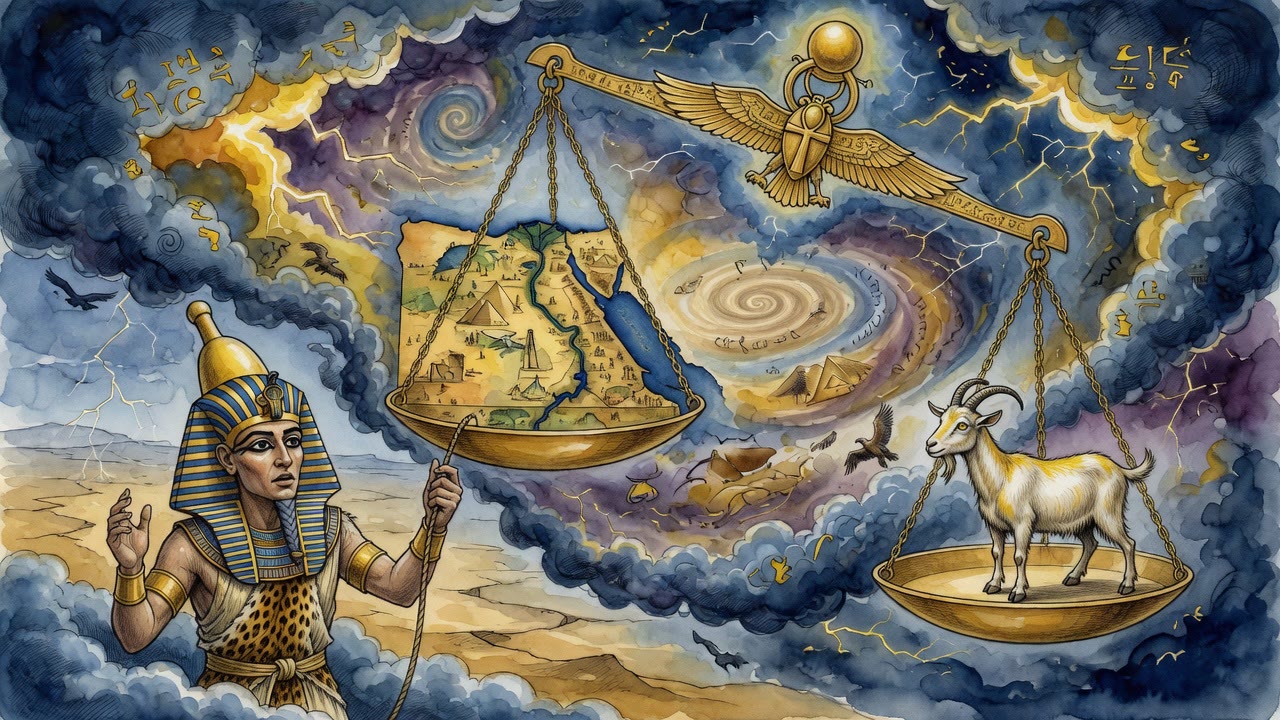
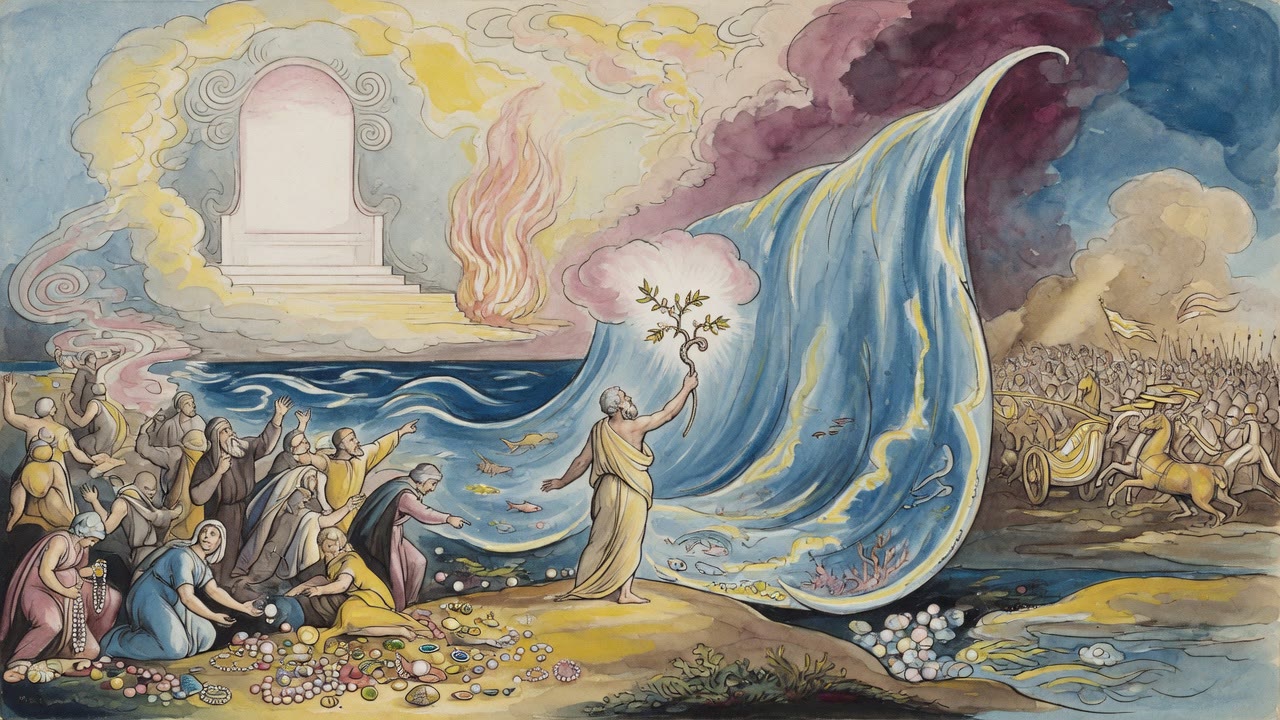
On this rod was inscribed the name of God and the ten plagues that would fall on Egypt. Every letter of every plague cut into the wood before a single plague had happened. The rod already knew what it was for. When Moses pulled it from the garden, he was not discovering a tool. He was taking delivery of something made for him before he was born.
Reuel had once tried to remove the rod himself. It would not move for him. He left it where it stood. It had been waiting for the man who spent ten years in a pit, the child born from a woman whose body was given back to youth at 130, the son hidden for three months in a house in Egypt while the river beneath the window had once agreed to carry a basket.
What the Numbers Say
Targum Jonathan is meticulous about counts. The six-month gestation, the three months in hiding, the ten years in the pit, the genealogy of the rod across nine patriarchal hands. This precision is not decoration. The Targum is making a claim about destiny and its mechanisms. A story this exact, with this many verified numbers, is a story that was being managed from before its beginning.
Moses himself did not know most of this. He did not know about the ornaments Jochebed had regained or the census the rod carried. He knew he had been hidden in a basket, raised in a palace, exiled after a killing, imprisoned underground, kept alive by a woman who became his wife, and handed a stick from a garden that had refused to move for anyone else. The pieces arrange themselves around a person who will not understand the arrangement until much later, if at all.
← All myths