Did Pharaoh Survive the Red Sea
Every retelling of the Exodus ends the same way: Pharaoh's army drowns and Egypt is broken forever. But the rabbis of the Yalkut Shimoni noticed something in the text that forced them to ask whether the king himself actually died at the sea, and their answer was more complicated than the story usually suggests.
Table of Contents
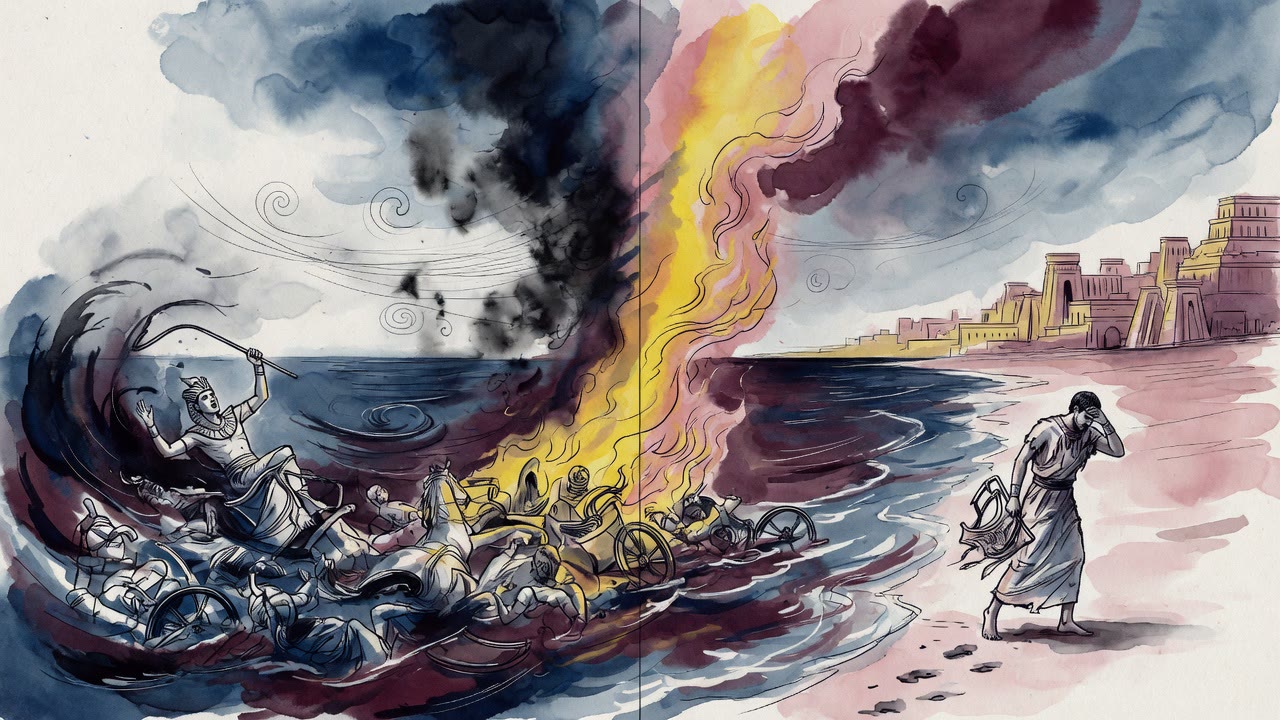
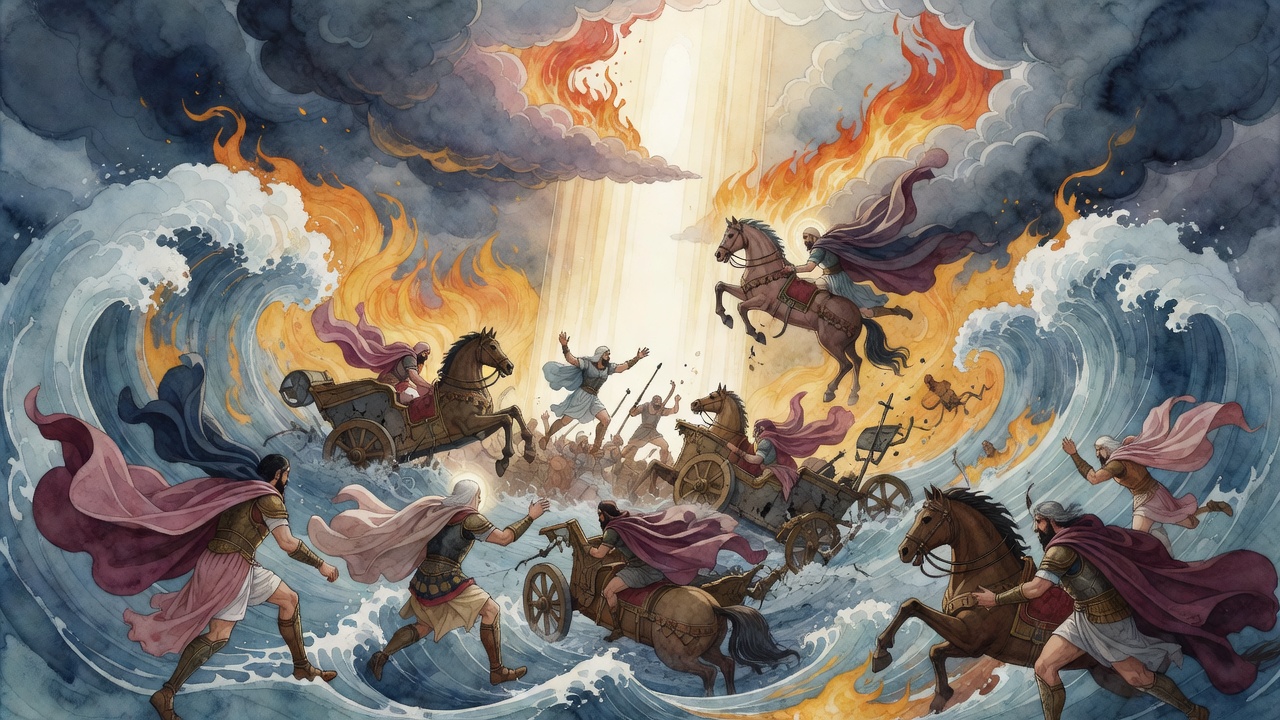
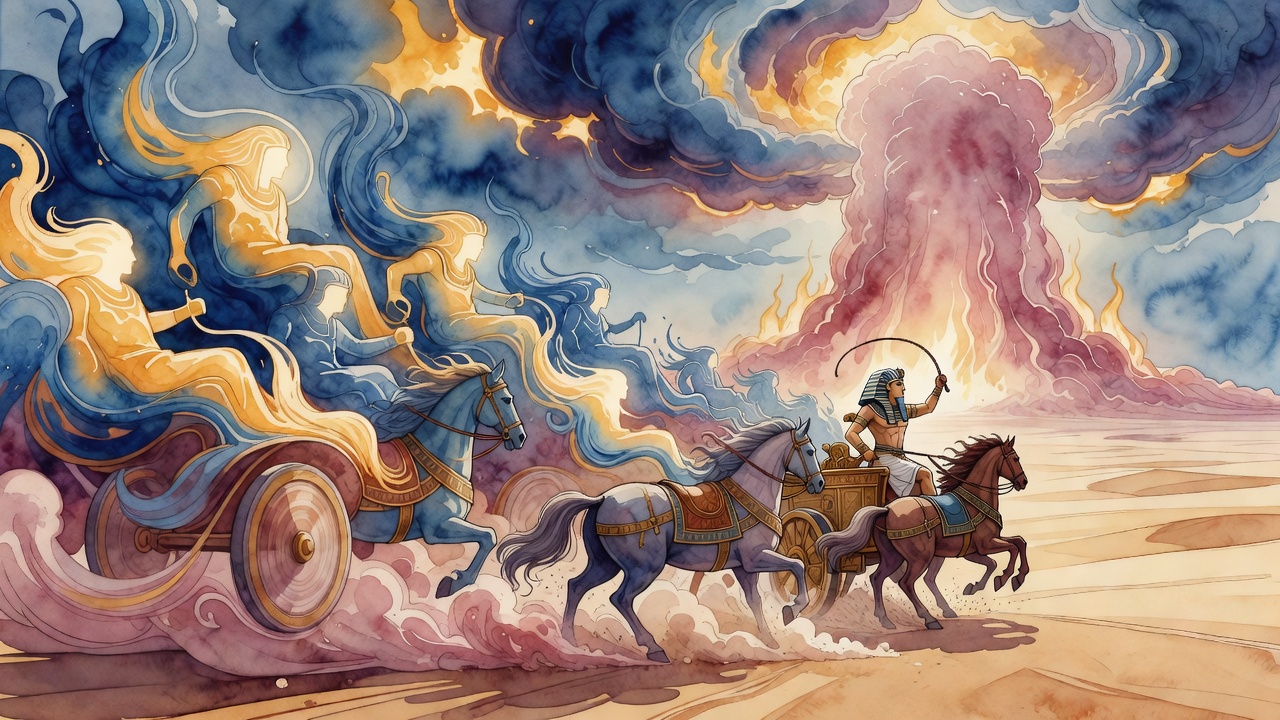
Every child learns the same ending to the Exodus story. The sea splits, Israel crosses on dry ground, Pharaoh's chariots plunge in after them, the waters crash shut, and Egypt's power is gone forever. Simple. Final. Just.
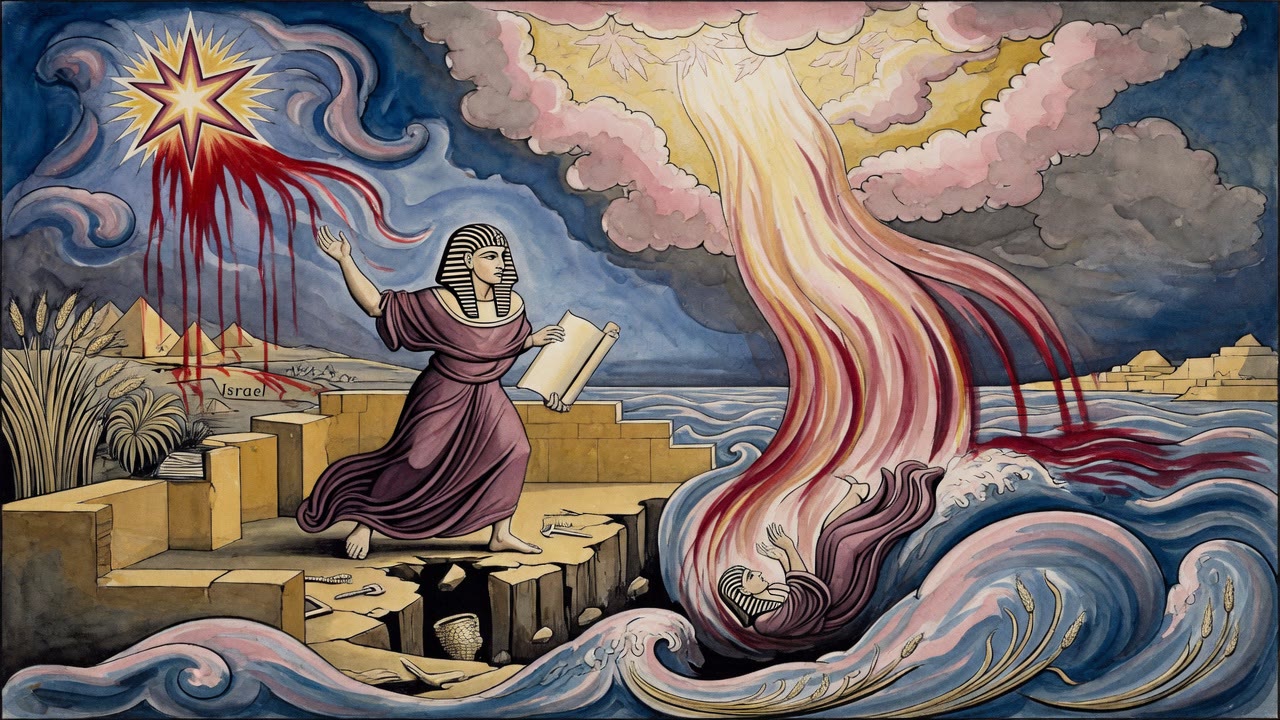
But the rabbis who compiled the Yalkut Shimoni on Torah, section 238, a vast midrashic anthology assembled in thirteenth-century Germany from sources spanning a millennium of rabbinic interpretation, noticed something in the text that the simple retelling skips past. The Torah says the chariots and horsemen were swallowed by the sea. It says the army drowned. But what about Pharaoh himself? The text is not entirely clear, and where the text is not clear, the rabbis argue.
Two Sages, Two Fates for the King
The dispute recorded in Yalkut Shimoni is between Rabbi Yehuda and Rabbi Natan, two voices from the tannaitic and early amoraic periods whose disagreement crystallizes a deeper question about how divine judgment works. Rabbi Yehuda reads (Exodus 15:4) strictly: "Pharaoh's chariots and his army He cast into the sea." The king goes down with his army. There is no special exception for the man who kept Israel enslaved for generations. Justice is applied uniformly, the mighty are brought low, the story ends with Pharaoh at the bottom of the sea alongside his horsemen.
Rabbi Natan disagrees, and his argument turns on a single verse from earlier in the plagues narrative. In (Exodus 9:16), God tells Moses to say to Pharaoh: "But for this reason I have let you stand, to show you my power, so that my name may be proclaimed in all the earth." Rabbi Natan reads this as a divine commitment, not just a statement. God raised Pharaoh up for a purpose. That purpose includes Pharaoh being alive afterward to testify to what God did. A Pharaoh at the bottom of the sea testifies to nothing.
The 3,205 texts of the midrash-aggadah collection preserve dozens of traditions about Pharaoh's fate and character, several of which circle back to this same tension between uniform justice and the divine strategy of keeping a witness alive to spread the news of God's power.
Why God Might Spare the Worst Offender
Rabbi Natan's position is theologically bold. It asks us to imagine God preserving Pharaoh specifically because Pharaoh's survival, his broken return to Egypt after watching his entire army die, would spread the name of God more effectively than his drowning would. A dead Pharaoh is just a casualty. A living Pharaoh, staggering home from the sea with no army, no horses, and no explanation except that the God of a band of former slaves had done this, is a walking proclamation.
The Mekhilta de-Rabbi Ishmael, a tannaitic legal and narrative midrash on Exodus composed in the land of Israel roughly in the second century CE, amplifies this reading. The 742 texts of the Mekhilta collection return repeatedly to the Exodus as the founding demonstration of divine power in history, and several of those texts ask the same question in slightly different forms: who ultimately benefits more from Pharaoh's survival or death? The Mekhilta traditions that see Pharaoh surviving understand his later life as a kind of forced testimony, the man compelled by what he had seen to spend the rest of his existence as living evidence for the God he had refused to acknowledge.
What Does It Mean That God Let Pharaoh Stand
The phrase God uses in (Exodus 9:16) is striking in Hebrew: he'emadticha, I have caused you to stand. The root amad, to stand, is the same root used for a witness standing before a court, for a soldier standing at his post, for the Levites standing at the Temple service. God is not merely saying Pharaoh survived by accident or because God chose not to destroy him yet. God is saying Pharaoh was positioned, placed upright, set in his role deliberately.
This has implications that Rabbi Natan does not spell out but that later interpreters drew from his reading. If Pharaoh was caused to stand for a divine purpose, then the entire career of Egyptian oppression, the four hundred years of slavery, the ten plagues, the hardened heart, the pursuit to the sea, all of it was not an accident of history that God intervened to correct. It was a designed sequence with Pharaoh as a specific instrument, not a villain who happened to cross God's plan but a figure placed precisely where he was placed in order to produce the demonstration that followed.
The Legends of the Jews, Louis Ginzberg's encyclopedic synthesis of rabbinic tradition compiled in early twentieth-century New York from thousands of classical sources, adds a detail that pushes this reading further. In Ginzberg's telling, Pharaoh survived the sea and eventually became the king of Nineveh, the city that repented at the preaching of Jonah. The repentance of Nineveh, in this tradition, was led by a man who had personally witnessed the ten plagues and the splitting of the sea and had spent the intervening centuries knowing exactly what the God of Israel was capable of. His return to God was not the conversion of a skeptic but the belated submission of a man who had firsthand knowledge and had resisted it for a long time.
The Heavenly Hosts Were Not Happy
Yalkut Shimoni preserves another layer to the Red Sea story that complicates the celebration on the shore. When Israel sang the Song of the Sea, the angels wanted to join in the singing. God rebuked them: "My creatures are drowning in the sea and you want to sing songs?" The Egyptians were also God's creatures. The joy of salvation was real, but it was bounded by grief at the cost of that salvation.
Read alongside the debate about Pharaoh's fate, this tradition creates a more textured picture of the Exodus than the straightforward triumph narrative provides. God saved Israel; this was the central fact and the source of the song. But God did not celebrate the destruction of Egypt without ambivalence, and the tradition that preserved God's rebuke of the angels was also the tradition that preserved Rabbi Natan's claim that Pharaoh himself was kept alive, made to stand, positioned as a witness rather than sent down with his horsemen into the deep.
What the Dispute Cannot Settle
The Yalkut Shimoni does not resolve the argument between Rabbi Yehuda and Rabbi Natan. It preserves both positions as legitimate readings of the same text, which is itself a statement about how midrashic interpretation works. The Torah left Pharaoh's fate ambiguous, and the rabbis understood that ambiguity as an invitation rather than an oversight.
What the dispute illuminates is a persistent tension in Jewish thought about divine justice: whether God's justice operates uniformly, the king drowns with his soldiers, or whether divine purposes sometimes require exceptions that look, from the outside, like injustice. Rabbi Yehuda's Pharaoh gets what he deserves. Rabbi Natan's Pharaoh gets a worse fate in some respects: he survives to carry the knowledge of what he saw and what he did, with no sea to close over him and end his accounting.
The Tanchuma midrashim, the homiletical commentaries on Torah portions probably compiled in their current form in the eighth or ninth century CE in the land of Israel, return to Pharaoh's story as a cautionary study in the gap between knowledge and repentance. Pharaoh knew, by the end, what God was. He had been shown, plague after plague, that his resistance was futile. He hardened his heart anyway, went to the sea anyway, and ended either drowned or broken on the shore. The rabbinic tradition could not decide which was the worse outcome, and perhaps that was the point: for a man who had watched ten plagues and still said no, the two possibilities were not so different from each other.