Who Jumped First Into the Red Sea
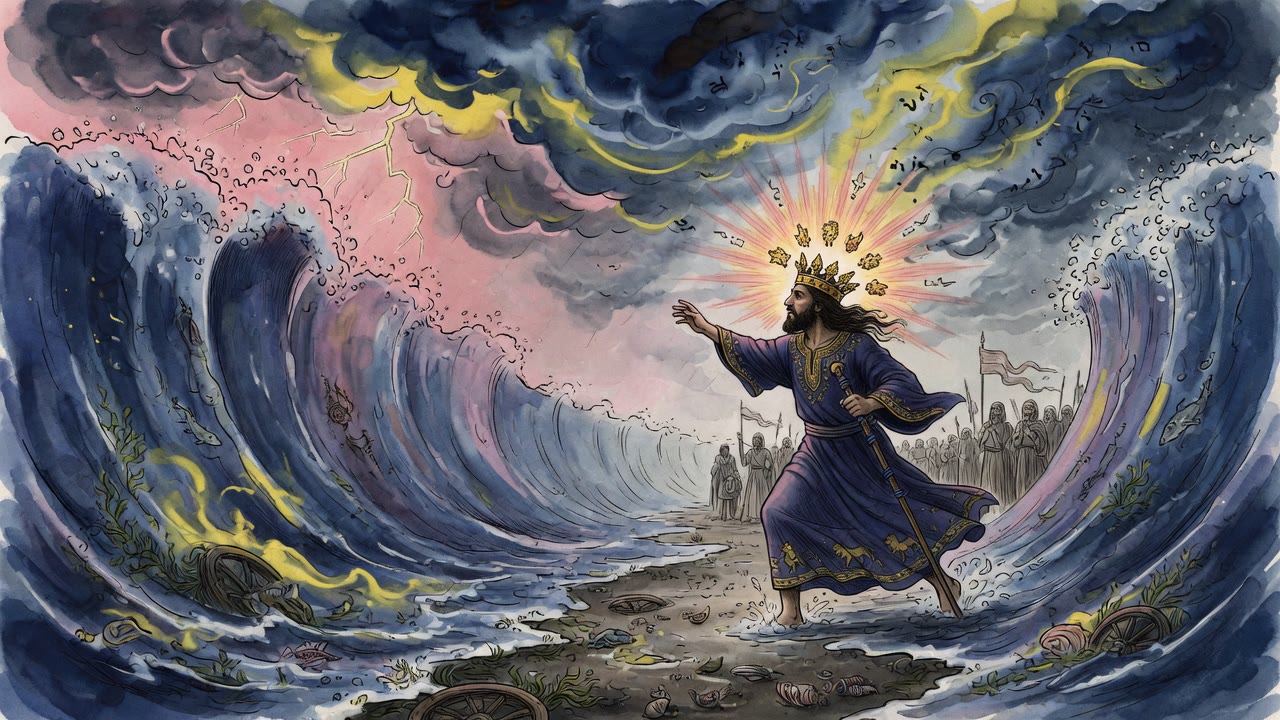
The tribes argued at the water's edge over who would lead Israel into the divided sea. Benjamin acted while they were still talking. Judah threw stones.
Table of Contents
 Click for full size
The Army Behind Them
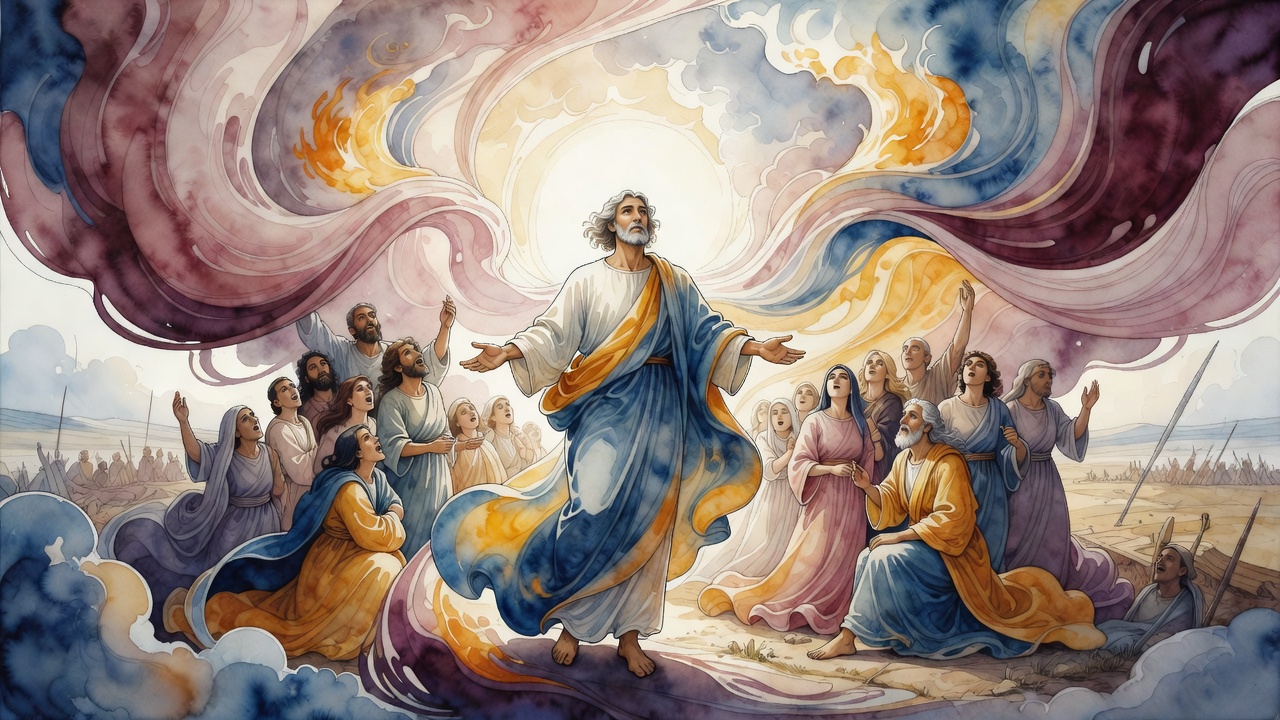
The Egyptian army was behind them. The sea was in front of them. Moses had told the people to stand firm and watch what God would do. The people had stopped walking, stopped moving, and were now standing at the edge of the water with the sound of wheels and horses growing louder from the west, and nothing but the sea in every other direction.
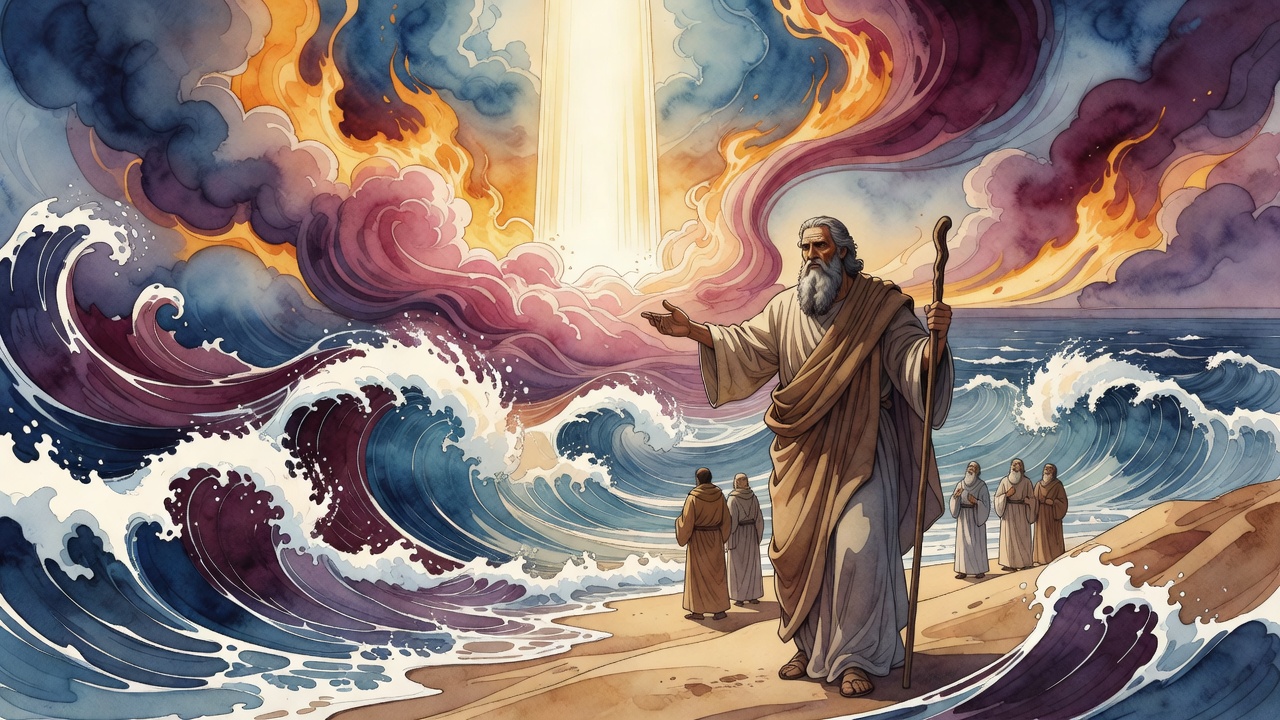
The sea had divided. The Mekhilta records what happened next, in the moment before anyone entered the corridor of water between the walls of sea. The tribes began to argue about who would go first.
The Argument
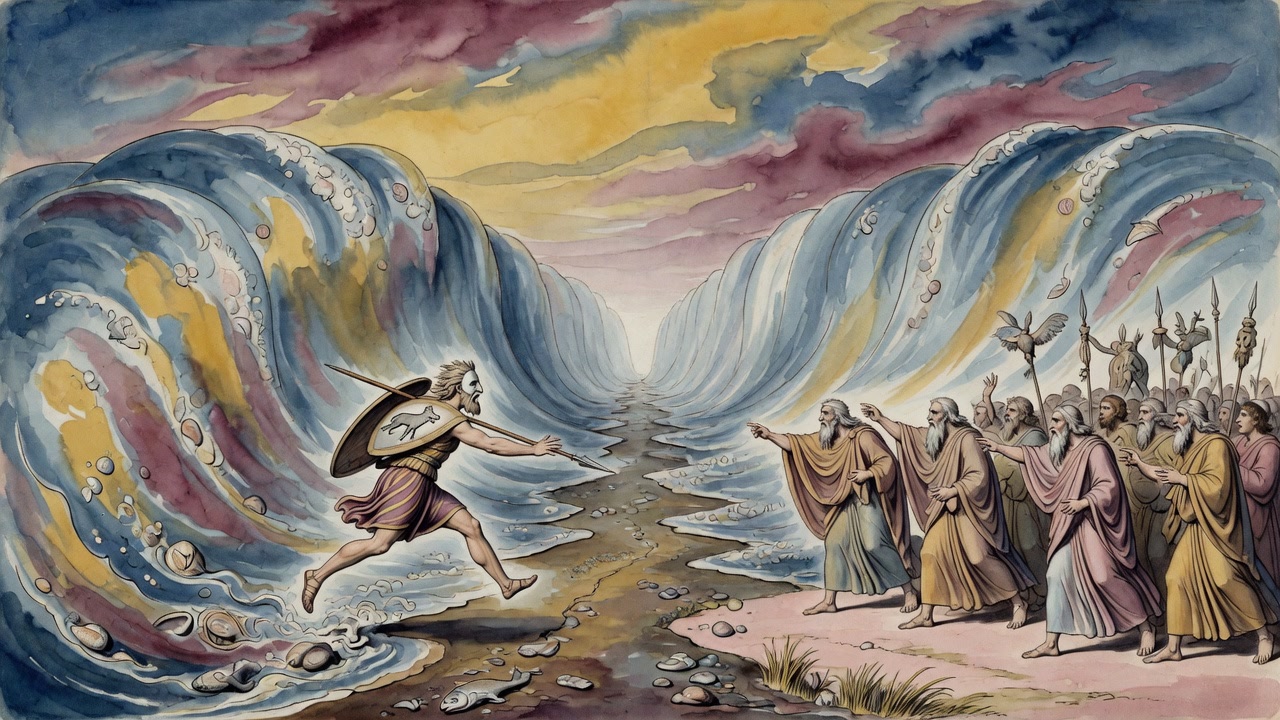
Not who had to go first, but who got to go first. Each tribe insisted on the honor of leading Israel through the divided water. They argued. The Egyptian chariots were getting closer. The walls of water stood waiting. The tribes stood at the edge and claimed precedence over one another, making the case for why their lineage, their history, their place in the arrangement of the camp entitled them to be first through the sea.
Rabbi Meir and Rabbi Yehudah saw the scene in opposite ways. Rabbi Meir saw the tribes competing for the honor. Rabbi Yehudah saw something less flattering: tribes hanging back, each waiting for another to go first, none of them willing to commit to stepping into the water until someone else had demonstrated it could be done. In Rabbi Yehudah's version, the argument covered fear rather than ambition. Both versions are preserved in the Mekhilta, because both were plausible readings of what human beings do when standing at the edge of something terrifying and unprecedented.
Benjamin Moved First
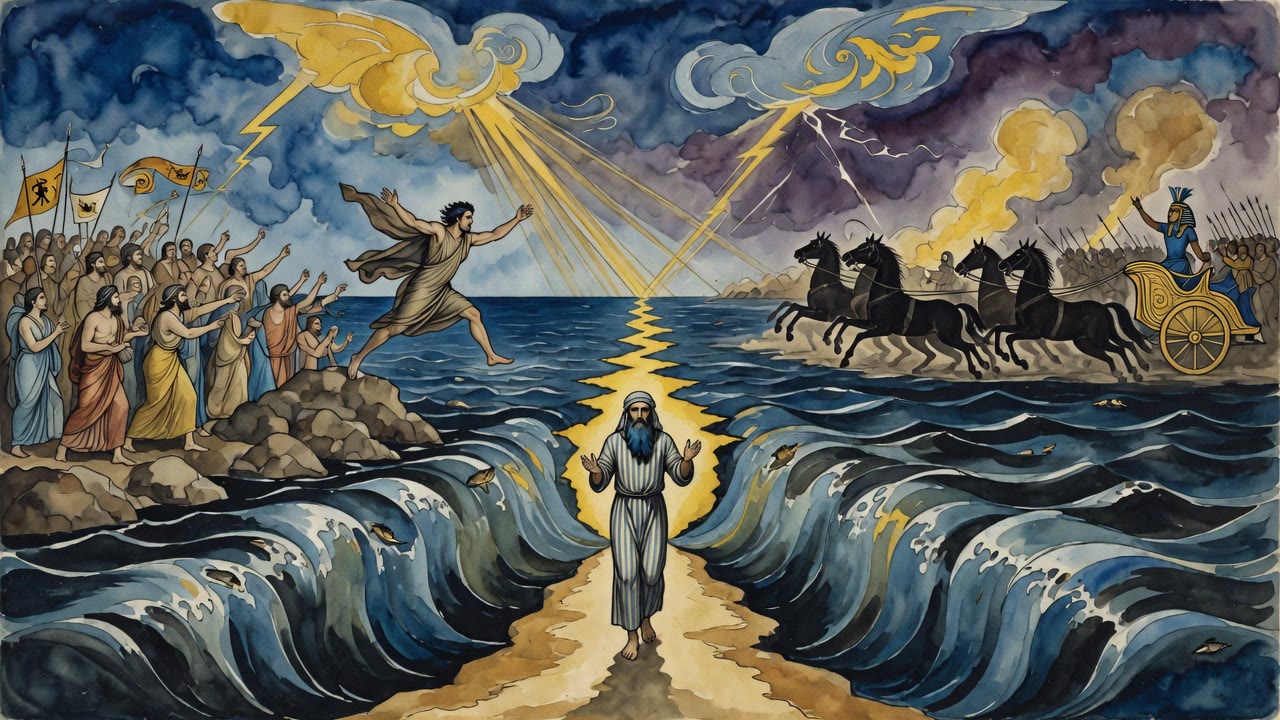
According to Rabbi Meir, while the tribes were still arguing, the tribe of Benjamin acted. Benjamin, the youngest, the smallest, sprang into the sea first. Benjamin settled the contest the only way it could be settled: not by winning the argument but by making the argument irrelevant. He was in the water before anyone had finished their sentence.
Rabbi Meir grounded this in a verse from Psalms: "There, Benjamin, the youngest, rules over them." The word "rules" in Hebrew could also be read as "dived into" or "subdued", Benjamin had subdued the sea, had overcome his own hesitation or his rivals' hesitation, and had gone in first. The word was ambiguous enough to carry the tradition's interpretation.
Rabbi Yehudah offered a different answer about who went first: the princes of Judah. They rushed into the sea throwing stones at the tribe of Benjamin, which Rabbi Yehudah read as competitive aggression, Judah was trying to push past Benjamin to claim the lead. The Psalmist's next line confirmed it: "The princes of Judah, their council", or "their throwing", the princes throwing stones in their urgency to be first.
What God Did While They Were Arguing
The Mekhilta added a frame around the tribal dispute. When Israel does God's will, God fights on their behalf. The proof text is Moses's words at the edge of the sea: "The Lord will war for you." What this meant practically was that the Israelites standing at the water's edge did not need to figure out the order. They did not need to resolve the argument. The God who had drowned Pharaoh's army in the sea was not waiting on their organizational decisions.
But the teaching also ran the other direction: when Israel does not do God's will, the same God who fought for them becomes their adversary. The tribes arguing at the water's edge were, in one reading, failing to act, standing in hesitation when action was required. The miracle of the crossing was not conditional on their getting their formation right. But the habit of hesitation, of waiting for someone else to move first, was a habit that would cost them later.
Why the Bodies Were on the Shore
After the crossing, Israel saw Egypt dead on the shore of the sea. The Mekhilta asked why the bodies had been thrown up onto the shore rather than left in the depths. It gave four reasons, each one addressing a specific need Israel had at that moment.
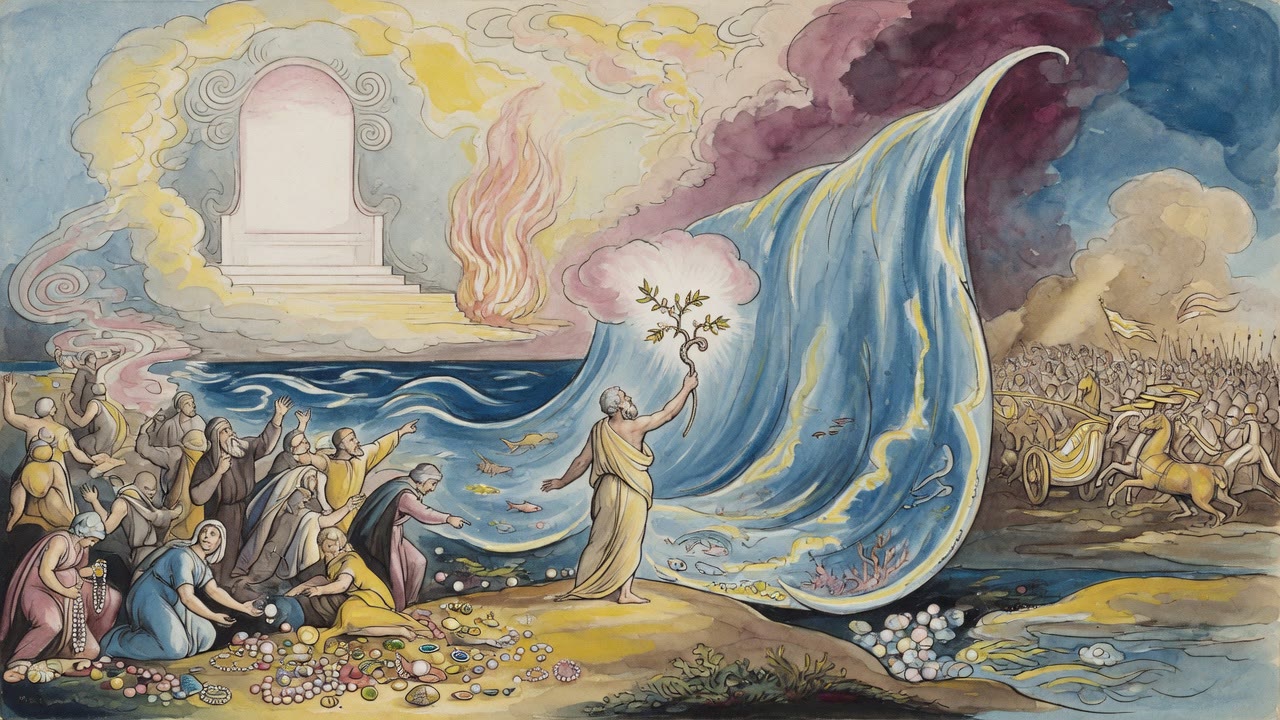
So that Israel would not fear that the Egyptians had escaped on the other side of the sea. So that the Egyptians watching from land could not claim that Israel had also drowned. So that Israel could take the spoils from the dead. And so that the bodies would serve as permanent testimony to the extent of the salvation, the Egyptian army lying on the shore, fully visible, fully dead, for anyone who doubted to see with their own eyes.
God had arranged not just the crossing but the aftermath. The sea had been a corridor between one life and another, and when Israel came out the other side, the evidence of what they had come through lay behind them on the shore, arranged so that no one, now or later, could convincingly deny it had happened.
← All myths