Korah's Sons Chose Moses Over Their Father and Survived
When the earth opened and swallowed Korah's rebellion, his sons were not among the dead. They had made a different choice while their father was still alive.
Table of Contents
 Click for full size
The Ground Opens
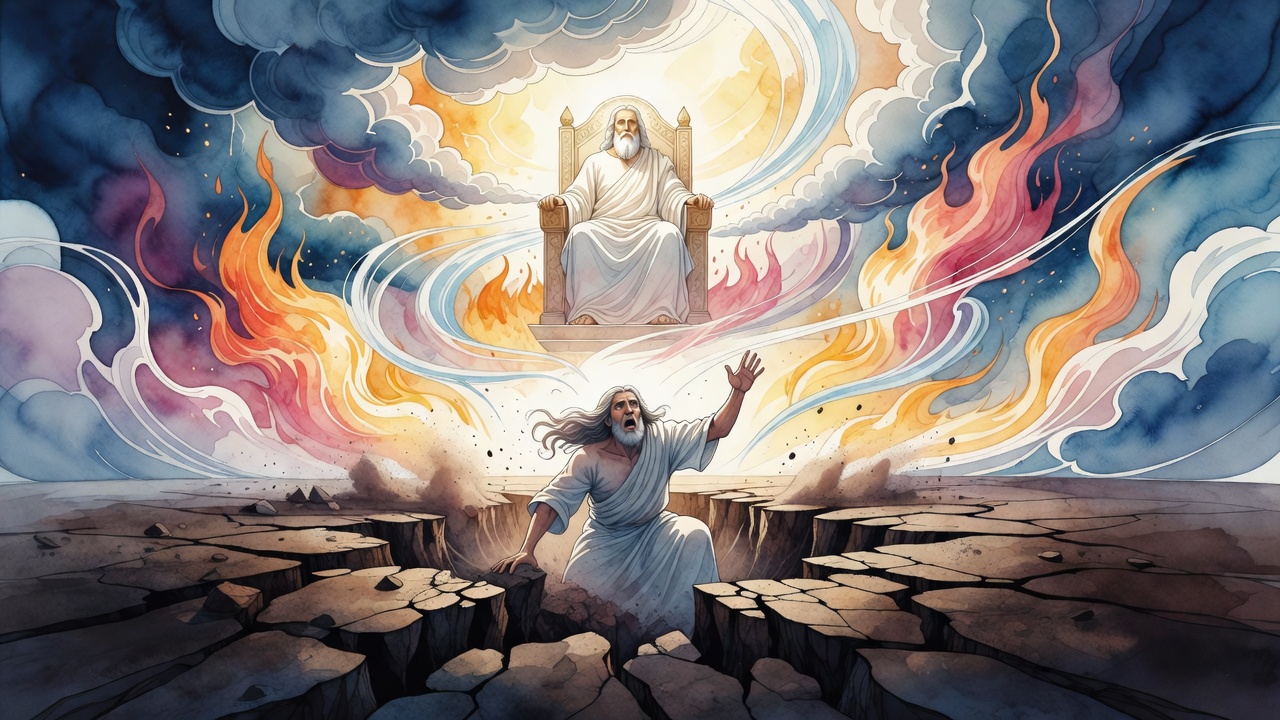
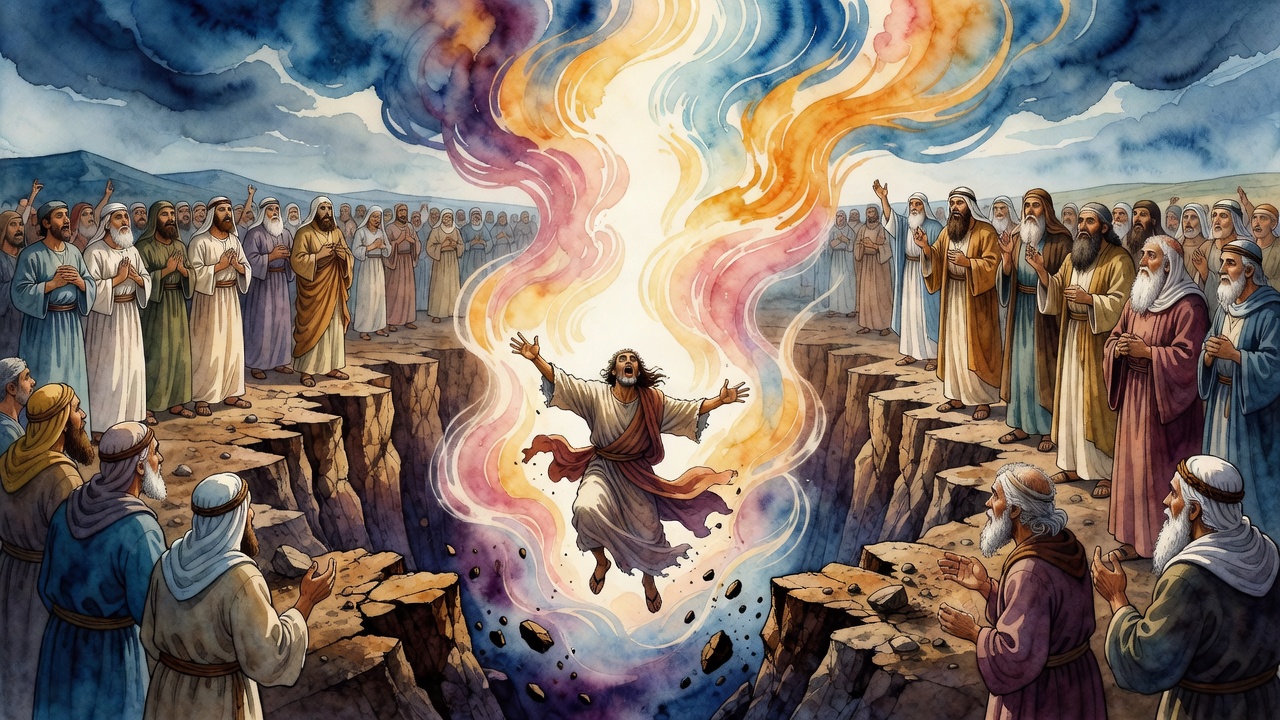
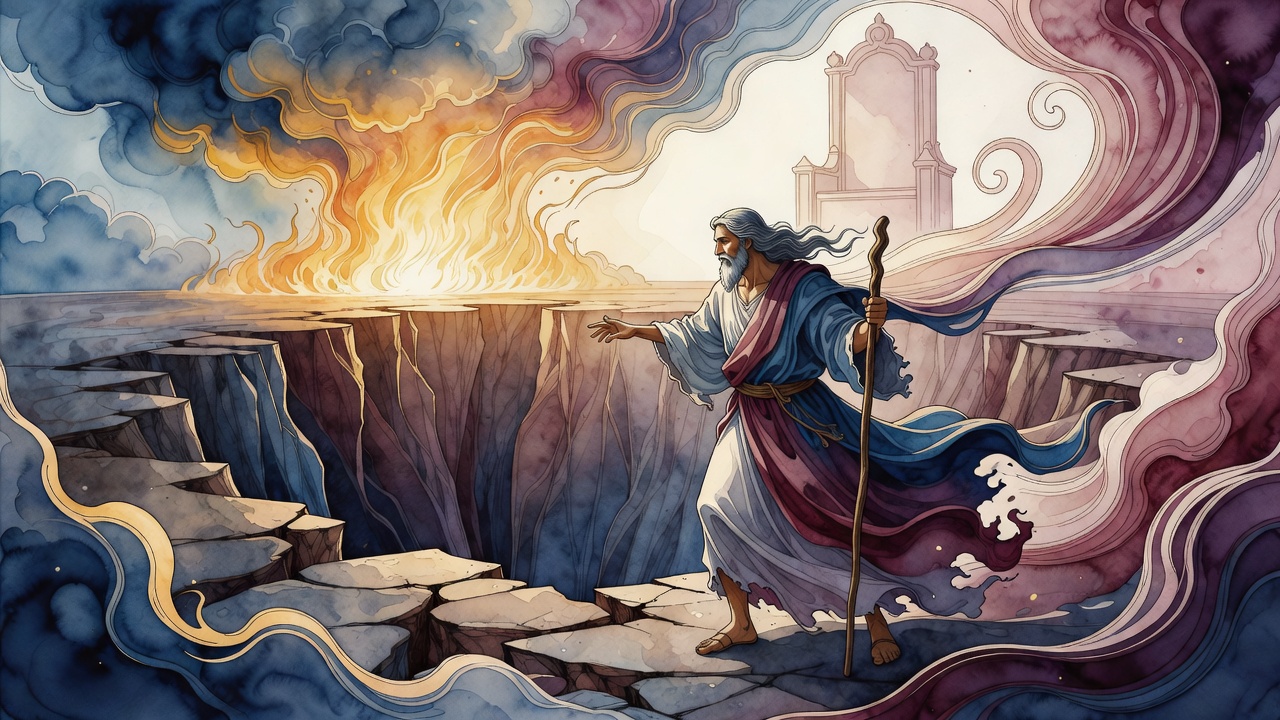
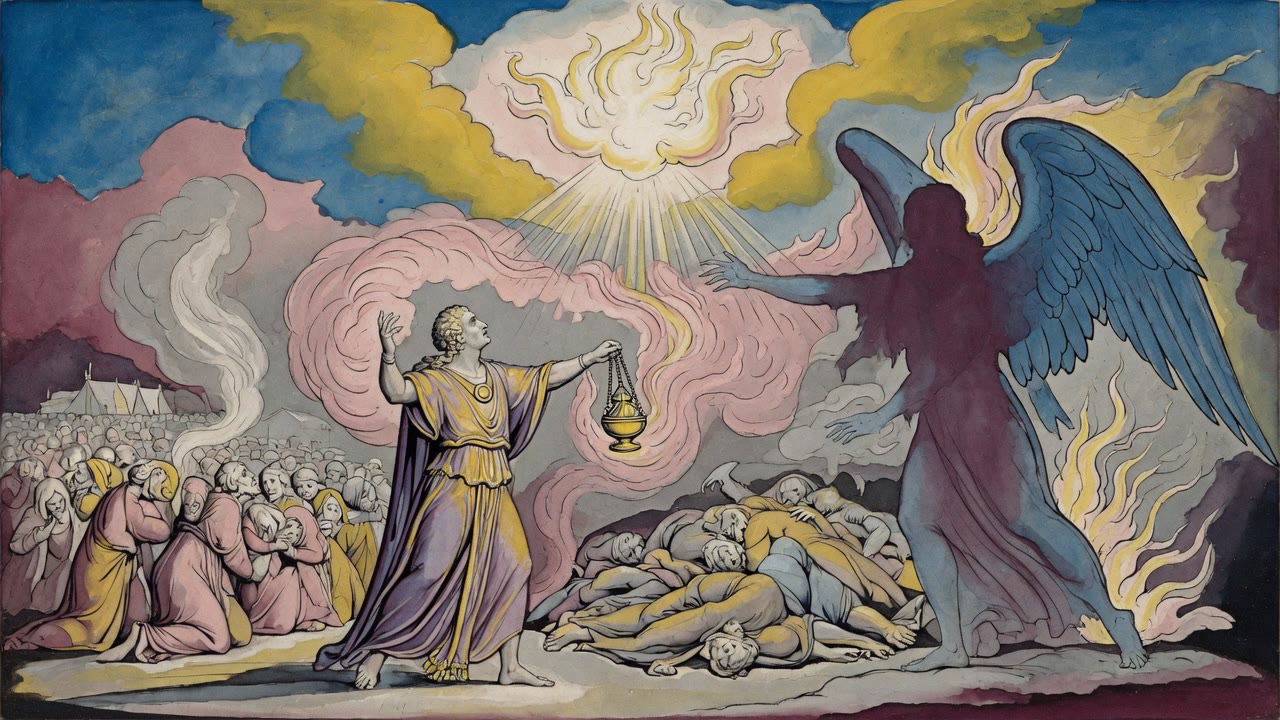
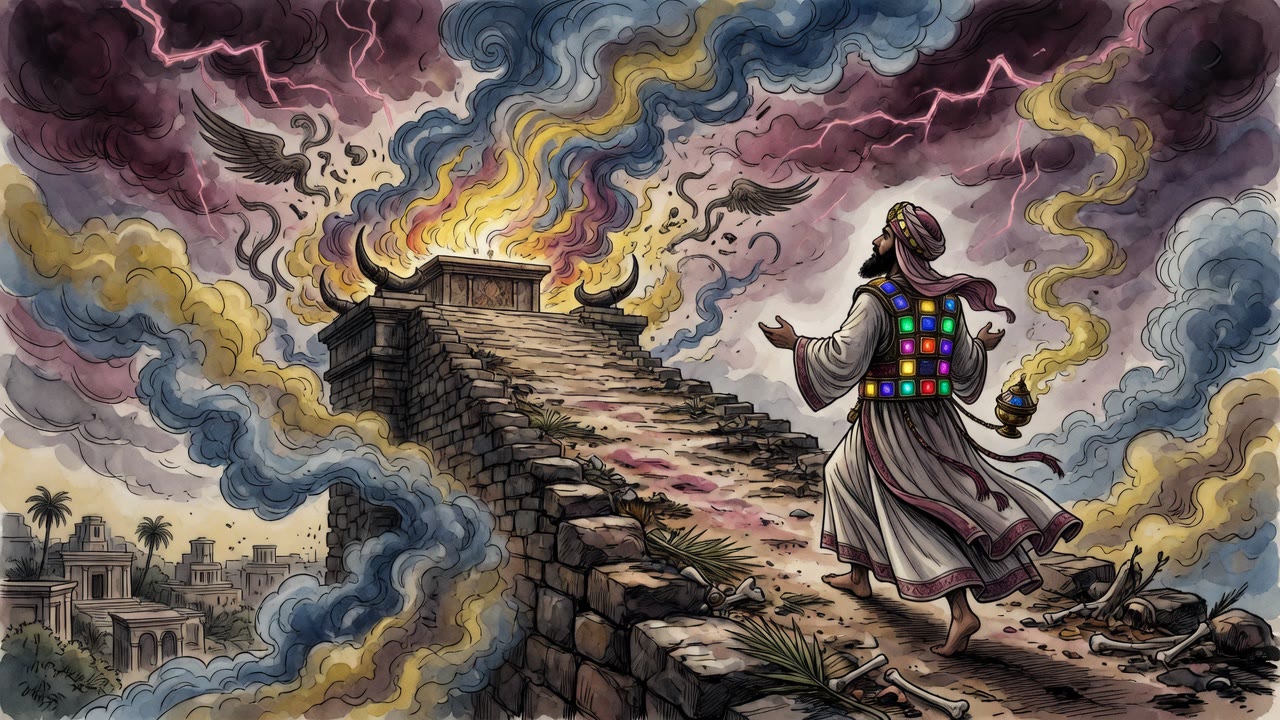
Moses had told the congregation to move away from the tents of Korah, Dathan, and Abiram. He told them that if these men died ordinary deaths, then the rebellion was his own invention. But if the earth opened and swallowed them alive, then Israel would know that God had sent him. Before Moses finished speaking, the ground split. It took Korah, it took Dathan and Abiram, it took their households and every person attached to their faction, and it took all their possessions. They went down alive into Sheol (the pit of the dead beneath the earth) and the ground closed over them. Two hundred and fifty men who had offered incense died the same day in a fire from God. The camp ran screaming. But Korah's sons were standing there, alive.
Their survival is stated in the Torah as a fact without explanation. Numbers 26 lists them among the living as if nothing requires comment. The Targum Jonathan, the Aramaic expansion of the Torah composed and edited across the first millennium CE, provides the explanation that the Torah omits.
What the Sons Had Done While Their Father Was Still Alive
The sons of Korah had not joined their father's counsel. More than that, they had publicly separated themselves from his rebellion while it was happening. They had followed Moses. Not quietly, not in secret, not after the fact, but openly, while Korah was still leading his challenge against Moses and Aaron and the established order. Their public loyalty to Moses was the act that distinguished them from everyone else in their father's household.
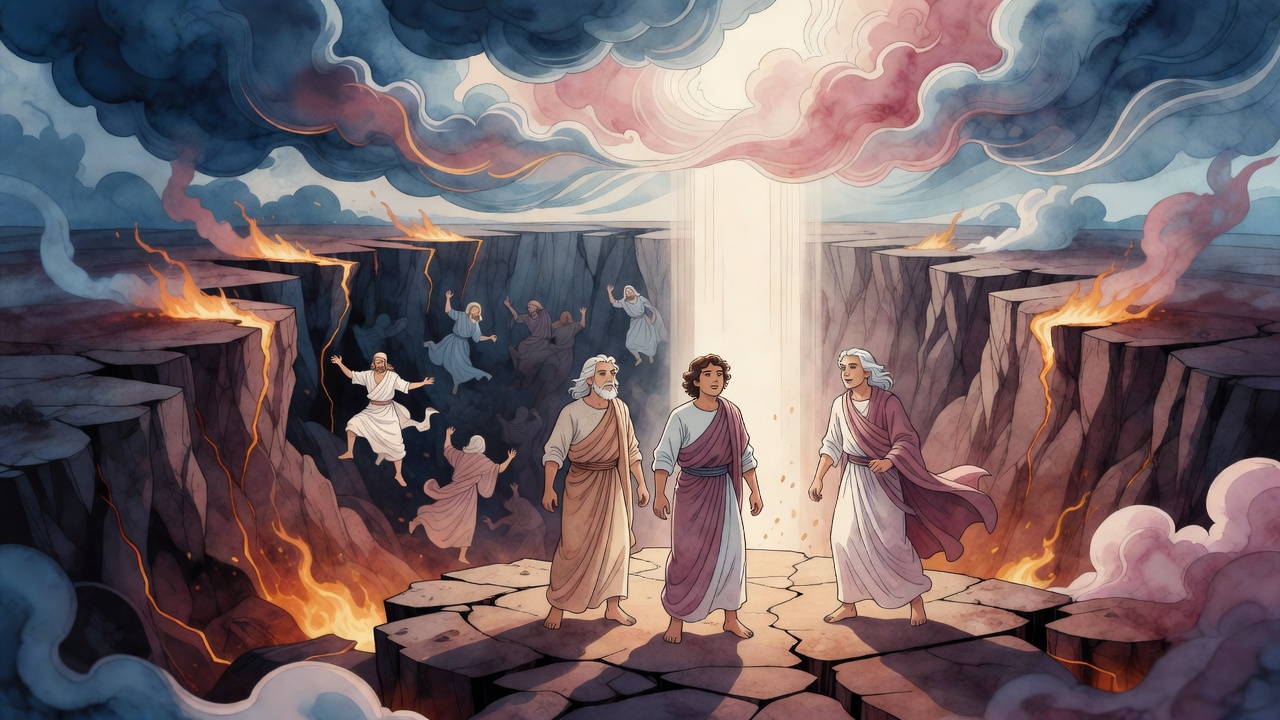
The Targum records that when the earth opened, a platform rose from within the depths beneath the sons of Korah. The ground split all around them, taking the rebellion down into the abyss, but they stood on a suspended ledge in the middle of the opening, held up inside the mouth of the earth while everything adjacent to them fell. They stayed there, suspended in the middle of the disaster their father had caused, until the ground closed again and they walked out.
The Census That Came After the Plague
The counting of Israel in Numbers 26 follows the plague at Baal Peor, which killed twenty-four thousand people. It was a census of survivors taken after a catastrophe, a way of knowing who and what remained after the camp had been shaken twice in rapid succession. The Targum opens the chapter with a phrase the Torah does not contain: the compassions of heaven were turned to avenge God's people through judgment. The census was not administrative bookkeeping. It was an act of divine attention, a way of saying that each person counted had been seen, named, and preserved for a reason.
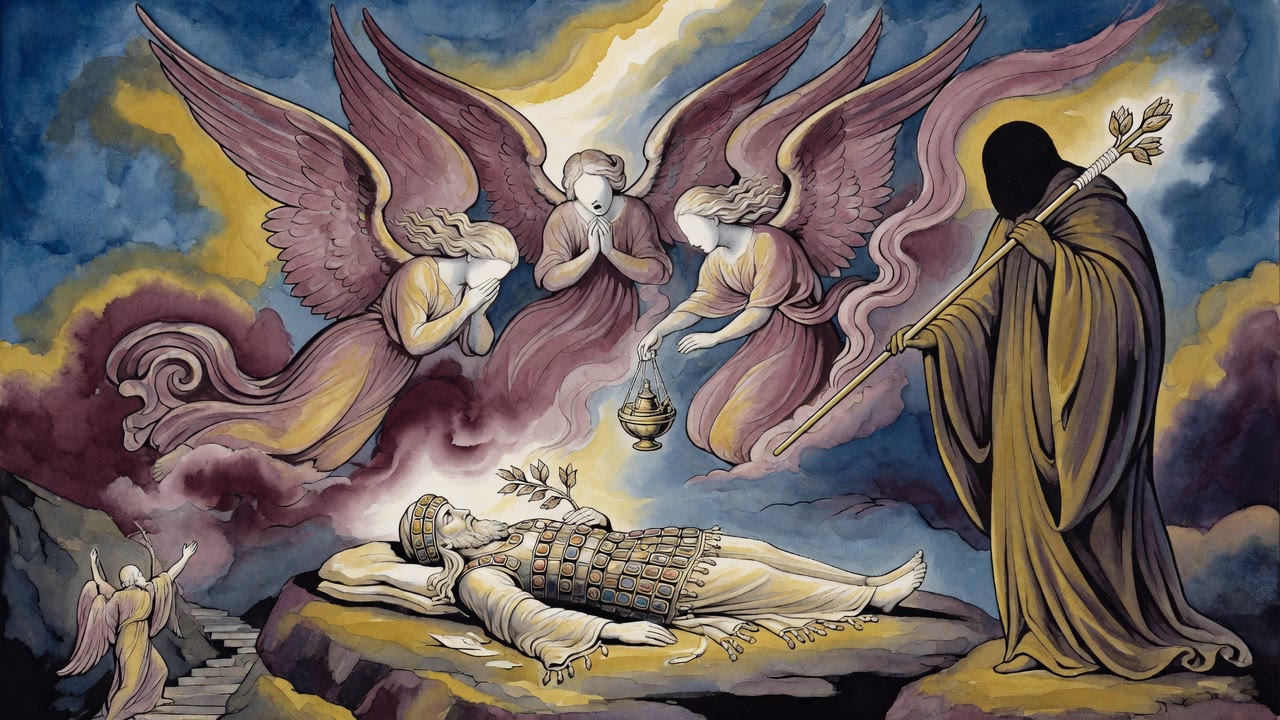
The sons of Korah appear in that census. Their survival was not luck. It was a verdict rendered on the specific choice they had made in their father's lifetime: they had stood on Moses's side when standing there cost something. The sons who could have inherited Korah's rebellion instead inherited their own futures.
What Korah's Sons Became
The tradition that grew around Korah's sons did not stop with their survival. The Psalms of Korah, eleven psalms attributed in their superscriptions to the sons of Korah, became part of the Temple liturgy. The men who had stood suspended in the mouth of the earth became singers. The lineage that began with a rebellion against Moses and Aaron produced, in the end, the musicians and gatekeepers of the sanctuary. What could have been a family name synonymous with catastrophe became, across the generations, a family name attached to praise.
The rabbis read the sons of Korah as the proof that loyalty to Moses was its own form of survival, and that the Levitical inheritance could be earned as well as inherited. Korah had wanted to seize a greater portion of the priestly role. His sons received a portion of it, not through their father's ambition but through their own refusal to follow him into the abyss.
← All myths