Translation of the source text.William Davidson Edition - Vocalized Aramaic + William Davidson Edition - English · CC-BY-NC
And as a child Miriam would say: In the future, my mother will give birth to a son who will save the Jewish people. And once Moses was born, the entire house was filled with light. Her father arose and kissed her on her head. He said to her: My daughter, your prophecy has been fulfilled.
And once they put him into the river, her father arose and hit her on her head. He said to her: My daughter, where is your prophecy? And this is as it is written: “And his sister stood afar off, to know what would be done to him” (Exodus 2:4), i.e., to know what will be the ultimate resolution of her prophecy. § The mishna teaches: Joseph merited to bury his father, resulting in a display of great honor to his father.
The Gemara begins its discussion of the burial of Jacob by asking: What is different initially that it is written: “And Joseph went up to bury his father; and with him went up all the servants of Pharaoh, the elders of his house, and all the elders of the land of Egypt” (Genesis 50:7), and afterward it says in the following verse: “And all the house of Joseph, and his brethren, and his father’s house; only their little ones, and their flocks, and their herds, they left in the land of Goshen” (Genesis 50:8), indicating that the brothers of Joseph were second in importance to the Egyptians?
And what is different at the end that it is written: “And Joseph returned into Egypt, he, and his brethren,” and afterward it states: “And all that went up with him to bury his father, after he had buried his father” (Genesis 50:14), placing the brothers before the Egyptians? Rabbi Yoḥanan says: Initially, before the Egyptians saw the honor of the Jewish people, as the Gemara will soon explain, they did not treat them with honor, so the brothers were behind the servants of Pharaoh.
And in the end, when they saw their honor, they treated the brothers with honor. The Gemara explains what honor was accorded to the family of Jacob: As it is written: “And they came to the threshing floor of Atad, which is beyond the Jordan, and there they wailed with a very great and sore wailing; and he made a mourning for his father seven days” (Genesis 50:10). The word atad is the name of the boxthorn bush.
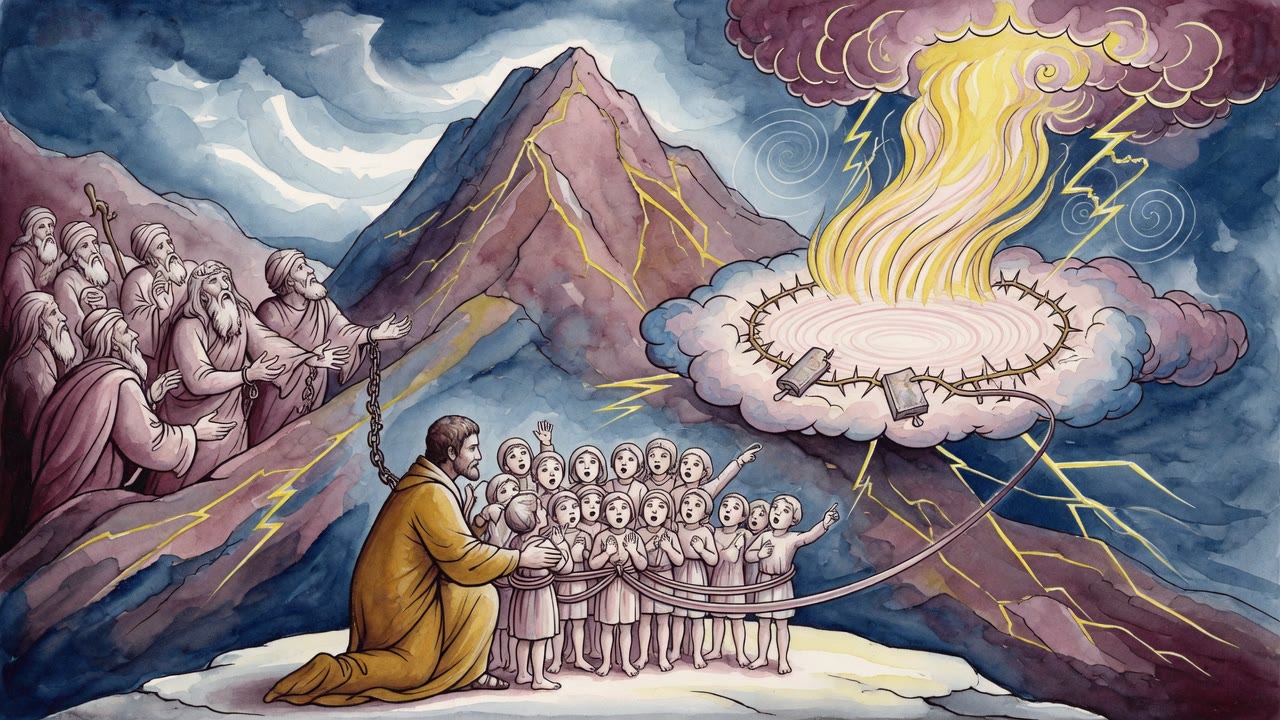
And does a boxthorn bush have a threshing floor? Thorns are not collected and eaten. Rabbi Abbahu says: This teaches that they surrounded the casket of Jacob with crowns, like this threshing floor that is surrounded with boxthorns, because the children of Esau and the children of Ishmael and the children of Keturah all came to the burial of Jacob. A Sage taught: Initially, they all came to wage war with the family of Jacob, but once they saw the crown of Joseph, the viceroy of Egypt, hanging on the casket of Jacob, they all took their crowns and hung them on the casket of Jacob.
A Sage taught: Thirty-six crowns were hung on the casket of Jacob. This was the great honor accorded to the family of Jacob. The Gemara continues its discussion of Jacob’s burial. The verse states: “And there they wailed with a very great and sore wailing” (Genesis 50:10).
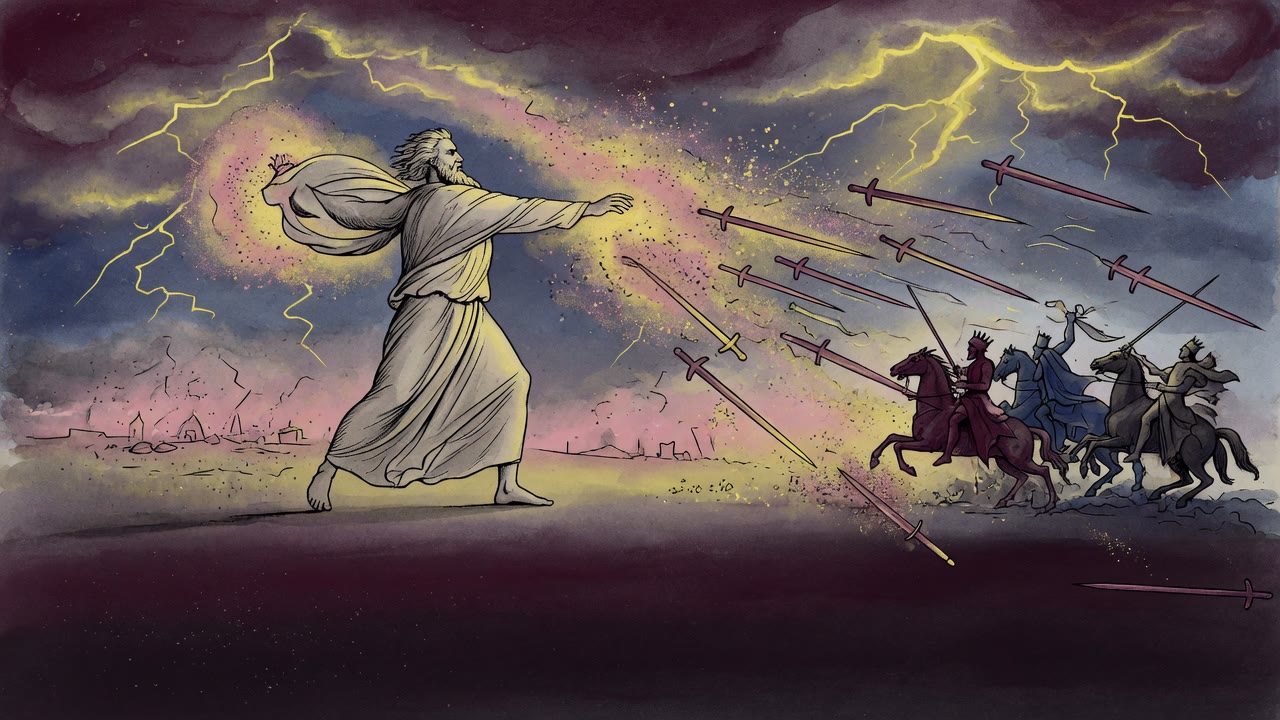
It is taught: Even horses and even donkeys participated in the mourning. Once they reached the Cave of Machpelah, Esau came and was preventing them from burying Jacob there. He said to them: It says: “And Jacob came unto Isaac his father to Mamre, to Kiryat Arba, the same is Hebron, where Abraham and Isaac sojourned” (Genesis 35:27). And Rabbi Yitzḥak says: It is called Kiryat Arba because there were four couples buried there: Adam and Eve, Abraham and Sarah, Isaac and Rebecca, Jacob and Leah.
Esau said: Jacob buried Leah in his spot, and the spot that is remaining is mine. The children of Jacob said to Esau: You sold your rights to Jacob. Esau said to them: Though I sold the birthright, did I also sell my rights to the burial site as an ordinary brother? The brothers said to him: Yes, you also sold to Jacob those rights, as it is written that Joseph stated: “My father made me swear, saying: Behold, I die; in my grave that I have dug [kariti] for me in the land of Canaan, there shall you bury me” (Genesis 50:5).
And Rabbi Yoḥanan says in the name of Rabbi Shimon ben Yehotzadak: The word kira in the verse is nothing other than a term of a sale [mekhira] sharing a similar root, because in the cities overseas they call a sale kira. Esau said to them: Bring the bill of sale to me, i.e., you can’t prove your claims. They said to him: The bill of sale is in the land of Egypt. They said: And who will go to bring it?
Naphtali will go, for he is as fast as a doe, as it is written: “Naphtali is a doe let loose, he gives goodly words” (Genesis 49:21). Rabbi Abbahu says: Do not read it as “goodly words [imrei shafer]”; rather, read it as imrei sefer, i.e., the words of the book, as he returned to Egypt to retrieve the bill of sale. The Gemara relates: Hushim, the son of Dan, was there and his ears were heavy, i.e., he was hard of hearing.
He said to them: What is this that is delaying the burial? And they said to him: This one, Esau, is preventing us from burying Jacob until Naphtali comes back from the land of Egypt with the bill of sale. He said to them: And until Naphtali comes back from the land of Egypt will our father’s father lie in degradation? He took a club [kulepa] and hit Esau on the head, and Esau’s eyes fell out and they fell on the legs of Jacob.
Jacob opened his eyes and smiled. And this is that which is written: “The righteous shall rejoice when he sees the vengeance; he shall wash his feet in the blood of the wicked” (Psalms 58:11). At that moment the prophecy of Rebecca was fulfilled, as it is written that Rebecca said of Jacob and Esau: “Why should I be bereaved of you both in one day?” (Genesis 27:45), as Rebecca foresaw that the future bereavement for both her sons would be on the same day.
The Gemara comments: And although their deaths were not on the same day, in any event their burials were on the same day, as Esau was killed and buried on the same day that Jacob was buried. The Gemara returns to discuss the involvement of Joseph and his brothers in the burial of their father: And if Joseph would not have dealt with the burial of Jacob, would his brothers not have dealt with it? But isn’t it written: “For his sons carried him into the land of Canaan, and buried him in the cave of the field of Machpelah” (Genesis 50:13)?
Since it is evident that the brothers were involved in the burial, why did they not deal with Jacob’s burial needs from the outset? The Gemara answers: They said: Allow Joseph to take care of it, because there is more honor for our father to be prepared for burial by royalty than by common people [hedyotot]. § It states further in the mishna: Who, to us, had a greater burial than Joseph, as it was none other than Moses who involved himself in transporting his coffin.
The Sages taught in the Tosefta (4:6–7): Come and see how beloved mitzvot are to Moses our teacher. As, at the time of the Exodus, all the Jewish people were involved in taking the plunder from Egypt, and he was involved in the performance of mitzvot, as it is stated: “The wise in heart will take mitzvot” (Proverbs 10:8). The Gemara asks: And from where did Moses our teacher know where Joseph was buried?
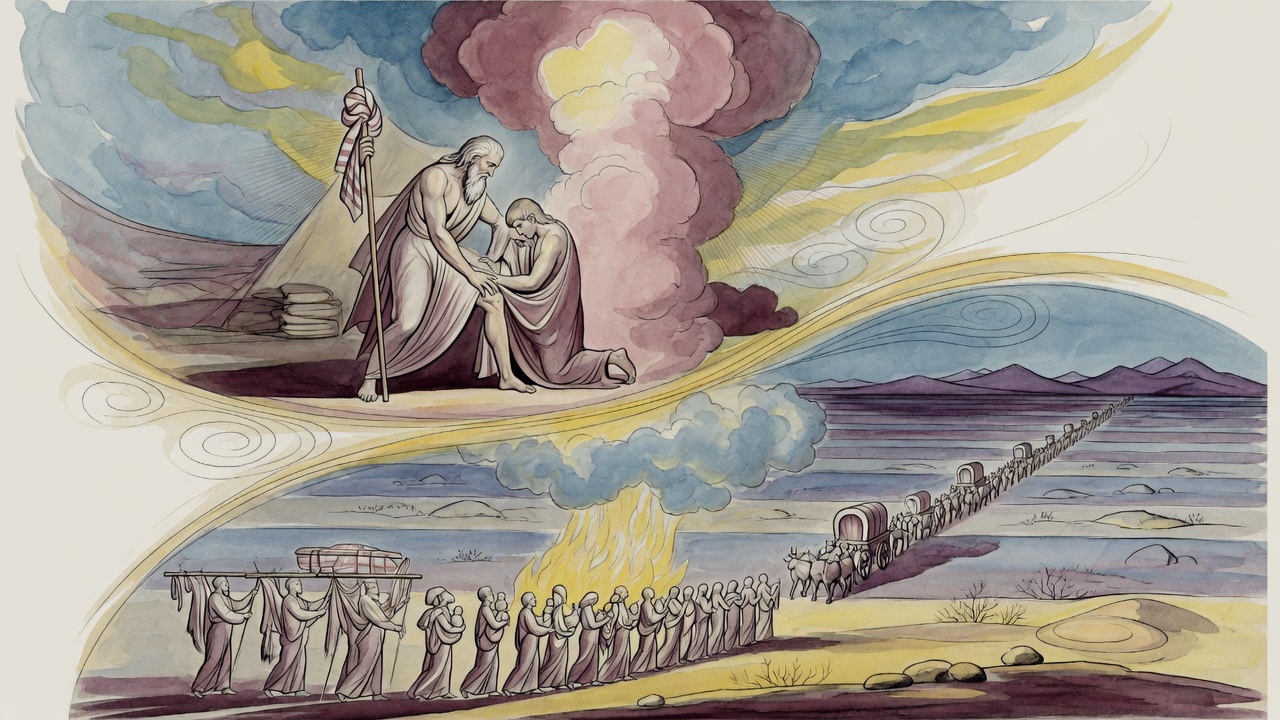
The Sages said: Serah, the daughter of Asher, remained from that generation that initially descended to Egypt with Jacob. Moses went to her and said to her: Do you know anything about where Joseph is buried? She said to him: The Egyptians fashioned a metal casket for him and set it in the Nile [Nilus] River as an augury so that its water would be blessed. Moses went and stood on the bank of the Nile.
He said to Joseph: Joseph, Joseph, the time has arrived about which the Holy One, Blessed be He, took an oath saying that I, i.e., God, will redeem you. And the time for fulfillment of the oath that you administered to the Jewish people that they will bury you in Eretz Yisrael has arrived. If you show yourself, it is good, but if not, we are clear from your oath. Immediately, the casket of Joseph floated to the top of the water.
And do not wonder how iron can float, as it is written in the verses describing how Elisha was able to cause iron to float: “But as one was felling a beam, the ax head fell into the water; and he cried, and said: Alas, my master! For it was borrowed. And the man of God said: Where did it fall? And he showed him the place.
And he cut down a stick, and cast it in there, and the iron floated up” (II Kings 6:5–6). And are these matters not inferred a fortiori: And just as Elisha, who was a mere student of Elijah, and Elijah was a mere student of Moses, as Elijah studied the Torah of Moses, was able to cause the iron to float before him, all the more so would it float before Moses our teacher himself. The Gemara now presents a different version of where Joseph was buried.
Rabbi Natan says: Joseph was buried in the crypt [kabbarnit] of kings. Moses went and stood by the crypt of kings and said: Joseph, the time has arrived about which the Holy One, Blessed be He, took an oath saying that: I will redeem you. And the time for fulfillment of the oath that you administered to the Jewish people that they will bury you in Eretz Yisrael has arrived. If you show yourself, it is good, but if not, we are clear from your oath.
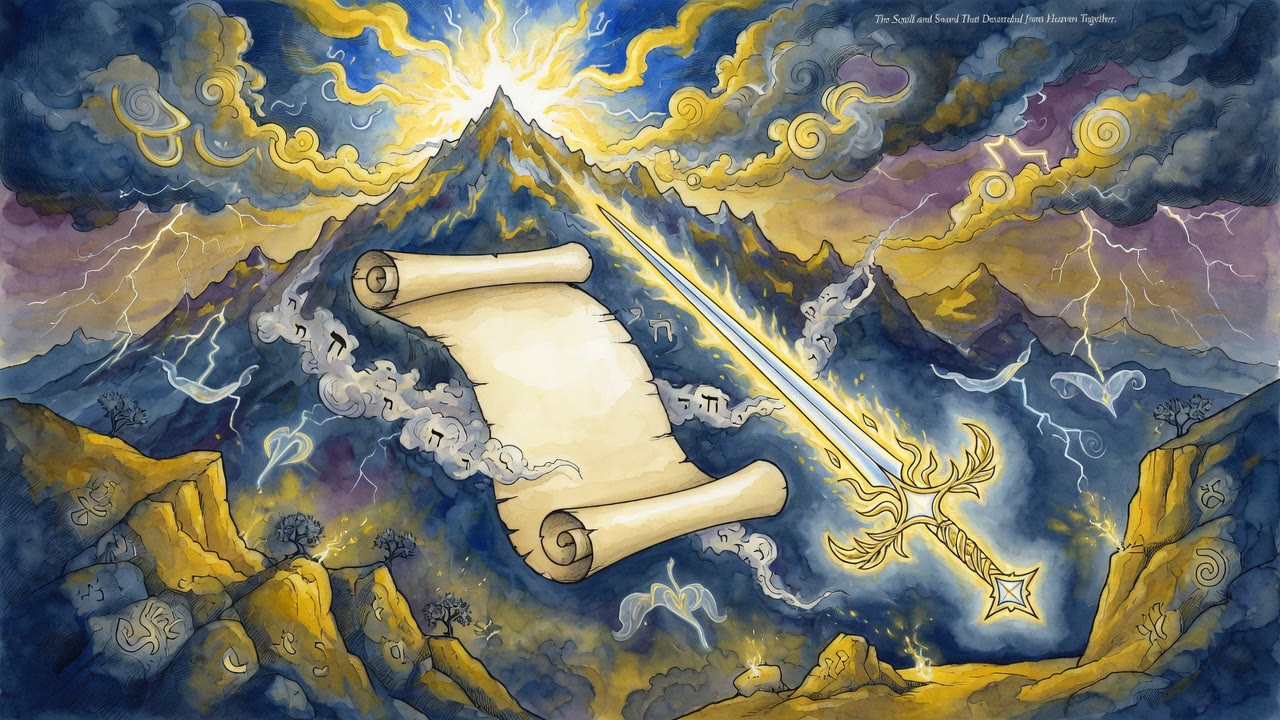
At that moment, the casket of Joseph shook among the caskets. Moses took it and brought it over to himself. And all those years that the Jewish people were in the wilderness, these two arks, one a casket of a dead man, Joseph, and one the Ark of the Divine Presence, i.e., the Ark of the Covenant, were traveling together, and passersby would say: What is the nature of these two arks? They said to them: One is of a dead person and one is of the Divine Presence.
The passersby would ask: And in what way is it the manner of a dead person to travel with the Divine Presence? They said in response:

 Click for full size