Abraham Stepped Into Jacob's Ladder Dream at Bethel
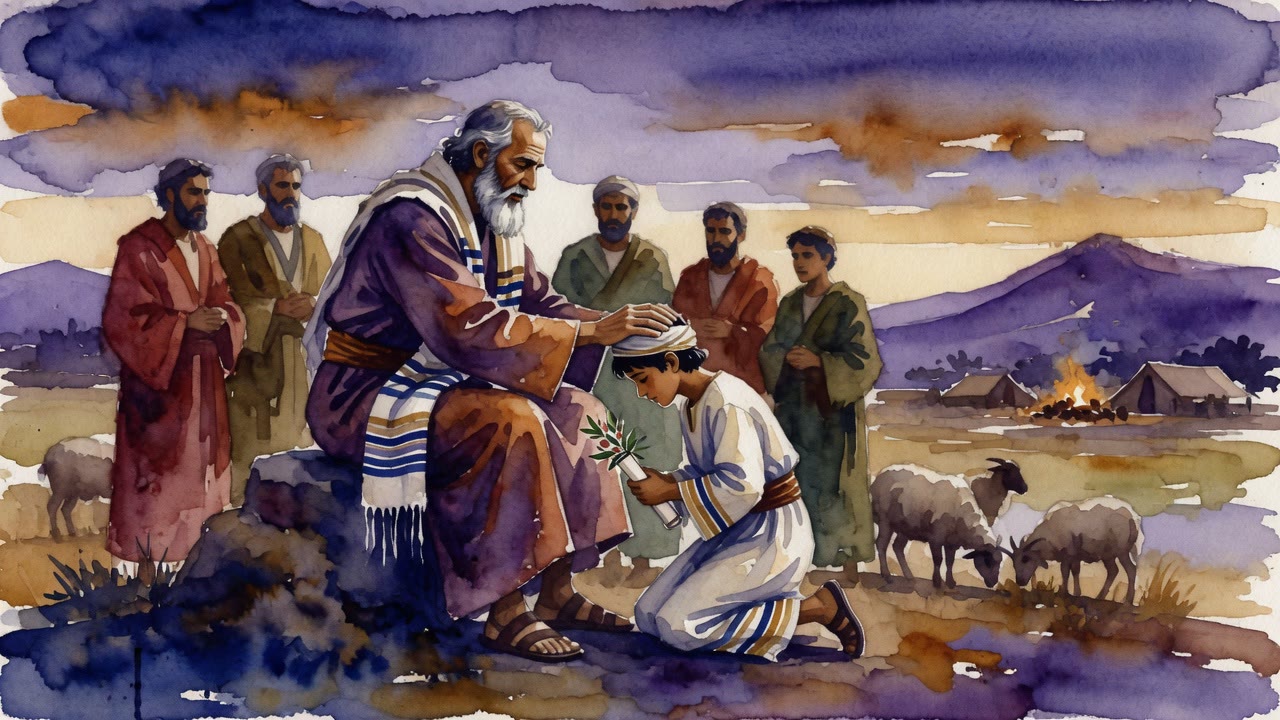
Abraham had been dead twenty years. In the dream he embraced his grandson and said he loved him with all his soul. Then he warned him about Laban.
Table of Contents
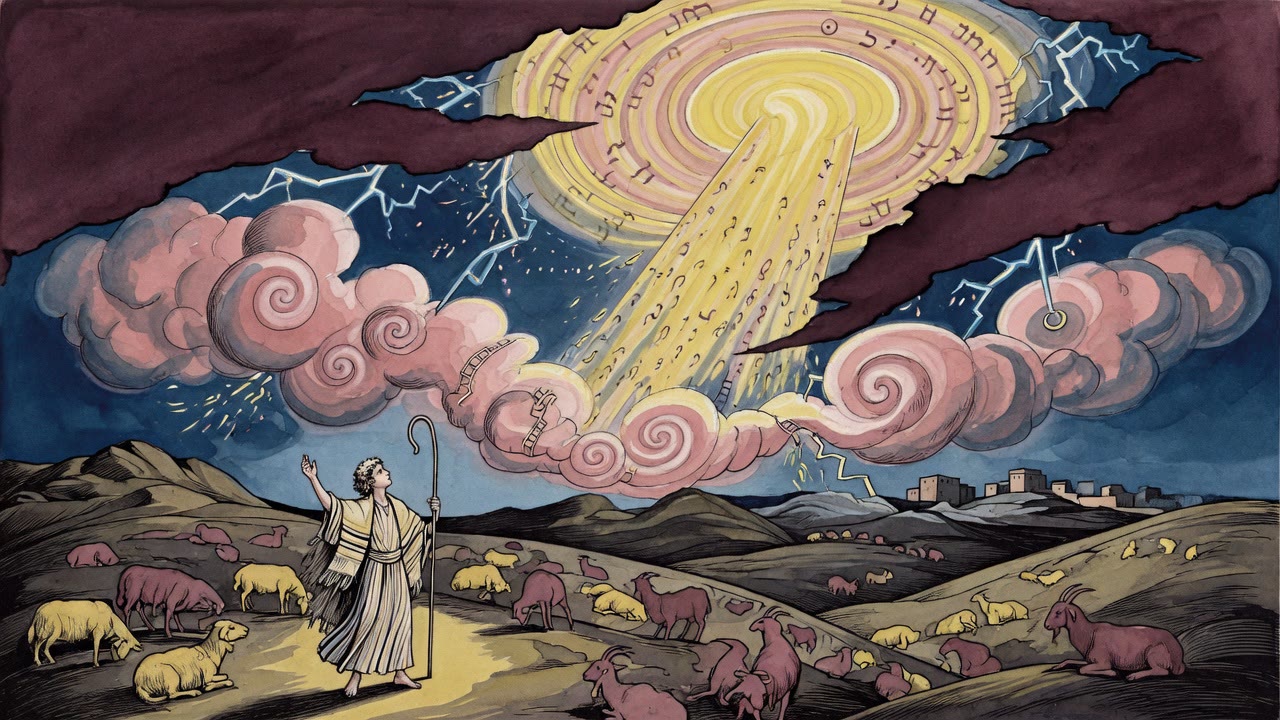
The ladder at Bethel is the part most often told: angels going up and down, God at the top, land and descendants promised in the dark. The vision became one of the most painted and memorized moments in the entire Hebrew Bible. What comes between the vision of the angels and the vow Jacob made at dawn is told less often, the moment when Abraham himself appeared.
 Click for full size
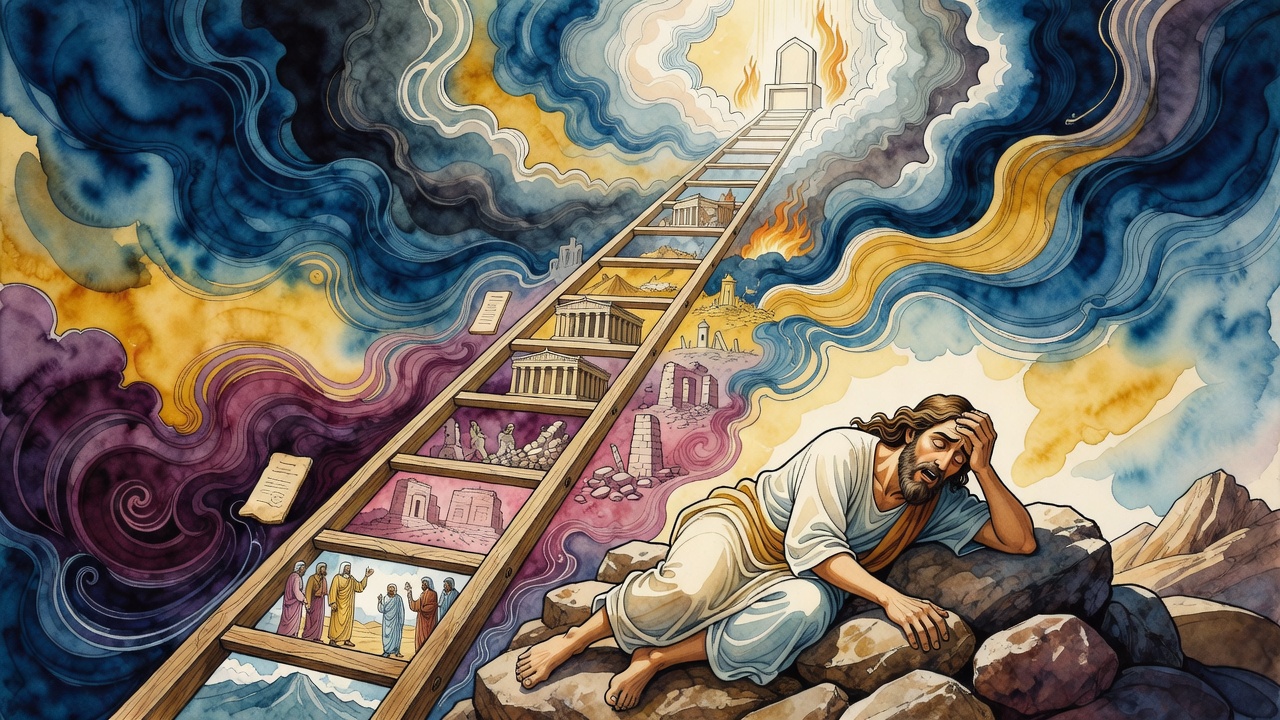
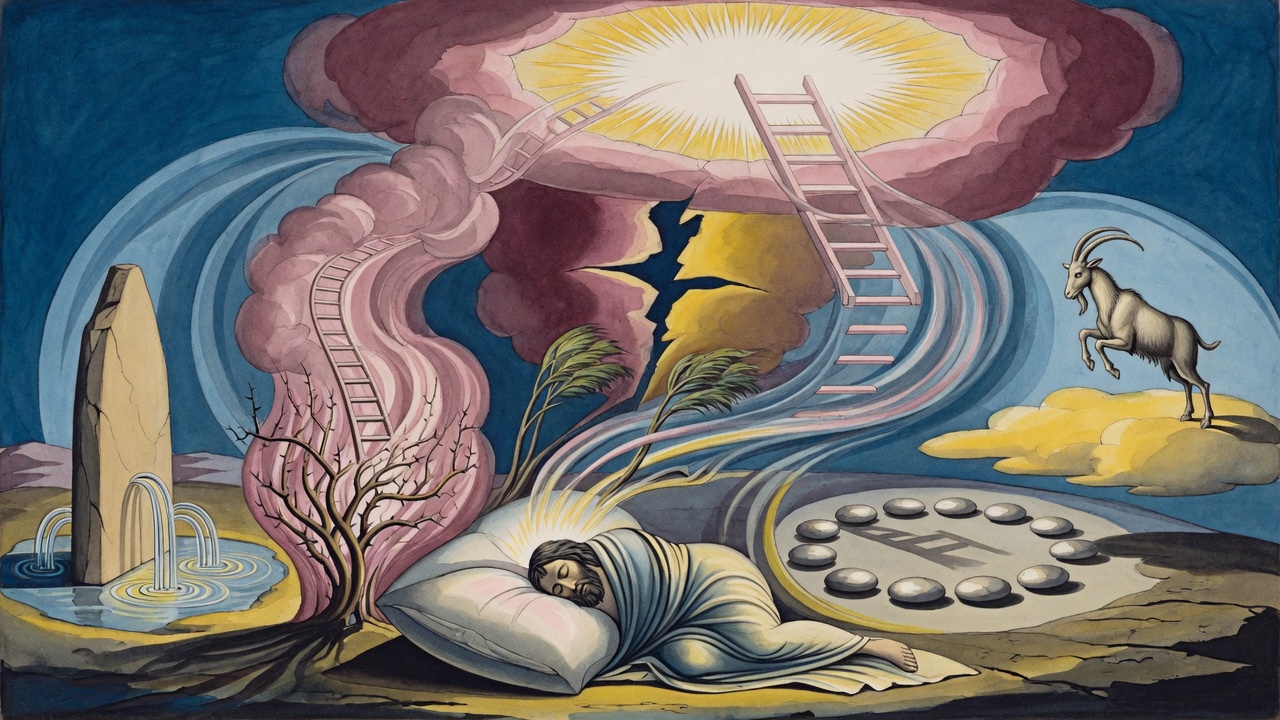
Jacob had fled Beersheba with nothing. His brother Esau was behind him with a murderous rage. The road ahead was Mesopotamia, Laban's house, years of labor still invisible in the future. He arrived at a place in the dark. He took one of the stones there and used it for a pillow. He lay down.
Love and Warning in the Same Voice
The Book of Jubilees, composed around 150 BCE and drawing on older traditions about the patriarchs, fills in what the Torah leaves blank. In the Jubilees account, the dream at Bethel is not only a divine promise delivered from above. It is also a family reunion. In the vision, Abraham came to Jacob and embraced him and kissed him and said: I love you with all my heart and with all my soul.
After twenty years of Jacob's grandfather being dead, here he was, warm and present and speaking, in the space that only dreams can open. But the older man did not come merely to embrace him. He came with warning woven into the love. He told Jacob not to be afraid. Then he told him what was coming: Laban would deceive him, the years ahead would be full of grief, the road to Mesopotamia was going to cost more than Jacob knew. But God would be with him through all of it. His seed would be like the dust of the earth, spreading west and east and north and south. Every family of the earth would be blessed through him and through his seed.
The Vision of the Heavenly Ladder
The ladder itself appears in Jubilees as in Genesis: angels ascending and descending on it, God standing above it. But Bereshit Rabbah, the fifth-century CE midrashic compilation, reads the traffic on the ladder as a map of history. Rabbi Yehoshua ben Levi identified the four groups of angels going up and coming down as the four kingdoms, the sequence of empires, Babylon, Persia, Greece, and the last, that would dominate Israel before the final redemption. Each group that ascended represented a kingdom rising. Each that descended represented its fall.
Jacob watched the angels of each kingdom climb and descend. He counted them as they went. The first group climbed a measured distance and came down. The second climbed higher, and came down. The third higher still, and came down. There was a rhythm to it, terrible and predictable, every empire that rose against his children also falling back to the ground from which it had risen.
The Kingdom That Would Not Come Down
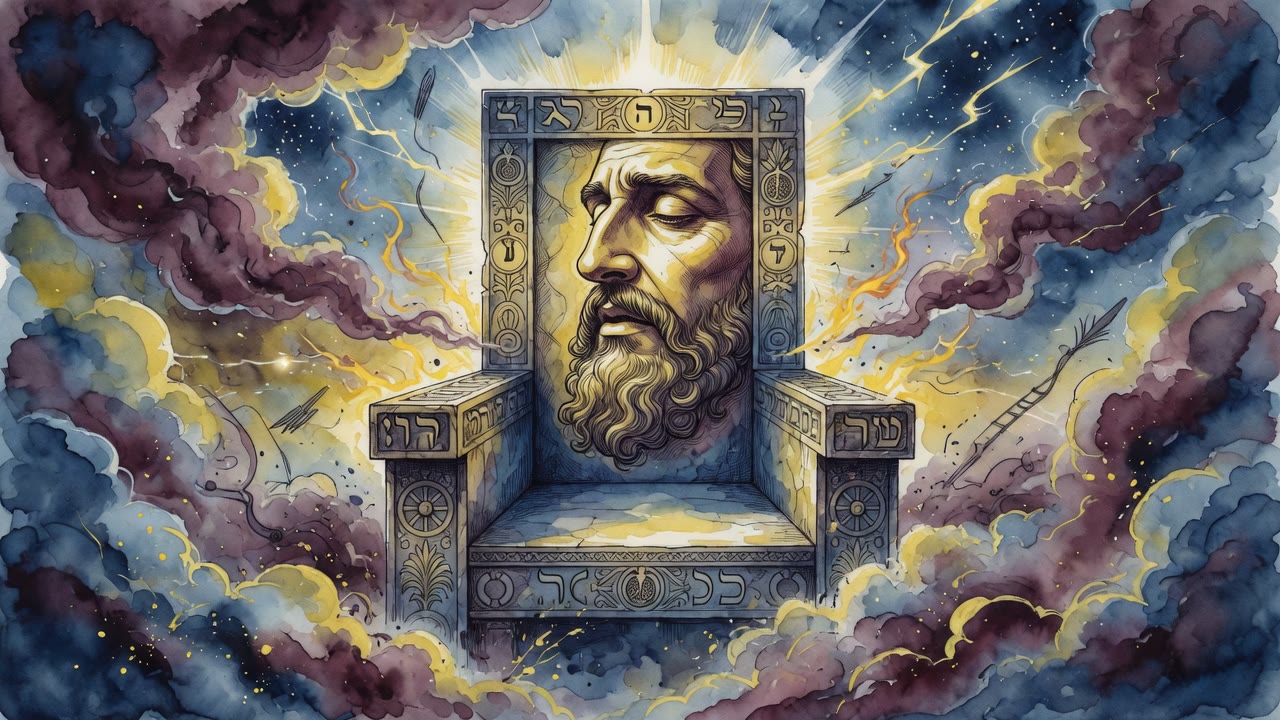
Then the last group began to climb. It climbed past the point where the others had turned back, and it did not turn back. It kept climbing, higher and higher, toward the place where God stood above the ladder, and it showed no sign of falling. Jacob, watching from the ground with the stone still beneath his head, grew afraid. This was the kingdom that would not come down on its own, the last and longest exile, the empire that seemed to have no fall written into it.
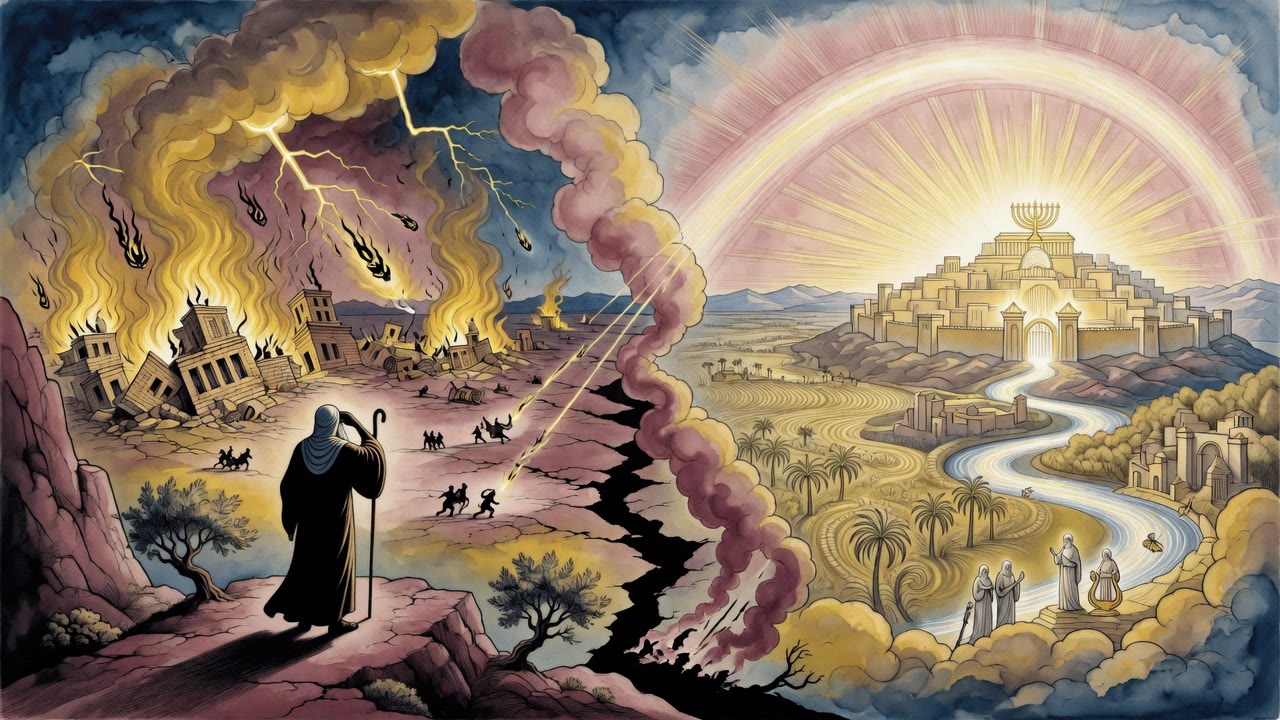
God had to speak directly into the fear: even if this kingdom reaches the sky, even if it climbs as high as the eagle and sets its nest among the stars, from there I will bring it down. Do not be afraid. The ladder was not only a vision of commerce between heaven and earth. It was a compressed prophecy of everything Jacob's descendants would endure before they came home, and a promise that the climb of even the last and proudest empire ended where all the others ended.
The Vow at Dawn
When Jacob woke, he said: surely the Lord is in this place and I did not know it. He was afraid and said: how awesome is this place. This is none other than the house of God and this is the gate of heaven. He took the stone he had slept on, set it upright as a pillar, poured oil on it, and named the place Bethel. House of God. Then he made his vow: if God will be with me and keep me on this road and give me bread and clothing, and if I come back to my father's house in peace, then the Lord will be my God, and this stone will be God's house, and of all that you give me I will give a tenth to you.
The vow is careful and conditional and entirely Jacob: I will, if you will. Even at Bethel, even after a dream of ladders and angels and his dead grandfather embracing him, Jacob negotiated. The tradition read this not as faithlessness but as Jacob's particular character, the man who never stopped calculating even when the divine was directly overhead.
← All myths