Retold in our words. Read the original at the link below.Project Gutenberg eBook #1494, The Legends of the Jews, Volume 2 · Public Domain
"Throw the stick up in the air," goes the saying, "it will always return to its original place." And perhaps that's how Zuleika, Potiphar's wife, felt about her growing desire for Joseph. According to Ginzberg's retelling in Legends of the Jews, Joseph, much like his mother Rachel, possessed a captivating beauty. And Zuleika? Well, she was consumed by an "invincible passion" for him.
Some even say that Zuleika's feelings were intensified by astrological predictions. The stars, it was said, foretold that she would have descendants through Joseph. Though, as we'll see, the prophecy unfolded in a way she never expected: Joseph later married her daughter Asenath, who bore him children.
Initially, Zuleika didn't reveal her feelings directly. Instead, she tried to use trickery. Under the guise of visiting him, she'd approach Joseph at night. And, because she had no sons of her own, she would pretend that she wanted to adopt him. Joseph, being the kind soul he was, even prayed to God on her behalf, and she eventually did bear a son. But even then, she continued to embrace Joseph, though he remained oblivious to her true intentions.
Eventually, Joseph recognized her "wanton trickery" and was deeply saddened. He tried to dissuade her from her sinful desires by speaking to her about God. But she, in turn, threatened him with death, even resorting to physical punishments to bend him to her will. When those tactics failed, she tried seduction. "I promise thee," she'd say, "thou shalt rule over me and all I have, if thou wilt but give thyself up to me… and thou shalt be to me the same as my lawful husband."
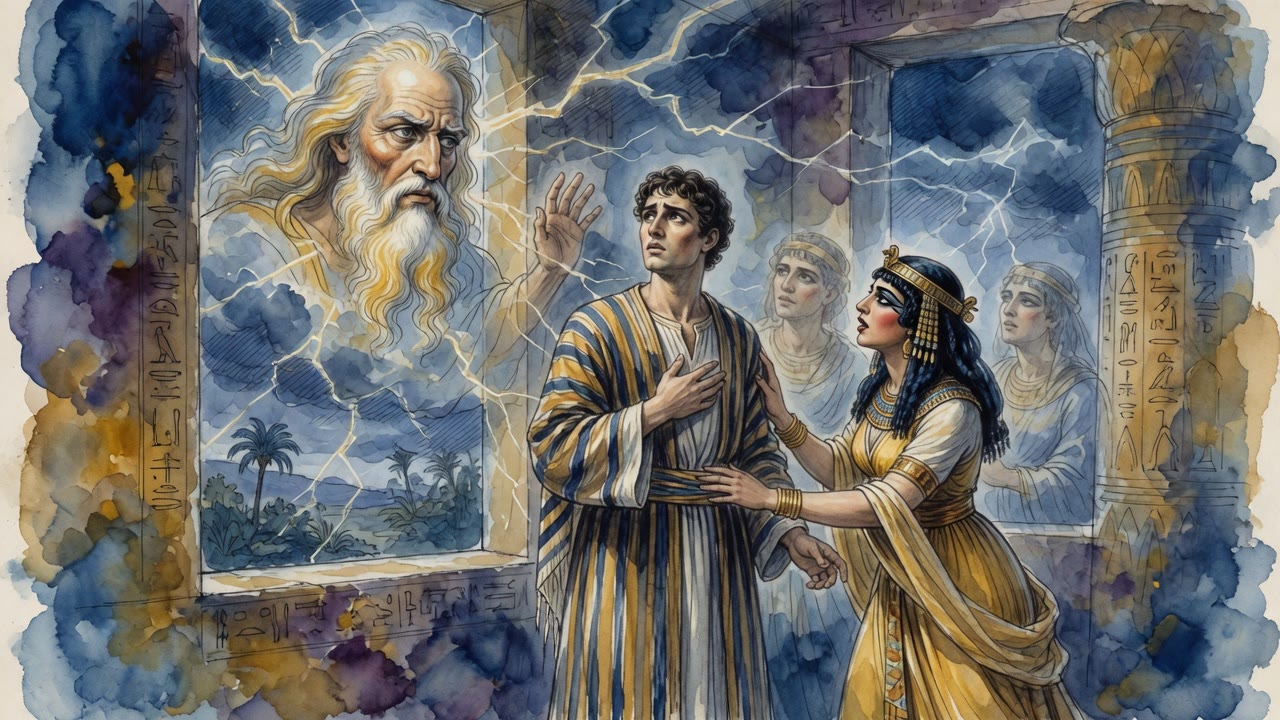
But Joseph wouldn't budge. Mindful of the teachings of his fathers, he retreated to his chamber to fast and pray, begging God to deliver him from the clutches of the Egyptian woman. Despite his self-denial, his master believed he was living a life of luxury, because, as the stories say, those who fast for the glory of God are made beautiful of countenance.
Zuleika, in a twisted game, would praise Joseph's chastity to her husband, ensuring he wouldn't suspect anything. And secretly, she'd encourage Joseph, telling him not to fear her husband, that Potiphar was convinced of his purity. She even claimed that if anyone tried to spread rumors about them, Potiphar wouldn't believe a word of it.
When she realized her words were having no effect, Zuleika changed tactics. She asked Joseph to teach her about the word of God. "If it be thy wish that I forsake idol worship," she pleaded, "then fulfil my desire, and I will persuade that Egyptian husband of mine to abjure the idols, and we shall walk in the law of thy God." Joseph's response was firm: "The Lord desireth not that those who fear Him shall walk in impurity, nor hath He pleasure in the adulterer."
On another occasion, she threatened, "If thou wilt not do my desire, I will murder the Egyptian and wed with thee according to the law!" Joseph, horrified, tore his garment and cried out, "O woman, fear the Lord, and do not execute this evil deed, that thou mayest not bring destruction down upon thyself, for I will proclaim thy impious purposes to all in public."
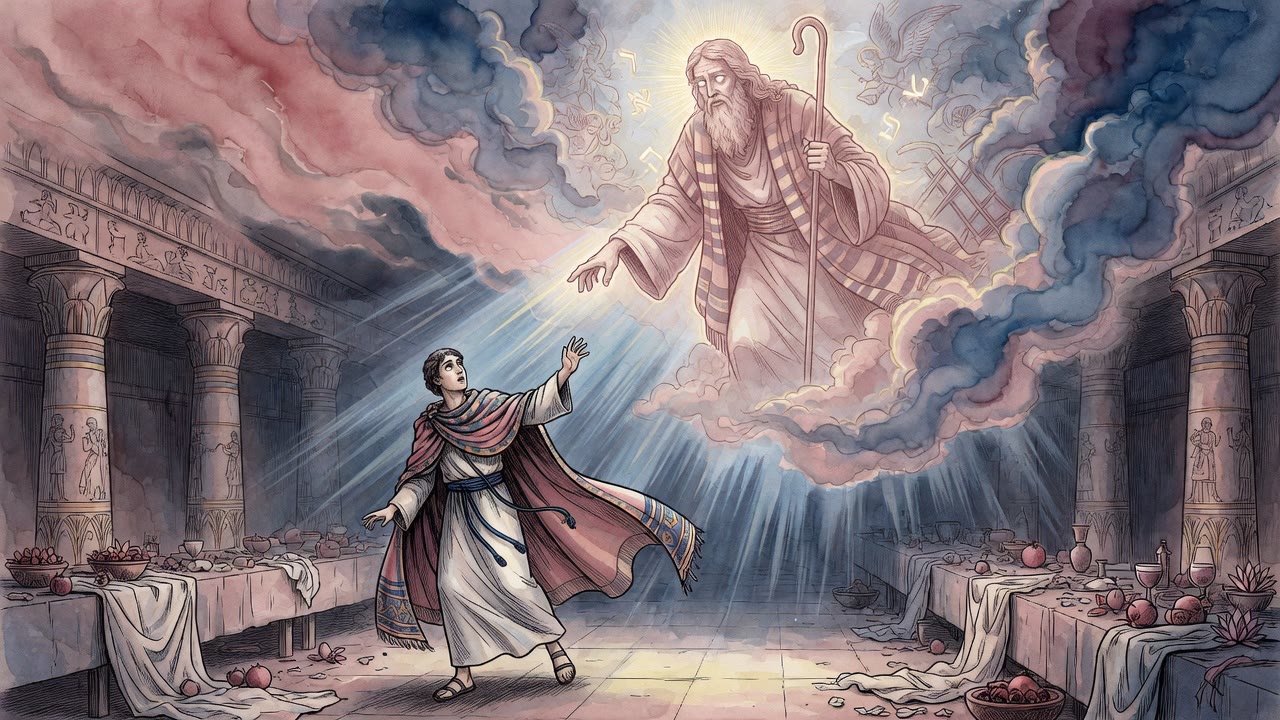
Even magic didn't work. She sent him a dish prepared with spells, hoping to ensnare him. But when the eunuch presented it, Joseph saw a vision of a man offering him a sword along with the dish. Warned, he refused to taste it. Later, when Zuleika questioned him, Joseph rebuked her, revealing that God had shown him her treachery through an angel. To prove that "the malice of the wicked has no power over those who fear God in purity," he ate the food before her eyes, trusting in the protection of God and the angel of Abraham.
Humiliated, Zuleika fell at Joseph's feet, promising to never repeat her sin. But her unholy passion persisted, and her distress made her visibly ill. When her husband noticed her decline, she feigned a pain in her heart.
In a moment of desperation, when alone with Joseph, she threatened suicide if he wouldn't yield to her. Joseph, attempting to calm her, warned that her rival, Asteho, would mistreat her children and erase her memory from the earth. But his words backfired, fueling her hope that he cared for her.
Day after day, Zuleika, whose name, according to some traditions, was indeed Zuleika, pursued him with flattery and amorous talk. "How fair is thy appearance, how comely thy form! Never have I seen so well-favored a slave as thou art." Joseph, unwavering, would reply, "God, who formed me in my mother's womb, hath created all men."
She'd compliment his eyes, his words, his hair, but Joseph remained steadfast, never even raising his gaze to meet hers. Gifts and threats were equally ineffective. He knew, "The Lord executeth judgment for the oppressed… The Lord giveth food to the hungry… The Lord looseth the prisoners… The Lord raiseth up them that are bowed down… The Lord openeth the eyes of the blind."
When she resorted to seductive behavior, he rejected her, proclaiming, "I fear my master." Zuleika, in a fit of passion, would retort, "I will kill him!" Joseph, appalled, exclaimed, "Not enough that thou wouldst make an adulterer of me, thou wouldst have me be a murderer, besides?" And then, he would declare, "I fear the Lord my God!"
Zuleika, unable to grasp his devotion, dismissed his fear of God. But Joseph countered, "Great is the Lord and highly to be praised, and His greatness is unsearchable." One time, she even took him into her chamber and covered the idol hanging above the bed, so it wouldn't witness their actions. Joseph responded, "Though thou coverest up the eyes of the idol, remember, the eyes of the Lord run to and fro through the whole earth."
He continued, "Adam was banished from Paradise on account of violating a light command; how much more should I have to fear the punishment of God, were I to commit so grave a sin as adultery! The Lord is in the habit of choosing a favorite member of our family as a sacrifice unto Himself… Also the Lord is in the habit of appearing suddenly, in visions of the night, unto those that love Him… Were I to fulfil thy desire, I would share the fate of my brother Reuben."
With these words, Joseph sought to cure Zuleika of her lust, not out of fear of punishment or public opinion, but because he desired to sanctify the Name of God before the entire world.
Finally, when she declared her desires in unmistakable terms, Joseph recoiled. "Why dost thou refuse to fulfil my wish? Am I not a married woman? None will find out what thou hast done." Joseph replied, "If the unmarried women of the heathen are prohibited unto us, how much more their married women? As the Lord liveth, I will not commit the crime thou biddest me do." This, it is said, was an example of pious men uttering an oath when tempted, seeking moral courage to control their instincts.
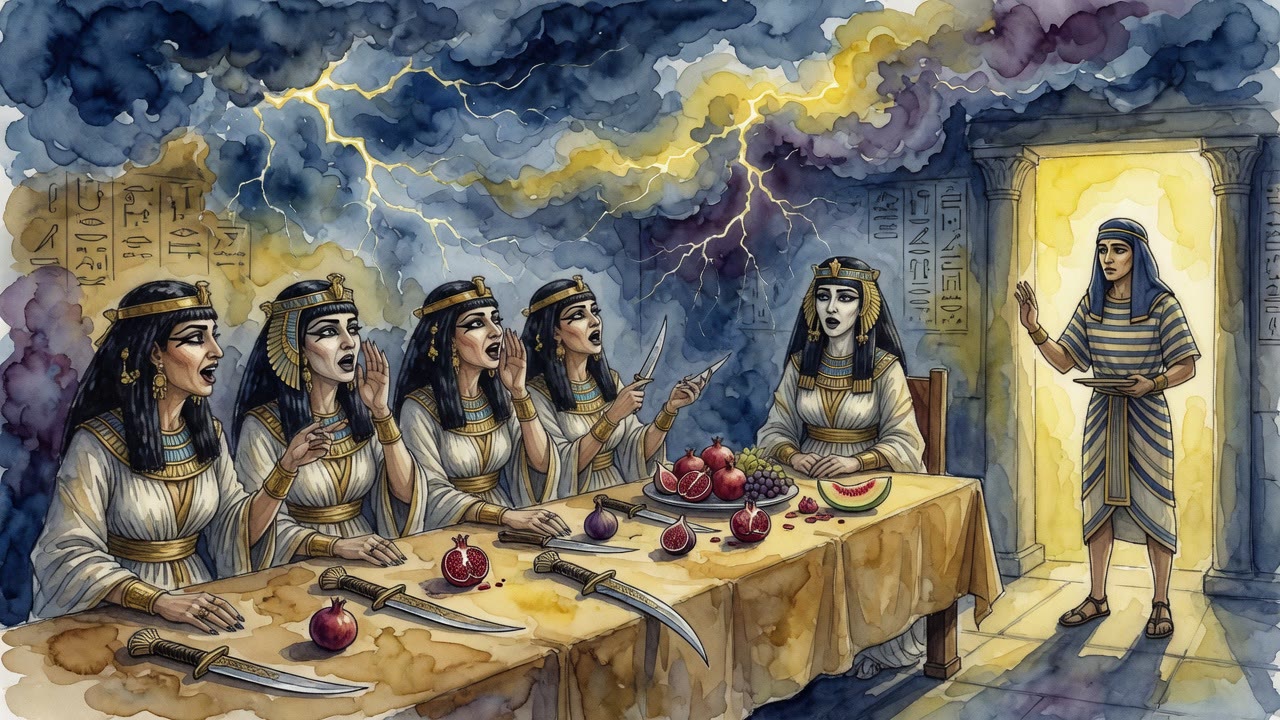
When persuasion failed, Zuleika's desire plunged her into a deep sickness. The women of Egypt came to visit, questioning her languid state. Zuleika devised a plan. She prepared a feast, placing knives at each setting to peel oranges. Then, she ordered Joseph to appear, adorned in costly garments, and serve her guests.
As Joseph entered, the women were captivated by his beauty. They became so entranced that they cut their hands with the knives, and the oranges in their hands were covered with blood, yet they were oblivious. Zuleika then revealed the reason for her suffering, explaining how she constantly saw Joseph and could not control her feelings.
The women, now understanding, suggested she simply reveal her feelings to Joseph. But Zuleika explained that she had tried everything, promising him everything, yet he remained unmoved.
Her sickness worsened. While her husband remained oblivious, Zuleika's female friends, aware of her love for Joseph, continued to encourage her to entice him. One day, she seized Joseph, but he was stronger and pushed her to the ground. Weeping and pleading, Zuleika begged him to consider the honor she had bestowed upon him and to end her suffering.
But Joseph remained steadfast. Zuleika, undeterred, persisted for an entire year, but Joseph, in his chastity, refused to even look at her. In a final act of desperation, she placed an iron shackle on his chin, forcing him to look her in the face.
What does this story tell us about temptation, resilience, and the unwavering commitment to one's beliefs? Joseph's journey is evidence of the power of faith and the strength of character in the face of overwhelming odds. It's a reminder that even when the world tries to pull us in different directions, we have the capacity to choose our own path, guided by our principles and our connection to something greater than ourselves.

 Click for full size