Jacob the Patriarch Who Never Stopped Fighting
Jacob led six thousand swordsmen against the Amorites and fought from sunrise to sunset. He invented tithing and wrestled an angel.
Table of Contents
 Click for full size
Six Thousand Swordsmen at Dawn
The Amorite kings thought Jacob was an easy mark. He was a patriarch with herds and tents and sons, not a general with an army. They came at night and plundered his livestock. They made a serious miscalculation.
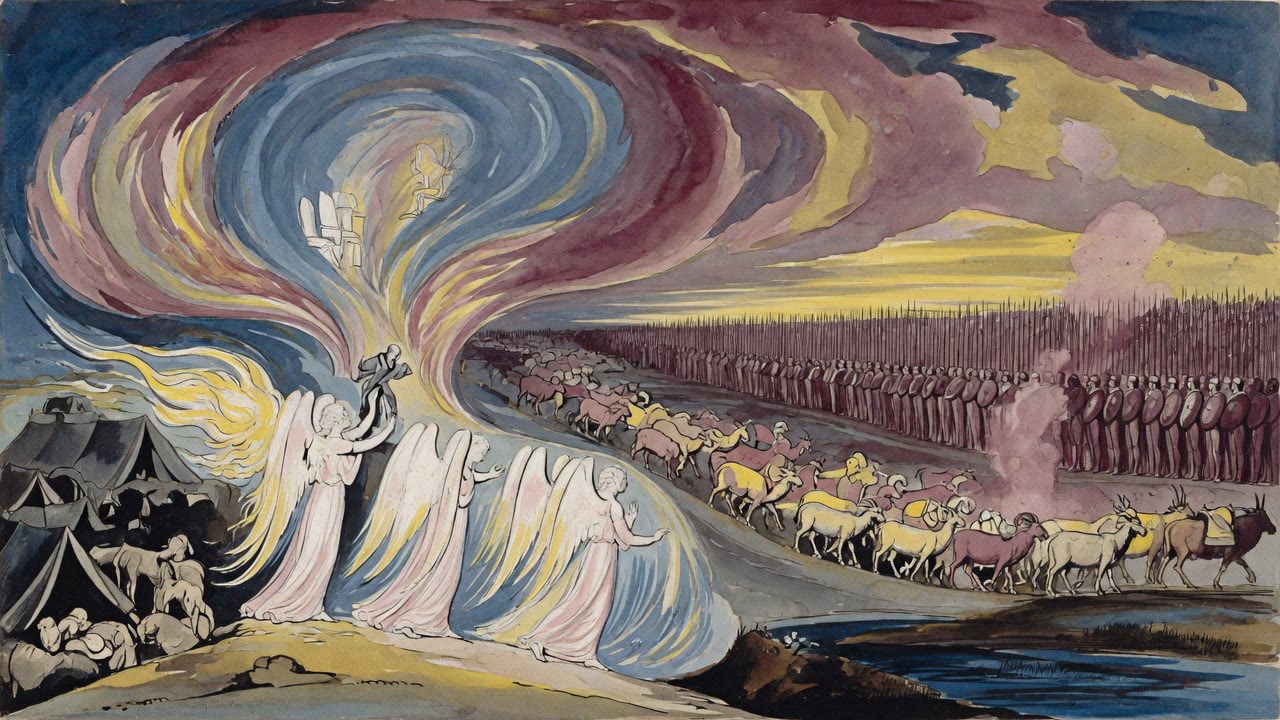
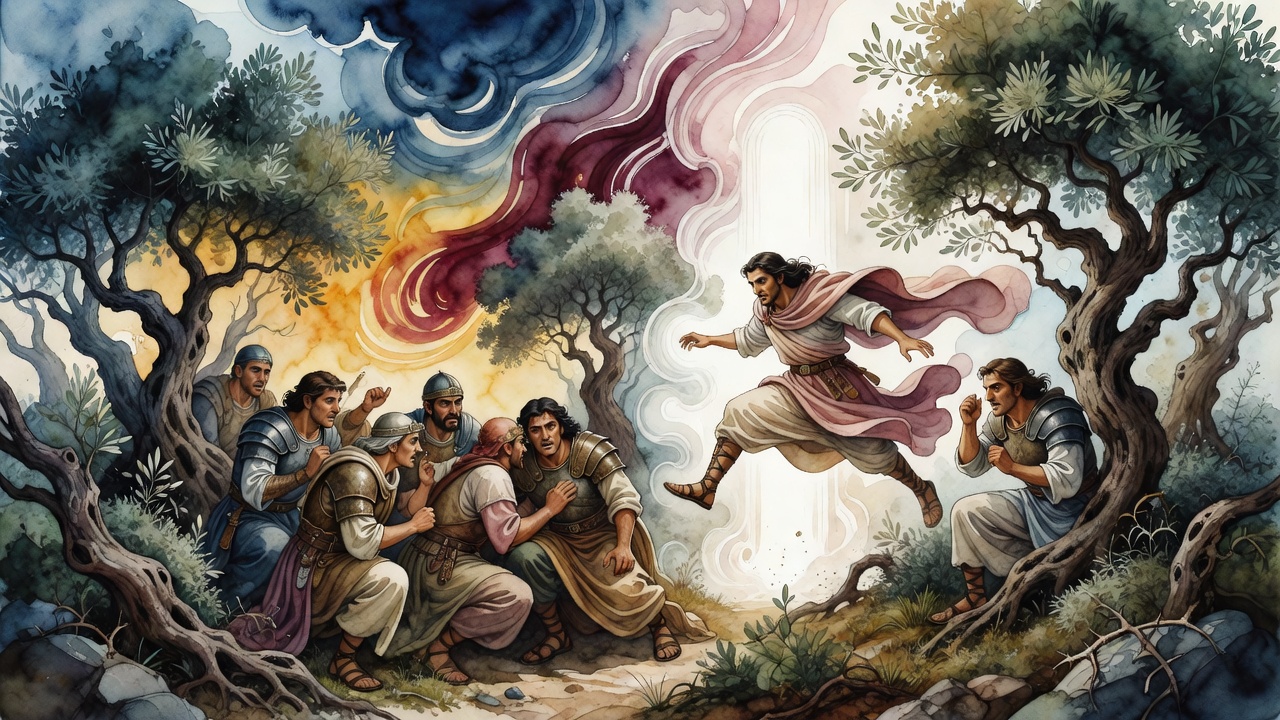
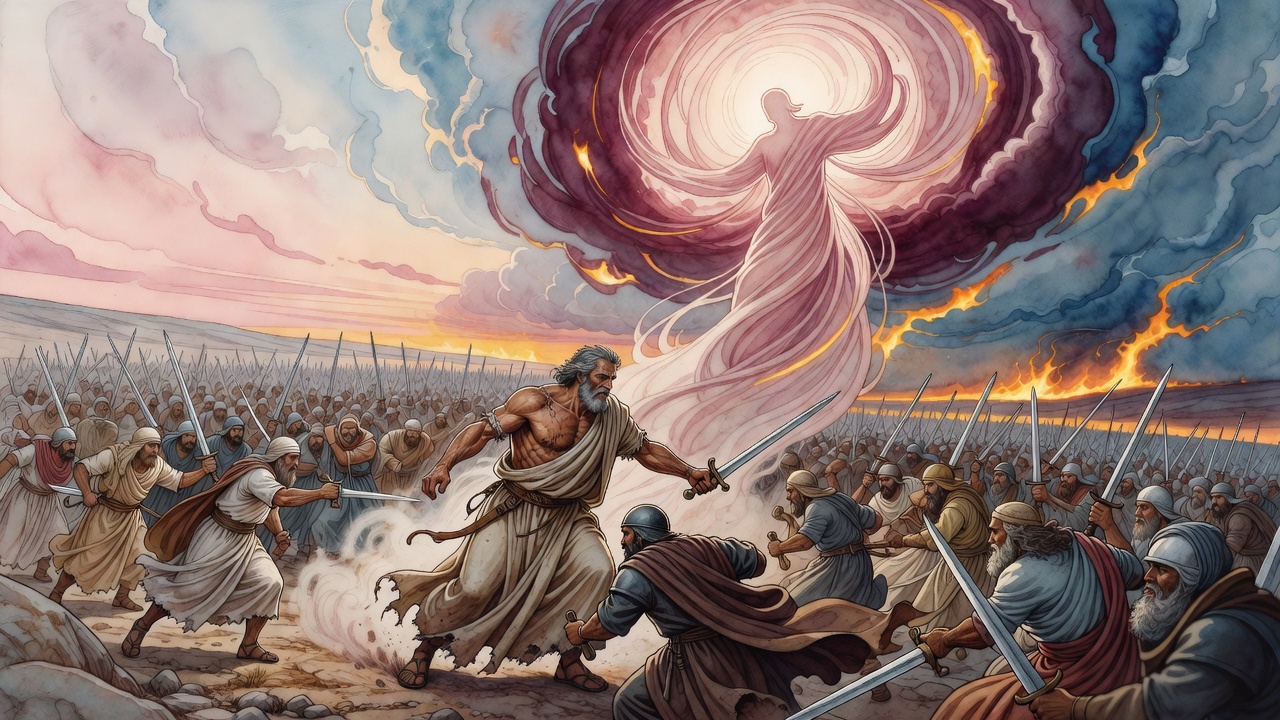
Jacob rose from his house with his sons and six thousand swordsmen, pursued the Amorite kings across the hills of Canaan, and killed four of them. The battle lasted from sunrise to the following sunset. The Book of Jubilees, composed in second-century BCE Judea and preserved among the Dead Sea Scrolls, is specific about the scale of it: blade to blade, Jacob's sons fighting alongside him, a full day of combat in the open field. Everything that was taken was recovered. The Amorite kings who survived did not come back.
Most often Jacob is remembered as the man of tents who stayed home while Esau hunted. That picture holds, and it leaves out half the man. The younger Jacob had slept on rocks in the wilderness, crossed rivers alone at night, and wrestled an angel until dawn without letting go. The older Jacob could raise six thousand swords and lead them personally. He had simply had no occasion to demonstrate it in the years that passed quietly.
The Practice He Invented
After Bethel, after the ladder and the voice from heaven, Jacob made a vow: if God would be with him and bring him back safely, he would give a tenth of everything he received. The tradition treats this as the origin of tithing. Abraham had tithed once, after the battle with the four kings, giving a tenth of the spoils to Melchizedek. But Jacob committed to tithe prospectively, before the wealth existed, from everything that was coming rather than from what had already arrived.
The Midrash on this moment notes what was at stake in the vow. Jacob was making a structural claim about the relationship between human prosperity and divine ownership. Not a post-hoc acknowledgment, but a standing practice: everything I receive, one tenth belongs to you. It was not a small thing to commit to while sleeping on a rock in the wilderness with nothing to his name but a staff. Jacob made the commitment precisely there, before he had anything to give.
What Isaac Saw When He Blessed the Wrong Son
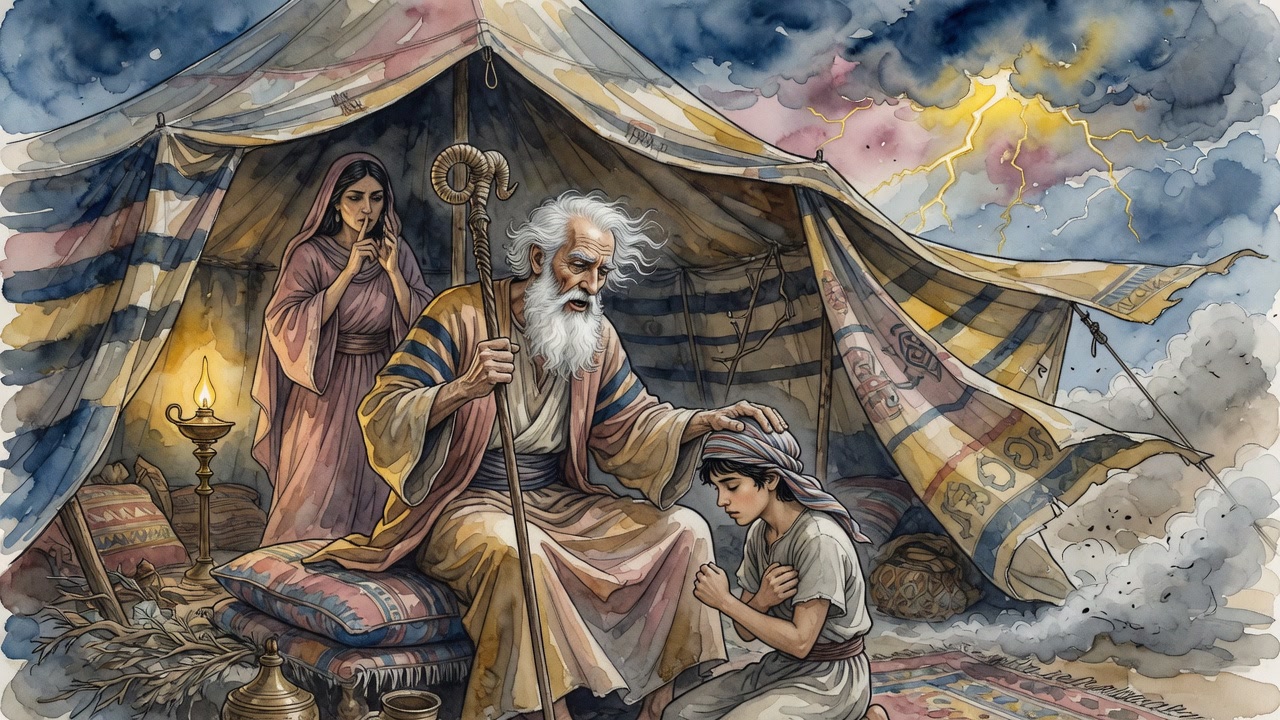
Isaac blessed Jacob thinking he was Esau. He was old, his eyes were dim, and the goatskin on Jacob's hands felt enough like Esau's rough skin to deceive him. The tradition has always been uncomfortable with this deception. The rabbis asked: did Isaac know, somewhere beneath the surface of his senses, who was in front of him?
The account of Isaac's offering of Jacob in the Midrashic tradition touches something the plain text does not fully resolve. Isaac smelled Jacob's garments and said he smelled the field. Some rabbis read this as the smell of the Garden of Eden, which clung to the righteous. The blessing that followed was specific about kingship, about nations bowing, about the cursing of those who cursed and the blessing of those who blessed. Whether Isaac knew or did not know, the blessing was real and it went where it went.
The Blessing That Cost Everything
The night crossing at the Jabbok was not an accident and was not a simple test. Jacob was about to meet Esau after twenty years of exile, with all the wealth he had accumulated and all the family Laban had given him, and he had sent everyone across the ford and stayed alone in the dark. The man who wrestled him until dawn was not winning. As the light came up, the man struck Jacob's hip to end the struggle and it still did not end the struggle. Jacob held on. He demanded a blessing before he would release his grip.
He limped for the rest of his life. The sinew of his hip was damaged and did not heal. The blessing he received came with a permanent mark. He became Israel at a cost he carried in his body every day thereafter, in the slight asymmetry of his gait, in the way he moved through the world after the Jabbok. The six thousand swordsmen and the ladder at Bethel and the vow of tithing and the long exile with Laban all belong to the same life as the limp. Jacob, the man of tents, had done all of it.
← All myths