Judah Charged First and His Face Was a Lion's Face
Seven Canaanite kings ringed the camp at Shechem. Jashub rode in iron, shooting from both hands. Judah ran at him first.
Table of Contents
The kings of Canaan had waited long enough. Jacob's sons had come back to Shechem, to the field their father had bought from Hamor, the city two of them had once emptied of its men. The city had been rebuilt. About three hundred souls lived there. The surrounding rulers decided the Hebrews would not finish the job a second time.
 Click for full size
Jashub of Tapnach sent to his neighbors. Elan of Gaash. Ihuri of Shiloh. Parathon of Chazar. Susi of Sarton. Laban of Bethchoran. Shabir of Othnay-mah. They assembled like sand on the seashore and divided into seven camps, seven divisions against the household of Jacob. Their messenger came with a declaration. Come out to the plain. Answer for Shechem.
Jacob Spread His Hands
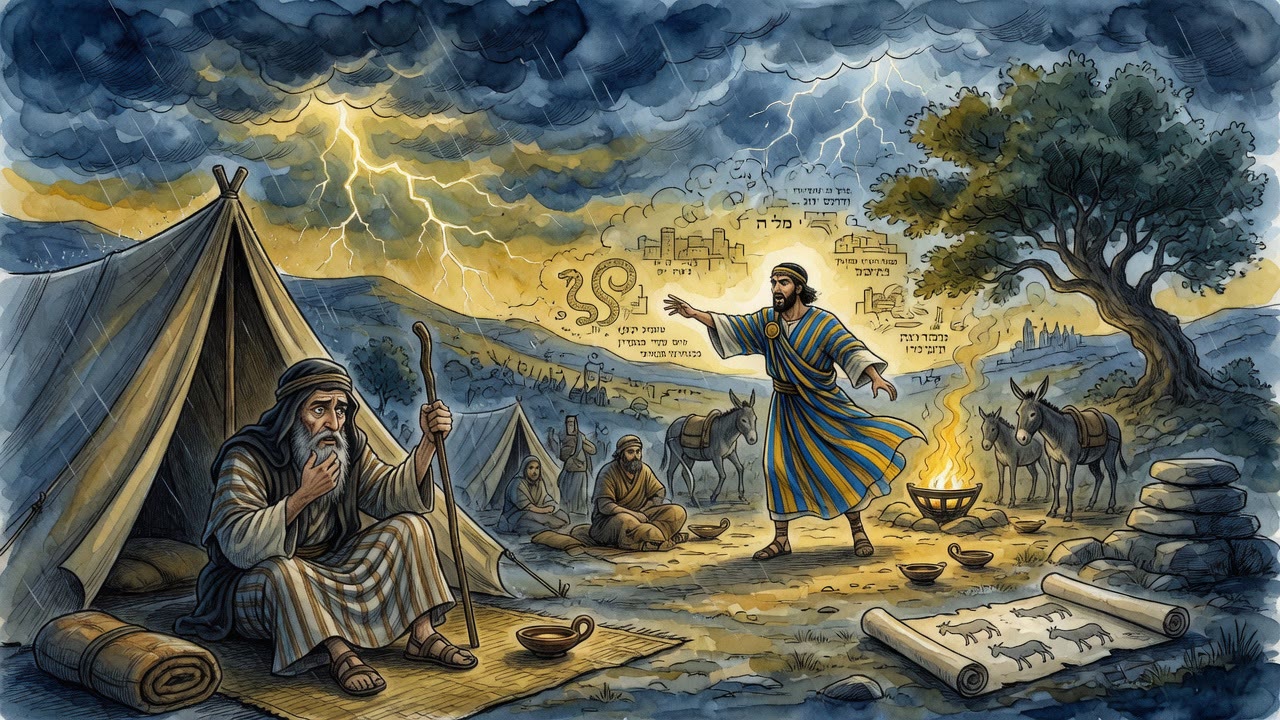
They had only just come from Bethel. Jacob was ninety-nine when he built the altar there, as the Lord had told him. Deborah, Rebecca's nurse, died under an oak, and he named the place Allon-bachuth, oak of weeping. Then word came that Rebecca herself had died in Hebron at one hundred and thirty-three years, and Jacob wept for his mother and for the nurse together. From that oak they had turned toward the fat pasture at Shechem. Now seven armies stood in the way.
Ten of Jacob's sons girt on weapons. A hundred and two servants stood with them. Jacob went with them to the heap of Shechem and spread his hands.
"O God, deliver my sons from the hand of their enemies who are coming to fight them this day. Give them strength of heart. If You mean to take their lives, take them by Your own ministers, not by the kings of the Amorites."
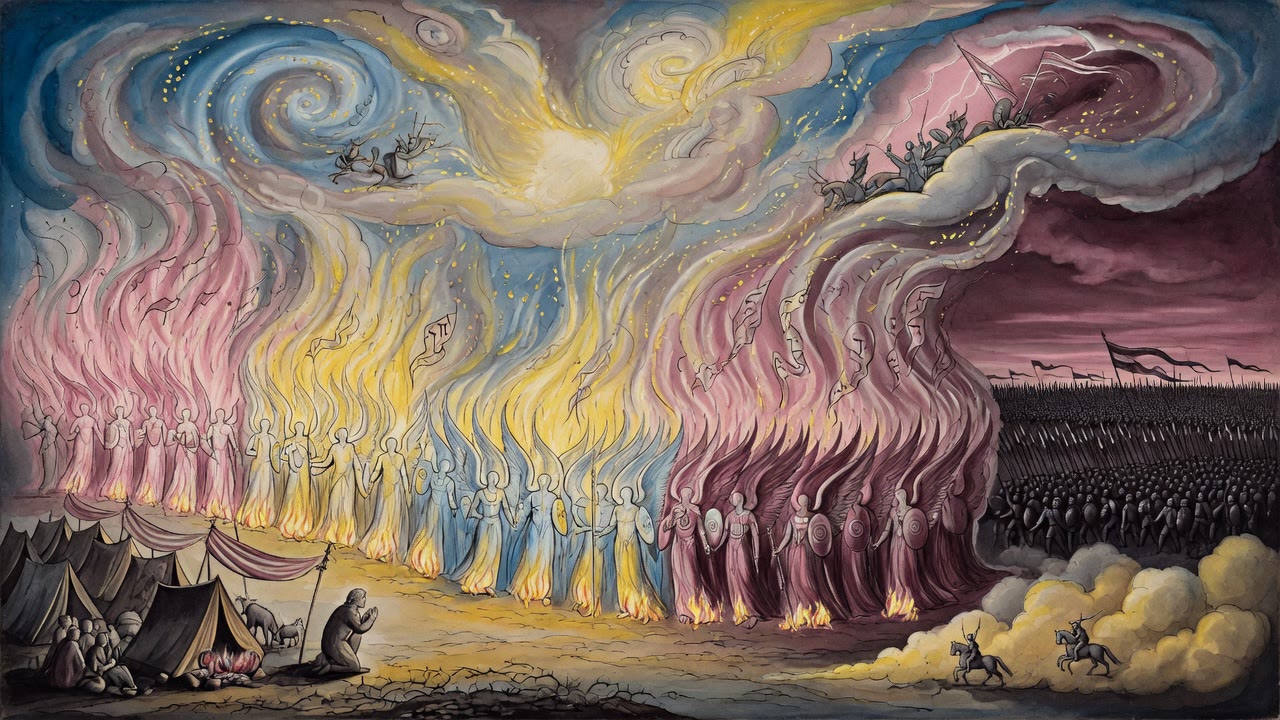
When he ceased, the earth shook. The sun darkened. The Lord impressed the kings with terror and made them hear the voice of chariots, the voice of mighty horses, the voice of a great army accompanying the sons of Jacob. There were one hundred and twelve men advancing. The kings heard a host. They were inclined to retreat, then refused, because it would be a disgrace to retreat from the Hebrews twice.
Judah Ran First
Judah ran first before his brothers, ten of his servants with him, toward the kings. He did not wait for a battle line. He did not call a council. He ran.
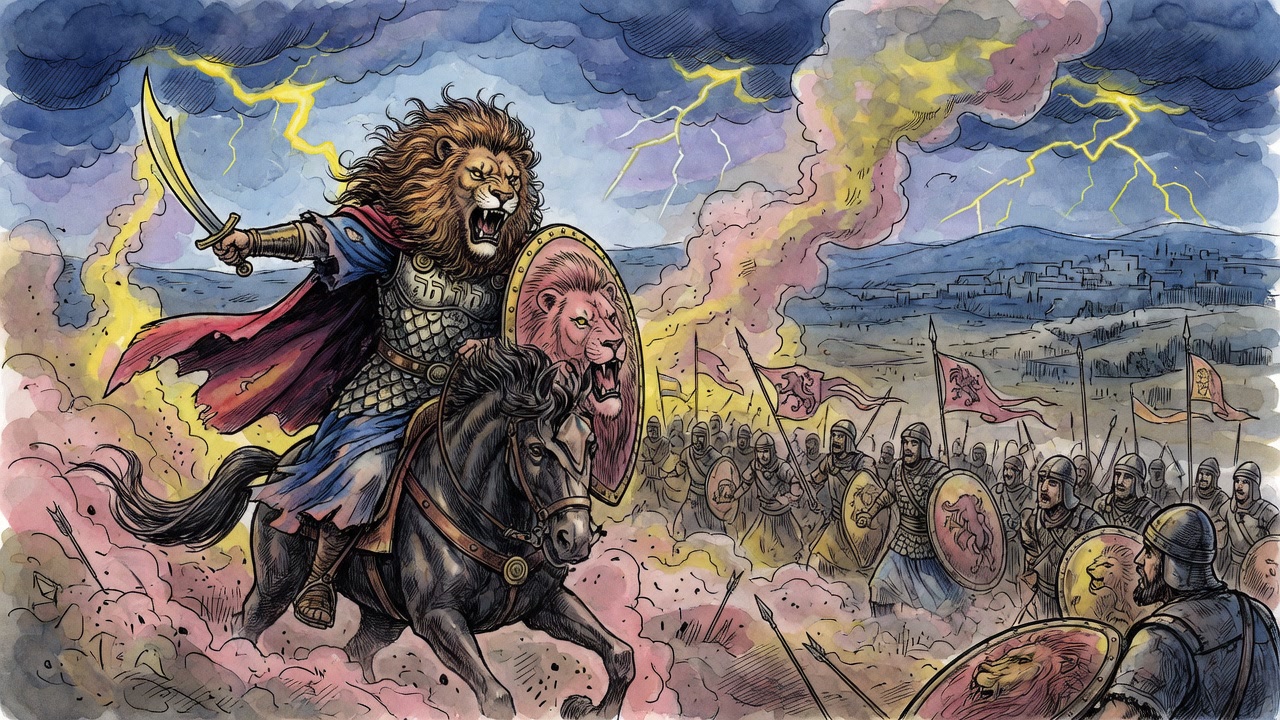
Jashub came forth to meet him, a valiant man covered with iron and brass from head to foot, riding a powerful horse, shooting arrows with both hands from before and behind, and he never missed. The distance between them was about thirty cubits. Arrows came. The Lord bound Jashub's hand, and the arrows rebounded on his own men. Jashub kept advancing anyway.
Judah's wrath kindled. He ventured his life. His face was a lion's face. His eyes were fire. The seven armies looked at him, and their hearts melted, and their strength failed. They had modeled sand. They had not modeled this.
The Stone of Sixty Shekels
Judah took up a large stone from the ground. Its weight was sixty shekels. He ran at Jashub and struck him on the shield. Jashub was stunned. He fell off the horse. The shield burst asunder and sprang about fifteen cubits, and fell before the second camp. The kings saw at a distance what Judah had done, and they were terribly afraid.
Judah drew his sword and smote forty-two men of Jashub's camp. The whole camp fled and left their king prostrate. Jashub rose in terror and stood opposite Judah, shield toward shield. He took his spear to strike Judah on the head. Judah got his shield up. The spear split it.
When Judah saw the split shield, he drew his sword and smote Jashub at the ankles and cut off his feet. Jashub fell. The spear fell from his hand. Judah picked it up, severed the head, and cast it next to the feet.
The Head Beside the Feet
When the sons of Jacob saw what Judah had done to Jashub, they all ran into the ranks of the other kings. They caused fifteen thousand to fall, and they smote them as if smiting at gourds, and the rest fled for their lives. Judah was still standing by the body. He stripped Jashub of his coat of mail. He took off the iron and brass.
The coalition that had assembled from every city in the region to destroy the household of Jacob was broken in a day. Jacob lifted his hands again and blessed the Lord who had delivered him from his enemies. His sons were fighters. It was Judah who had moved first, before the formation was set, before anyone else had decided that running toward an armored king was an action a man could survive.
Years later Jacob would call him a lion's whelp (Genesis 49:9). On the plain before Tapnach the kings had already seen the face.
← All myths