How the Sons of Jacob Each Found Their Wives
In the year Joseph was sold, Jacob was too broken to arrange marriages. His sons had to find their own wives in grief's shadow.
Table of Contents
 Click for full size
The Year the Matchmaking Stopped
The year Joseph disappeared was the year Jacob stopped being a father in any practical sense. His sons had thrown their brother into a pit, had sold him to traders, had dipped his coat in goat's blood and carried it home. Jacob tore his garments, put on sackcloth, and refused to be comforted. He would go down to his grave mourning, he said. The house of Israel was a house of inconsolable grief, and there was no father left to arrange the marriages his sons needed.
So they arranged their own, each in his own way, each carrying the guilt of what they had done to Joseph into the families they now built in his absence.
Judah Marries First Without Asking
The brothers looked to Judah. He was their spokesman, their chief voice since the pit, the one who had said sell him rather than kill him and had counted that as mercy. They asked him to marry first, to lead in this as in everything else. Judah went to Adullam, to his friend Hirah the merchant, and there he met Alit, the daughter of a Canaanite trader named Shua. He married her without consulting his father, quickly, as if speed would cover the evasiveness of the act. Two sons from this marriage died for their wickedness. Then Alit died too. The family Judah built carried the cost of the rescue he had performed halfway and then abandoned.
Simeon, who had been with Levi in the destruction of Shechem, had a harder situation. He had promised a Canaanite woman named Bunah that he would come back for her after completing that violent business. The massacre happened. Simeon returned and kept his word. He married Bunah, and she bore him a son. The tradition treats this as both a kept promise and a warning: the oath was honorable, but the circumstances that produced it were not.
The Captive and the Handmaid
Not all of the brothers married Canaanite women. Issachar and Zebulun both married daughters of Jobab, a man of Midian. Zebulun's wife had been a slave, purchased and then freed before the marriage. Issachar's wife came with a story of captivity behind her. Neither marriage was arranged with ceremony. Both were made with whatever materials the broken household could provide.
Dan and Gad took wives from the daughters of the men around them. Naphtali, according to this tradition, married a woman whose father had brought her out of Mesopotamia. Asher married Hadurah, a widow with a daughter from her first marriage. That daughter, Serah, would live long enough to identify Joseph's bones in Egypt generations later, one of those figures the tradition keeps alive across impossible spans of time because there is a specific task she alone can perform.
The Amulet Thrown Toward Egypt
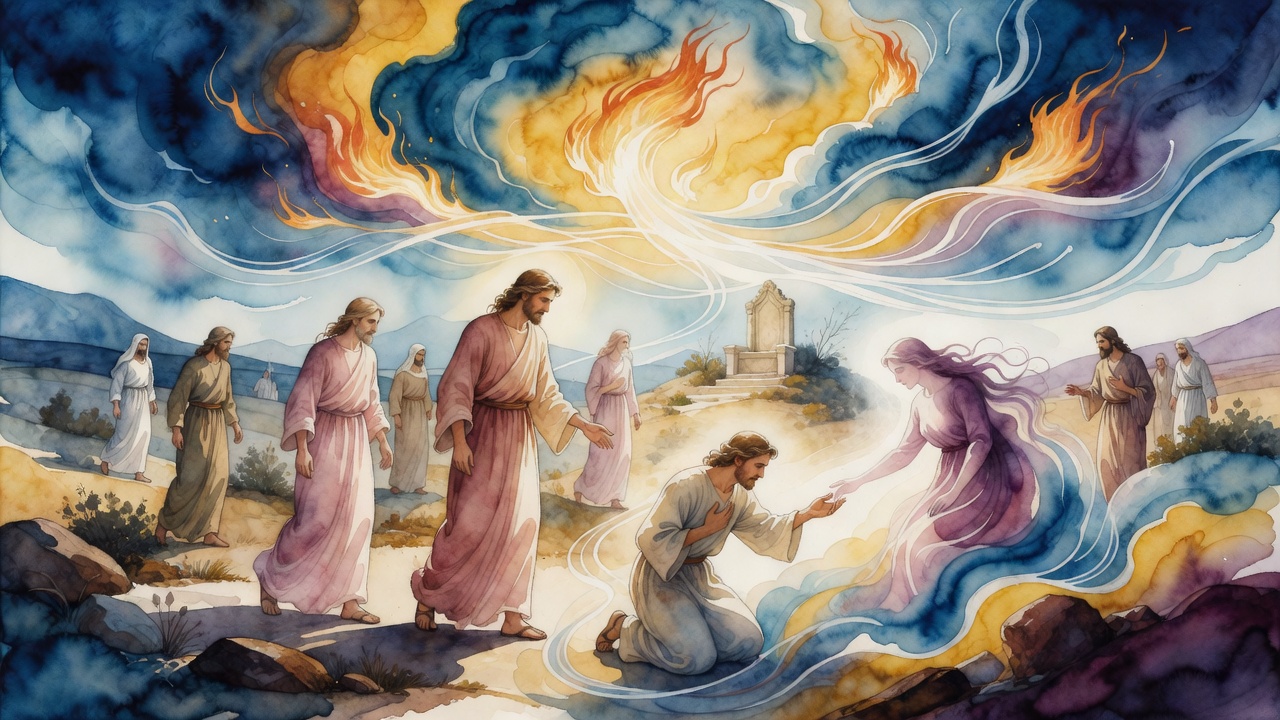
Benjamin was the youngest, and his story reaches the furthest. He married Mechalia, the daughter of Aram the son of Zibeon, but the tradition gives him something stranger than a wedding ceremony. In Egypt, a woman named Asenath had fallen in love with Joseph when she saw him. She was the daughter of Potiphera, the priest of On, and she had no way to reach him directly. She wrote his name and her own on a gold plate and threw it from her window toward him as he passed through the city below. The plate, somehow, found its way to Benjamin. He wore it as an amulet.
When Joseph was brought out of prison and raised to second in the kingdom, Pharaoh gave him Asenath as a wife. The amulet Benjamin had worn connected the story in a circle: the woman who had thrown her love toward Joseph across an impossible distance became the mother of Manasseh and Ephraim, the two tribes that would bear Joseph's portion in the inheritance of the land.
← All myths