Judah's Hidden Threats and Benjamin's Peaceful End
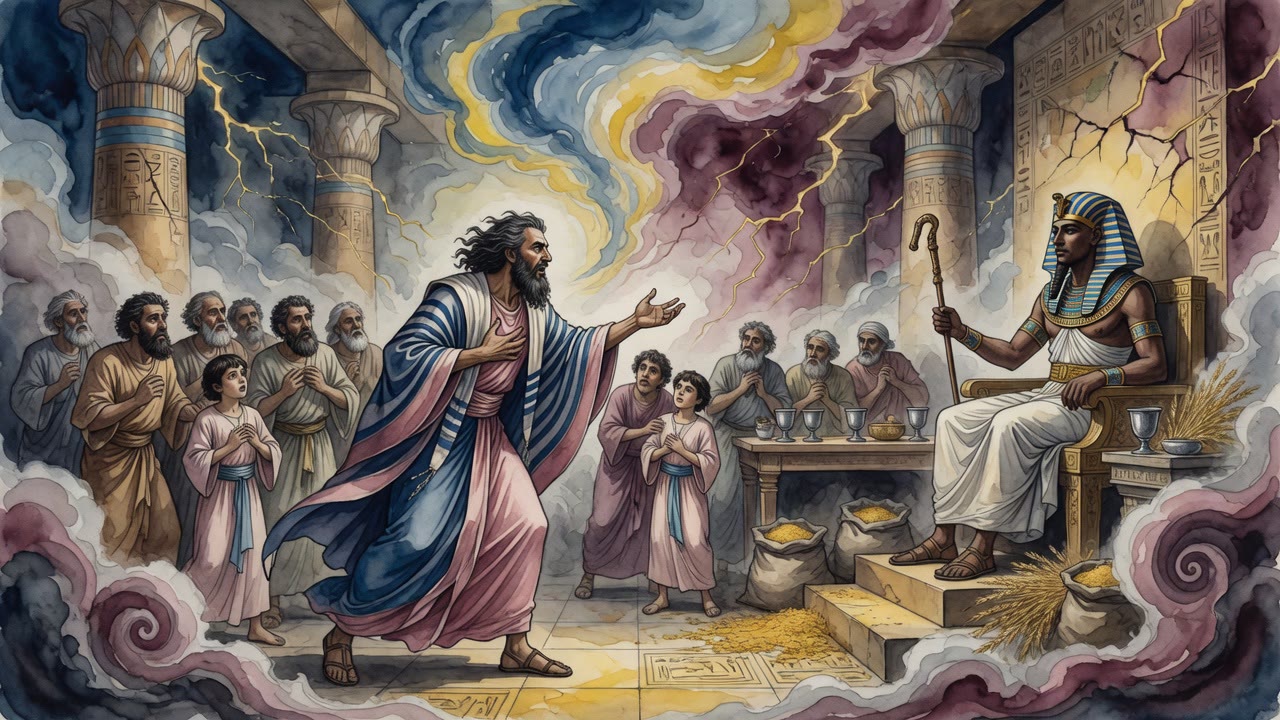
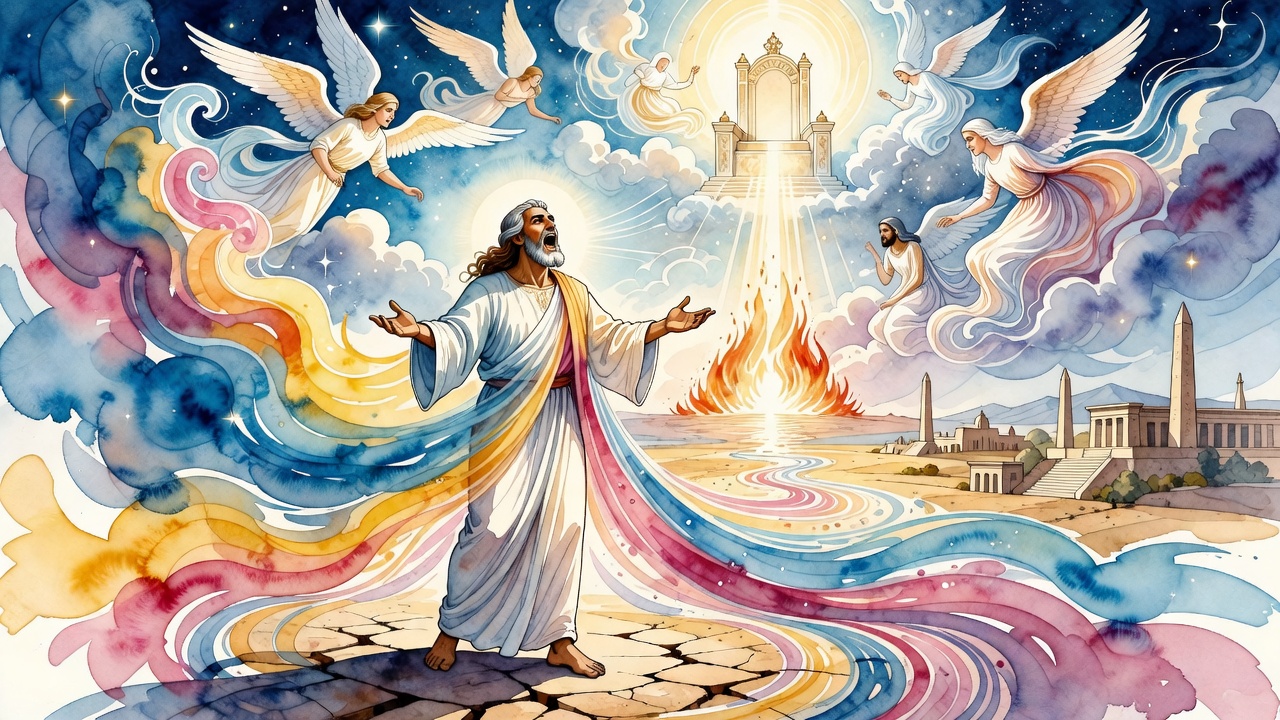
Judah did not kneel. He named the kings who had taken women from this family, and the viceroy who held Benjamin had to keep his face still.
Table of Contents
Judah stood before the viceroy of Egypt with Benjamin already taken, and he did not kneel.
 Click for full size
He was asking for his youngest brother's life. The man on the throne had all the power in the room. Judah still spoke as if the family behind him had a history the throne should fear.
Judah Stood and Did Not Kneel
"This did they do, but thou didst therefore account them as spies." He reminded the viceroy of his own earlier accusation, and then he pressed on the wisdom the court liked to boast about.
"We have heard the report of thy wisdom. How, then, canst thou look upon their countenances and declare them to be spies? Especially as we have heard thou didst interpret Pharaoh's dream, and didst foretell the coming of the famine."
The flattery had an edge. A man who could read seven fat years should have been able to read eleven brothers. Judah was not only begging. He was testing the judgment of the man who held Benjamin.
He Named Pharaoh and Abimelech
Then he opened the family record.
"Hast thou not heard, and dost thou not know, what our God did unto Pharaoh when he took our mother Sarah unto himself? Or what happened unto Abimelech on account of her?"
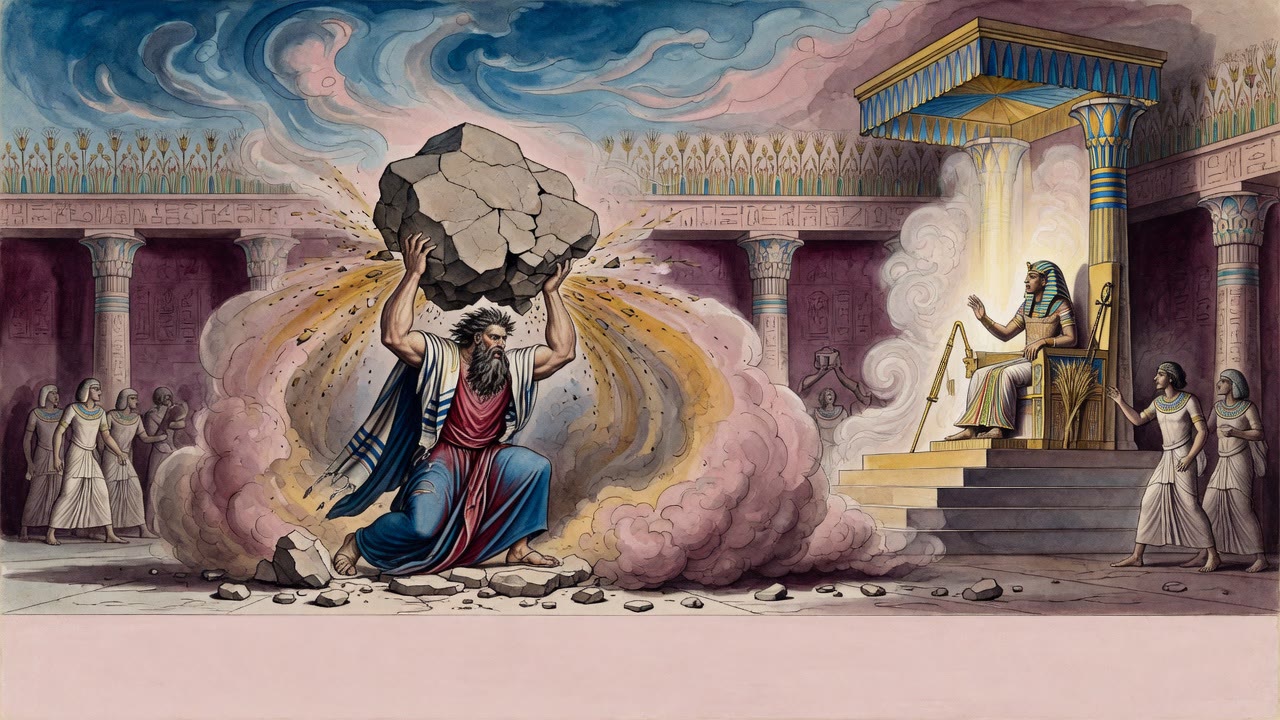
He named what Abraham had done to the nine kings of Elam with only a small band of men. He named what his brothers Simeon and Levi had done to eight cities of the Amorites on account of their sister Dinah.
He was cataloguing, for the benefit of this Egyptian official, what happened to people who took members of this family against their will. "Benjamin consoled them for the loss of Joseph. What, then, will they do unto him that stretcheth forth the hand of power to snatch him away from them?"
The room heard a petition. The throne heard a warning.
Joseph Heard Himself Called Dead
The viceroy was Joseph. He had not revealed himself. He sat in Egyptian linen and listened to his brother describe the family's capacity for violence in defense of its own, and he had to hold his face still.
Judah told him that Benjamin had been the consolation of his brothers for the loss of Joseph. He said this to the man he had sold into slavery. He said this to the man whose loss he was describing as the wound Benjamin had been salving for twenty years.
Joseph heard his own story told back to him as evidence of Benjamin's importance. The five seconds after that sentence were the ones he could not survive in costume. He cleared the room. He revealed himself. The brothers who had put him in a pit now had to look at the face they had sold.
Benjamin Watched the Room Break
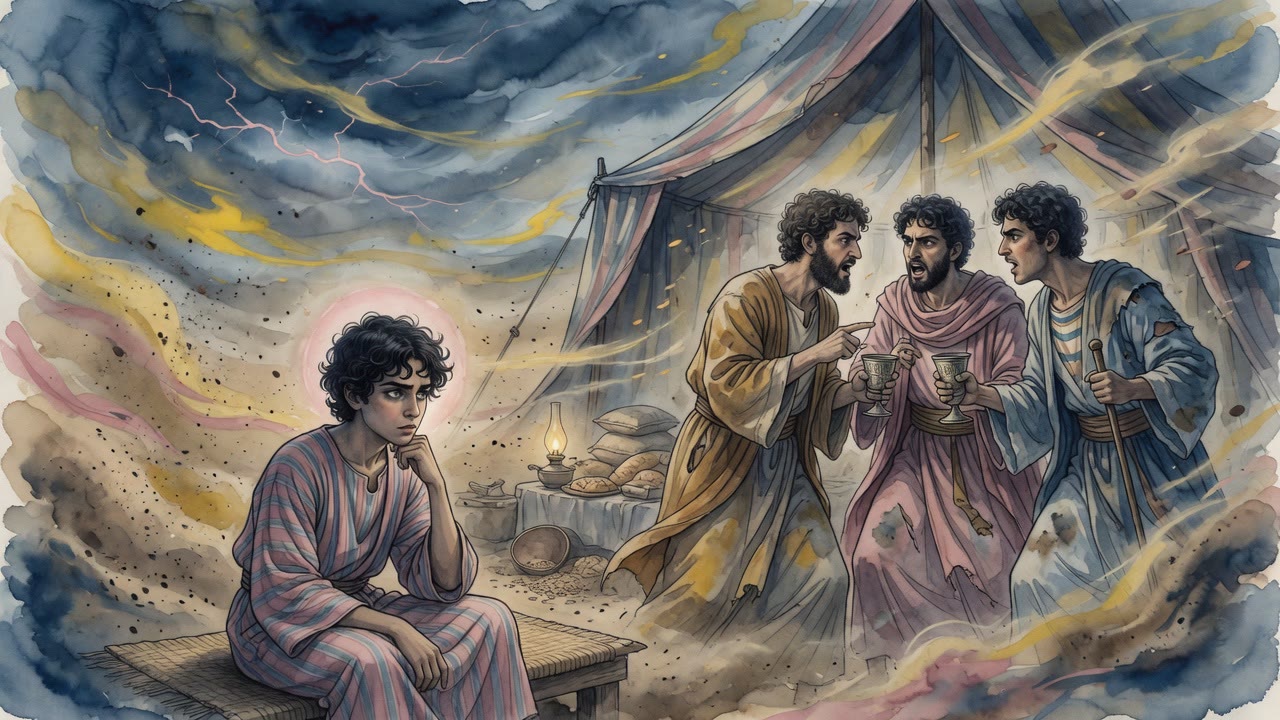
Benjamin had been in the room for all of it. He had heard Judah's speech, the historical precedents, the veiled threats, the family record laid out before a stranger who turned out not to be a stranger. He had watched Joseph weep. He had learned, in that hall in Egypt, that the brother he had mourned his entire life was alive and powerful and had been testing the family to see whether they were still who they were when they sold him.
He carried that hour for the rest of his life. The speech. The names of dead kings. The moment the viceroy's face broke. The sound of Judah staking everything on a youngest brother who had not even been born when Joseph went into the pit.
He Died Asking for Hebron
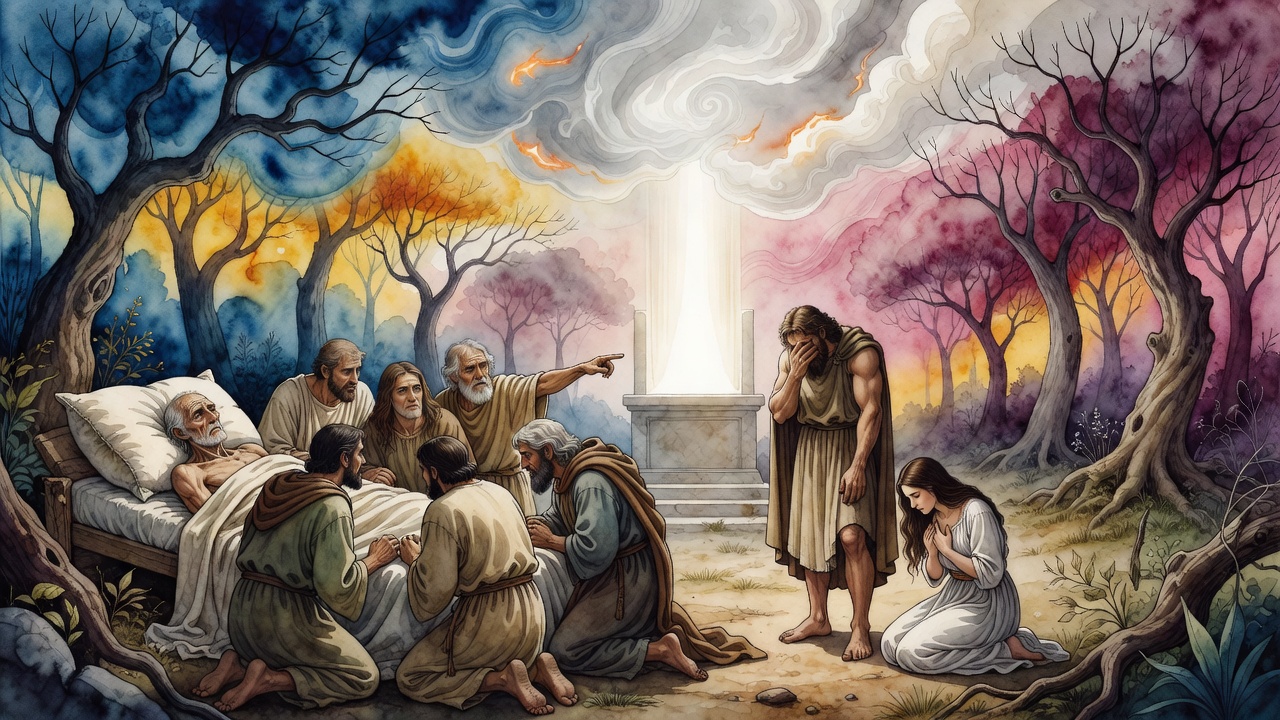
At one hundred and twenty-five years old, surrounded by his children, Benjamin told them what he remembered. "As Isaac was born unto Abraham in his old age, so was I born unto Jacob when he was stricken in years. Therefore I was called Benjamin, the son of days."
He said his mother Rachel had died at his birth, and Bilhah her slave had suckled him. He said Rachel had gone twelve years after Joseph without another child, had prayed and fasted twelve days, and then had borne him. He said he had seen his brother Joseph, whom he had thought dead, ruling Egypt with a name he had not been born with. He said he had seen Judah speak for him in a room where they were powerless and leave with all of them free.
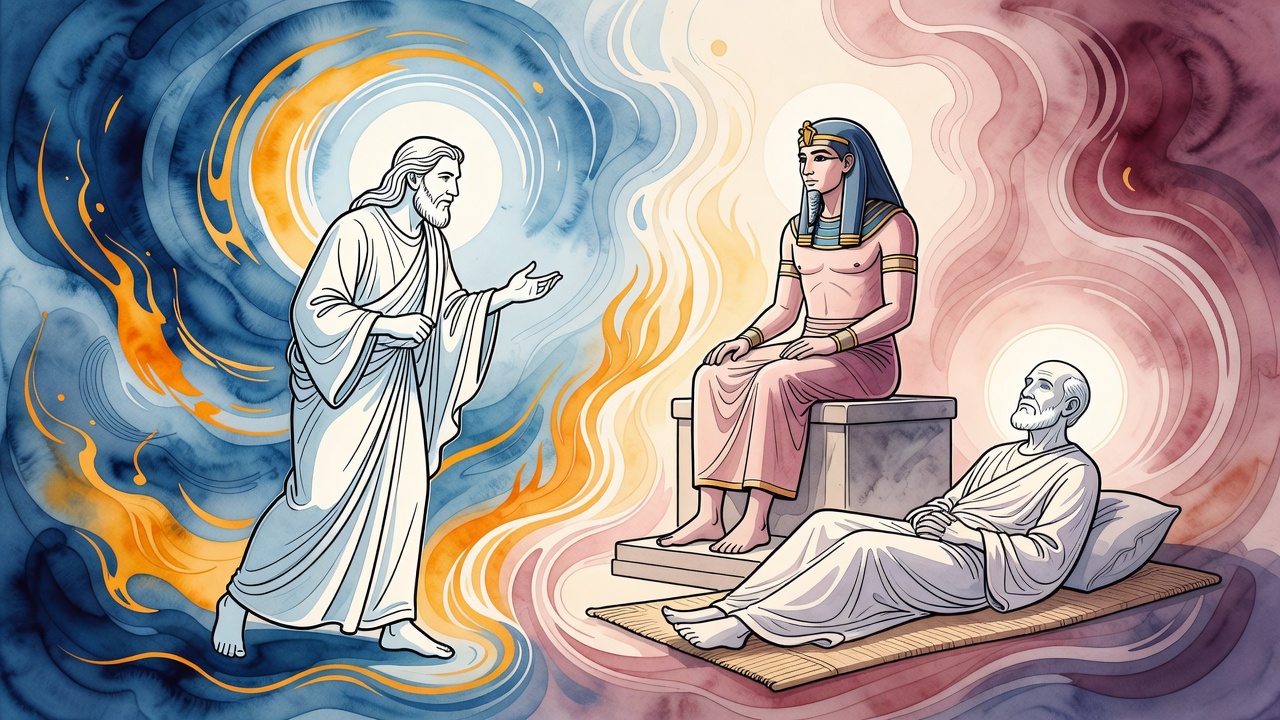
When he had finished speaking, he kissed his children and commanded them to bury him in Hebron, with his fathers. Then he sank into sleep and died. His sons carried him as he had asked.
His end was peaceful. His sons lifted him and walked him toward Hebron. The cave that held Abraham and Isaac opened for a man who had heard Judah threaten a throne and then watched that throne weep. Benjamin went in with that hour still in his mouth.
← All myths