Abraham Reasoned His Way to God Without a Vision
In Chaldea the sun and moon were gods. Abraham watched them drift and asked who gave them their orders. The city turned on him.
Table of Contents
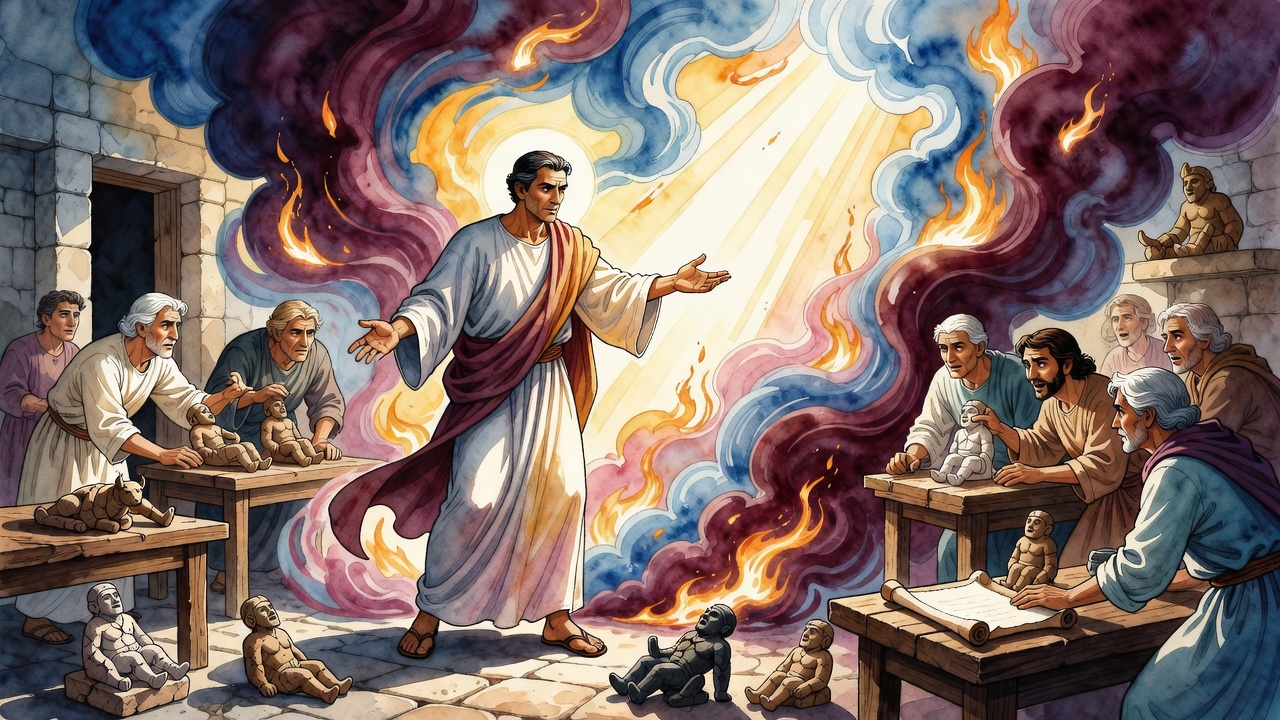
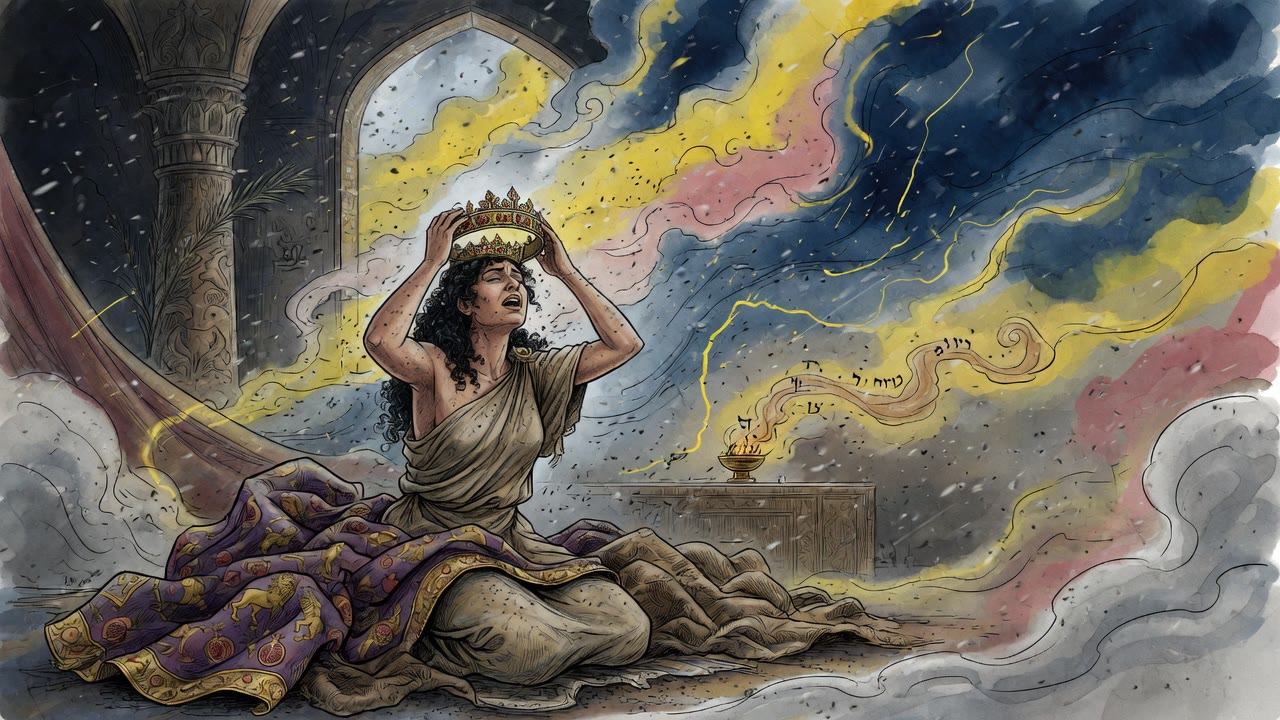
The priests of Chaldea called the sun a god. They called the moon a god. They had tablets for the paths, temples aimed at the risings, and a whole city's work timed to what moved overhead. Abraham stood in the same courtyard and watched the same sky. No voice had come to him yet. No vision. He kept count anyway.
 Click for full size
The sun went down when the tablets said it should not. The moon thinned itself on no schedule a god would choose. The stars drifted from their places as the seasons turned. If these were masters, they were masters who could not keep their own feet.
The Stars Could Not Steer Themselves
Abraham followed the thought all the way down. If the heavenly bodies had power of their own, they would take care of their own motions. They would go straight. They would not wander, sink, and slip. They did not. So they were not giving orders. They were taking them.
Land and sea went irregular too. Floods. Winds. The same pattern: things that bless a harvest only when something else tells them to. Servants, then. Not gods.
Which left one question, standing in the dark with no prophet to answer it. Who commands them? To that one, Abraham said, we ought to offer honor and thanks. He had reasoned his way there without a vision. The sky had been enough.
Chaldea Raised a Tumult
He did not keep the conclusion in the courtyard. He published it. One God, Creator of the universe. The others, if they helped anyone at all, helped only by appointment, not by their own power.
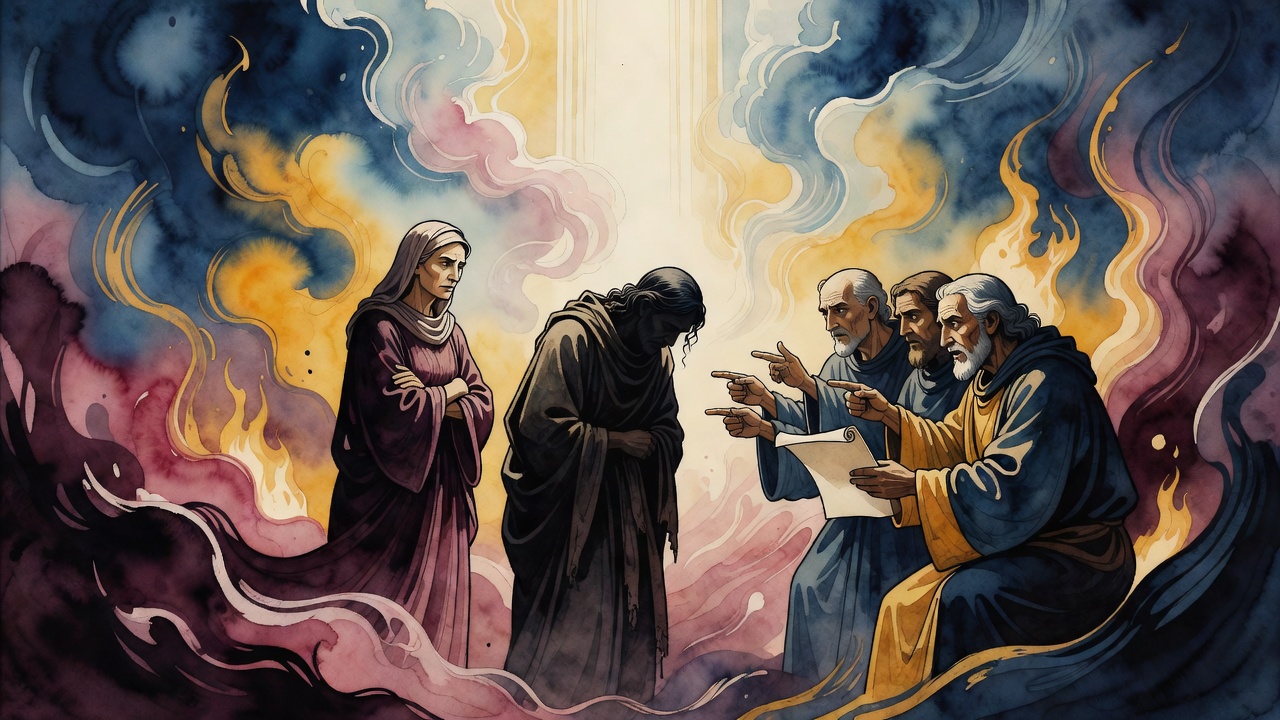
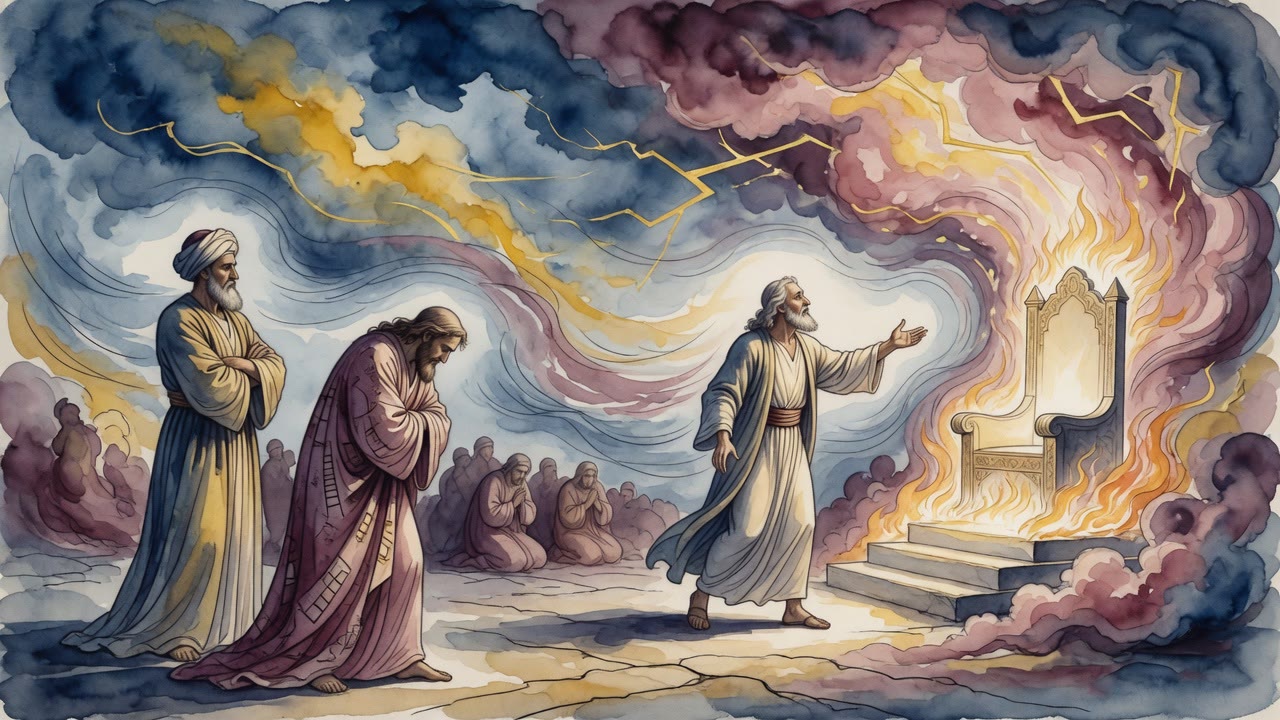
The Chaldeans heard it as an attack on the temples, the priests, the calendar, the king who stood under those gods. Mesopotamia raised a tumult against him. This was not a school argument. A man who said the stars were servants was saying the city's gods were staff.
They turned on him. Remaining in Ur meant dying for a sentence he would not unsay. He left the country. At the command of God, and with God's help, he went into Canaan. He was seventy-five. He built an altar there and offered a sacrifice, the first worship of a man who had argued the stars down to servants and then met the One who moved them.
They Threw Him in the Furnace
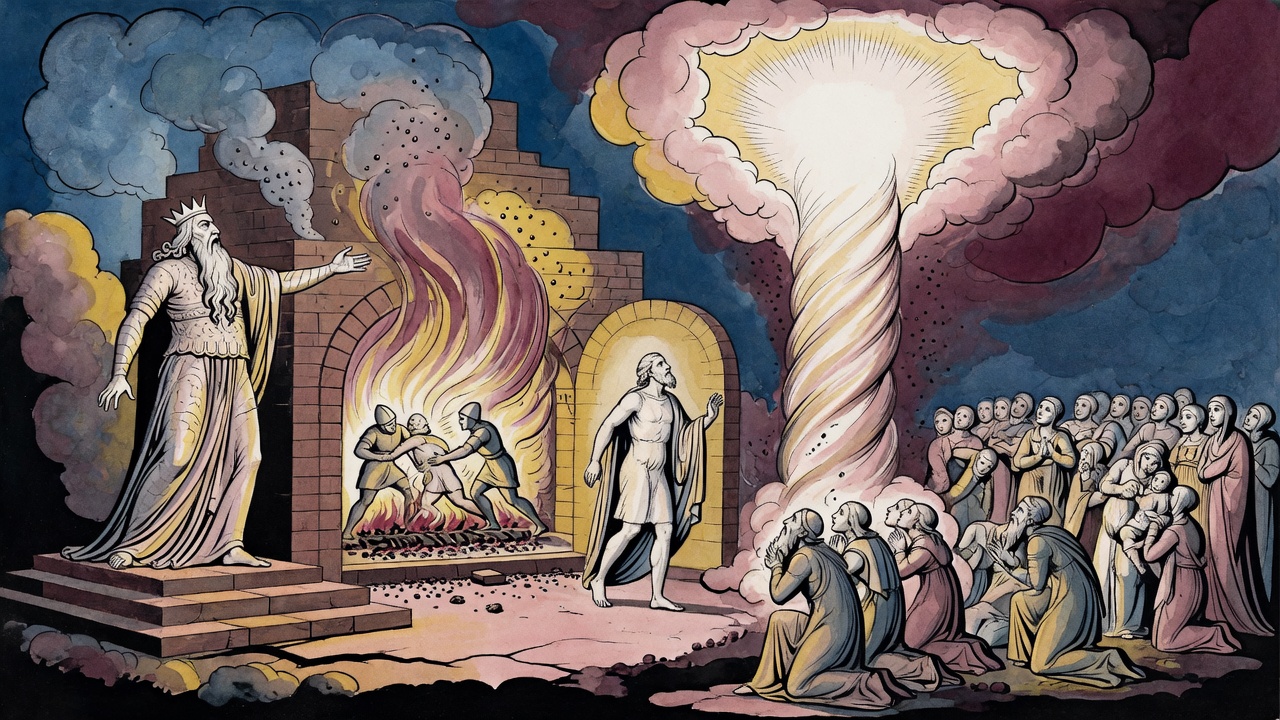
Before the road, there was fire. God would later say, "I am the Lord who took you out of Ur of the Chaldeans" (Genesis 15:7). In Hebrew, Ur can mean furnace. Rabbi Eliezer ben Yaakov heard the verse that way and put Abraham inside it.
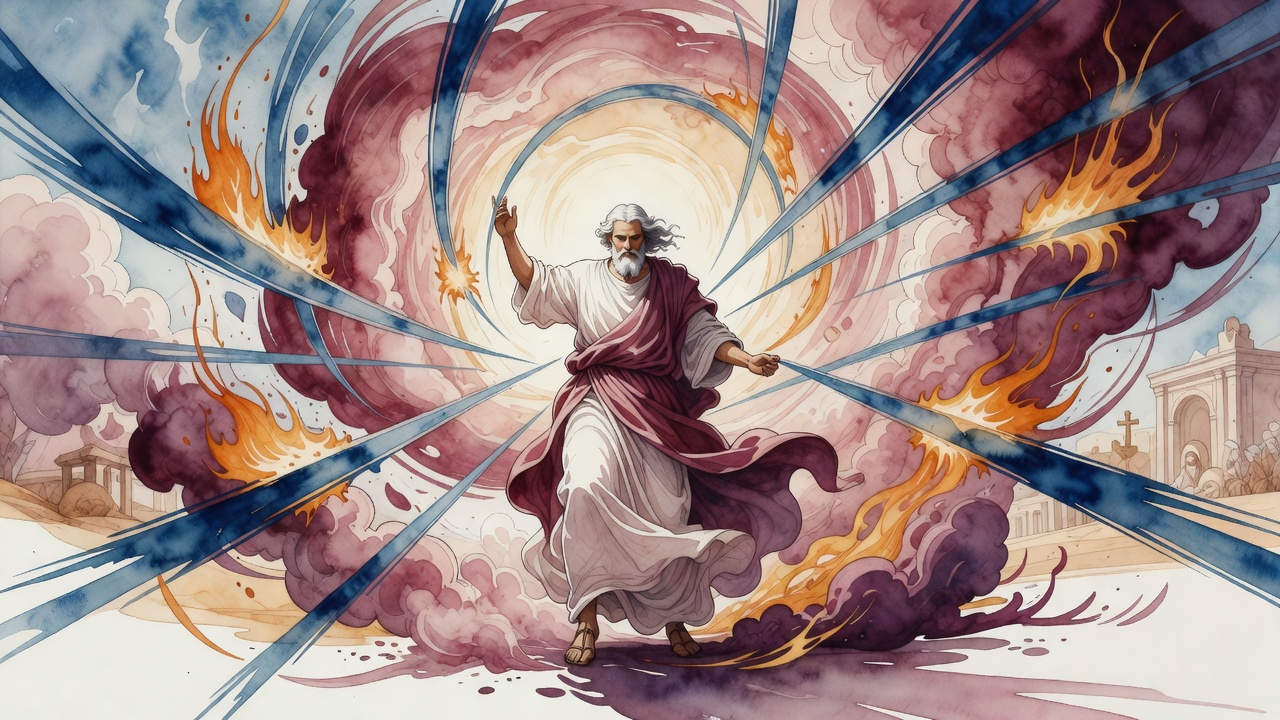
They threw him in for the same crime as the tumult: he would not bow to what the city bowed to. The heat took the air. Then Michael the archangel came down and pulled him out. Other sages said God Himself reached in, because the verse names the Lord as the one who took him out of the furnace of the Chaldeans.
Either way, the man who had reasoned without a vision was not left to burn for the reasoning. The power he had deduced from a crooked sky put a hand into the fire and took him out of it.
He Carried the Argument with Him
Canaan was not the end of the thought. Abraham taught it wherever he walked. He had not been a man frightened of what the priests knew. He had learned the motions, followed them past the place the priests stopped, and refused to call a servant a god.
In the tenth generation after the Flood, the old Chaldean records still remembered a righteous man among them, great, and skillful in the celestial science. They did not always use his name. The skill was the mark. The man who broke their religion had first been good at it.
He built the altar in Canaan with that skill still in his hands. The sun rose on it. The moon rose on it. He did not bow to either. He bowed to the One who sent them across.
The Sky Kept Moving
The stars did not start keeping a straighter path because Abraham had understood them. They went on drifting. That was the proof he had used, and it remained the proof. A god who must be pushed is not a god.
Behind him Ur cooled. The tumult spent itself on an empty courtyard. Michael had already closed his hand. Abraham walked west with Sarai and with Lot, whom he had adopted, and the first thing he did with his freedom was pile stones and burn an offering to the God no tablet in Chaldea had named.
He had not been shown. He had counted. Then the furnace, and the road, and an altar in a land that was not yet his.
← All myths