Dinah Sent Word Out of Shechem's House and Her Brothers Came
She was twelve and she was being held in the prince's house when she overheard what the men downstairs were planning to do to her family.
Table of Contents
 Click for full size
A Child of Twelve at the Dance
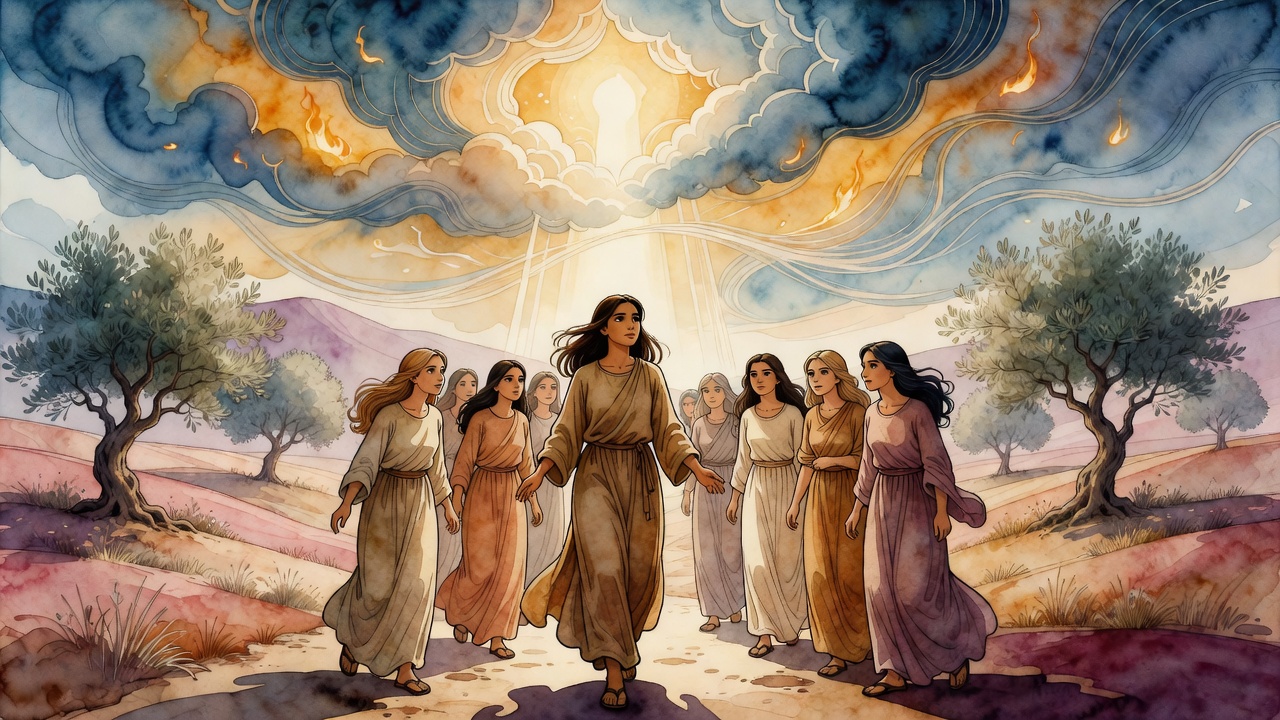
The women of the district went into Shechem to dance with the daughters of the city, and Rachel and Leah went in to watch, and Dinah went with them. She sat down beside her mother among the local girls with half the town standing around the edges looking on.
Shechem was standing there too. He was the son of Hamor and the prince of the land and he could have anyone in that square.
"Whose daughter is that?" he asked the men beside him. "I do not know her."
They told him. The Hebrew's daughter, from the family camped outside the walls, the ones who had bought a field for five shekels and been living quietly in it for a year and a half.
He sent for her and had her taken by force and brought to his house, and there he lay with her and shamed her, and afterward he could not stop looking at her and kept her. She was a little girl, a child of twelve years.
Twelve Servants Turned Away at the Door
Jacob sent twelve of his servants to go and get her.
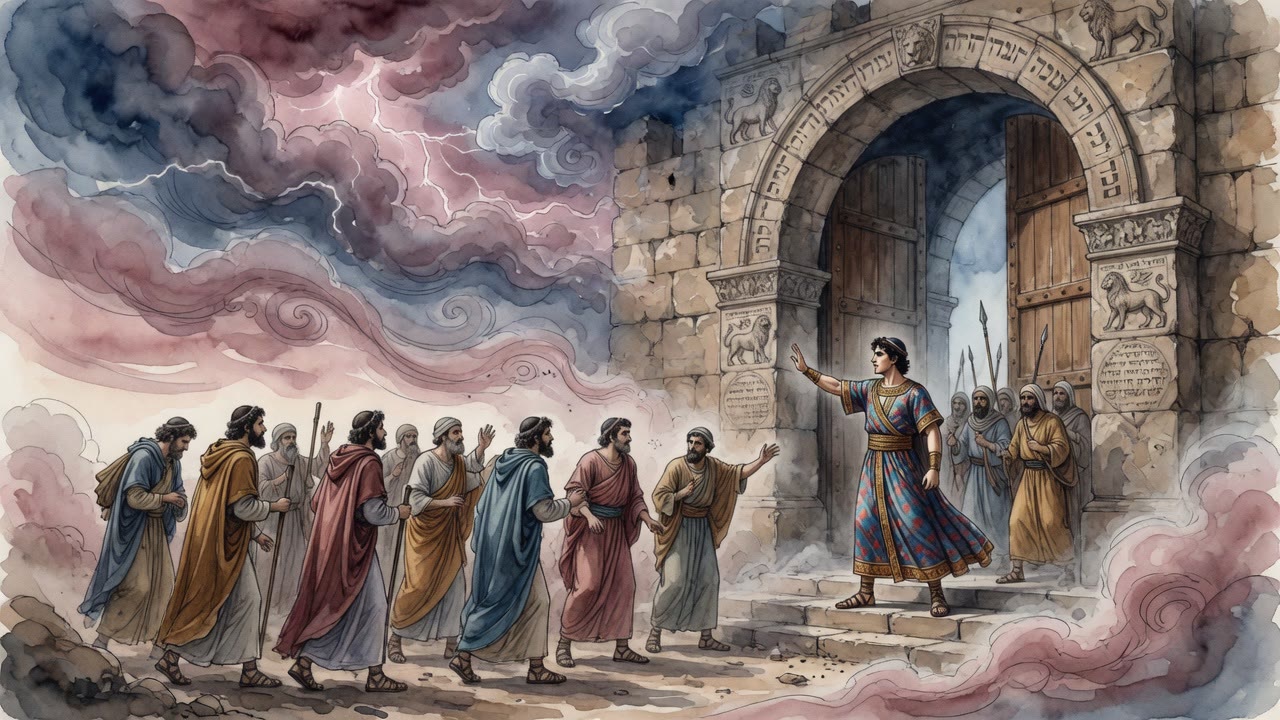
Shechem came out with his men and drove them off the property. He would not let them past him to see her. He sat down where they could watch him through the doorway and kissed her and put his arms around her in front of their eyes, and then his men pushed the twelve out into the road.
They came back and told Jacob what they had seen. Jacob said nothing at all. His sons were out with the herds and he sat in the house and waited for them.
Then he did the only thing left to do. He picked two girls from among his servants' daughters and sent them into Shechem's house to look after Dinah and to stay with her.
Meanwhile Shechem sent three friends to his father. "Get me this girl for a wife."
Hamor came and sat down with his son. "Is there no woman among the daughters of your own people, that you want a Hebrew you never knew existed until last week?"
"Her only," Shechem said.
Six Hundred and Forty-Five Men
The brothers came in from the field before the cattle were gathered, already knowing.
They sat in front of their father and said that death was owed here, to this man and to his whole house, because God had commanded Noah and everyone after him that a man does not rob and does not take another man's woman, and Shechem had done both, and not one person in that city had opened his mouth about it.
Then Hamor walked in with an offer. "Give us the girl. Marry into us. The land is wide, settle in it and trade in it and nobody will say a word to you." Shechem came in behind his father and offered to pay any price named.
Simeon and Levi answered them pleasantly. "Everything you have said, we will do. Only leave our sister alone in your house until we send word to our grandfather Isaac, because we can do nothing without his consent."
They needed the days. Simeon had already worked out what to do with them. Tell the city to circumcise every male. If they refuse, we take our sister and go. If they agree, then on the third day, when they are lying down sick with it, we go in with swords.
The city agreed. Six hundred and forty-five grown men and two hundred and forty-six boys were cut over two days, Hamor among them, and Shechem, and Shechem's five brothers.
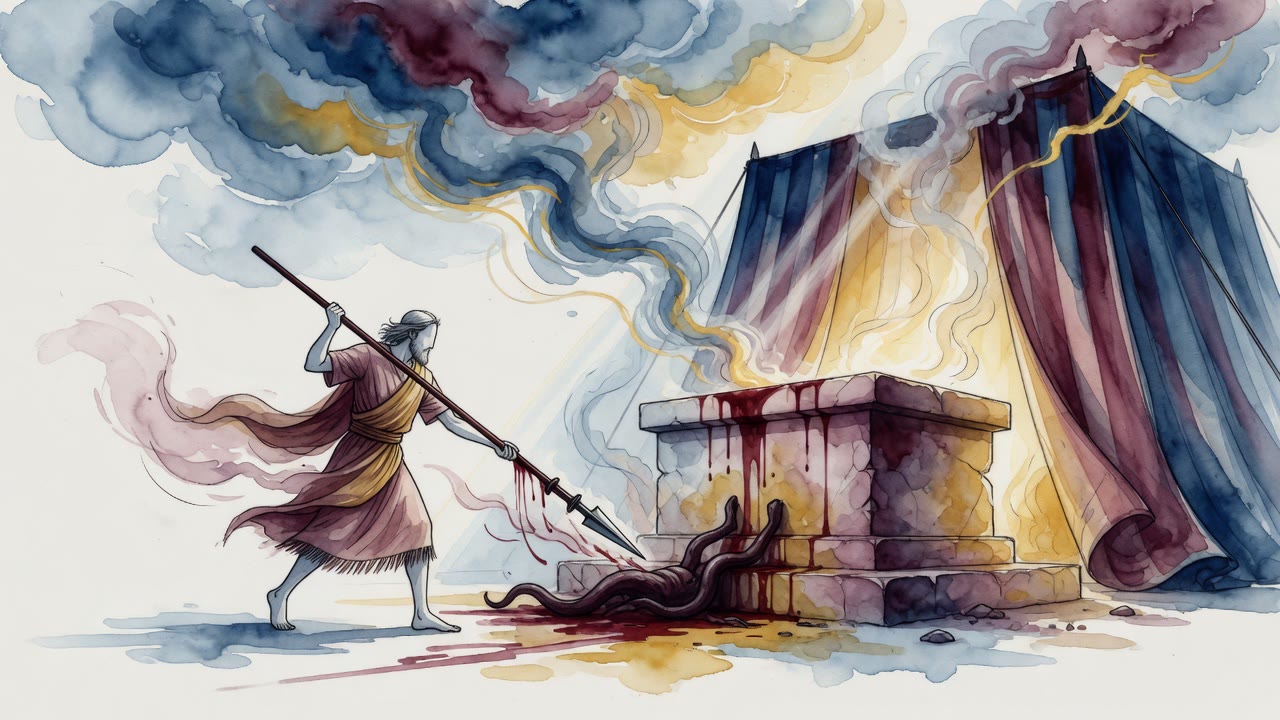
Seven men refused. Chiddekem, Hamor's own father, and his six brothers walked out of it and would not be touched, and on the second evening they found eight small children whose mothers had hidden them from the knives. When Shechem sent to have those children brought, the seven old men came at them with drawn swords, and they meant to kill Shechem too, and Hamor, and Dinah with them.
Then they cooled down and made a plan instead. "Wait," they told Shechem. "Let your flesh heal. Get what you want out of the Hebrews, and then we go together and finish them."
She Heard Every Word of It
Dinah was in that house, and she heard all of it.
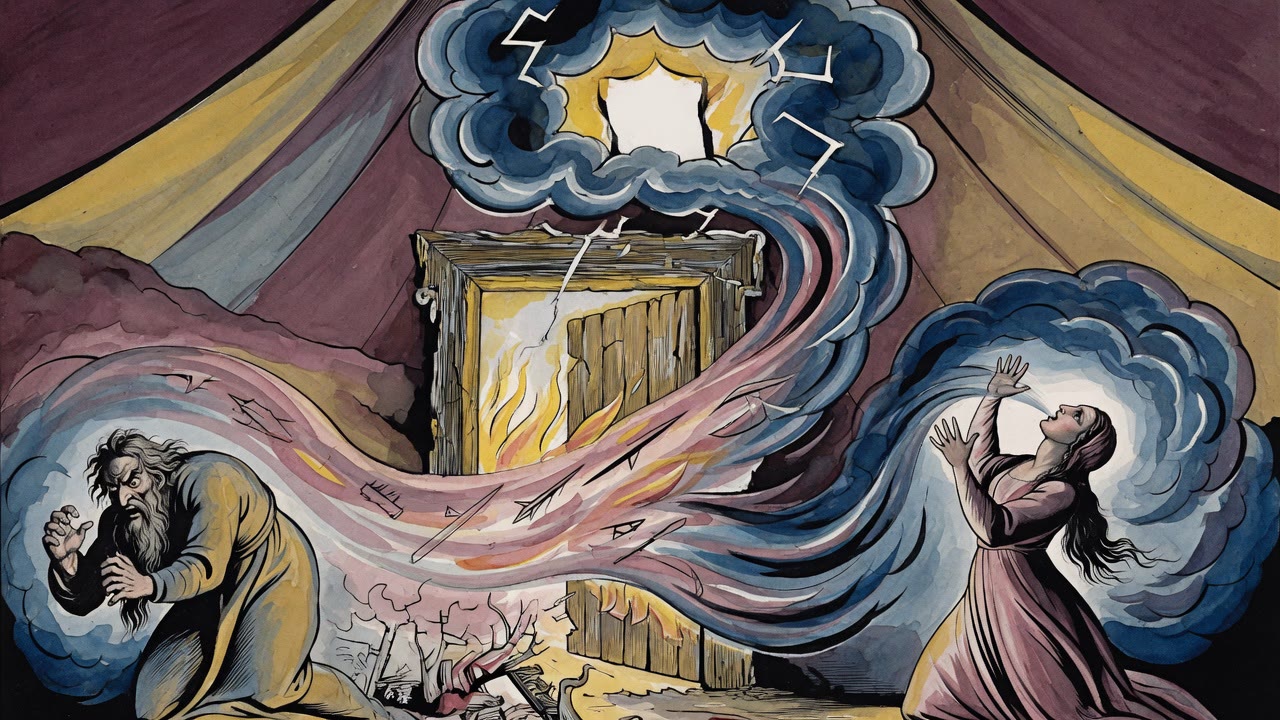
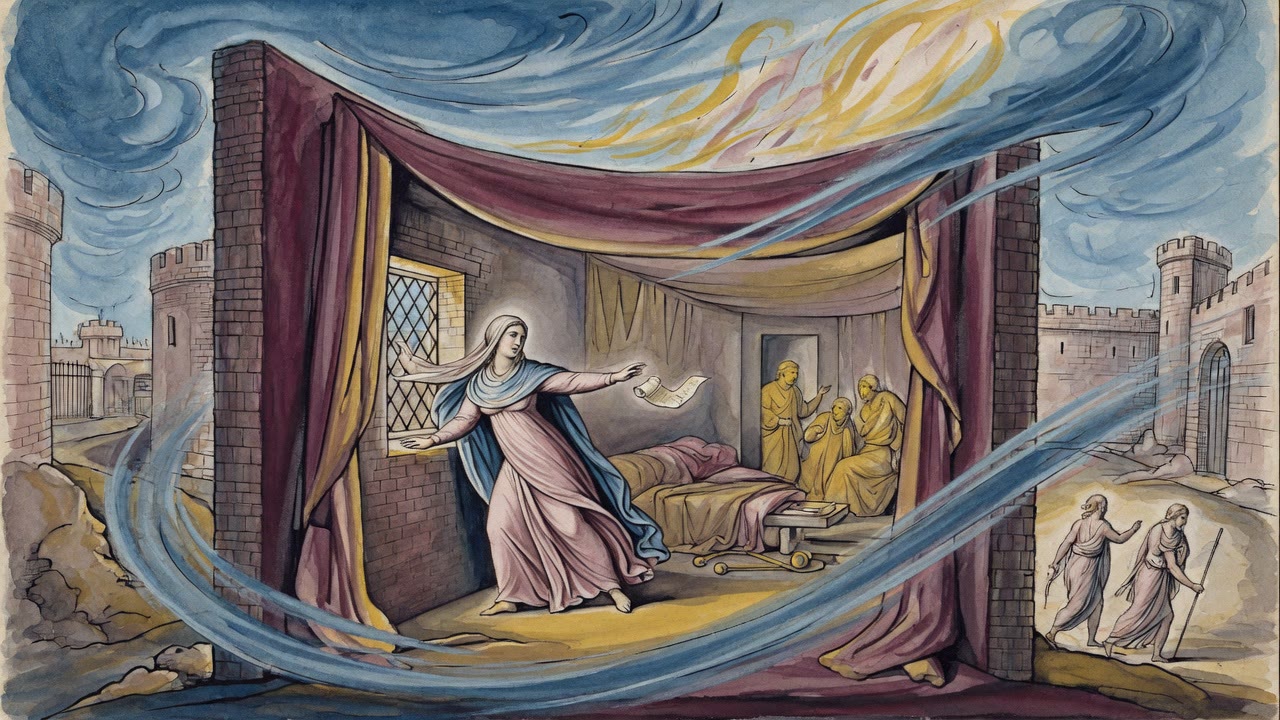
She got up and found one of the two maids her father had sent in to sit with her, and put her out the door with the whole thing: what the seven old men had said, what Shechem and Hamor had answered, and the date they had set.
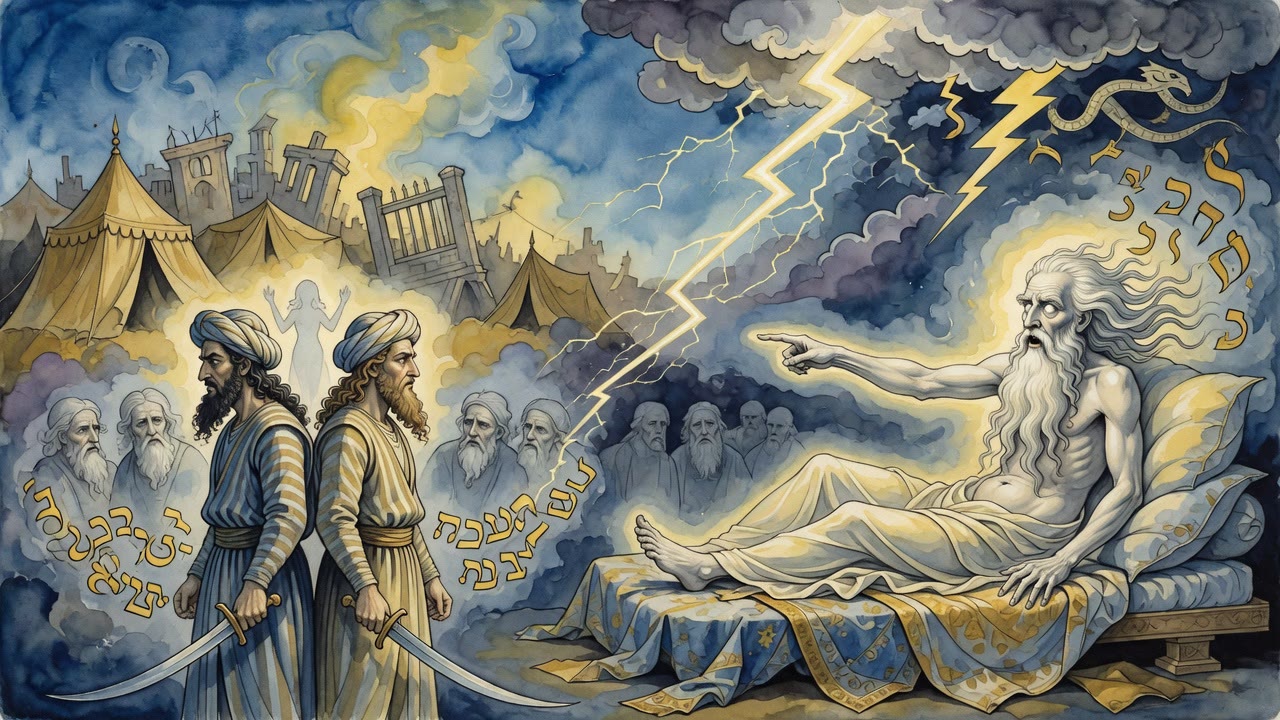
The maid reached the camp. Jacob went white. Simeon and Levi swore an oath on the living God of the whole earth that by this hour tomorrow there would not be a remnant left in that city.
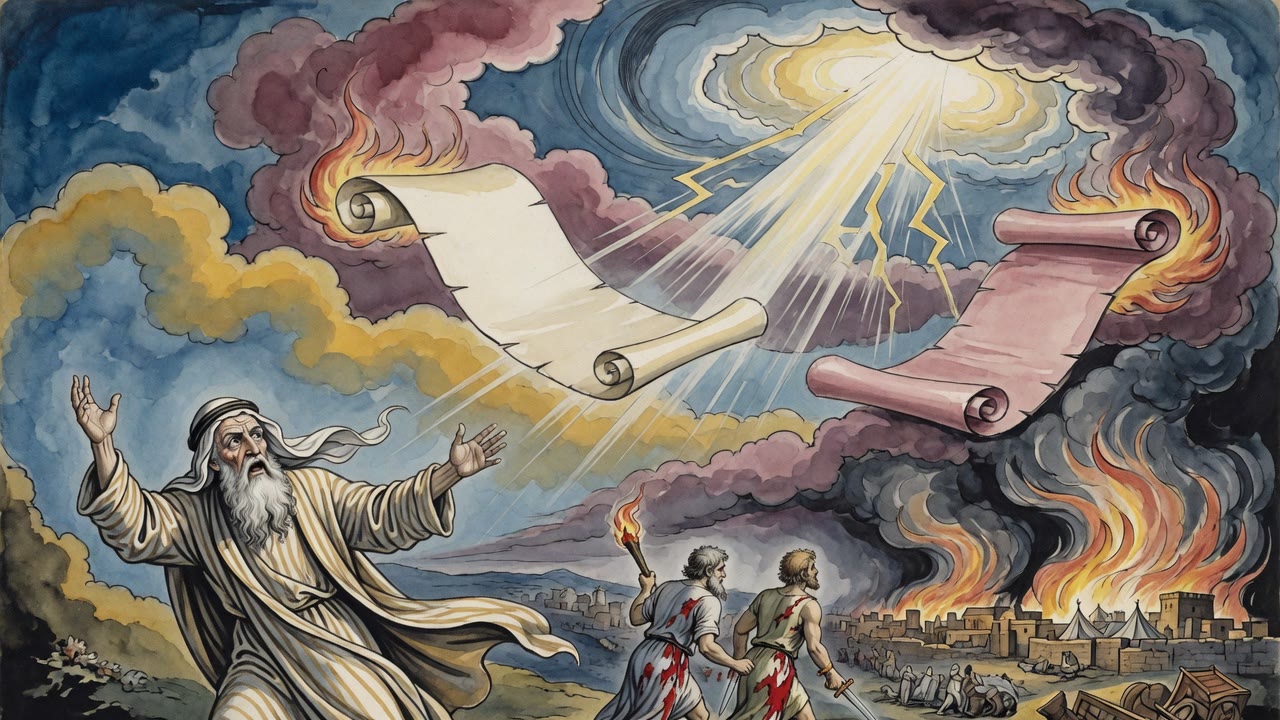
They went in the next day, two men. Twenty young men who had hidden from the circumcision came out to fight them, armed and healthy; Simeon and Levi killed eighteen and the last two got away into the lime pits and could not be found. After that there was nobody in Shechem who could stand up. They went street by street to the edge of the sword and the noise of it went up out of the city into the sky, the women screaming, the children screaming. They killed Hamor. They killed Shechem. They walked into the house and brought their sister out.
On the way out with the flocks, three hundred men came at them throwing dirt and stones, and Simeon turned around and killed all three hundred.
Jacob was waiting when they came back. "What have you done to me? I had peace here. I am a handful of people and every Canaanite in this country is going to come."
They looked at him. "We live in this land. Was Shechem going to do that to our sister? Why were you silent? Should he treat her like a whore in the street?"
How Could Two Men Do This
The two who hid in the lime pits climbed out after the dust settled and walked back through their own city, and it was empty. No men anywhere. Only women, weeping.
They carried the story to Tapnach, and Jashub the king there refused to believe it and sent his own messengers to look. The messengers came back and told him the town was standing there with nothing alive in it worth counting. Jashub kept repeating the same sentence. How could two men lay waste a town that size. Nothing like it had happened since the days of Nimrod.
He called in seven Amorite kings and ten thousand men with drawn swords.
Jacob heard, and was afraid, and turned on his sons again. Judah answered him this time. "Our God handed us that city, and He will hand us these kings. Stop being afraid and pray." Eleven brothers and their servants went out to meet the coalition, one hundred and twelve men in all, and they sent word to Hebron asking Isaac to pray that the counsel of those kings be turned aside.
Out in the field, the kings' own advisers stood up and told them they were fools. "Two of these men emptied a walled city and nobody stopped them. You are not going out against Hebrews. You are going out against the God who pulled their great-grandfather alive out of Nimrod's furnace."
The kings turned around and went home. The sons of Jacob held their position opposite Mount Sihon until evening, and when nobody came, they walked back to the camp.
Above all of it, on the heavenly tablets, what Levi did that day was entered as righteousness, and there it stays, to be read out for a thousand generations.
← All myths