Joseph Rose to Rule Egypt With Gabriel at Every Turn
A man in the Shechem field sent Joseph toward Dothan. Joseph was seventeen. Thirteen years later Pharaoh put a ring on that same hand.
Table of Contents
 Click for full size
A Stranger in the Field
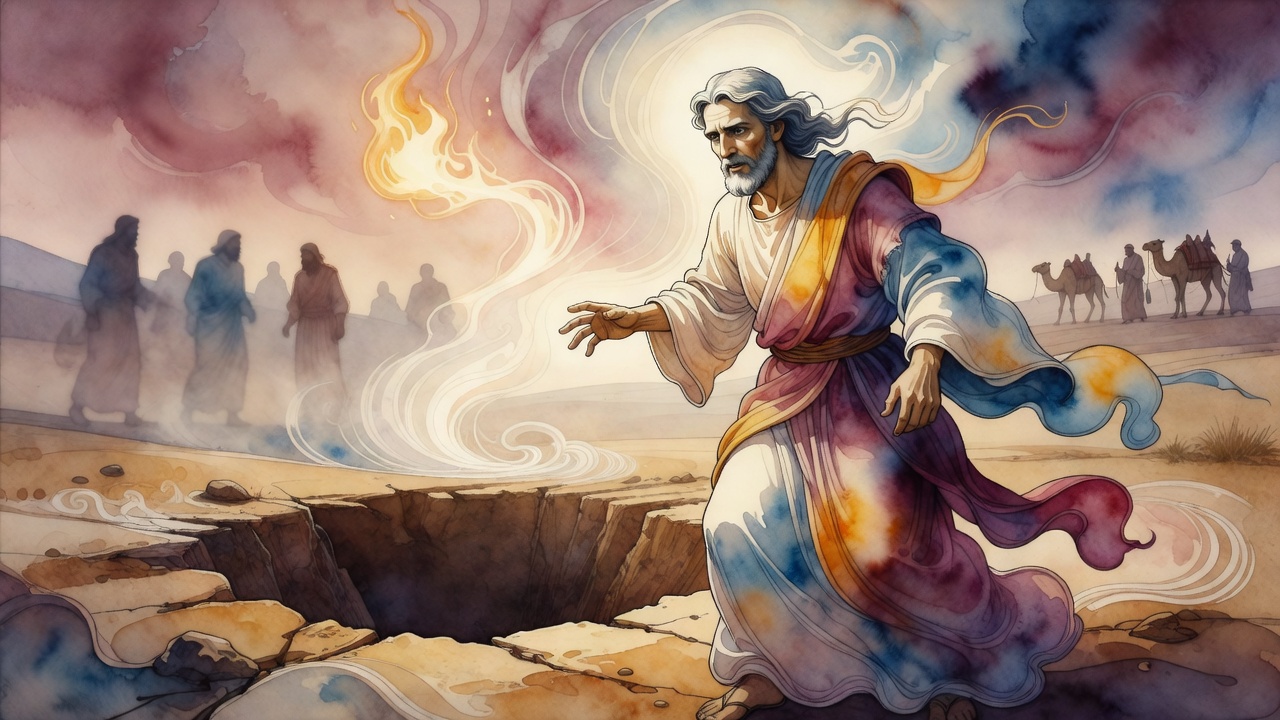
Joseph left Hebron in the coat his father had given him and walked to Shechem looking for his brothers. The pastures were empty. The flocks were gone. He turned in the field until a man stood in front of him and asked what he was seeking.
"I am looking for my brothers," Joseph said. "Tell me, please, where they are feeding the flock."
The man did not hesitate. "They have moved on from here. I heard them say, Let us go to Dothan."
That man was Gabriel. Joseph was seventeen and did not know the name. He took the road the stranger pointed and walked straight toward the brothers who already wanted him gone.
A boy asking for directions in an empty field does not look like the start of a kingdom. The stranger had not appeared by accident. He had been sent to put Joseph on the only road that would drop him into Egypt alive.
The Dry Pit
He found them at Dothan. They saw the coat first. They stripped it off him and threw him into a cistern that held no water. Then they sat down to eat, as if a brother in a hole were no more than a pause in the day.
A caravan of Ishmaelites came through, camels loaded for Egypt. Judah said killing him would gain them nothing. They pulled Joseph up and sold him for twenty pieces of silver.
In Egypt he was sold to Potiphar, captain of Pharaoh's guard. Potiphar's wife reached for him in the house. He refused her. She held the coat and accused him, and he went from the household into the prison.
Pharaoh's cupbearer and baker arrived there with dreams they could not carry. Joseph read them. In three days the cupbearer would stand at the king's side again. In three days the baker would hang. Both came true. The cupbearer walked free and forgot the Hebrew who had saved him. Two years passed.
The Dreams Pharaoh Could Not Read
Pharaoh dreamed. Seven fat cows came up from the river. Seven lean cows ate them and stayed lean. Seven full ears of grain were swallowed by seven thin ones. He woke angry. He told the dream to his magicians and wise men, and none of them had a reading that held.
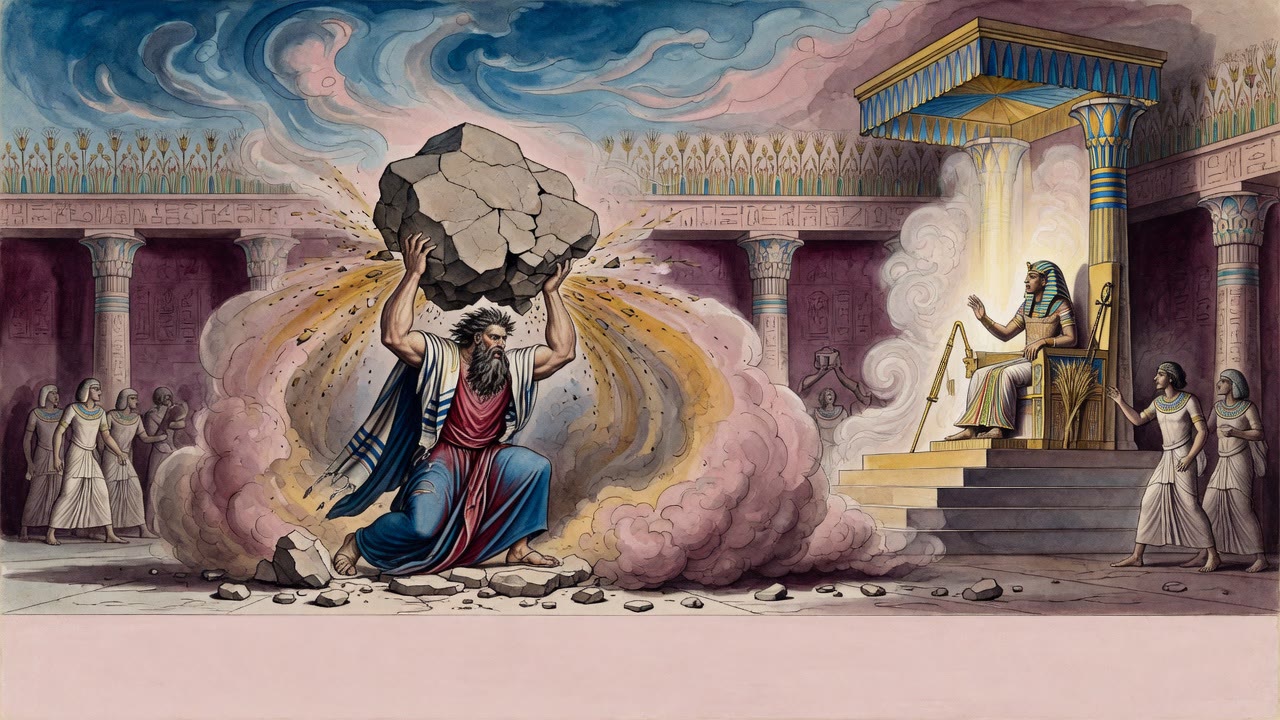
Then the cupbearer remembered the man in the prison. They brought Joseph up in a hurry. They shaved him. They put new clothes on him. They walked him into the hall where the king of Egypt sat waiting for a voice that would make the night make sense.
Joseph did not claim the gift. "It is not in me," he said. "God will give Pharaoh an answer of peace." Then he named the years: seven of plenty, seven of famine, the famine so hard it would eat the plenty that came before it.
He chose his words with care. "What God is about to do, He has shown Pharaoh." A decree of hunger can be shortened. A promise of bread cannot be taken back. Joseph left a door open for mercy and kept the warning sharp enough that a king would act.
Gabriel Among the Wise Men
The hall was full of men who made a living reading signs. A Hebrew prisoner had just told the king of Egypt what his own court could not. They might have argued him down. They might have called the dreams a private terror and sent the slave back to the dungeon.
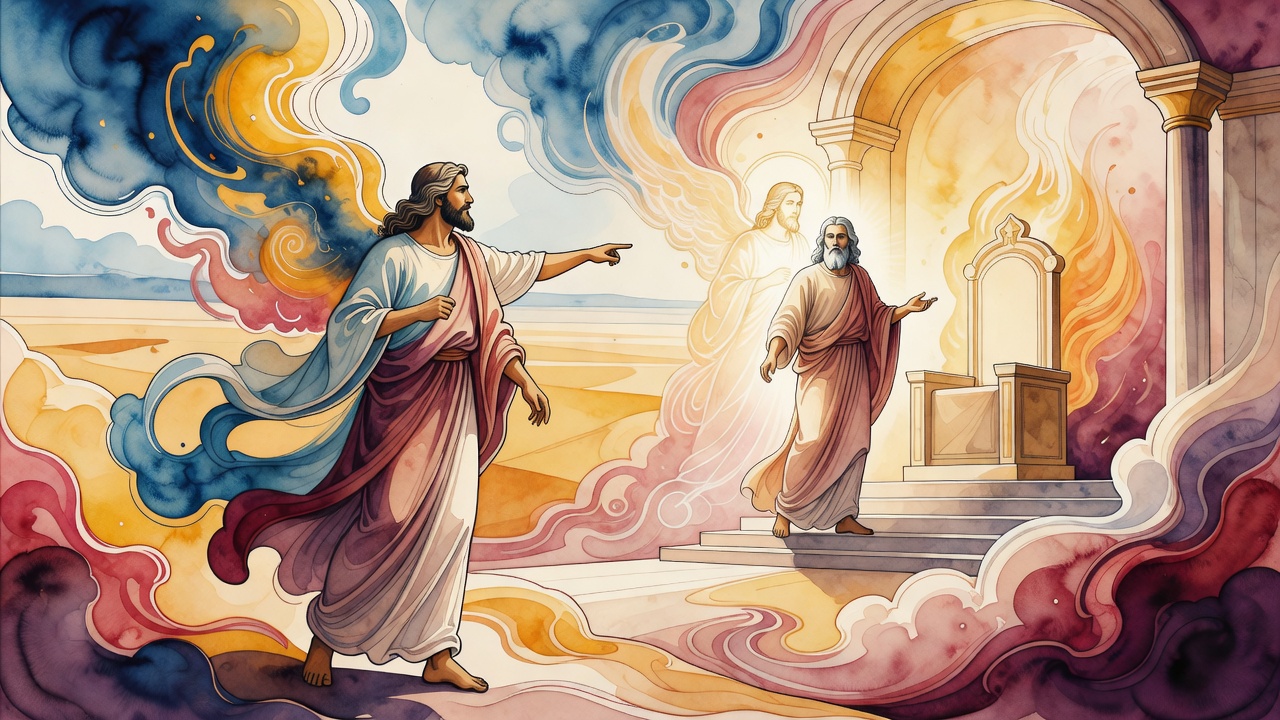
Gabriel sat among them in a borrowed face. He did not speak. He did not have to. The room that might have split stayed still long enough for Pharaoh to hear the interpretation and keep it.
The same stranger who had pointed Joseph to Dothan was in the court when the pit finished its work. From the field to the prison to this floor of stone, the guide had not left him. Joseph felt the silence hold and spoke into it.
Pharaoh Took Off His Ring
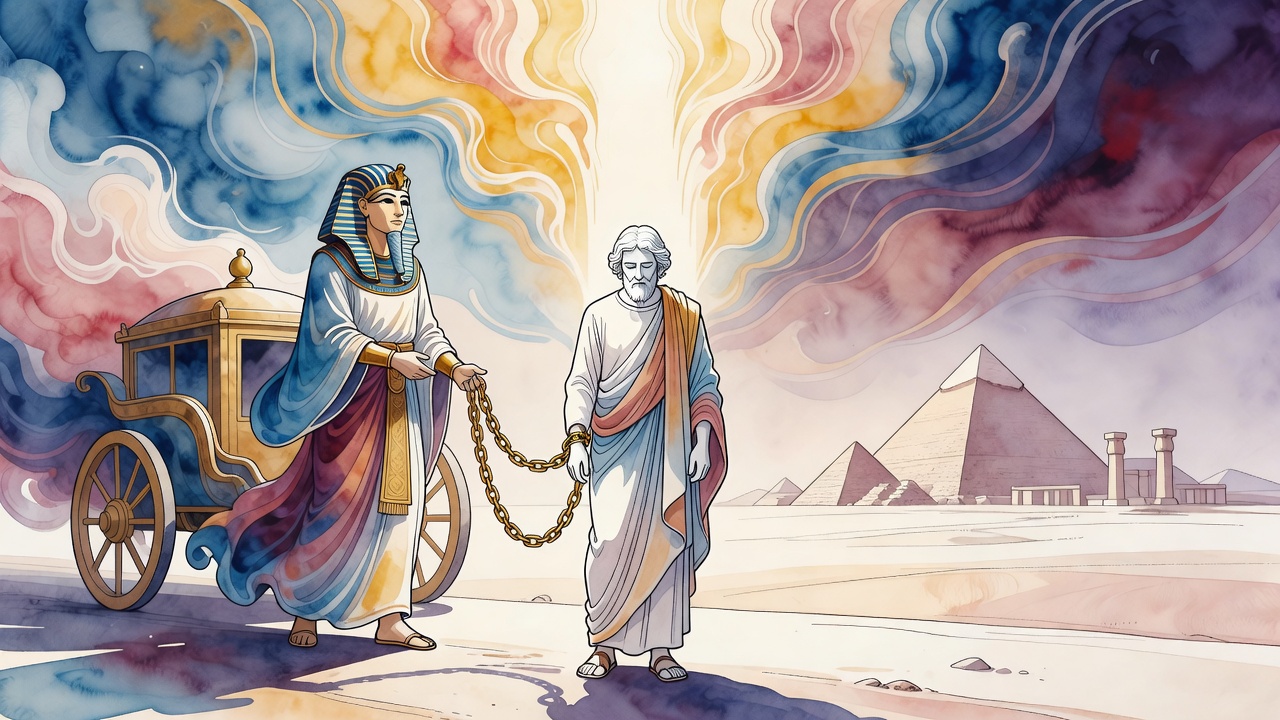
Pharaoh asked who else could do this. Joseph was thirty. Pharaoh took the signet ring from his own hand and put it on Joseph's. He dressed him in fine linen and hung a gold chain on his neck. He made him ride in the second chariot, and men ran before it calling out to bow the knee.
"Without you," Pharaoh said, "no man shall lift hand or foot in all the land of Egypt." He gave Joseph an Egyptian name and a wife, the daughter of the priest of On.
Thirteen years sat between the dry pit and that ring. Joseph had been taken down to Egypt, and the taking-down was the road that put him over the storehouses when the hunger came. The brothers who had meant to erase him would eat from his hand.
In the field outside Shechem, a stranger had asked what he was looking for. Joseph had answered. He had never stopped walking the direction he was sent.
← All myths