Abraham Feared He Had Used Up All His Merit in One Battle
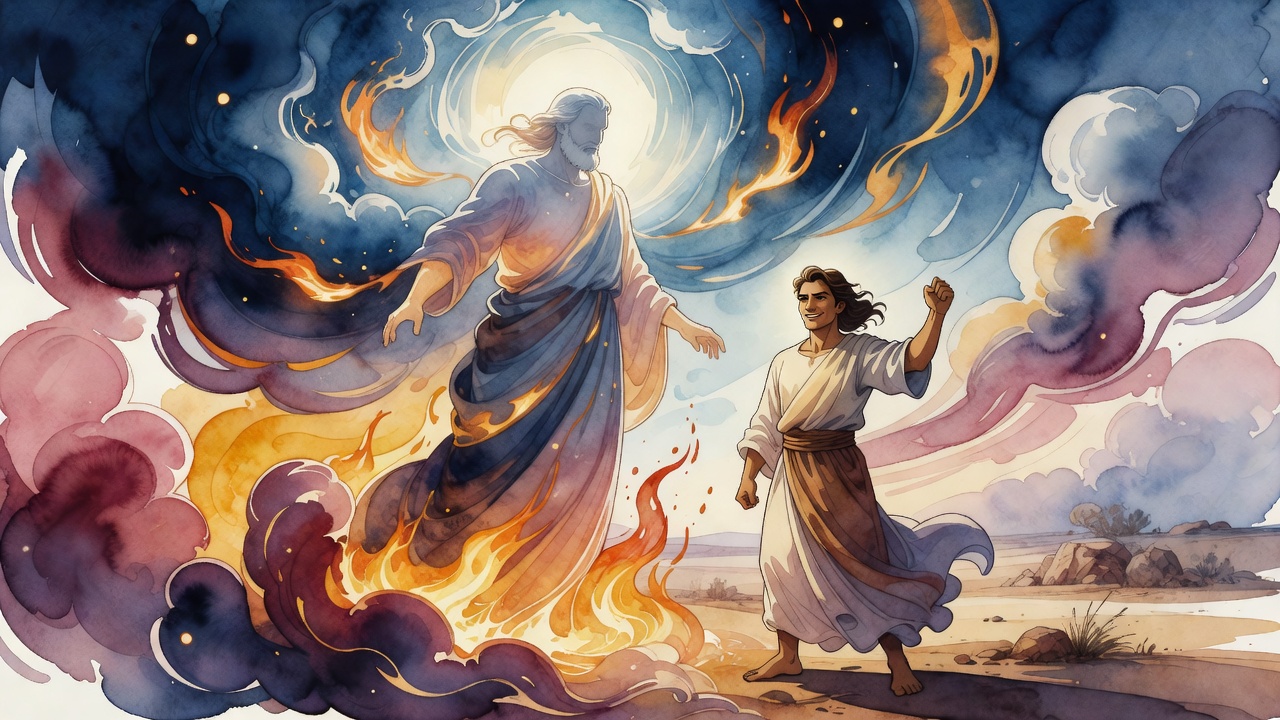
Lot walked beside him alive. The plunder train rattled behind. Abraham was already counting what the victory had cost him.
Table of Contents
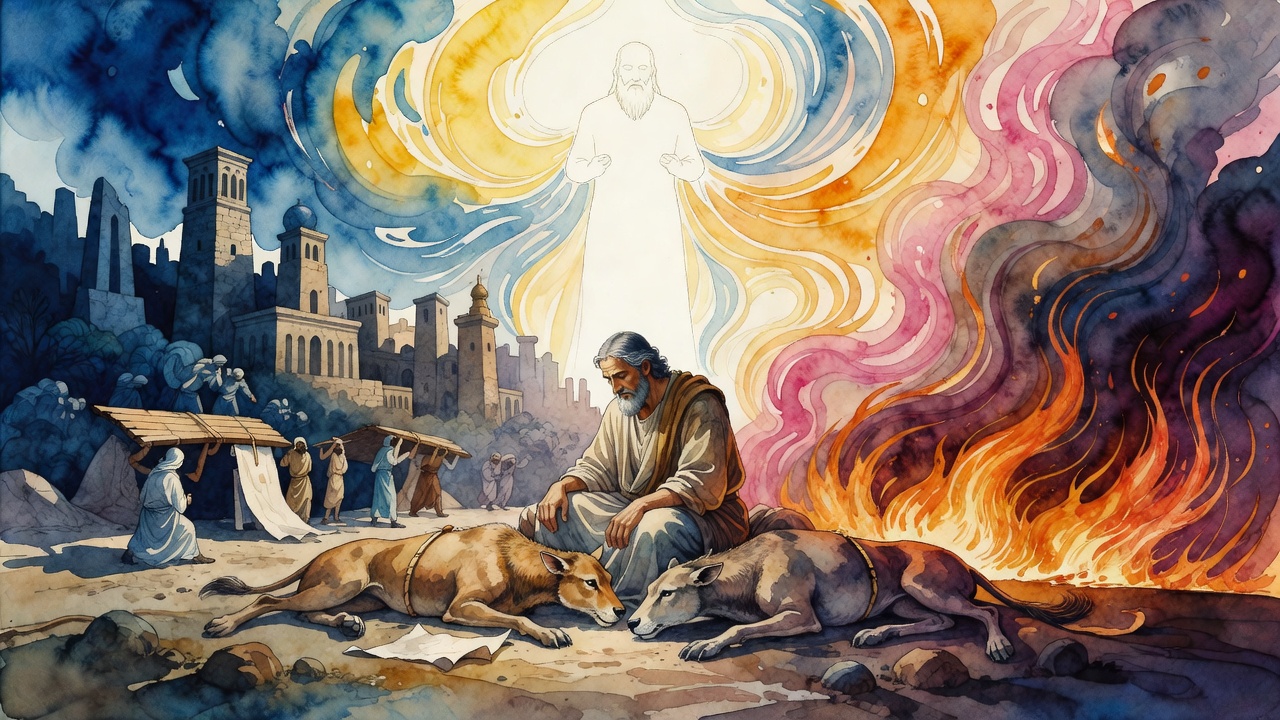
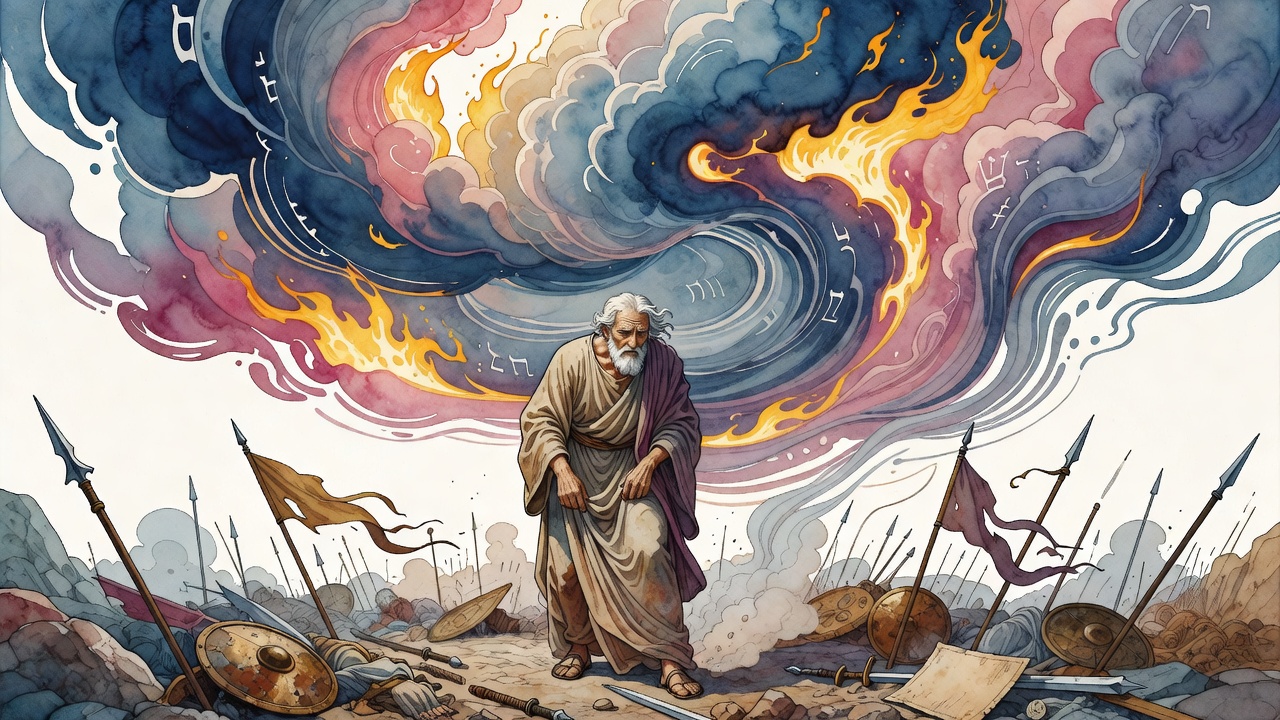
Abraham came off the night fight with dust in his mouth and a live nephew at his side. Four kings were down. The recovered goods creaked behind them in a long train. Lot kept looking back as if the valley might still open and swallow him a second time.
 Click for full size
Abraham was already doing sums.
"Woe to me," he said to himself. "I have been paid. Whatever was owed me for the things I have done, I have collected it here, in this world, and nothing is left standing in my name in the world to come."
The fear had a second face. Out there were brothers of the men he had killed. They would raise companies. Next time there might be no merit left to draw on. He had used up the whole store of it on one battle. He would lose, and men who despised Heaven would hold up his corpse as proof.
The Thorns in the King's Orchard
A third fear sat under those two, and it was worse, because it was about the dead.
Among all those thousands, he thought, there may have been one decent man. One who feared God. He had no way of knowing. He had no way of putting a soul back into a body he had already cut down.
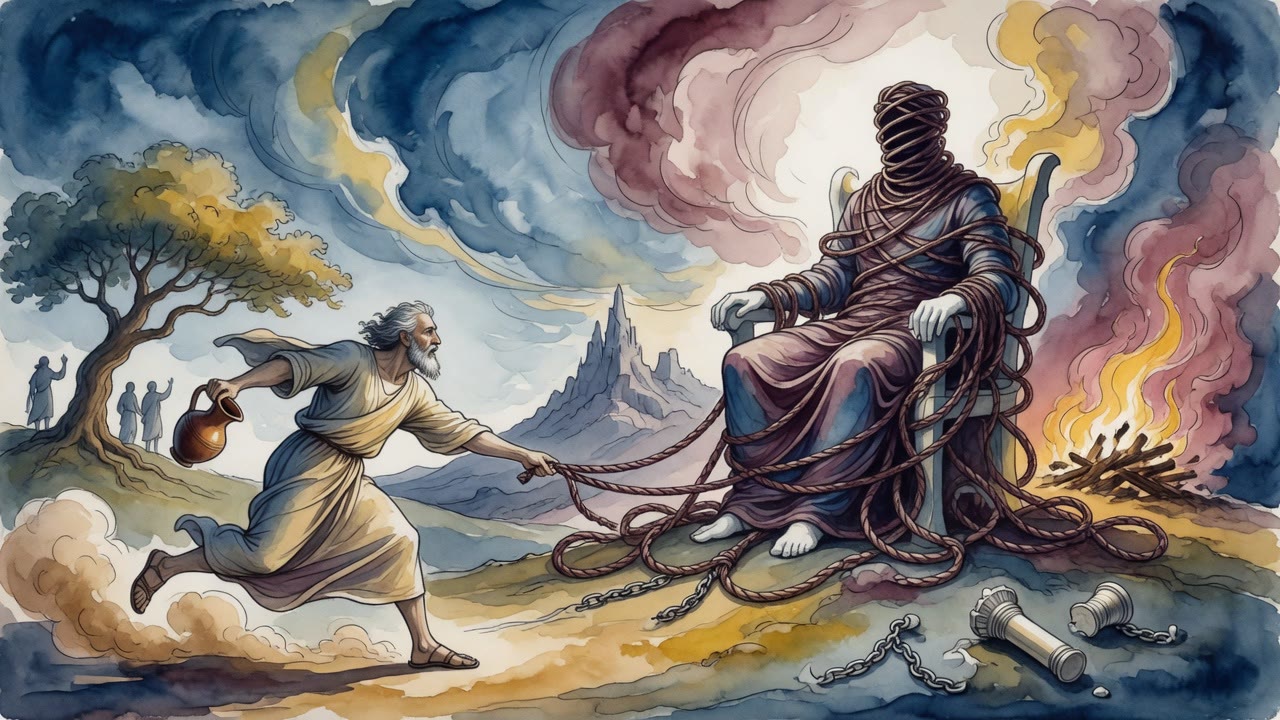
God did not argue the count. He told Abraham a story about a man walking past the king's orchard. The man sees a bundle of thorns inside the wall. He climbs down and takes it. Then he looks up and finds the king watching, and he starts backing away, trying to get out of sight.
"Why are you hiding?" the king says. "I have been trying to hire someone to clear those out. You have cleared them. Come and take your wages."
"Those armies you killed," God told him, "were cut thorns."
Then the other two fears, in order. "Their sons will raise companies against you. My Memra (מימרא), My utterance, will be a shield to you, and a shield stands no matter how many swords come at it. You have spent your reward. I made a shield for you in this world, and what is owed you is being held for the world that comes."
Abraham stood on the road with the plunder still moving and heard that his victory had been a clearing job, not a payout. The store was not empty. He had been working in someone else's orchard the whole time.
Two Men Afraid of the Same Meeting
There was one more thing on that road, and it was walking toward him.
Shem was still alive, the son of Noah, the priest at Salem. The kings Abraham had just destroyed came out of his line. Each of them was afraid of the other. Abraham was thinking: he holds it against me that I killed his sons. Shem was thinking: he holds it against me that I produced men like that.
They met and neither of them said any of it. Shem brought out bread and wine and blessed him. "Blessed be Abram of God Most High." Abraham gave him a tenth of everything he had taken off the battlefield. One helped the other with a blessing. The other helped back with a gift. They went their separate ways with nothing spoken and nothing settled.
The fear did not vanish. It just learned how to share a meal.
Birds Over the Cut Animals
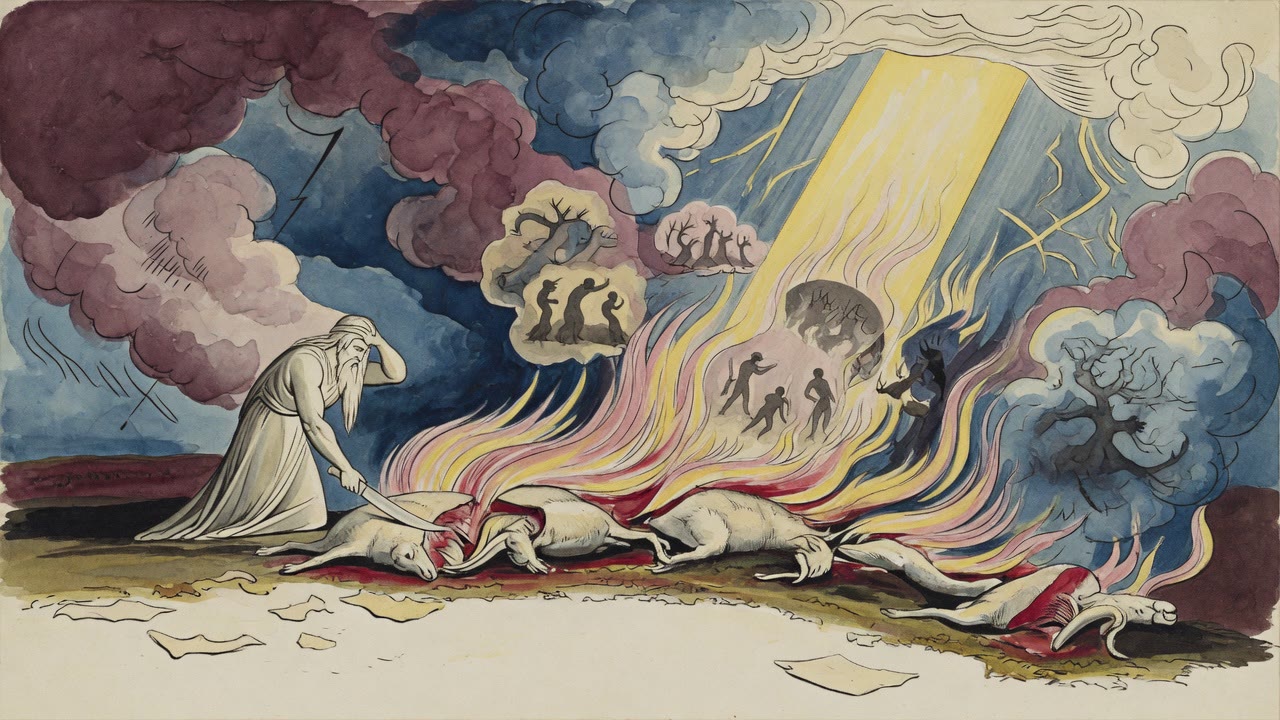
God told him to bring a heifer three years old, a goat three years old, a ram three years old, a turtledove and a young pigeon. Abraham killed them and split them down the middle and laid each half opposite its other half in two rows. He left the birds whole.
Then the carrion birds came down on the meat.
They were not birds. They were the idolatrous nations, dropping out of the sky to snatch the offerings of Israel off the ground before Israel existed. What beat them off was the righteousness of a man standing in a field with blood to his elbows and no children.
The sun went low. A heavy sleep came down on him. Inside the sleep four kingdoms stood up one after another to enslave his descendants. Terror, which is Babylon. Darkness, which is Media. Greatness, which is Greece. Decline, which is Persia, which is going to fall and never get up, and out of that fall his children come home.
He had asked whether his own account was empty. He was shown the centuries his children would spend in other people's lands. The question got larger, and it did not get kinder.
The Fire That Went Between the Halves
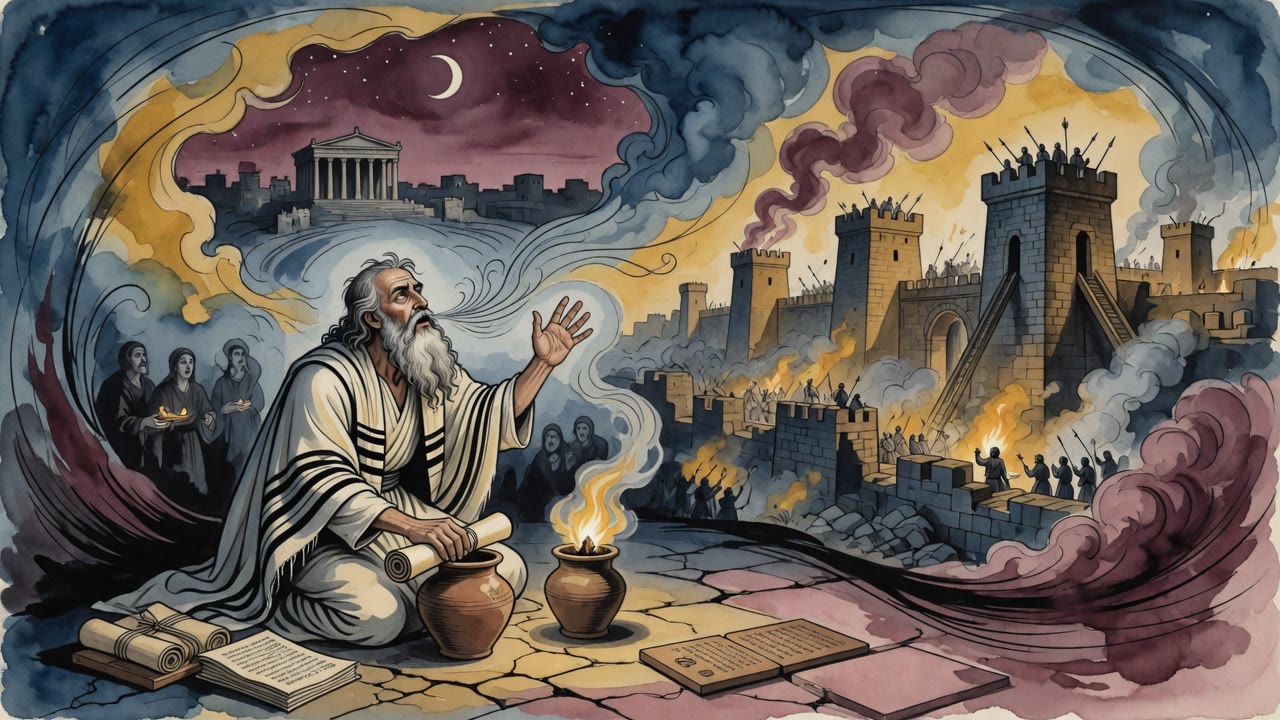
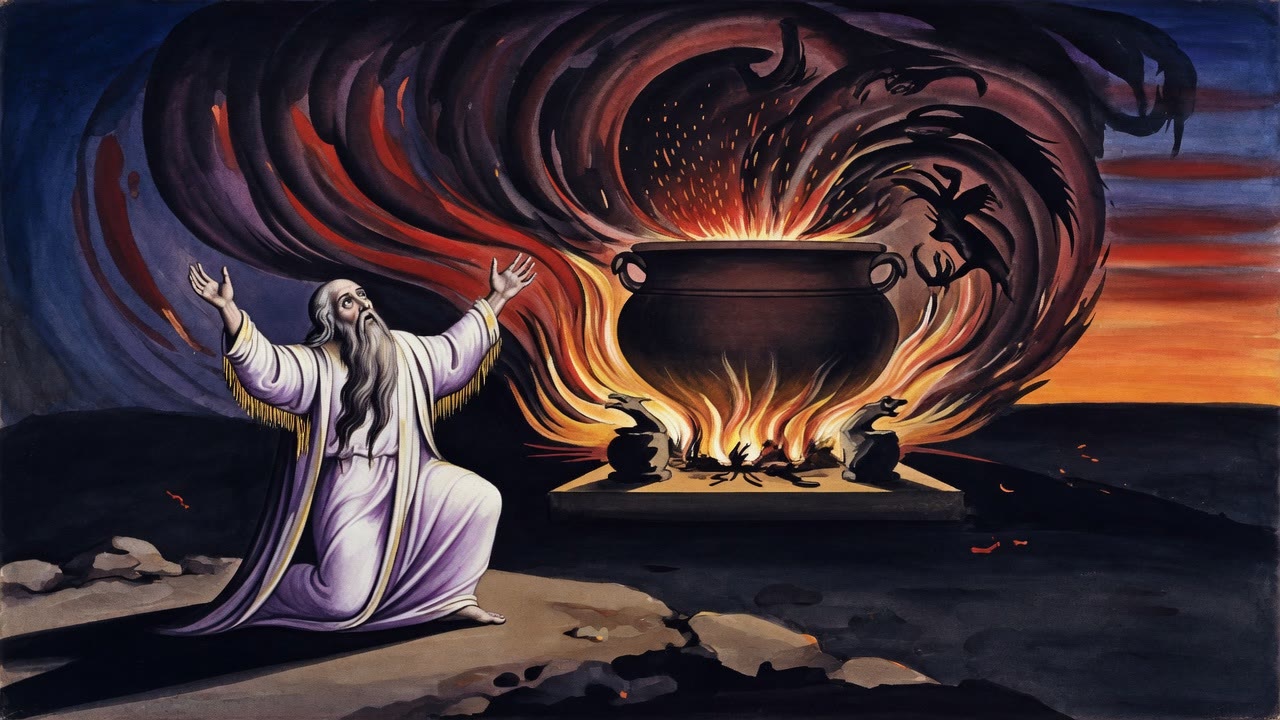
When the sun had set, the dark came, and Gehinnam (גיהנם) came up out of the ground in front of him. Smoke first. Then coals with the flame still on them. Then flakes of fire coming off, the furnace where the wicked are judged.
It moved. It went down the aisle he had cut between the halved animals, between the heifer and the heifer, the goat and the goat, the ram and the ram, and passed through.
The deep opened. The hidden garden was not shown that night. What was written into the covenant was that his children would go down into a country that was not theirs and be crushed there for four hundred years, that God would judge the nation holding them, and that they would walk out of it with their hands full.
Abraham had spent the whole day asking whether there was anything left in his name. He was shown the fire that judges. It went past him without stopping.
← All myths