The Last Thing Enoch Said Before God Took Him
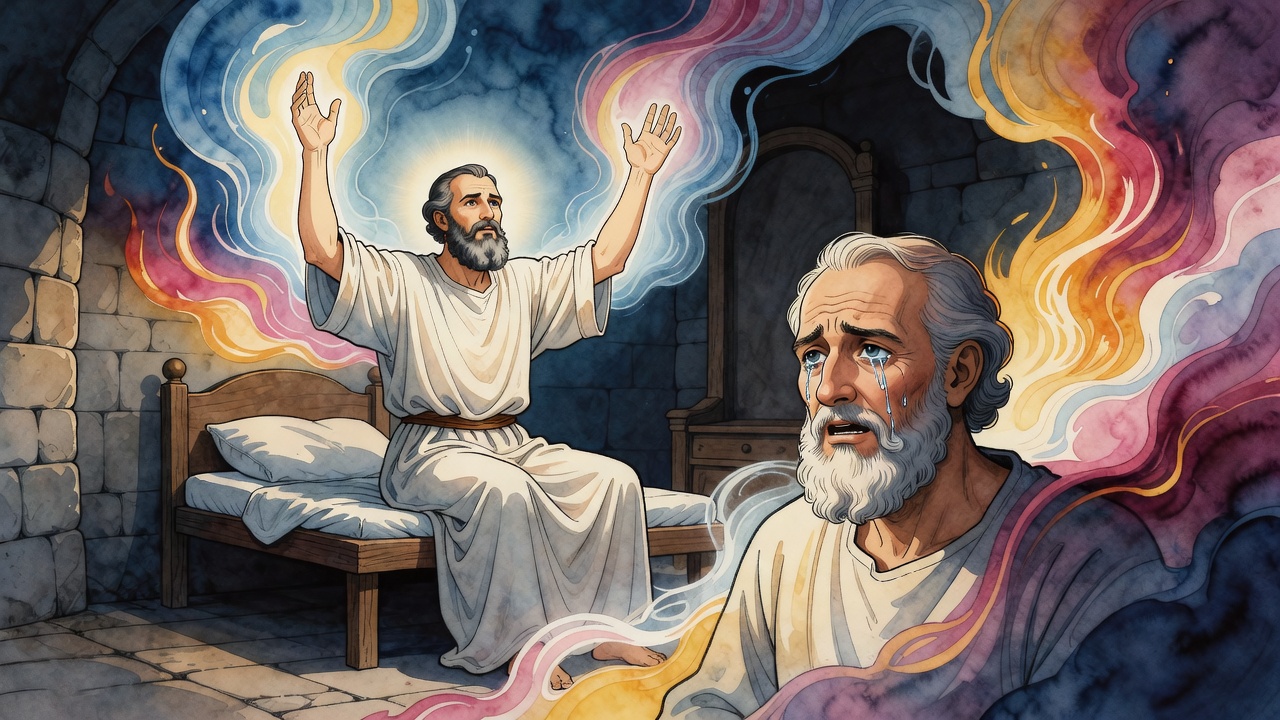
Methuselah asked what to cook before his father left the earth. Enoch said the oil of glory had ended hunger. He wanted nothing from any kitchen.
Table of Contents
Methuselah stood in the doorway with a bowl and the most ordinary question a son can bring. What would sit well on the tongue. What could be cooked. Let me feed you while you are still here to taste it.
 Click for full size
Enoch looked at the empty bowl as if it belonged to a country he had already left. The thirty days were almost gone. The ointment of glory still sat on him. Kitchen steam did not reach that far.
He told Methuselah the truth in a voice that had no appetite left in it. "Since the Lord anointed me with the ointment of His glory, food holds nothing for me. My soul does not remember earthly pleasures. I want nothing of this world."
A Son Asked About Food
Methuselah's hands stayed on the bowl a moment too long. The request was love with nowhere to land. There was no food in any kitchen on earth that could feed what Enoch now was. The refusal was not a rejection of the son. It was a measure of how far the anointing had gone.
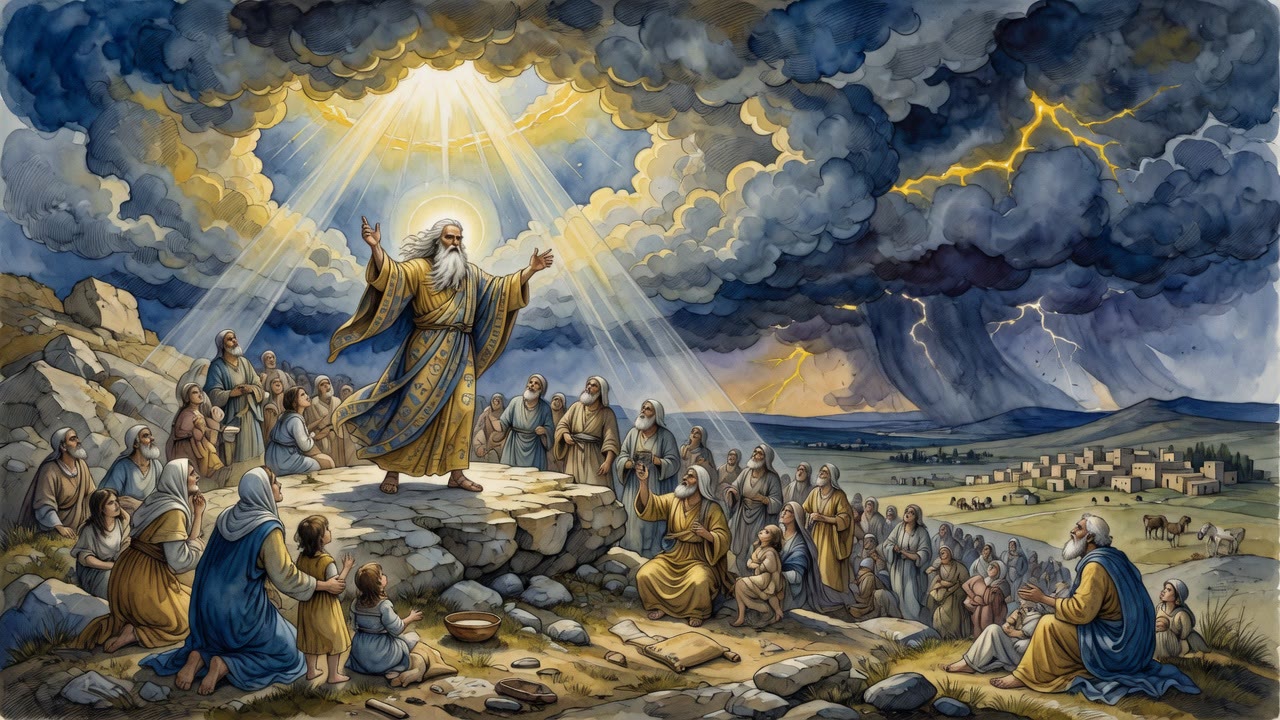
Enoch asked him to summon everyone. Brothers. Household. Elders of the people. When they had assembled, he blessed them and began to teach, not from hunger, but from the last hours he still owed the living.
He spoke of Adam, how God descended for Adam's sake, created him, brought every beast and bird and reptile before him so he could name them, and set him ruler over all creation. Whoever harms a beast harms his own soul. Whoever kills an animal without cause defiles his own flesh. Whoever takes a human life kills his own soul, with no remedy for all time.
"Keep your hearts from every injustice," Enoch said. "Just as a man asks something from God for his own soul, let him do the same for every living soul." He taught them about gifts. When a man clothes the naked and feeds the hungry, he finds reward. If his heart murmurs while giving, he destroys the gift and himself. "Blessed is the man who brings his gifts with patience and faith. He will find forgiveness. If he takes back his words before the time, there is no repentance after death."
Blessing and Curse in One Mouth
Then he laid pairs on them, sharp as a blade, blessing and curse in one breath, a man who had seen the weights in heaven's accounting and knew which actions fell on which side.
"Blessed is the man who opens his lips in praise of God and worships with his whole heart. Cursed is the one who opens his lips to slander his neighbor, for in doing so he brings God into contempt."
"Blessed is the one who blesses all the Lord's works. Cursed is the one who holds creation in contempt. Blessed is the one who looks down and lifts the fallen. Cursed is the one who looks eagerly toward the destruction of what is not his. Blessed is the one who keeps the foundations of his fathers. Cursed is the one who perverts the decrees of his ancestors. Blessed is the one who speaks with a humble tongue. Cursed is the one who speaks peace with his tongue while carrying a sword in his heart."
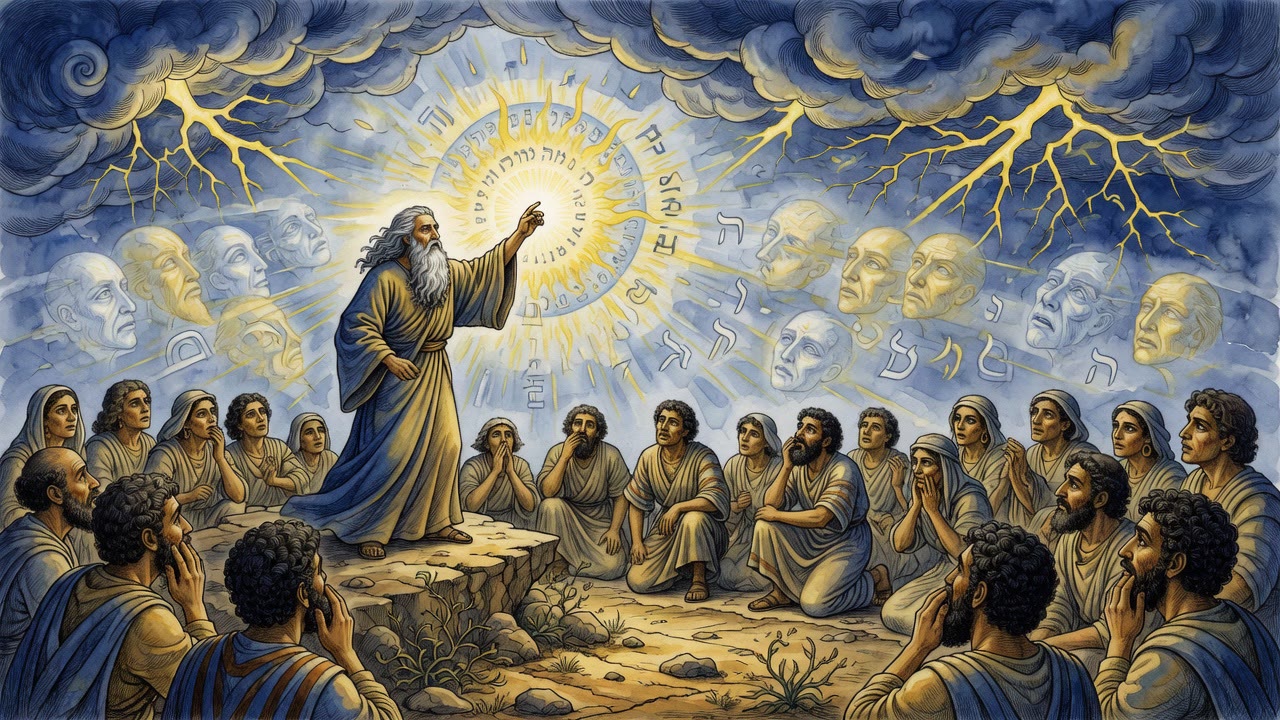
"All these things," Enoch said, "will be laid bare on the weighing-scales and in the books, on the day of the great judgment." The blessings were not prizes he was promising. They were descriptions of what a mouth had already chosen. The curses were the same, only darker.
Do Not Lean on My Prayer
Then a harder truth. "Do not say, Our father stands before God and prays for our sins. There is no helper for any man who has sinned. I wrote down every person's works before their creation. The Lord sees every imagination, where they hide in the treasure-houses of the heart."
"Mark well my words," he said, "lest you regret it later, saying, Why did our father not tell us?" He handed them the books one last time. "Let these be your inheritance of peace. Give them to all who want them. Instruct them, that they may see the Lord's marvelous works."
The crowd wanted a father who would keep praying after he left. Enoch would not sell them that comfort. The books stayed. The excuse did not.
The Angels Were Already Standing
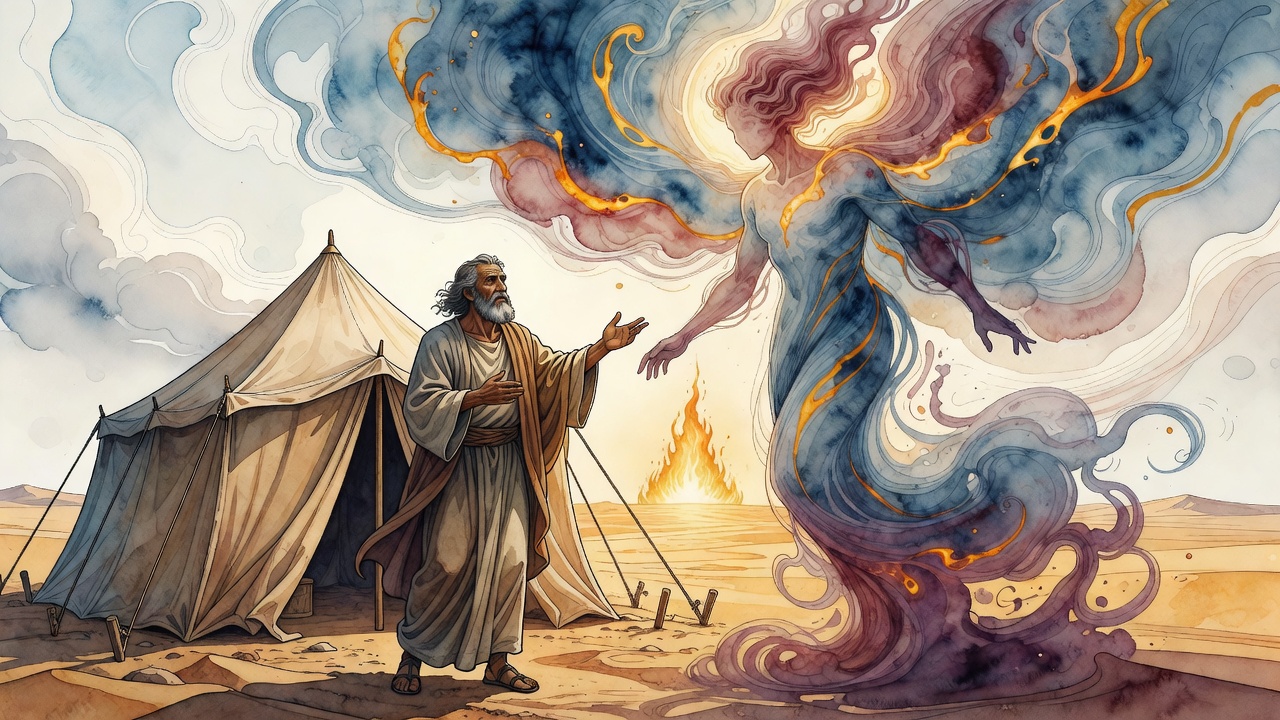
He looked at the angels standing beside him, the ones who had been waiting on earth for the appointed moment. "My children, the day of my term has arrived. The angels who will go with me are standing before me, urging my departure. They are here on earth, waiting for what has been ordained."
"Tomorrow I shall ascend to heaven," he told them, "to the uppermost Jerusalem, my eternal inheritance. Therefore I command you: do all good things before the Lord's face."
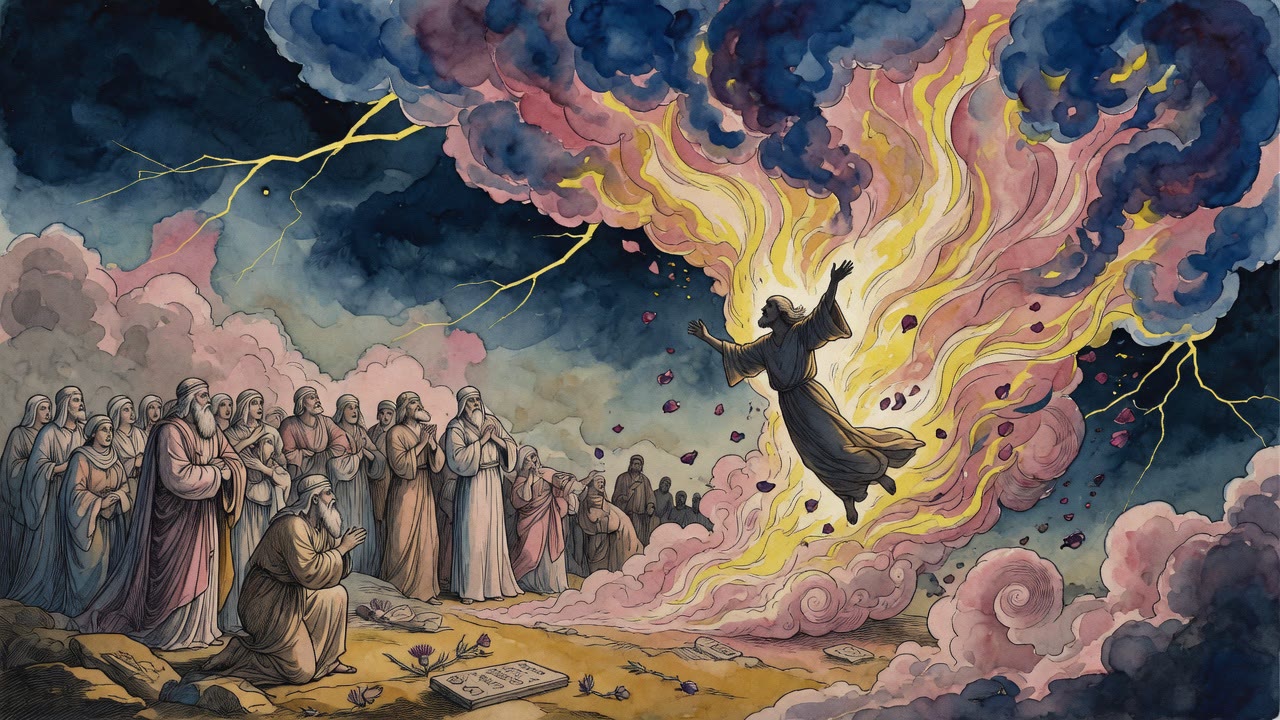
Word had already spread. Two thousand people gathered at Achuzan, where he stood with his sons. The elders bowed and kissed him. "Our father Enoch, may you be blessed by the Lord, the eternal ruler. Bless your sons and all the people before you depart."
He blessed them. He gave them the books again, because a crowd that large needed the same instruction the household had already heard. Keep them. Pass them to children. The writings would survive even the thing that would wipe the world clean.
Then the Lord sent darkness upon the earth. A thick blackness covered the people standing around him. In that darkness the angels took him. The darkness lifted. Light returned. Enoch was gone. Methuselah still held the question about food. The bowl had never been filled. What Enoch had wanted to eat was irrelevant. He was already somewhere else.
← All myths