Holofernes Was Told Israel Cannot Be Conquered While Faithful
An officer stood up at the war council and told Holofernes the truth. No army can beat the Jews while they keep faith. They lose only when they sin.
Table of Contents
 Click for full size
The Briefing on Israel's Divine Armor
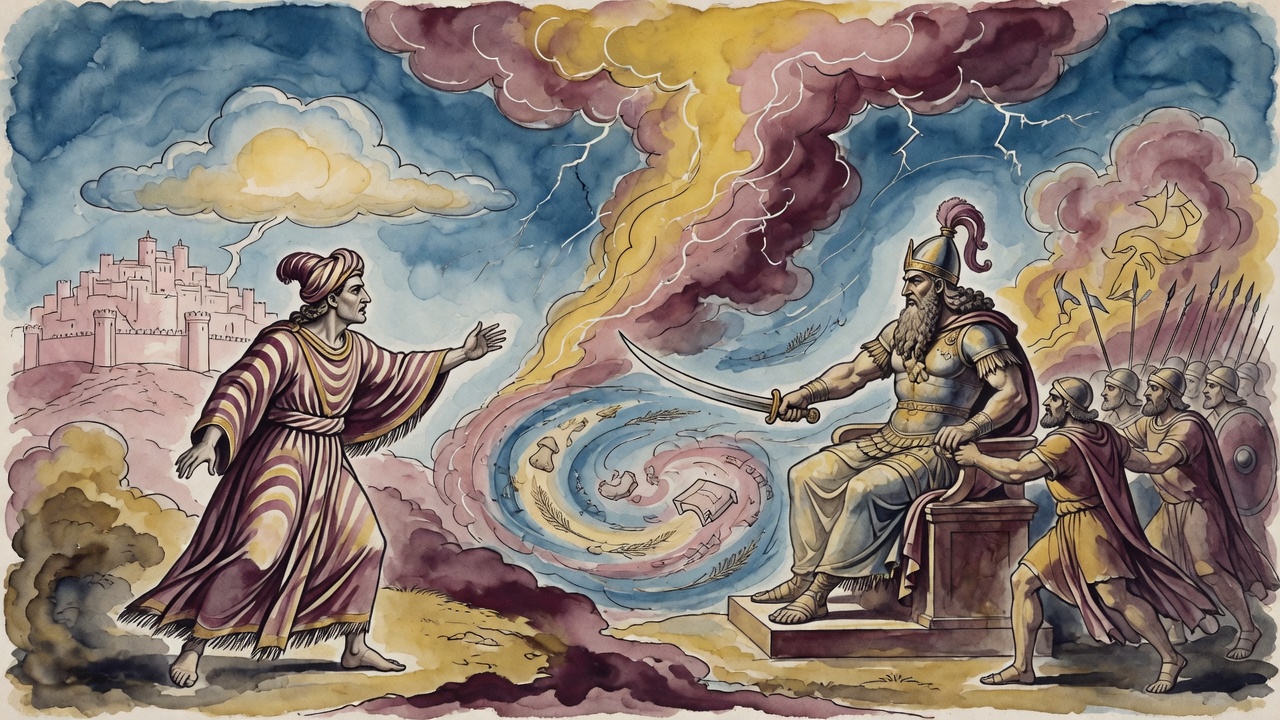
Holofernes had carved through nations the way a plow cuts through earth. When he turned his army toward Judea, his council gathered to brief him on the enemy. What his officers told him was not military intelligence. It was theology.
An advisor stood before the general and explained the Israelites as follows: as long as they remain faithful to their God, they are untouchable. They possess a protection no army can penetrate. It fails only when they sin. When they stray from the covenant, they become vulnerable, and when they are vulnerable, they fall. But while they walk in obedience, no power on earth can take them.
The advisor backed this with history. He traced the pattern from Egypt forward, through the crossing of the Red Sea, through the wilderness, through the conquests under Joshua. Every time Israel prospered, it was because they held the covenant. Every time they were defeated, it was because they had broken it. The pattern held without exception across centuries.
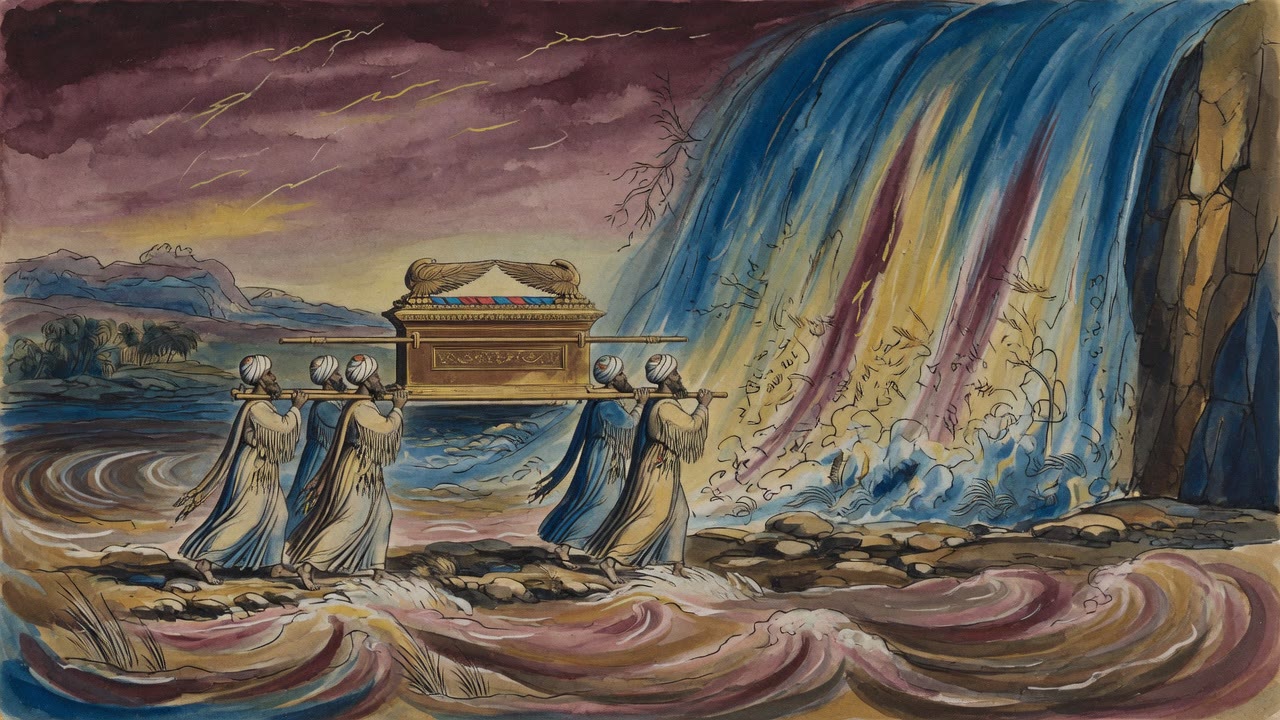
The Crossing of the Jordan
The Book of Judith's account of Israel's entry into Canaan emphasizes the displacement of the original inhabitants without apology. The Canaanites, Perizzites, Jebusites, Shechemites, Gergesites, all of them were driven out. Israel settled the hill country and lived there a long time. Then came the season of disobedience, and the pattern the advisor was describing to Holofernes began its first repetitions. Defeat followed transgression. Restoration followed repentance. The cycle was not random. It had a logic that any competent observer could identify.
What makes the advisor's briefing strange is that he was delivering this information to an enemy. He was telling the general of Assyria how to read Israel's spiritual condition as a battlefield calculation. If the Israelites were sinning, the timing was right. If they were faithful, no amount of Assyrian iron would matter.
The Cry With One Voice
Israel, hearing that Holofernes was coming, cried out to God with one throat. The Book of Judith describes it as a unified appeal, not the fractured, distracted petitions of a divided people but something more concentrated. They begged that their children not be taken as prey, their wives not as spoil, their cities not as ruins, the sanctuary not as a profanation for foreign nations to celebrate over. God heard those prayers, the text says, and that hearing was the first sign of where the battle was actually going to be decided.
The rabbi's discussion of Refidim in the Mekhilta adds a parallel note. When Israel fought in the wilderness and wavered, the battle went against them. When they held fast, the battle turned. Refidim was a place name, not an allegory, but the pattern encoded in that battle appears throughout the tradition as the same structure the Book of Judith lays out for Holofernes's briefing. The mechanism of Israel's victory and defeat is consistent.
What the General Did With the Information
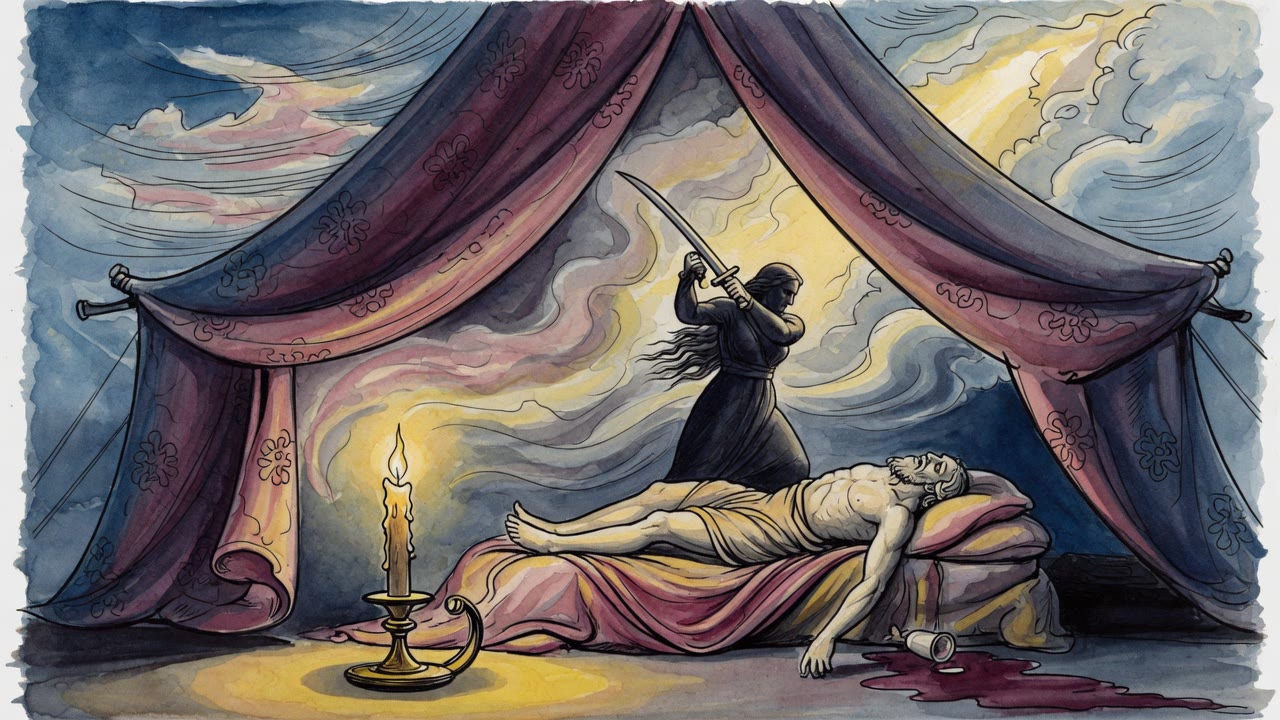
Holofernes received the briefing and did not take it as a reason to retreat. He heard that Israel's strength was divine and decided to approach the problem militarily anyway. That decision, made in his tent while the advisor laid out the theological architecture of Israel's invulnerability, was the decision that eventually led him to a tent of his own, outside Bethulia, where a woman named Judith was preparing to walk in with wine and a sword.
← All myths