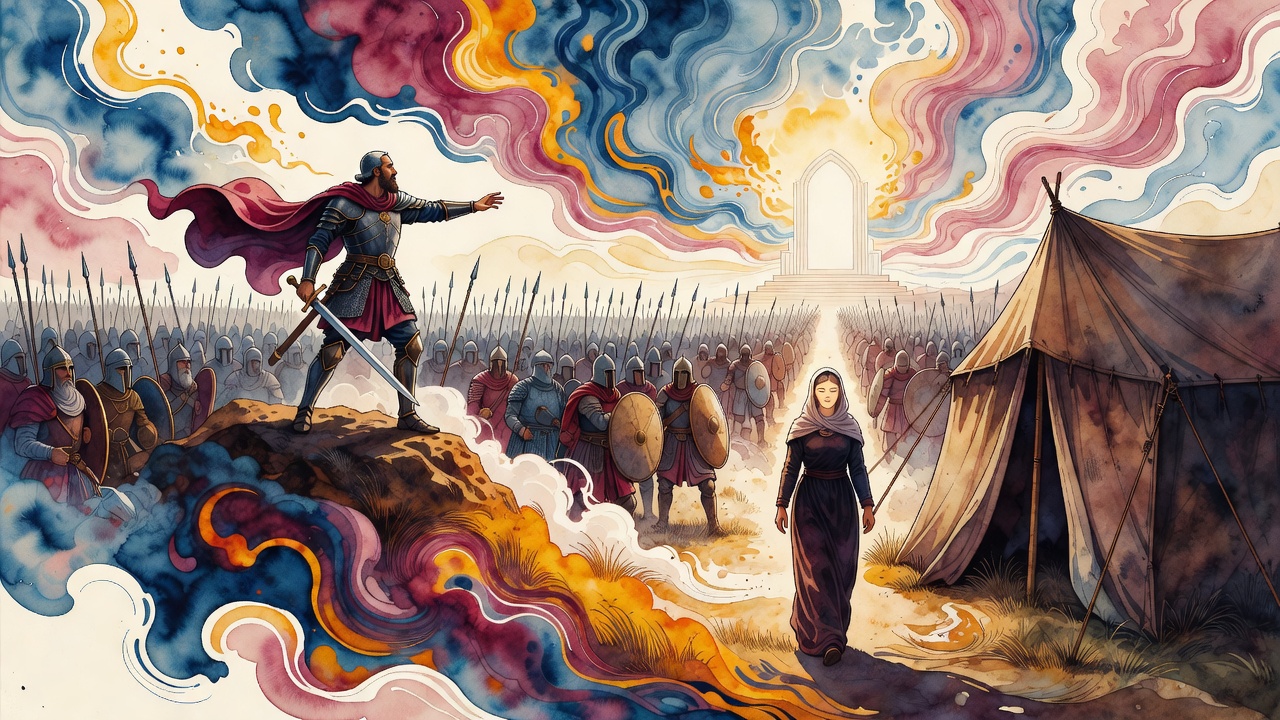
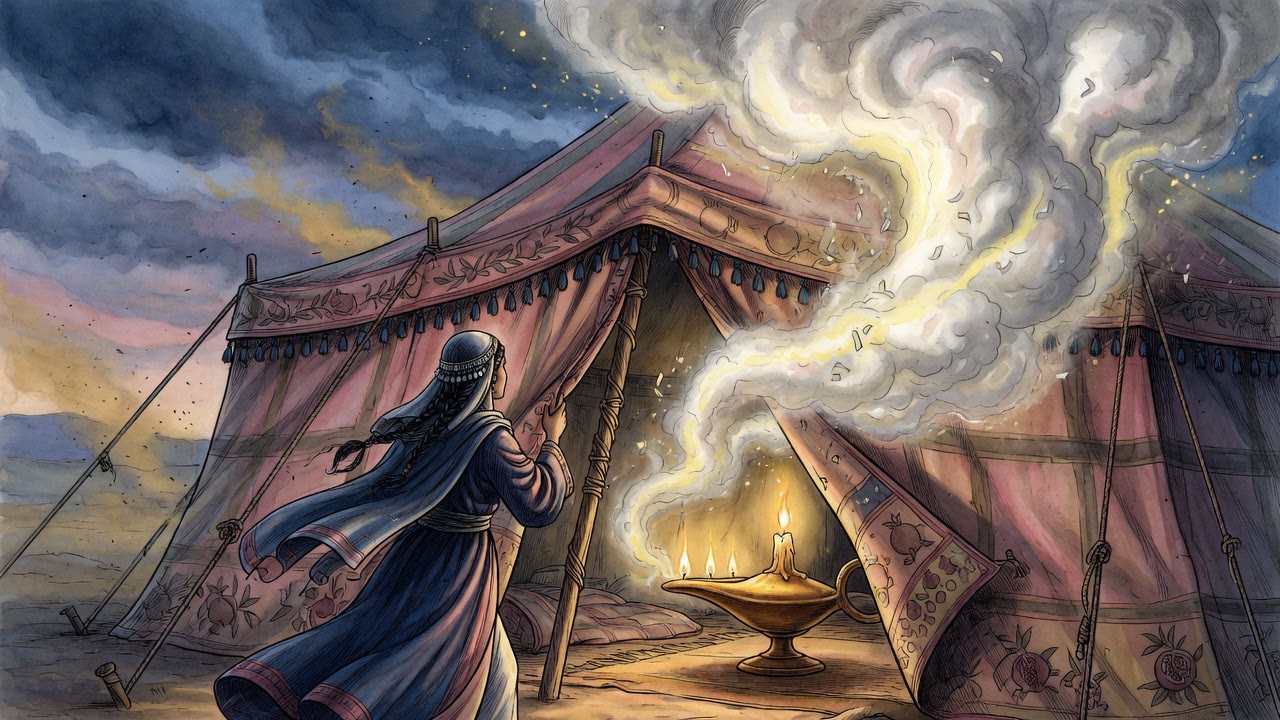
Judith Cut Off the Head of Holofernes While He Slept
Bagoas shut the tent from the outside and went to bed. The general who had swept the known world lay drunk, his sword hanging from the bedpost.
Table of Contents
Bagoas shut the tent from the outside and dismissed the waiters. They went to their beds. Inside, the general who had swept the known world lay heavy with wine. His sword hung from the bedpost. Judith was still on her feet.
 Click for full size
She had been in the camp four days. Four days of eating her own food while his servants ate around her. Four days of bathing at night in the spring outside the camp and dressing in her finest clothes before going to his tent. Four days of telling him she had left Bethulia because the people were about to sin against God by eating the consecrated grain, and that God would tell her when they had crossed that line, and then she would guide the Assyrian army into Jerusalem without a fight.
It was a lie. Holofernes did not know it was a lie. He had no frame for a woman sharper than he was, who loved God more than she feared death.
Drink and Become One of Us
On the fourth day Bagoas came with the invitation. "Let not this fair gentlewoman fear to approach my lord and be honored in his presence, and to drink wine and be merry with us, and to become this day like one of the daughters of the Assyrians, who serve in the house of Nebuchadnezzar."
Become one of us. Lay down the food you packed. Lay down the hours you keep. Dissolve into the house of the king who tears down groves and altars and demands worship. Judith answered as if she had already surrendered. "Who am I now, that I should contradict my lord? Surely whatever pleases him I will do without hesitation, and it will be my joy until the day of my death."
She rose and dressed. Her sandals ravished his eyes. Her beauty took his mind prisoner. She did not become a daughter of the Assyrians. She had packed her own food from Bethulia, and she had kept the days a people keeps when God has separated them from all the peoples and written Jacob down as a firstborn. The sign is not wood. It is not stone. Holofernes had torn down every sacred grove he could find. He could not tear down a day.
The Sword on the Bedpost
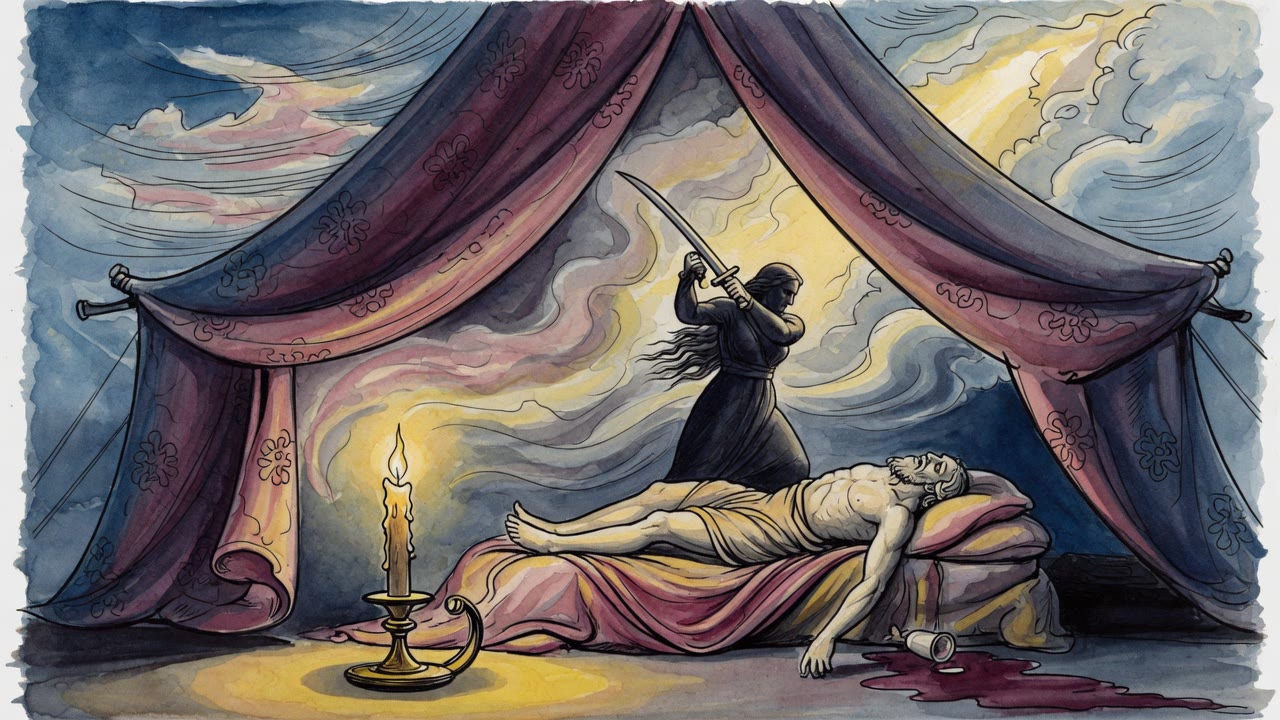
Holofernes took great delight in her and drank more wine than he had drunk in one day since he was born. Evening arrived. His servants hurried out. Bagoas shut the tent. Judith was alone with him. He lay passed into sleep on his couch, the sword within reach of a sober hand.
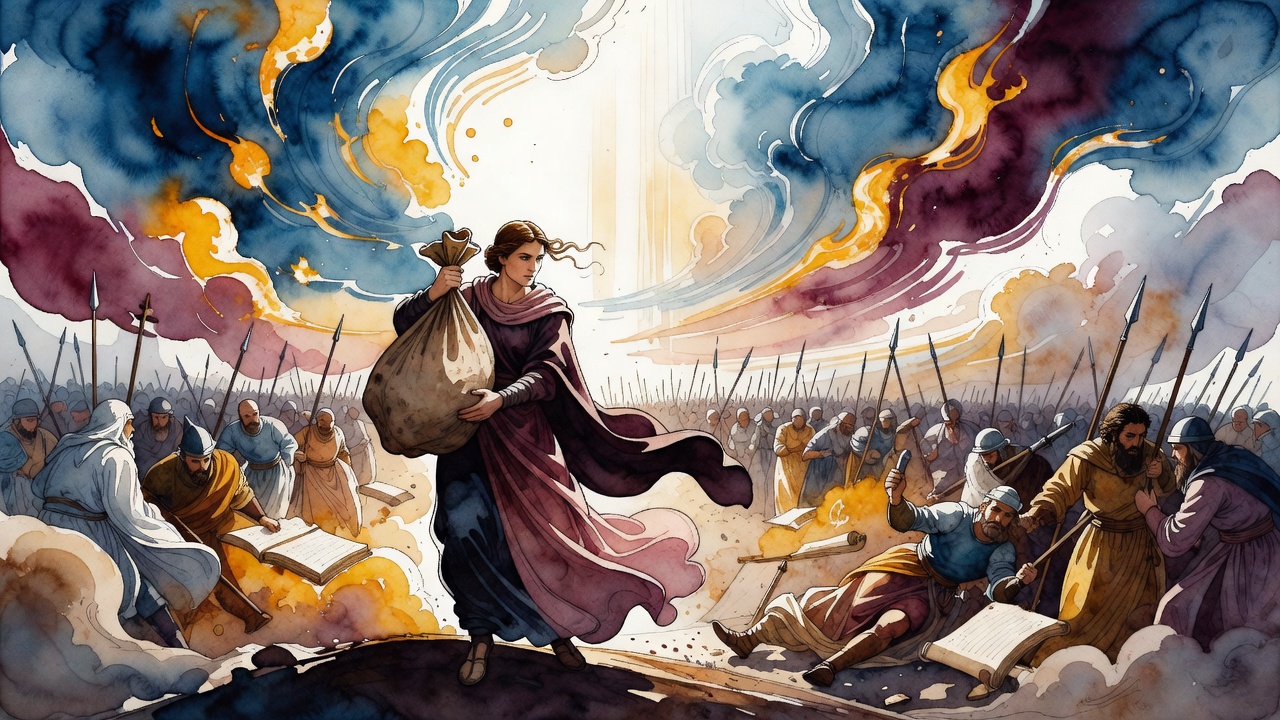
She stood over him while he slept and prayed. "Strengthen me this day, O Lord God of Israel." Then she took down his sword with both hands and cut twice. The first blow. The second blow. His head came away from his body. She wrapped it in the food bag she had brought from Bethulia, the same bag that had kept her from becoming one of them, and walked out of the camp with her maidservant the way she had walked out every night for four days to pray, so that no guard stopped them.
The Head on the Wall
She reached the gates of Bethulia before first light and called to the watchmen. They ran down to meet her. She pulled Holofernes' head out of the bag and held it up in the torchlight. The people gathered. The priests came. Uzziah the ruler of the city blessed her and said, "You are the exaltation of Jerusalem, you are the great glory of Israel, you are the great pride of our nation." All the people said amen.
In the morning the head hung on the city wall. The men of Bethulia armed themselves and went out. The Assyrian army woke and went to rouse Holofernes and found his headless body on the bloody couch. What had held the army together was gone. They fled. Israel pursued them. The Persians quaked at her boldness. The Medes were daunted. The afflicted shouted. The weak cried aloud. The sons of the gentlewomen pierced the fugitives through. They perished by the battle of the Lord.
A Sign He Could Not Tear Down
God had said he would separate a people from among all the peoples, and these would keep the Sabbath day. He would sanctify them as his people and bless them as he had sanctified the day. He had chosen the seed of Jacob and written him down as a firstborn son. He would teach them the Sabbath, that they might keep it from all work, eat and drink, and bless the one who created all things, a peculiar people keeping the day together with heaven.
Judith had carried that sign into a tent that wanted her to forget it. She did not act as a daughter of Assyria. She acted in the dark between Holofernes' wine and the morning, with her own food bag in her hand and his sword in both of hers. What she carried back out was a head, and the proof that the covenant had held in a place built to erase it.
Bethulia's wall kept the head until the army broke. The bag that had held bread now held the general. The day went on being a day no king could pull down.
← All myths