Hananya, Mishael, and Azarya Were Held to an Oath Sworn at Sinai
The king gave them three chances to bow. They told him their God might not save them, and that it made no difference to what they were going to do.
Table of Contents
 Click for full size
Three Chances to Bow
Nebuchadnezzar did not want them dead. He wanted them bent, once, briefly, with the music playing loud enough to cover it.
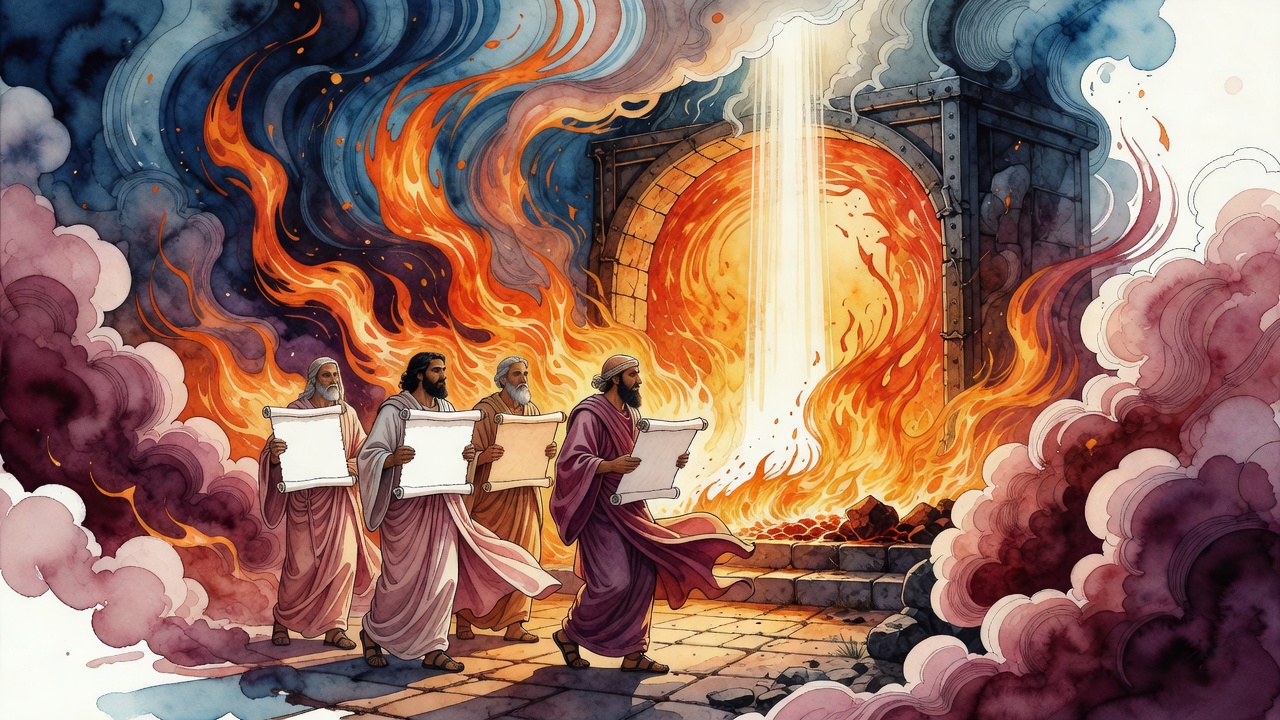
He offered it in front of the whole assembled apparatus of his empire, and when they did not take it he offered again, and again. The furnace stood lit behind him the entire time. It would have cost them one motion of the spine, and instead three young Judeans told a king who could burn them within the minute that they had no need to answer him on this matter. Their God was able to bring them out of the fire. And if He did not, they said, it changed nothing at all. They were not going to serve his gods or bow to the gold he had set up.
Hananya, Mishael and Azarya promised heaven nothing and claimed to know nothing. They only said what they would not do.
The Blood Moses Divided in Half
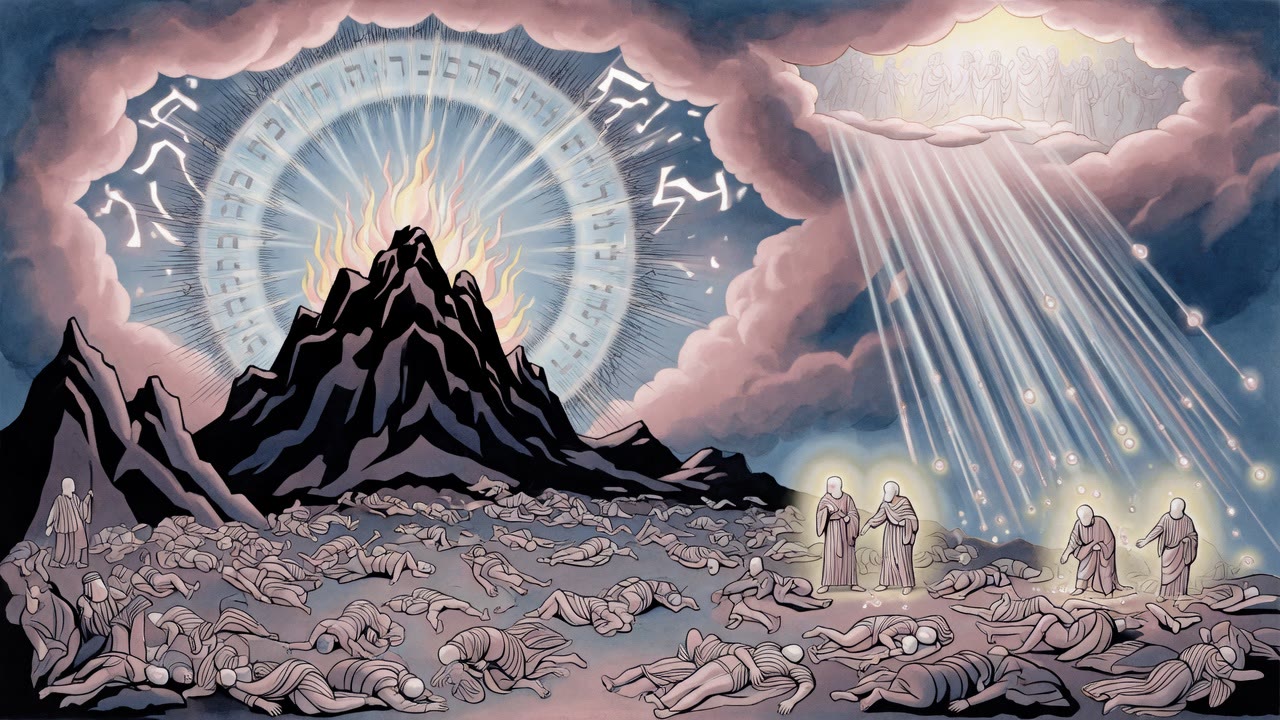
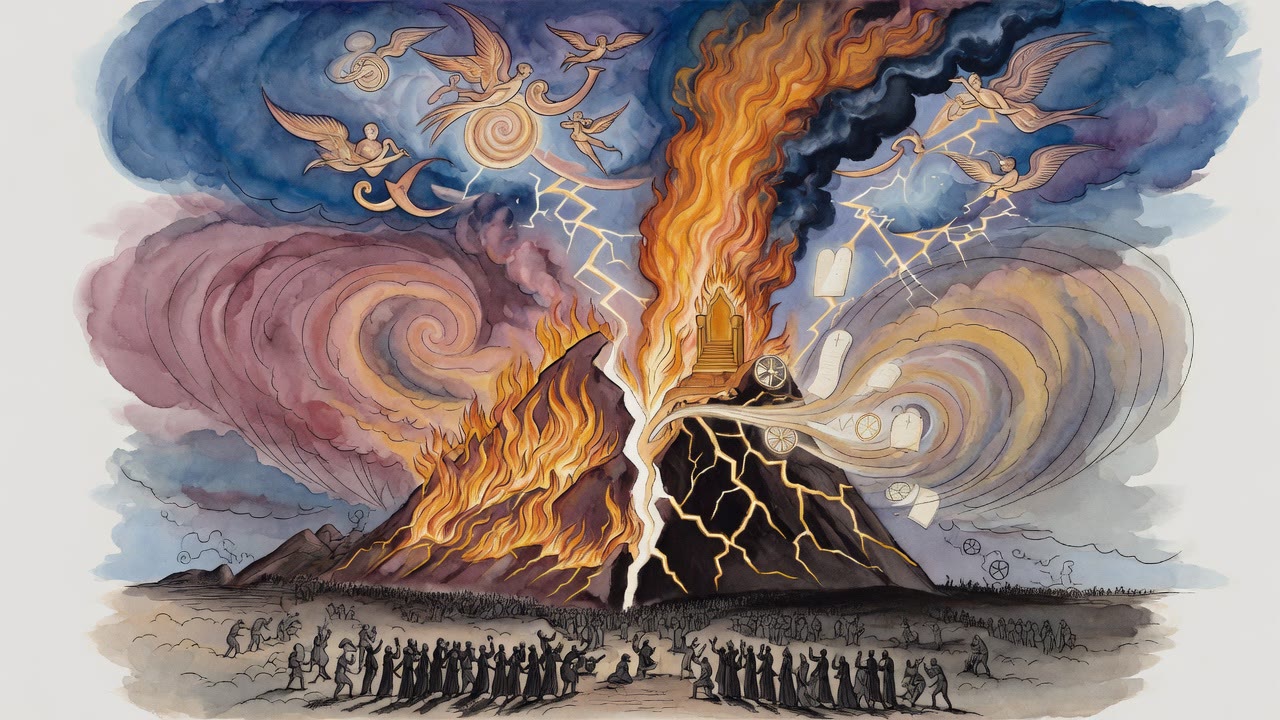
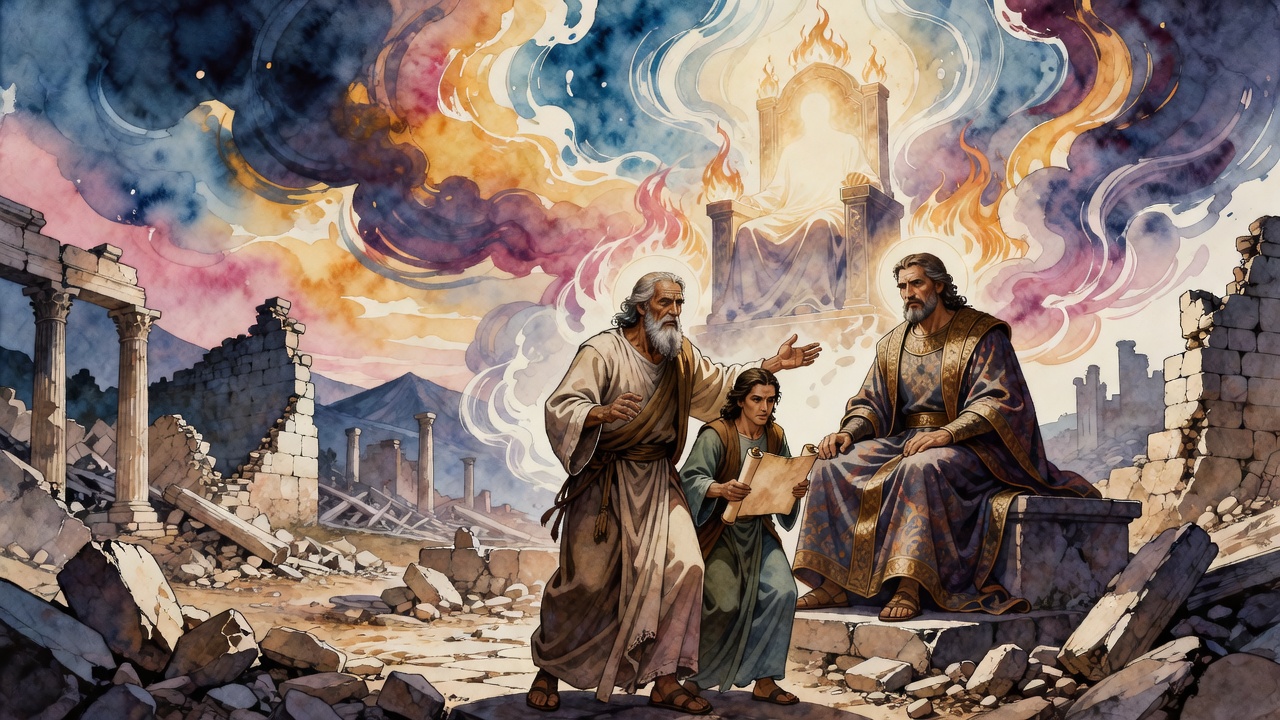
What stood behind that refusal was six hundred years old and had been sealed in blood at the foot of a mountain.
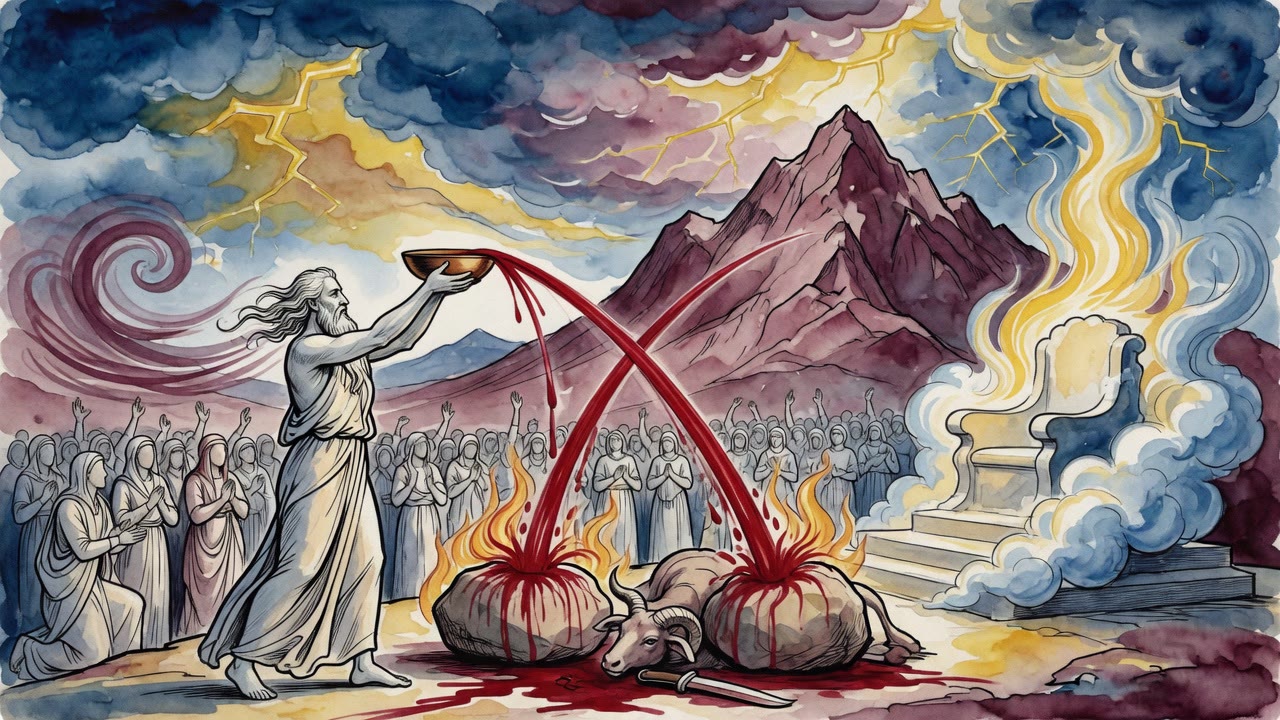
Moses got up early that morning and built an altar under Sinai and stood up twelve pillars for the twelve tribes. He offered burnt offerings and peace offerings. Then he took the blood and divided it exactly in half.
How a man measures half a basin of blood by eye is a question the rabbis would not let alone. One said the blood divided itself. One said it changed color while he looked at it, half going black and half staying red. One said an angel came down wearing Moses' own face and did the dividing for him. One said a voice came out of Horeb and called, "Half the blood is to here." One said Moses knew the laws of blood better than any man alive and simply knew. On the basins they agreed. The two vessels were the same size, neither larger than the other, so that no one could argue afterward about whose share had been bigger.
Then Moses stopped and asked what to do with them. "What is to be done with Your portion?" he said. "Sprinkle it on the people." "And with theirs?" "Throw it against the altar." Each side of the agreement went home wearing the other side's blood.
He had read the terms out first. Sabbatical years, jubilee years, blessings, curses, down to the closing line about the statutes given between God and the children of Israel. Some said he read further back than that, all the way to the opening of Genesis. The people answered that they took it on themselves. Then the blood went over them and he told them what they now were. "You are tied," he said. "You are bound. You are held fast. Tomorrow come and take on the rest of it."
The Sword Drawn Over the Oath
Rabbi Yohanan put the terms of it plainly. The two of them had made a commitment between them, that He would not disavow Israel and Israel would not disavow Him.
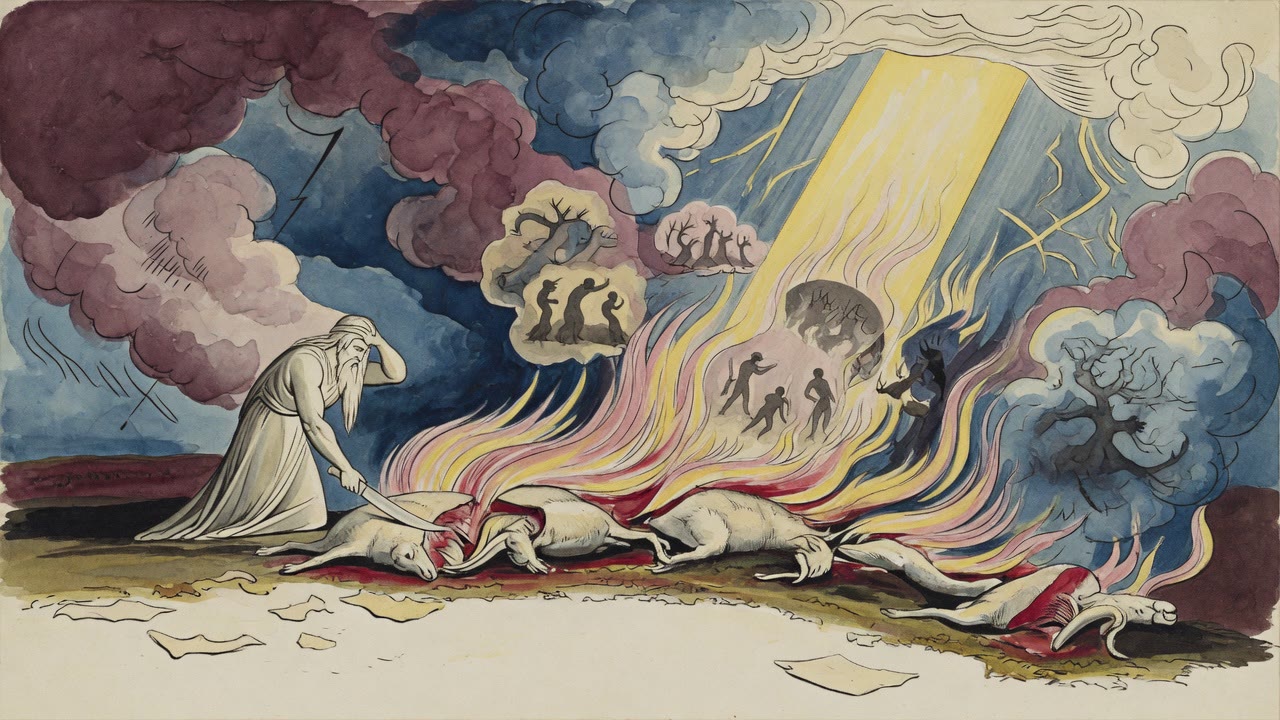
Rabbi Yitzhak gave the picture. When a king swears his legions in, he does it with the sword out, so that every man taking the oath can see the blade and understand exactly where it will pass if he breaks his word.
The word for what Israel walked into that day was ala, and the rabbis fixed its meaning from the harshest place available to them. A priest stands a woman accused by her husband in front of the sanctuary, with no witness against her and nothing proved, and puts her under the oath of ala, and if she has lied her own body will publish it. That is the weight of the word. Not a pledge. A binding under curse, with the consequence written into flesh.
Zedekiah Broke an Oath and Lost His Eyes
Judah had produced its demonstration of the cost already, one king earlier, at the hands of the same emperor and in the same city where the three of them were now standing.
Zedekiah had sworn allegiance to Nebuchadnezzar and then broken it. He was caught on the run, and the Babylonians put his eyes out. He had broken two oaths, the recent one to the king and the old one at the mountain, and the blinding was read as payment laid on top of payment, sentence upon sentence. The verse said it would be placed on his head, and the rabbis asked why only the head, and answered that the eyes sit in the head. A man is punished through the part of him that swore.
The Blood of Your Covenant
So three men walked into a furnace in Babylon holding up their half of an agreement none of them had signed, and no one alive had watched being made.
What God answered them with, the rabbis found in Zechariah: because of the blood of your covenant, I have sent your prisoners out of the pit where there is no water. Not because of your nerve. Because of the blood. The blood at the mountain, split into two basins of exactly equal size, half of it thrown over the people and half of it thrown against the altar, and never once written off from either direction.
The ropes on their arms burned through and dropped away. Nothing else on them was touched, not their coats, not their hair. The king counted the men walking around in the fire and got four.
← All myths