How Korach's Rebellion Forced God to Write a Deed
After the ground closed on Korach, God did not soothe Aaron with words. He had a deed written and sealed, so no later contest could reopen the field.
Table of Contents
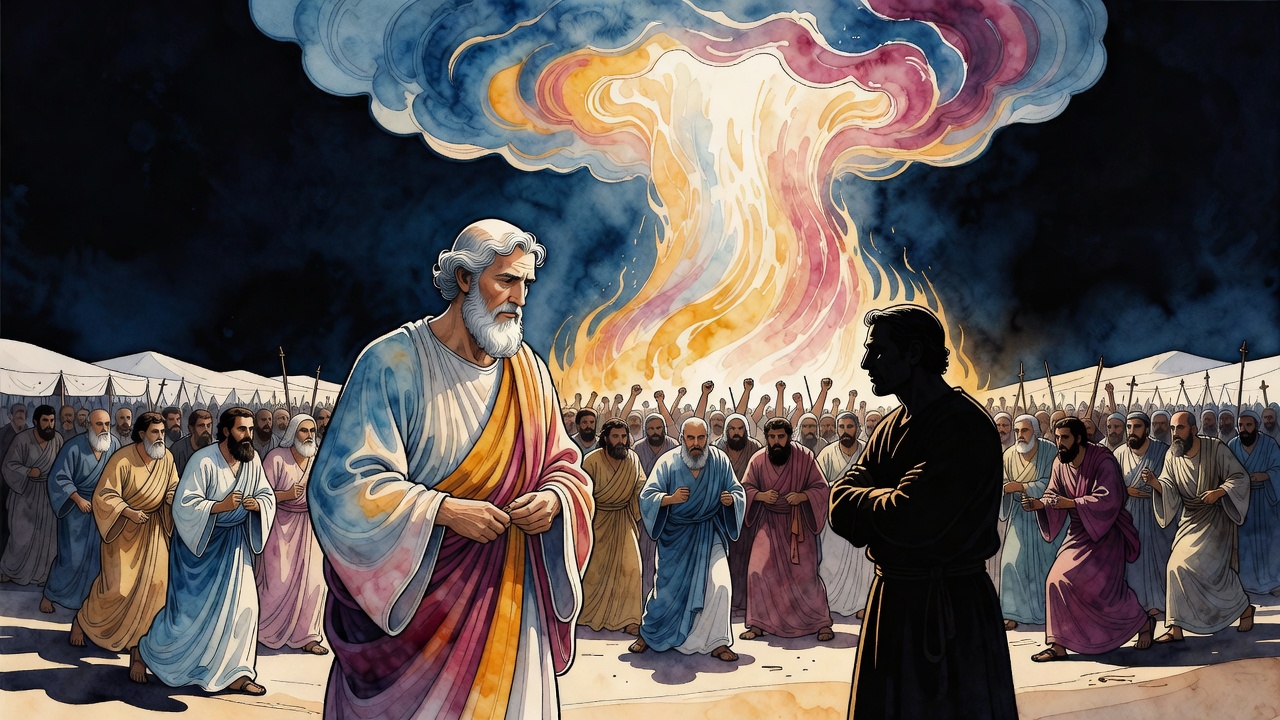
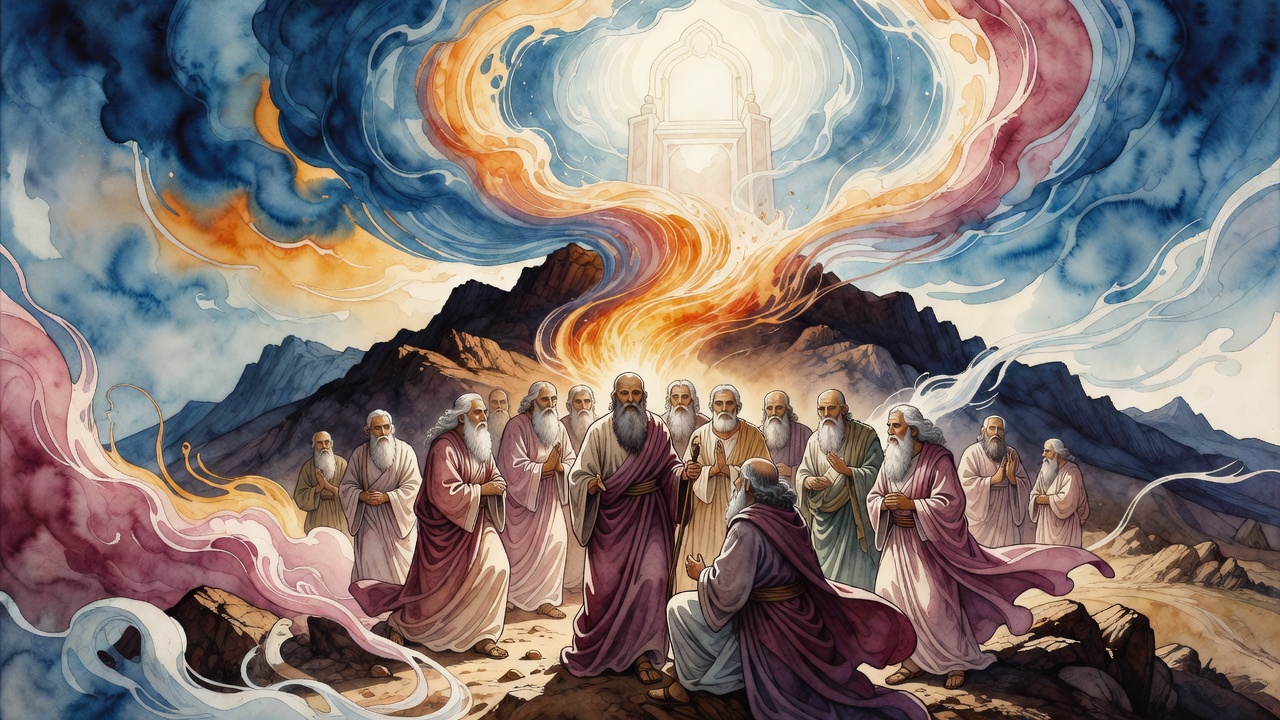
Korach had done his arithmetic carefully. Two hundred and fifty men stood with him, princes of the congregation, men with names and records. He had framed the argument with precision. All the congregation is holy, every one of them, so why do you set yourselves above the assembly of God? The target was not Moses alone. The target was Aaron. The priesthood. The altar. The right to burn incense before God and live.
 Click for full size
Aaron said nothing. He let God answer.
God answered with fire. The two hundred and fifty men who offered incense were consumed where they stood. The ground opened for Korach and swallowed him whole, with his household and everything that belonged to him. Korach took two deaths, because one would have left the other company screaming that the ringleader had been spared. Fire first, then the pit. The screaming, and then nothing.
The Camp Still Raged
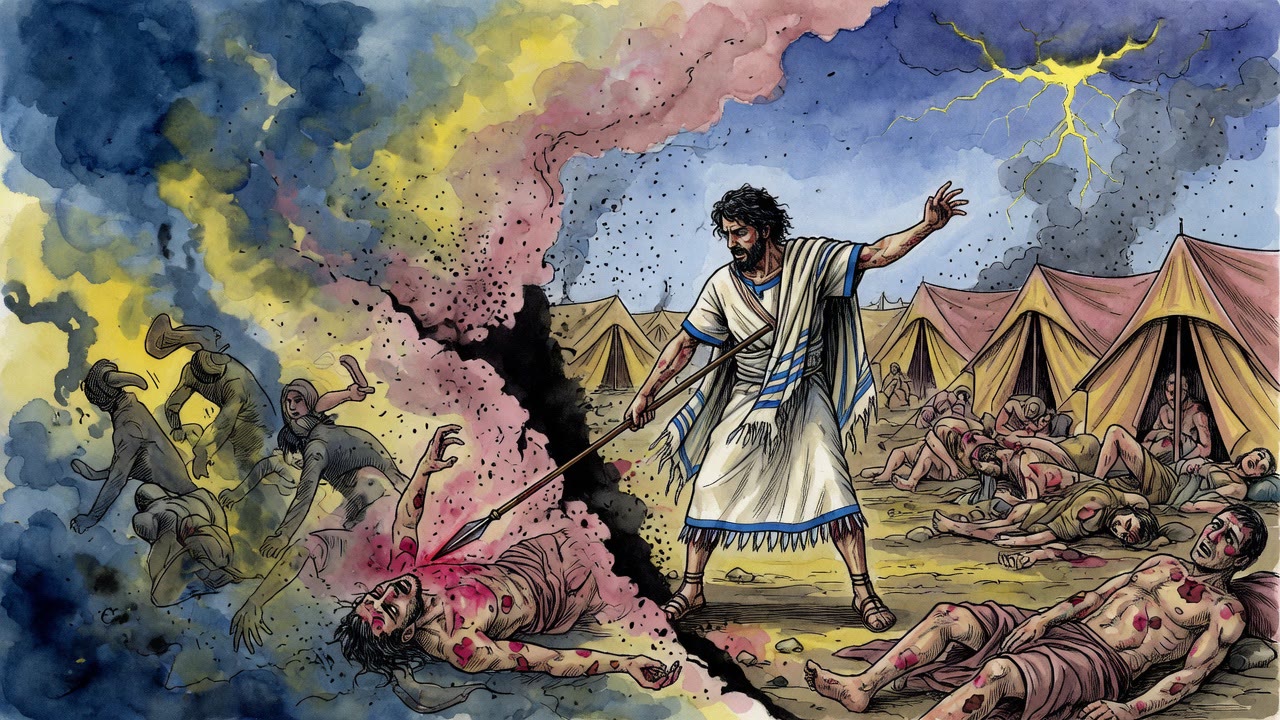
The congregation was furious that their champions had been killed. They blamed Moses and Aaron. Plague spread until Aaron took his censer and ran to stand between the living and the dead. Fourteen thousand seven hundred people died before the dying stopped.
After all of that, God spoke to Aaron directly. Not through Moses. To Aaron. What God gave him at that moment was not a soothing word. It was a deed.
The King Wrote the Field into a Record
A king of flesh and blood had a servant, and he gave that servant a field as a gift. Everyone knew it. The servant worked it, improved it, built on it. The king wrote nothing, sealed nothing, recorded nothing. Then a challenger arrived and said the field was never legally his. Show me the document.
The king did not argue. He had the deed written, sealed, and formally recorded. "Let anyone who wishes come and contest it," he said. "Come now and I will write, seal, and record it."
Korach had contested Aaron's claim to the priesthood. The priesthood had always been Aaron's. God had established it from the beginning. But a legal challenge required a legal response. The oral designation became a written covenant, an everlasting statute for Aaron and his sons in their merit, generation after generation. The gift became a permanent record.
Kehat Carried the Ark Because Aaron Came From Him
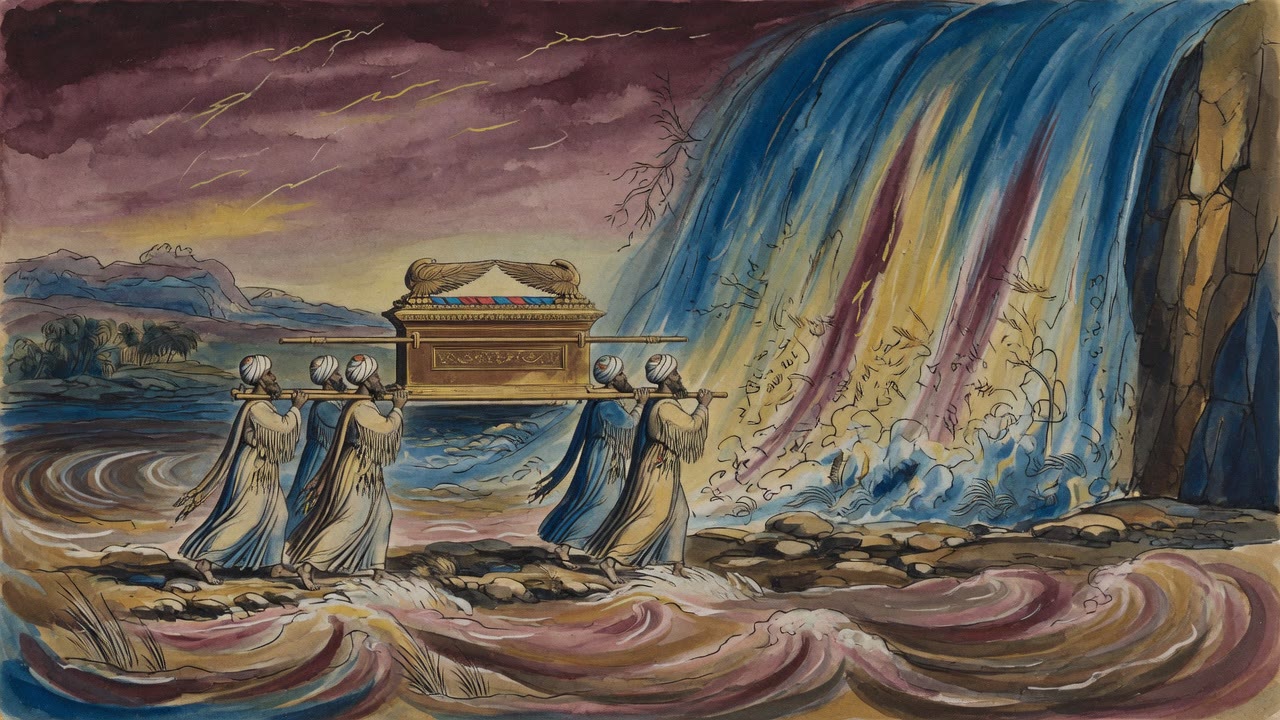
When God counted the sons of Levi for ordinary birth order, Gershon came first, then Kehat, then Merari. When He counted them to appoint them over the sacred vessels, the order flipped. Kehat went first. From Kehat had come Aaron, of the most sacred order. Therefore Kehat's descendants merited service with items of the most sacred order: the Ark, the altar, the vessels that could kill a careless hand.
Gershon took the sheets and the Tent. Merari took the beams and the sockets. The house of Aaron sat at the center of that ranking. Korach had tried to pry the center loose. The census had already written who stood nearest the fire.
Two Sons Died and Two Were Kept
Aaron was called holy among his peers, "the holy one of the Lord" (Psalms 106:16). Let one who is holy come, enter the holy, sacrifice before the Holy, and atone for the holy. That was Aaron, the Sanctuary, God, and Israel, four holies stacked in one man's walk toward the altar.
Holiness did not spare him grief. Nadav and Avihu died. Elazar and Itamar remained. All of Levi's other sons established families. Aaron's line had a hole burned in it, and still God said, "Take Aaron, and his sons with him." Two died. Two were kept. The taking that had once helped fashion a calf was answered by a taking that set the remaining house back on its feet.
Later, in the court of Rabbi Judah the Prince, the Roman Antoninus looked at the disciples and asked if these were the ones the sage boasted of. "The least of them can revive the dead," Rabbi said. When a servant of Antoninus lay dying, a disciple came, some say Rabbi Shimon ben Halafta, and found the man recumbent. "Why are you recumbent while your master is standing on his feet?" The servant shook and stood. The same verse was read over Aaron's remaining sons: deliver those taken to death. The holy work still needed a living house.
The Contest Made It Permanent
Korach wanted to prove the priesthood was a grab. He forced God to write it down. Before Korach, the priesthood rested on word and appointment. After Korach, it rested on a deed, a sealed record that could be pointed to in any future dispute.
Aaron still said nothing. He had run with the censer. He had watched two sons die. He had watched the ground close. The document was in heaven's hand now, written, sealed, recorded. Anyone who wished could come and contest it. The field would not go back to rumor.
← All myths