Noah Held the Door Until God Swore There Would Be No Second Flood
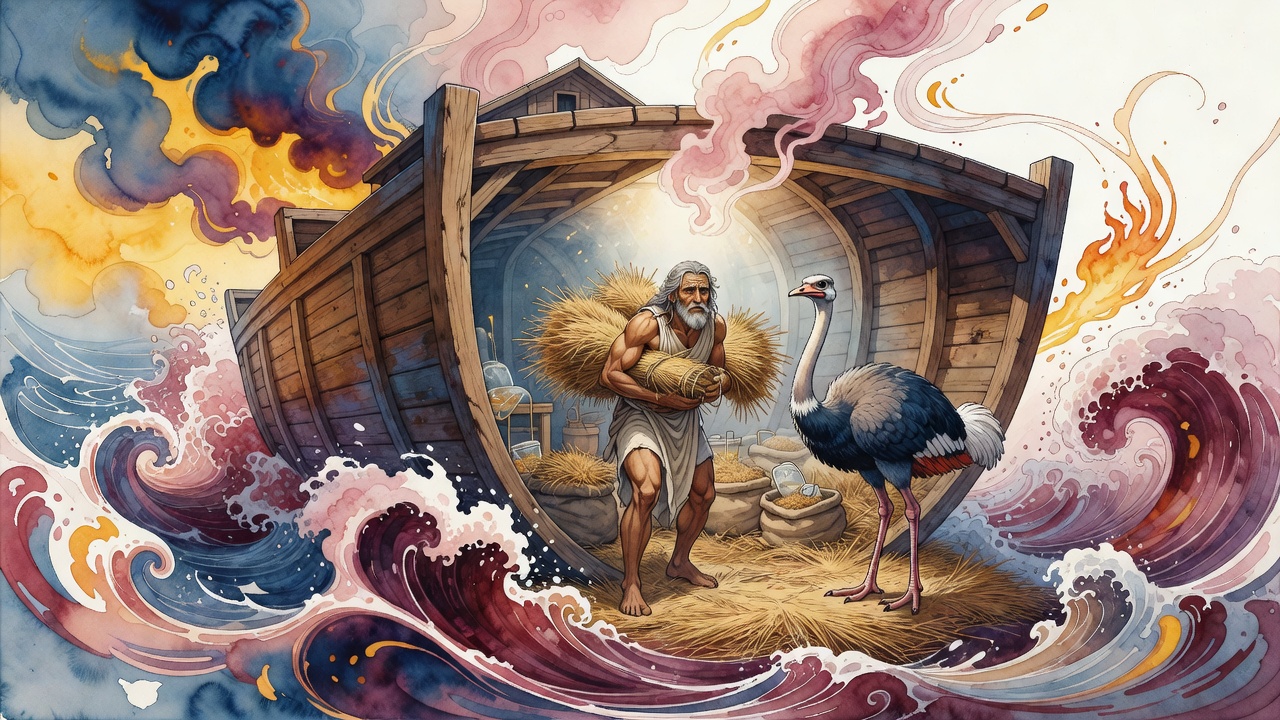
The ground was dry. The dove had not come back. His sons stood at the door with their packs, and he still would not put a foot on the mud.
Table of Contents
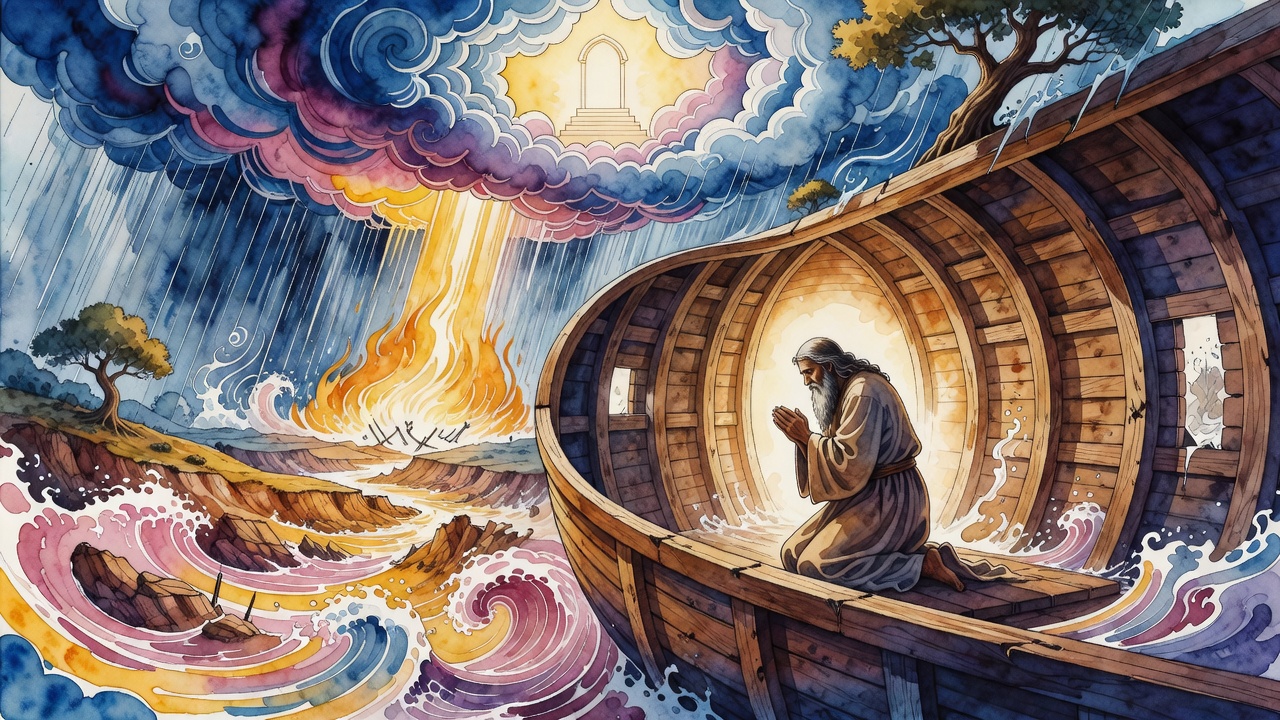
The mud had gone hard, and Noah kept the door shut.
 Click for full size
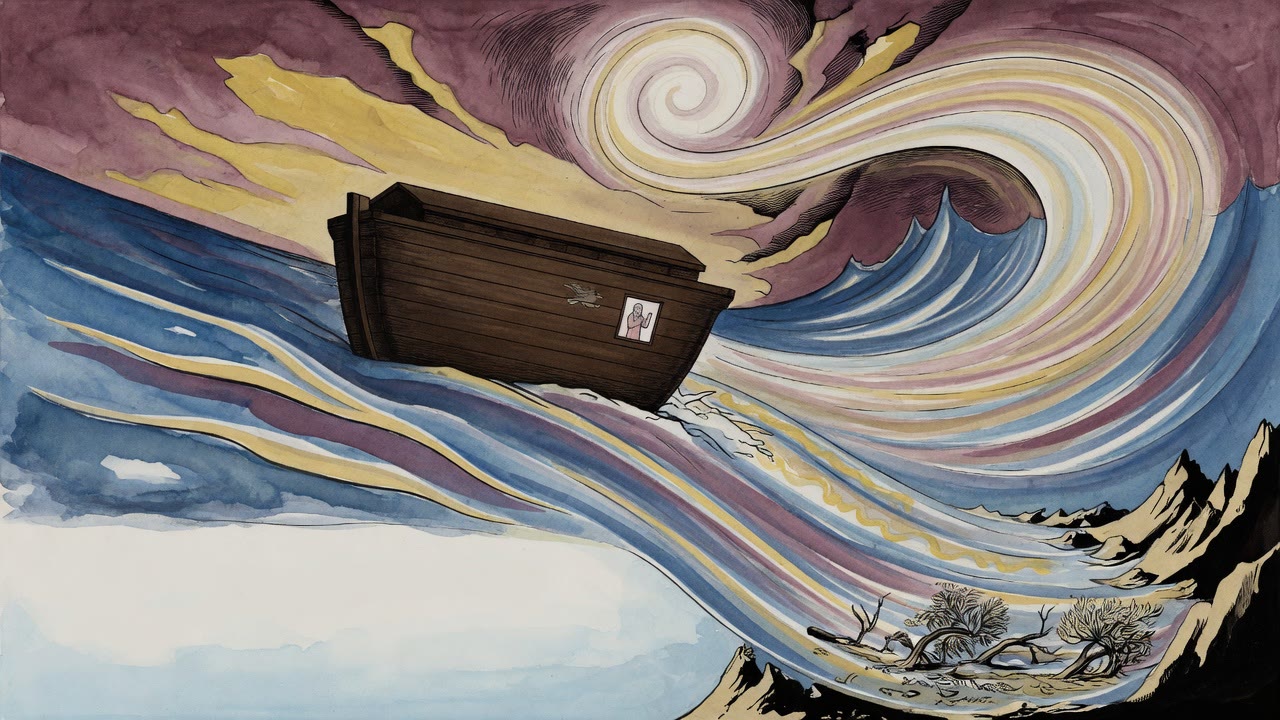
Peaks stood where the water had been. The ark no longer lurched. His sons had their packs ready. The animals pressed the stalls. He did not put a foot on the ground.
The Raven Chose a Corpse
He opened a hatch and sent the raven. Find out if the waters have dropped. Come back. Tell us if a living thing can stand out there.
The raven did not want the job. "Art thou sending me because thou wishest me gone?" he said. "Hast thou designs on my mate?"
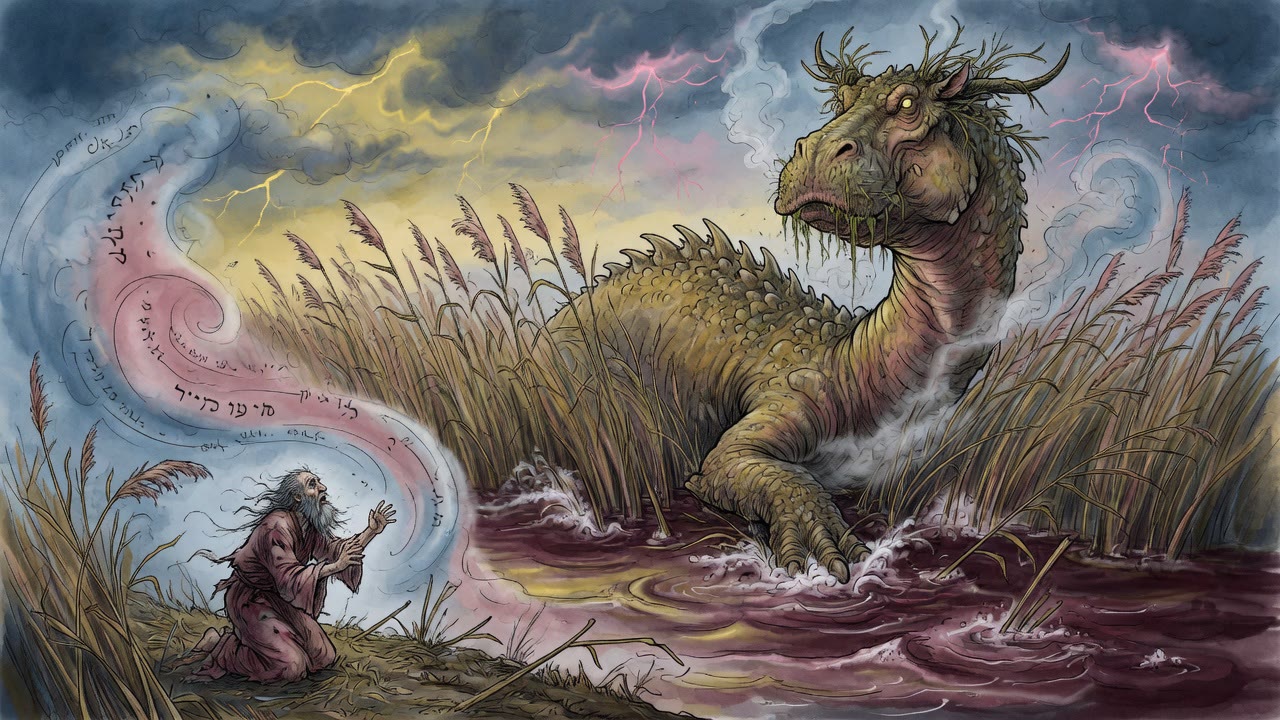
Noah cursed the mouth that had spoken that. The animals in the stalls said Amen with him. The black bird went out anyway, over a world of wreckage, and found a body floating in a pool that had not finished dying.
Meat was louder than the command. The raven stayed with the dead. He did not come back with an answer. Noah waited in the dark with a household that had already spent a year listening to wood creak, and he learned that not every messenger will carry hope when hunger crosses its path.
The Dove Brought Jerusalem Green
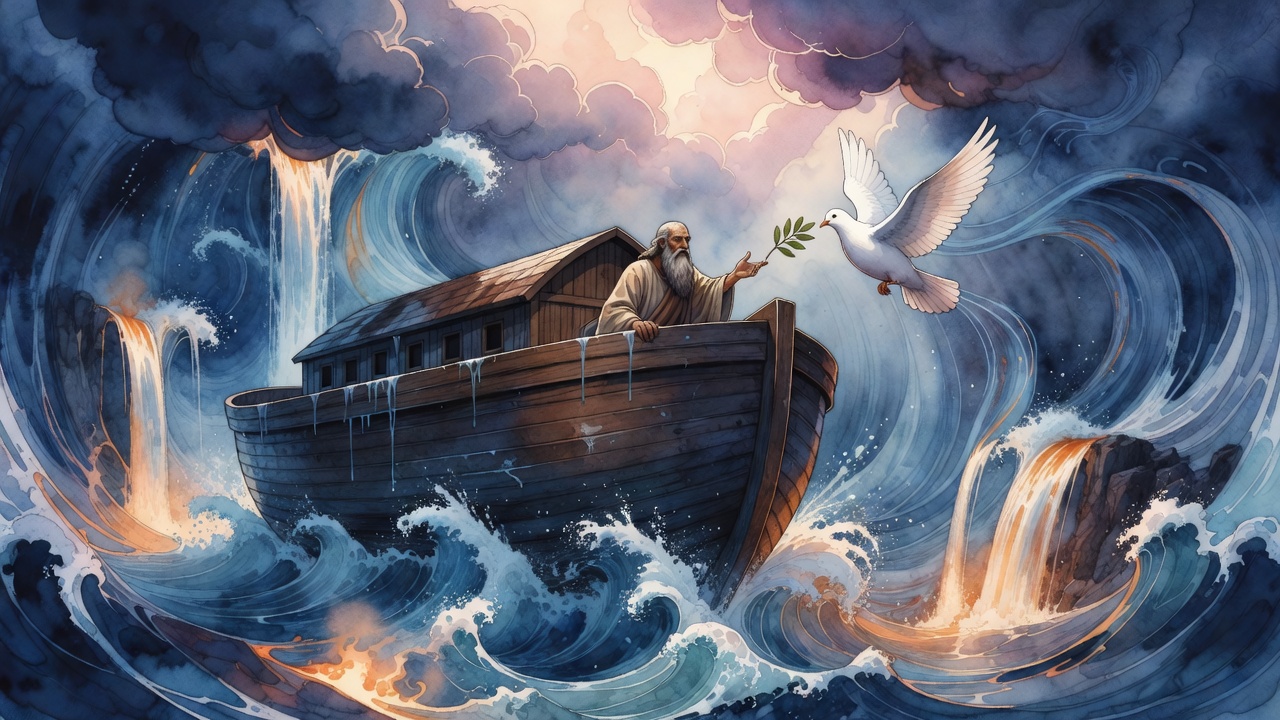
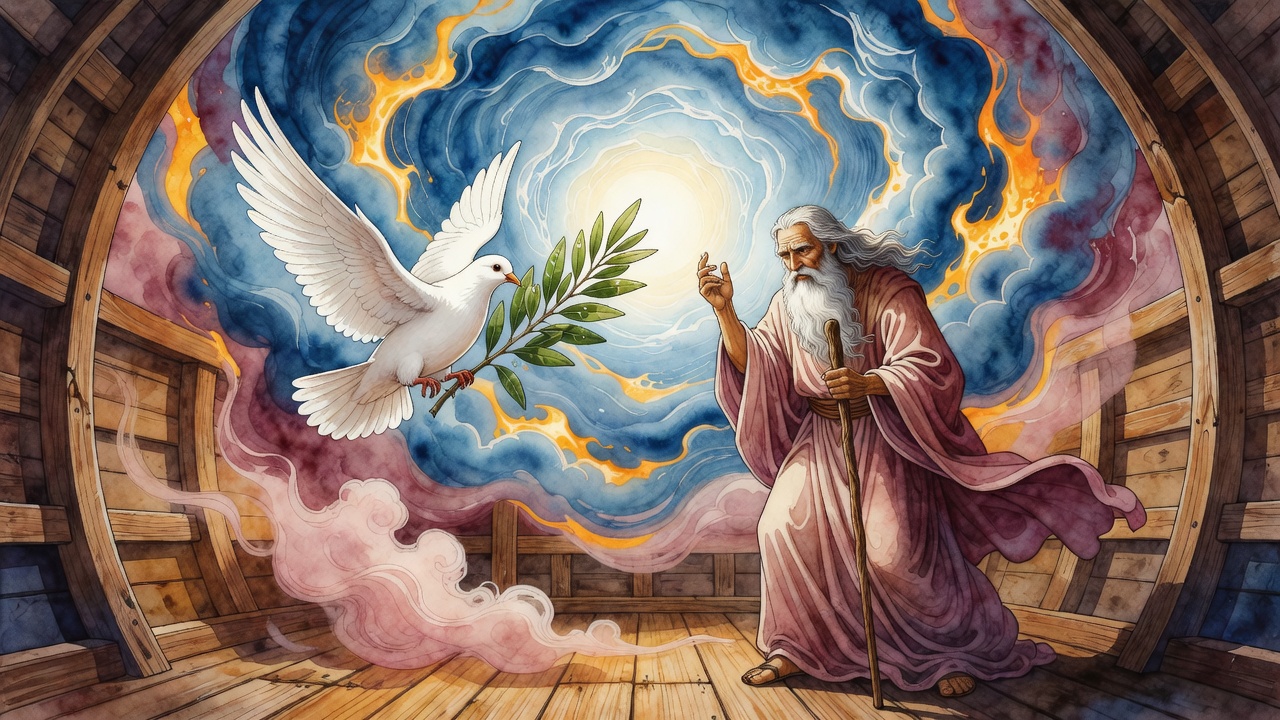
Then he sent the dove. She was small against the wet silence. Toward evening she came back with an olive leaf in her bill, thin as a fingernail, still bitter (Genesis 8:11).
The branch had come from the Mount of Olives in Jerusalem. The waters had covered the world. That hill had kept a living tree. She plucked the leaf and spoke while she did it. "O Lord of the world, let my food be as bitter as the olive, but do Thou give it to me from Thy hand, rather than it should be sweet, and I be delivered into the power of men."
Noah sent her again. The third time she did not return. Somewhere a branch could hold a bird. Somewhere the mud would take a foot. His household pointed at the empty sky and called the catastrophe finished.
A leaf is not an oath. A dry field is not a promise.
The Door Stayed Shut
He had gone in because God told him to go in. He would not go out on a guess.
"As I entered the ark at the bidding of God, so I will leave it only at His bidding," he said.
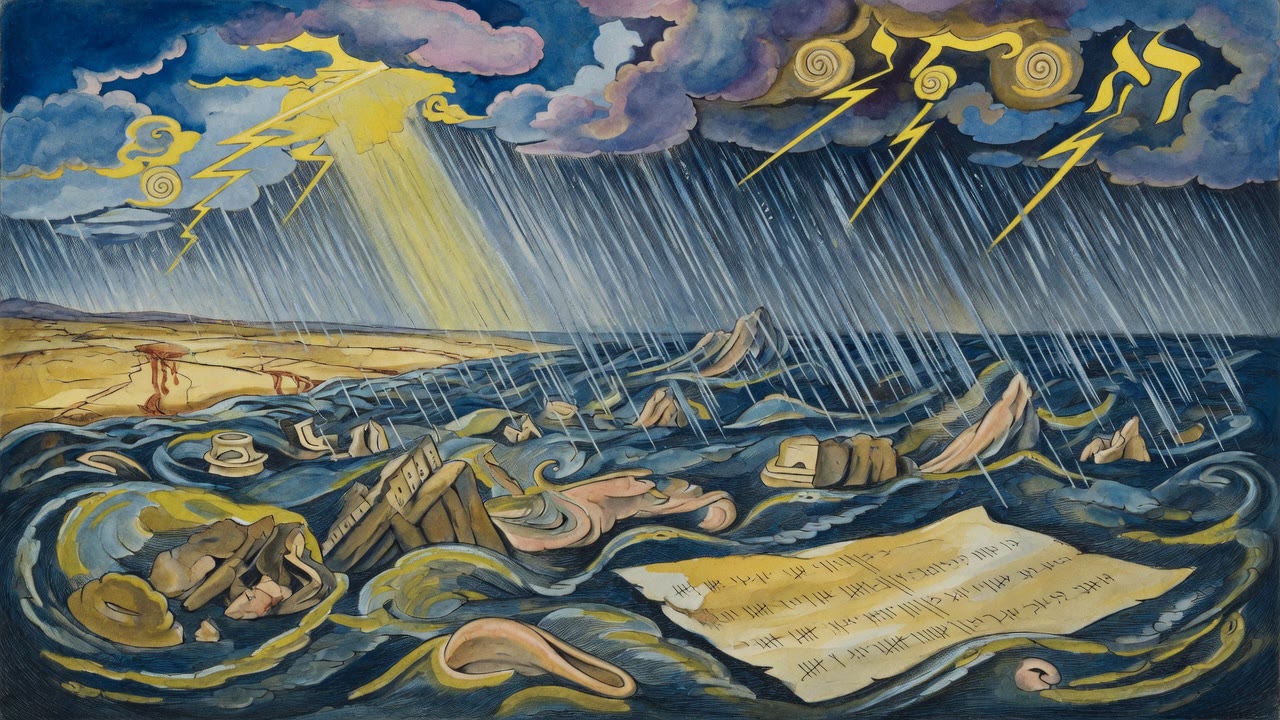
The wood still smelled of the year. He had heard the first rain strike the roof. He had heard the voices outside grow thin. Hands had beaten the planks. Then the hands had stopped. Dry ground could not shout down that memory.
The animals breathed in the dark. Shem, Ham, and Japheth looked at the door. Their wives stood with whatever could be carried into a second beginning. Noah held the latch. The same voice that had ordered him into the ark would have to order him out. A step off the plank without that voice was not courage. It was a wager with the sky.
God Spoke and He Still Did Not Move
The command came. Go out. Take your wife. Take your sons. Take every bird and beast that lived under your hand. The world can begin again.
Noah did not move.
Permission was not the same as safety. He could see the years after the step: planting, building, children, a table, a roof that did not leak. He could see the sky darkening over that table. He had watched one world erased. He would not spend a second one on a door that opened too soon.
The sons shifted their packs. A goat struck the stall. Outside the air was clean, and it smelled like a trick. For a man who had spent a year inside judgment, the quiet was not proof. The quiet was the part that scared him.
The Oath Opened the Door
God swore. Never again would a flood cut off all flesh from the earth (Genesis 9:11). The promise did not raise the drowned. It did not take the stench out of the stalls. It did one hard thing. It made a future that could be walked into.
Only then did Noah step down. Behind him came his sons, their wives, the animals, the birds, the small surviving pulse of the world. His heel left a print in mud that had been ocean a season ago. He did not look back at the door. He had not trusted the ground. He had trusted a vow.
Above them a bow bent in the cloud, not as decoration. It was the seal on the sentence that had pulled a frightened man through the door and set his foot on dry earth.
← All myths